Introduction
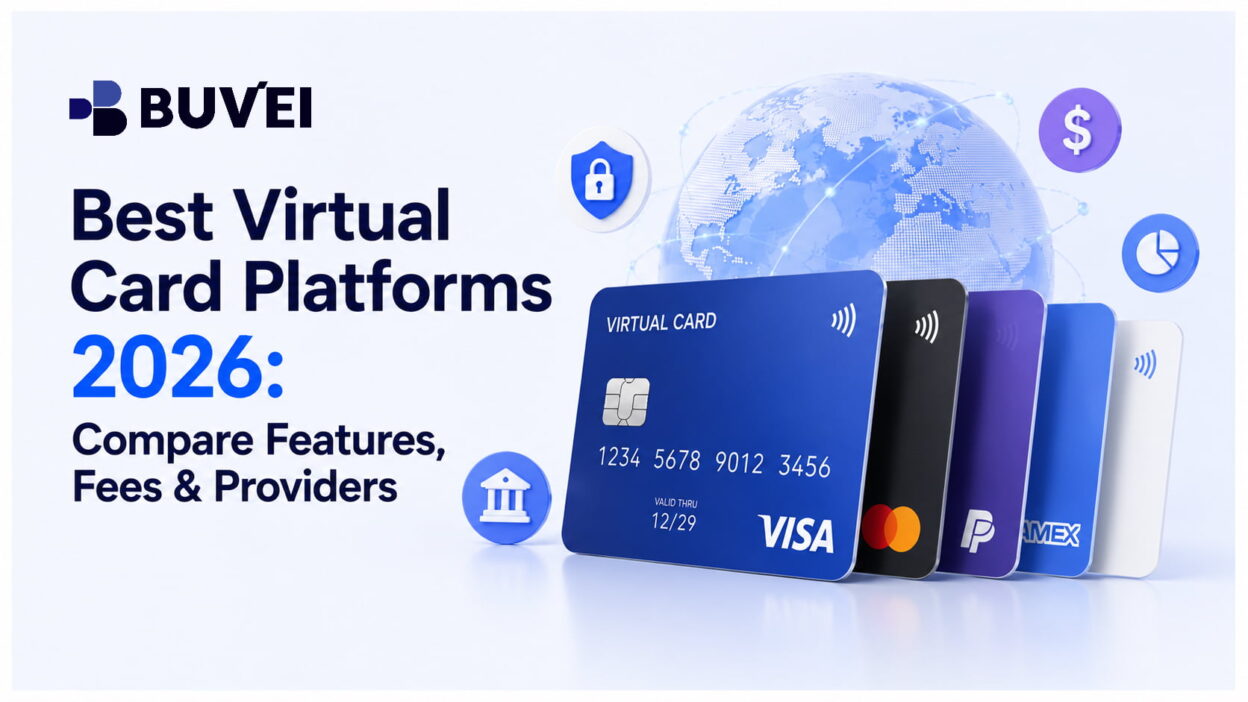
Choosing the best virtual card platforms in 2026 can make a major difference for businesses managing online payments, advertising spend, subscriptions, and international transactions.
For this reason, this guide compares the best virtual card platforms in 2026 by looking at provider capabilities, key features, pricing considerations, and business applications.
Why Businesses Choose the Best Virtual Card Platforms
As businesses expand across digital channels, managing payments through traditional corporate cards becomes increasingly complex.
As a result, companies often need separate payment methods for advertising, subscriptions, vendors, and online services.
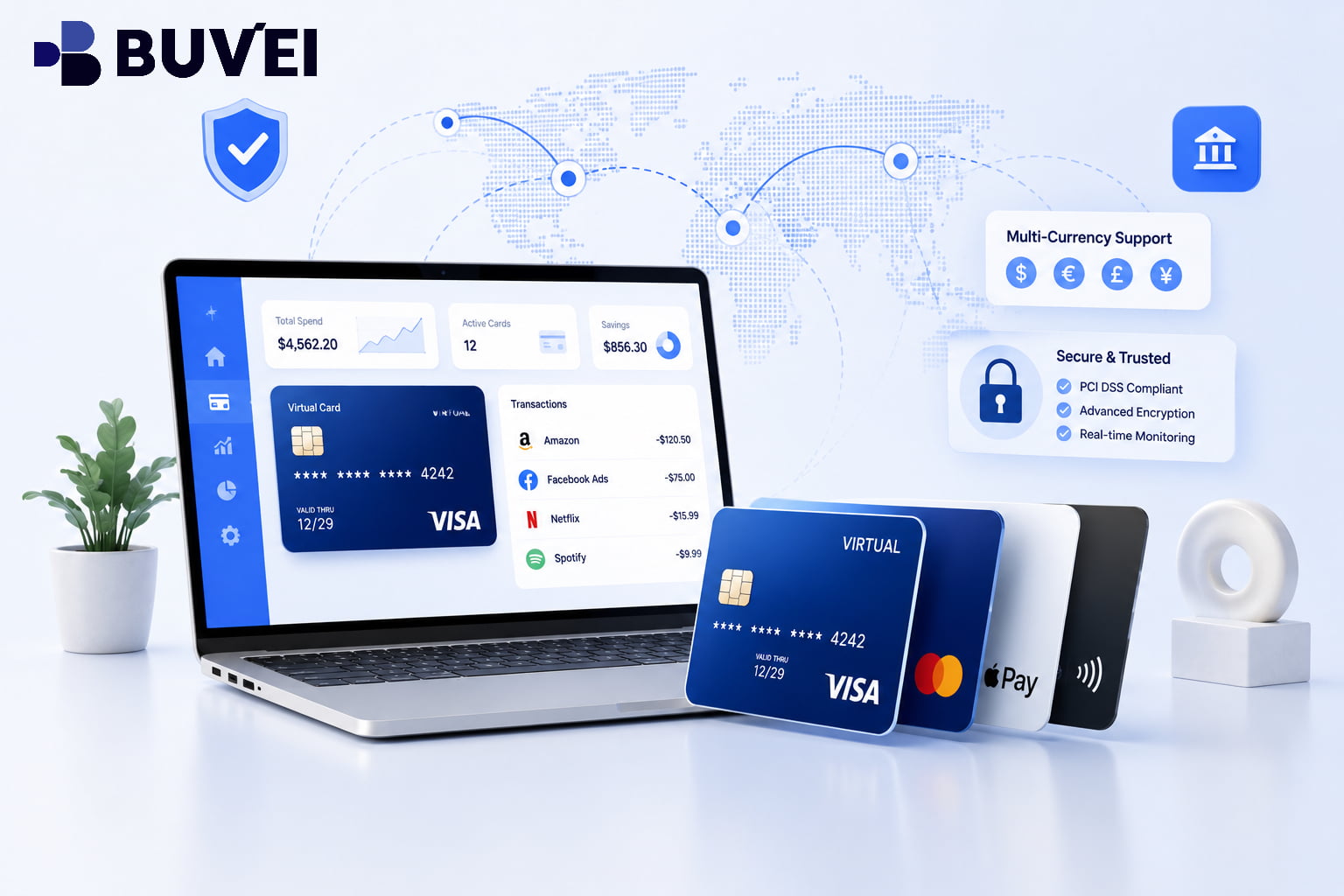
To address these challenges, virtual card platforms provide a more flexible approach by enabling dedicated cards, spending controls, and centralized payment management.
This helps businesses improve visibility, reduce payment risks, and scale operations more efficiently.
How We Evaluated the Best Virtual Card Platforms
Different businesses need different types of virtual card solutions. A platform suitable for personal payments may not meet the needs of a growing company.
For this comparison, we evaluated providers based on:
Card management: card creation, spending controls, transaction visibility, and flexibility.
Pricing: card fees, transaction costs, currency conversion, and overall payment efficiency.
Scalability: whether the platform can support growing transaction volume and multiple payment workflows.
API and global support: integration capabilities and suitability for international businesses.
Best Virtual Card Platforms and Providers Compared in 2026
The virtual card market includes providers designed for different audiences. Specifically, some focus on privacy and personal payments, while others provide corporate spending tools or scalable payment infrastructure.
| Provider | Best For | Key Features |
| BUVEI | Digital businesses and advertising teams | Multi-BIN cards, fast issuance, USDT top-ups, scalable card management |
| Privacy.com | Privacy-focused payments | Merchant-specific cards and payment controls |
| Ramp | Corporate expense management | Employee cards, spending controls, expense workflows |
| Airwallex | Global businesses | Multi-currency payments and international financial tools |
BUVEI: Virtual Card Infrastructure for Digital Businesses
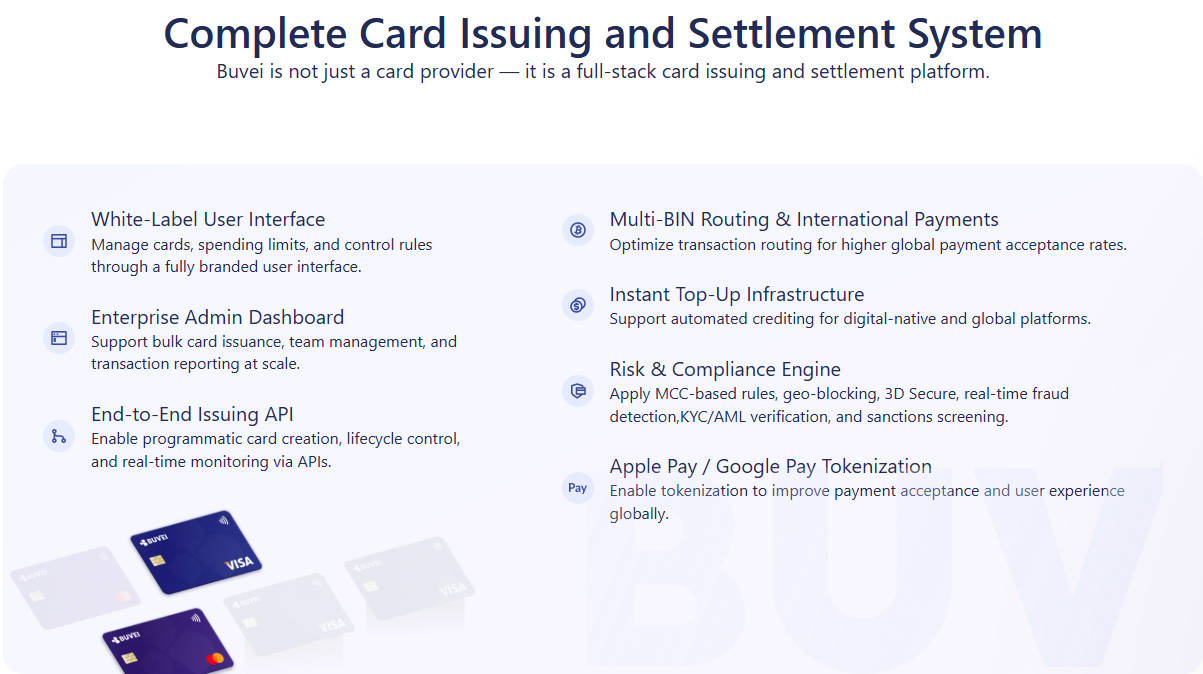
BUVEI provides scalable virtual card infrastructure for digital businesses that manage online advertising, subscriptions, and international payments.
In addition, the platform supports multi-BIN virtual cards, fast card issuance, dedicated payment cards, and USDT top-up options, helping businesses organize expenses across different platforms and payment needs.
For teams managing multiple advertising accounts or high-volume digital payments, BUVEI enables better spending control, payment separation, and operational scalability.
Privacy.com: Virtual Cards for Privacy Protection
Meanwhile, Privacy.com is primarily designed for users who want more control over online payments.
Its merchant-specific virtual cards help protect primary payment information and provide additional spending controls.
The platform works well for individual users, but companies requiring API access, international payment capabilities, or large-scale card management may need more advanced solutions.
Ramp: Corporate Virtual Cards for Expense Management
On the other hand, Ramp focuses on corporate spending and expense management.
Its virtual card solutions help companies manage employee spending, monitor transactions, and improve financial visibility.
It is suitable for businesses looking for internal expense controls, although companies needing advertising payments, global payment flexibility, or customized card issuing may require broader infrastructure.
Airwallex: Virtual Cards for Global Businesses
Similarly, Airwallex provides financial tools for companies operating across multiple markets.
Its solutions focus on multi-currency payments, international transfers, and global financial operations.
It can be useful for businesses managing cross-border workflows, but companies should evaluate whether its virtual card capabilities match their specific operational requirements.
Key Features to Look for in the Best Virtual Card Platforms
When comparing virtual card platforms, businesses should therefore focus on the factors that directly affect payment efficiency, security, spending control, and scalability. The right platform is not the one with the most features, but the one that matches the company’s operational needs.
Fast Card Issuing Features in the Best Virtual Card Platforms
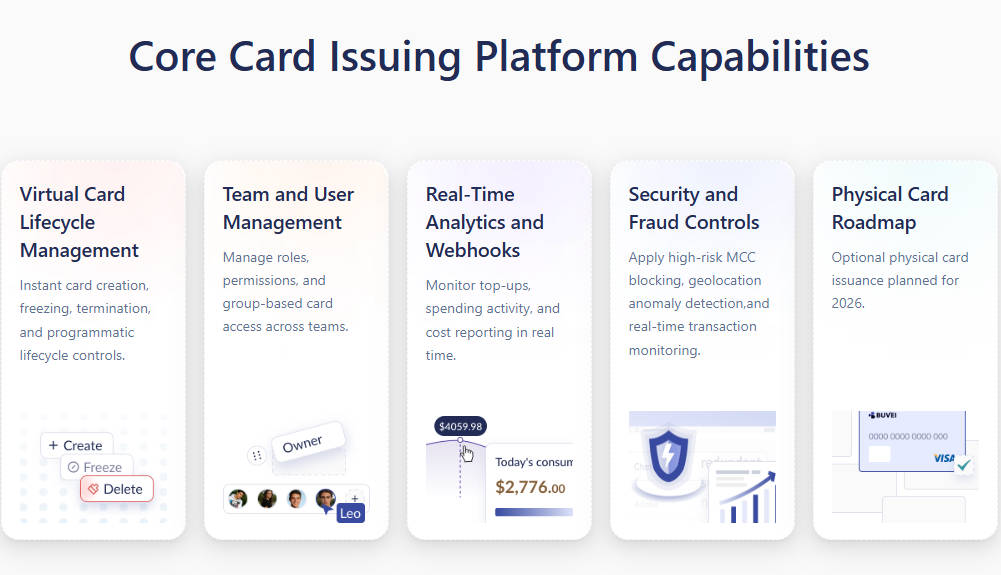
For this reason, businesses managing multiple online payments, fast card issuing and scalability are essential. A reliable platform should support rapid card creation, multiple virtual cards, and flexible management as payment needs grow.
This is especially important for advertising teams, SaaS companies, and digital platforms that need dedicated cards for different campaigns, users, or payment purposes.
Spending Controls in the Best Virtual Card Platforms
One major advantage of virtual card platforms is better spending control and payment visibility. Features such as spending limits, transaction monitoring, and card management tools help businesses separate expenses, reduce risks, and manage payments more efficiently.
Fees and Payment Costs
Another important consideration is cost when selecting a virtual card provider. Businesses should evaluate the overall pricing structure, including transaction fees, currency conversion costs, and funding expenses.
For companies handling international payments, balancing cost efficiency with payment reliability is often more important than choosing the cheapest option.
Virtual Card API Features in the Best Virtual Card Platforms
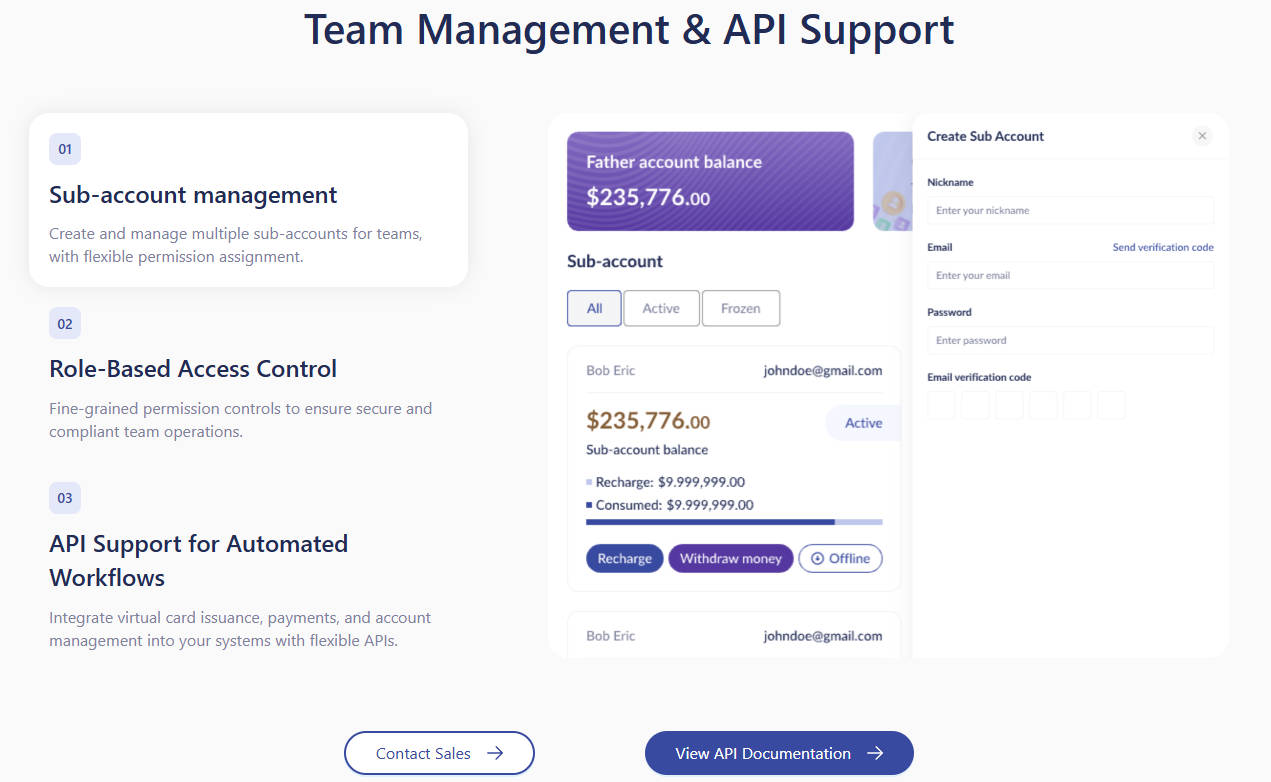
For example, FinTech companies and SaaS platforms, API integration is a key requirement. Virtual card issuing platforms with API capabilities allow businesses to automate card creation, payment workflows, and customized financial services.
This is particularly valuable for companies building embedded payment solutions or managing large-scale card programs.
Global Payment Support in the Best Virtual Card Platforms
Additionally, for businesses operating across markets, global payment support is essential. Companies should consider regional coverage, currency support, merchant acceptance, and funding flexibility.
A platform with broad payment capabilities helps businesses manage international advertising, subscriptions, cloud services, and vendor payments more efficiently.
Best Virtual Card Platforms for Different Business Needs
In practice, different businesses adopt virtual card platforms based on their payment volume, operational requirements, and level of control needed.
Best Virtual Card Platforms for Global Businesses
Companies operating across multiple markets need flexible payment solutions for international transactions, multiple currencies, and global vendors.
A reliable virtual card platform helps manage global expenses, subscriptions, and online services while improving payment efficiency and operational visibility.
Best Virtual Card Platforms for Advertising Teams
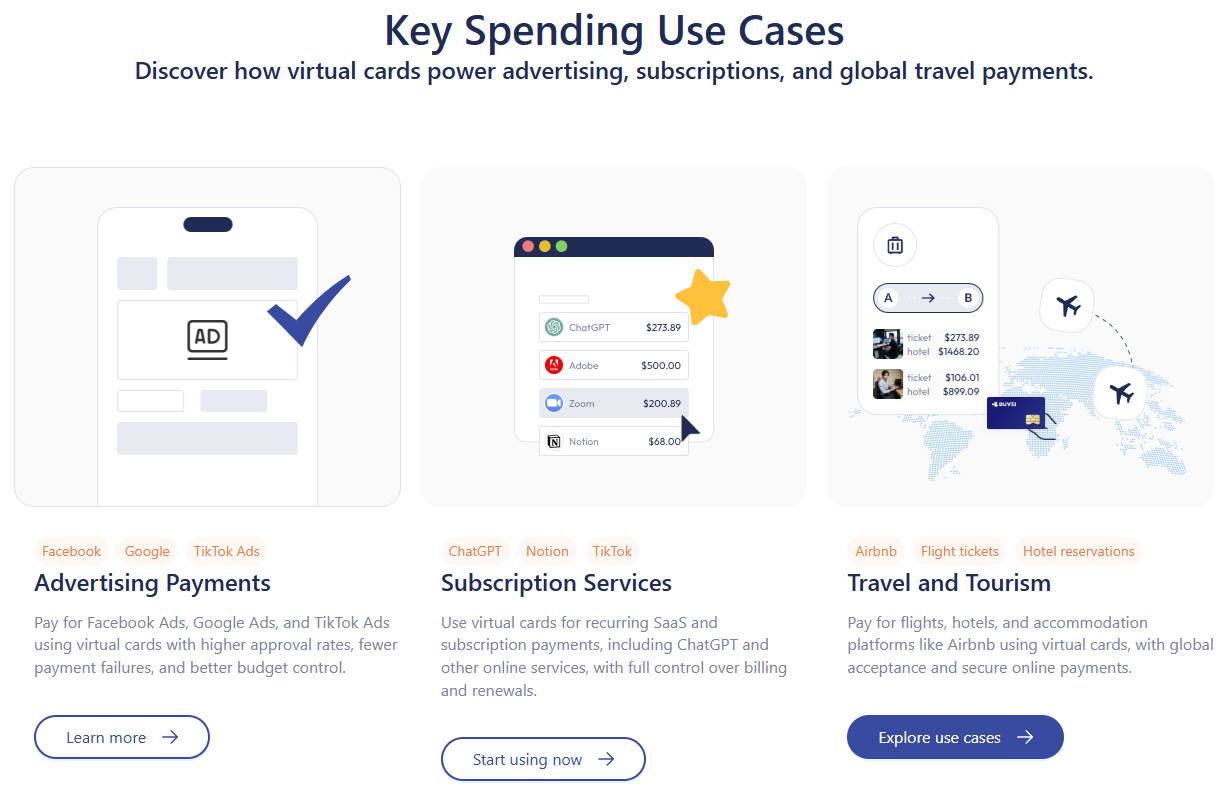
For example, advertising and media buying teams often manage multiple campaigns, accounts, and platforms such as Google Ads, Meta Ads, and TikTok Ads.
For these businesses, payment reliability and spending control are critical. Virtual card platforms help separate advertising expenses, manage budgets, and support campaign scaling without payment disruptions.
Virtual Card Platforms for FinTech and SaaS Companies
At the same time, FinTech companies and SaaS platforms typically require more advanced capabilities, including API-based card issuing, automation, and scalable payment infrastructure.
A virtual card issuing platform allows these companies to integrate card functionality into their products and build customized payment solutions for larger user bases.
How BUVEI Fits Into the Virtual Card Platform Market
Currently, the virtual card market includes different types of solutions, from personal payment tools to enterprise payment infrastructure.
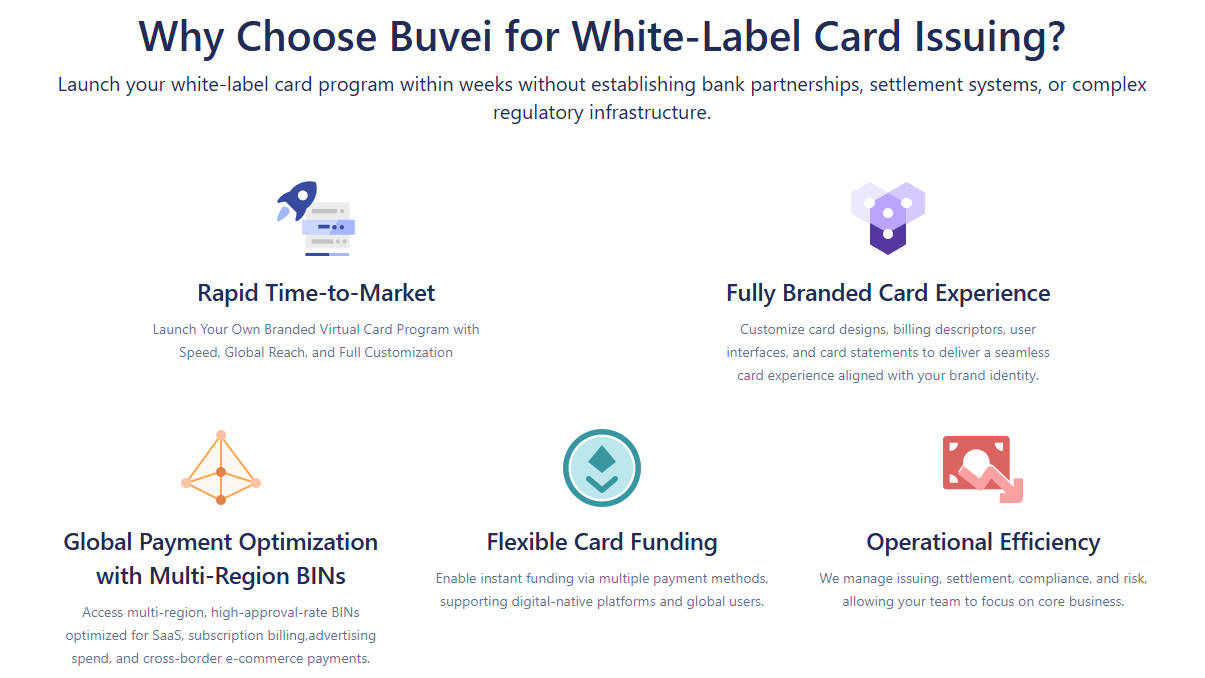
BUVEI focuses on businesses that need scalable virtual card operations for digital payments, advertising, and global transactions.
The platform is designed around practical business requirements, including:
- Multi-BIN virtual cards
- Fast card issuance
- Dedicated cards for different payment activities
- USDT top-up support
- Flexible card management
For businesses running multiple online payment workflows, this approach provides more control over spending organization and payment operations.
BUVEI is built for companies that need virtual card infrastructure that can scale with their business, not just a single payment card.
Frequently Asked Questions About Virtual Card Platforms
Can Virtual Card Platforms Issue Cards Instantly?
Many virtual card platforms support fast card creation and activation. However, issuing speed depends on factors such as provider infrastructure, verification requirements, and account setup.
Can Businesses Use Virtual Cards for Advertising Payments?
Yes. Businesses commonly use virtual cards for advertising platforms such as Google Ads, Meta Ads, TikTok Ads, and affiliate campaigns. They provide better spending control, payment tracking, and account separation, although acceptance depends on the card provider and platform requirements.
Do Virtual Card Platforms Support API Integration?
Furthermore, many virtual card platforms offer API integration, enabling businesses to automate card issuance, payment workflows, and account management. This is especially useful for companies building customized payment solutions or managing large-scale card programs.
What Is the Difference Between a Virtual Card Provider and a Virtual Card Issuing Platform?
A virtual card provider typically offers ready-to-use cards for payments, while a virtual card issuing platform provides the infrastructure to create, manage, and customize card programs through dashboards or APIs.
Businesses building payment products usually require issuing capabilities rather than simple card access.
Final Thoughts: Choosing the Right Virtual Card Platform in 2026
The best virtual card platforms help businesses manage payments more efficiently while providing flexibility for future growth.
The right solution depends on a company’s payment needs, whether it requires better spending control, faster card issuing, or scalable payment capabilities.
A strong virtual card platform should help businesses operate more efficiently today while providing the flexibility needed for future growth.