Crypto assets are easy to hold and transfer, but using them for everyday payments remains a challenge.
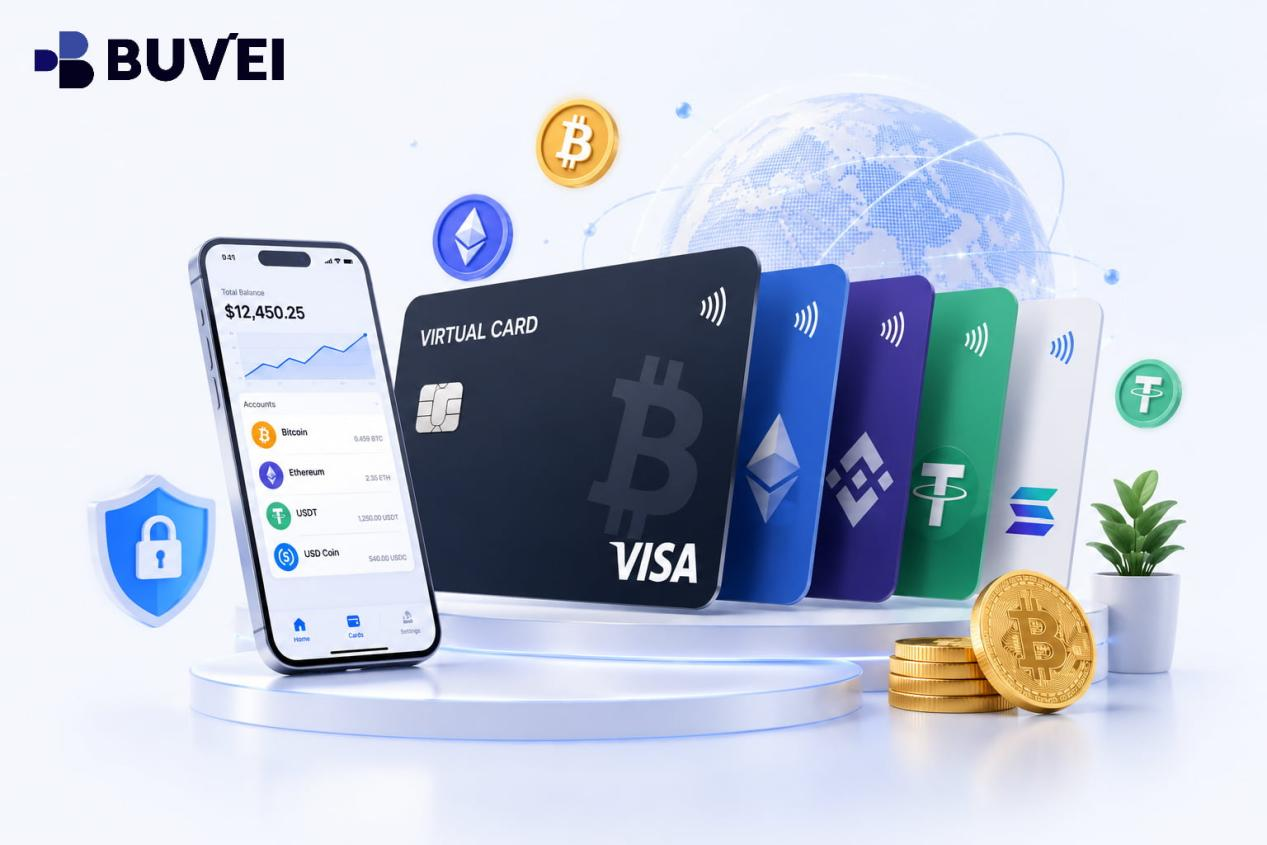
Many online services, advertising platforms, and digital businesses still require traditional card payments. Crypto virtual cards connect digital assets with real-world payments by allowing users to spend crypto-funded balances through standard card networks.
This guide explains how crypto virtual cards work, what to consider when choosing a provider, and how businesses can use them for crypto payments.
Why Crypto Users Are Looking for Virtual Cards
The biggest challenge with crypto is not storing assets, but using them in real payment scenarios.
Many merchants do not accept cryptocurrency directly, creating a gap between holding digital assets and paying for online services, subscriptions, and business tools.
Crypto virtual cards help bridge this gap by allowing users to spend crypto-funded balances through traditional payment channels.
How Crypto Virtual Cards Work for Online Payments
Crypto virtual cards work similarly to traditional virtual cards from the merchant’s perspective.
Users fund the card through supported crypto assets, and the provider manages the payment process when a transaction occurs. The merchant receives a standard card payment while the user spends through a crypto-funded balance.
This allows crypto holders to use digital assets for online payments without requiring merchants to support direct crypto transactions.
What to Look for in a Crypto Virtual Card Provider
Choosing a crypto virtual card provider is not only about supported cryptocurrencies. The key is whether the card works reliably for real payment needs.
Crypto Funding and Supported Assets
Funding options directly affect how practical a crypto virtual card is.
Many users prefer stablecoins such as USDT because they provide more predictable value for payment activities. A suitable provider should support commonly used assets and provide a smooth funding process.
Payment Acceptance and Merchant Compatibility
A crypto virtual card is only useful if it works where users need it.
Businesses should consider merchant acceptance, card compatibility, and regional availability, especially when using cards for advertising platforms, subscriptions, and online services.
Settlement Speed and Spending Control
Fast access to funds can improve payment efficiency.
For business users, features such as dedicated cards and transaction controls help separate payment activities and improve expense management.
Global Availability
Crypto payments are often international, but provider availability can vary across regions.
Users should review supported countries, account availability, and payment coverage before choosing a provider.
Crypto Virtual Cards for Different Business Needs
Different users choose crypto virtual cards for different payment scenarios. The best option depends on how the card will be used.
Crypto Virtual Cards for Advertising and Digital Businesses
Digital businesses often manage advertising accounts, software tools, and online services that require reliable payment methods.
For teams using crypto funds, a suitable virtual card solution can help connect digital assets with daily business expenses while maintaining access to traditional payment networks.
Crypto Virtual Cards for Global Payments
Businesses managing international expenses often need flexible payment options for vendors, software services, and online platforms.
Crypto-funded virtual cards provide another way to manage global digital payments using existing crypto balances.
BUVEI: Crypto-Friendly Virtual Cards for Business Payments
BUVEI provides virtual card infrastructure for businesses that want to connect crypto funding with everyday digital payments.
The platform supports multi-BIN virtual cards, fast card issuance, dedicated payment cards, and USDT top-up support, helping businesses use crypto-funded balances for advertising platforms, subscriptions, and online services.
BUVEI helps businesses turn digital asset liquidity into practical payment capabilities through flexible virtual card infrastructure.
Crypto Virtual Cards vs Traditional Virtual Cards
Crypto virtual cards and traditional virtual cards serve different funding environments.
Traditional virtual cards usually rely on fiat balances, while crypto virtual cards allow users to access payments through digital asset funding.
The better choice depends on where funds come from and how payments are managed.
| Feature | Crypto Virtual Cards | Traditional Virtual Cards |
| Funding source | Crypto assets or stablecoins | Fiat balances |
| Main advantage | Connect digital assets with card payments | Traditional payment compatibility |
| Common users | Crypto holders and digital businesses | Businesses using standard payment methods |
| Payment model | Card payments funded by crypto | Card payments funded by fiat |
Conclusion
Crypto virtual cards help solve a key challenge in digital asset adoption: making crypto funds usable for everyday payments.
The best providers combine reliable payment acceptance, flexible crypto funding, and practical spending capabilities.
For businesses managing advertising expenses, online services, or global payments, crypto-friendly virtual card infrastructure provides a flexible connection between digital assets and traditional payment systems.