Introduction
Your Credit Card Still Works — So Why Are People Looking for Alternatives?
For years, using one credit card for every online payment felt like the easiest option.
A single card could handle online shopping, subscriptions, travel bookings, software tools, and digital services.
But the way people spend online has changed.
Today, one card may be connected to dozens of platforms. When something goes wrong — a declined payment, an unexpected renewal, or a compromised merchant — the impact can extend beyond one transaction.
The problem is not that credit cards no longer work. The problem is relying on one payment method for everything.
That is why more consumers are adopting virtual cards.
In 2026, the biggest change in online payments is not about spending more.
It is about gaining more control.
Why One Credit Card Is No Longer Enough
Credit cards were not designed for the way people use them today.
A modern card may support AI subscriptions, streaming services, online marketplaces, travel platforms, business tools, and advertising accounts.
The convenience is obvious, but the risk is concentration.
If that card expires, gets compromised, or fails a security check, multiple services may be affected at the same time.
One payment problem can quickly become many payment problems.
Virtual cards solve this by allowing users to separate spending categories into different payment methods.
Instead of managing everything through one card, users can create dedicated cards for different online activities and reduce unnecessary exposure.
The Hidden Cost of Subscriptions and Recurring Payments
Subscriptions make digital services easier to access, but they also make spending harder to track.
Many consumers now pay for software, entertainment, cloud storage, AI tools, and memberships every month. Individual charges may seem small, but together they can create a complicated payment history.
The bigger issue is not the subscription itself.
It is losing visibility into what is still being charged.
Virtual cards help users organize recurring payments by creating separate payment methods for different services.
This makes subscriptions easier to monitor, manage, and stop when they are no longer needed.
Why Online Payments Fail More Often Than You Think
A declined payment does not always mean insufficient funds.
Online transactions are reviewed through multiple systems, including fraud detection, merchant restrictions, and payment risk checks.
That is why a card that works in one place may fail when paying for AI tools, SaaS products, advertising platforms, travel services, or international merchants.
As digital payments become more complex, payment flexibility matters more.
Virtual cards help by separating different transactions, making payment issues easier to manage without affecting everything else.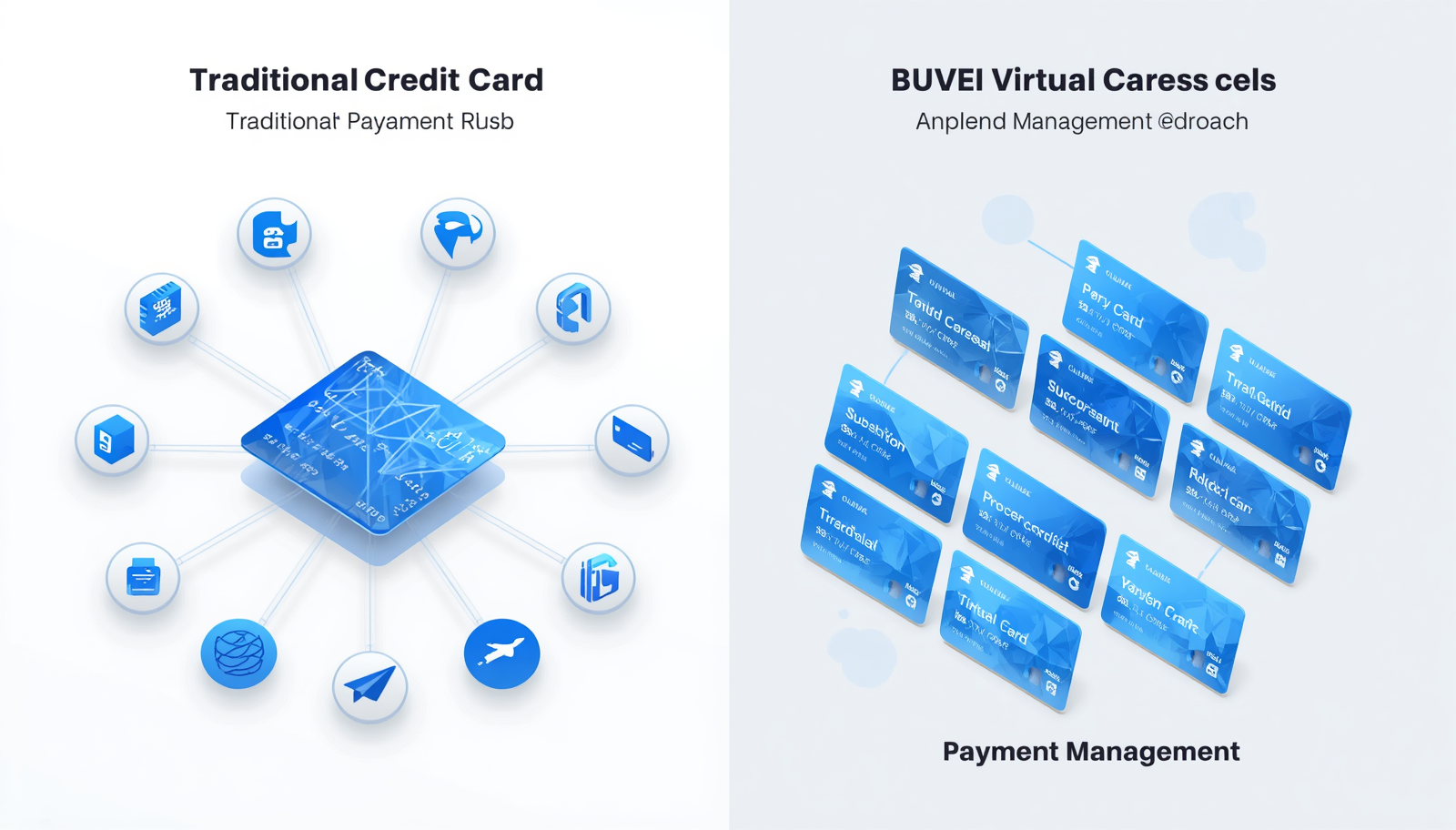
How Virtual Cards Solve Online Payment Problems
Virtual cards were built for modern online spending.
Instead of connecting every service to one card, users can create dedicated cards for subscriptions, shopping, travel, or business expenses.
The biggest advantage is separation.
A problem with one card does not automatically affect every other payment. Spending becomes easier to organize, monitor, and control.
Virtual cards are not replacing traditional payment methods.
They are adding a layer of flexibility that modern digital spending requires.
Virtual Cards vs Credit Cards: What Actually Matters
| Feature | Credit Card | Virtual Card |
| Primary Card Exposure | Higher | Lower |
| Subscription Control | Limited | Flexible |
| Spending Separation | Limited | Strong |
| Instant Creation | No | Yes |
| Card Replacement | Slower | Faster |
| Physical Purchases | Excellent | Limited |
| Online Payments | Good | Excellent |
The question is not whether virtual cards are better than credit cards.
The question is whether one card is enough for the way people spend online today.
Credit cards remain useful for everyday purchases and physical transactions.
Virtual cards are especially valuable for digital payments where flexibility, organization, and security matter.
Many consumers now use both.
Real Scenarios Where Virtual Cards Make the Biggest Difference
Virtual cards are most useful when payments need more organization.
AI Subscriptions and Digital Tools
Users managing tools like ChatGPT Plus, Claude Pro, Midjourney, and other digital services often handle multiple recurring payments.
Dedicated virtual cards make these subscriptions easier to track and manage.
Online Advertising
Businesses using platforms such as Google Ads, Meta Ads, and TikTok Ads need clear spending control.
Virtual cards help separate advertising expenses by campaign, client, or platform.
International Shopping
When buying from unfamiliar merchants, virtual cards provide an additional payment layer without exposing your primary card details.
Travel Bookings
Flights, hotels, and travel platforms often involve multiple payments.
Dedicated virtual cards help keep travel expenses organized.
The common goal is simple: making online payments easier to manage.
Getting Started With BUVEI Virtual Cards
As online payments become more complicated, consumers need more flexible payment tools.
BUVEI allows users to create virtual cards for different spending needs, including subscriptions, online shopping, travel, and advertising expenses.
Users can manage cards, monitor transactions, and organize spending from one platform.
Instead of using one card everywhere, BUVEI helps users create separate payment solutions for different parts of their digital life.
Create your first virtual card and start managing online payments with more flexibility.
The Future of Online Payments Is Control, Not Credit
Online spending has evolved.
What started as simple online shopping has become a connected system of subscriptions, digital services, software platforms, and recurring payments.
The challenge today is not access to payments.
It is managing them.
The future of online payments is not about having more spending power. It is about having more control over every transaction.
Virtual cards are becoming an important part of this shift by helping consumers separate payments, manage subscriptions, and reduce unnecessary risks.
Traditional credit cards still matter.
But for many online shoppers in 2026, virtual cards provide the missing layer between convenience and control.