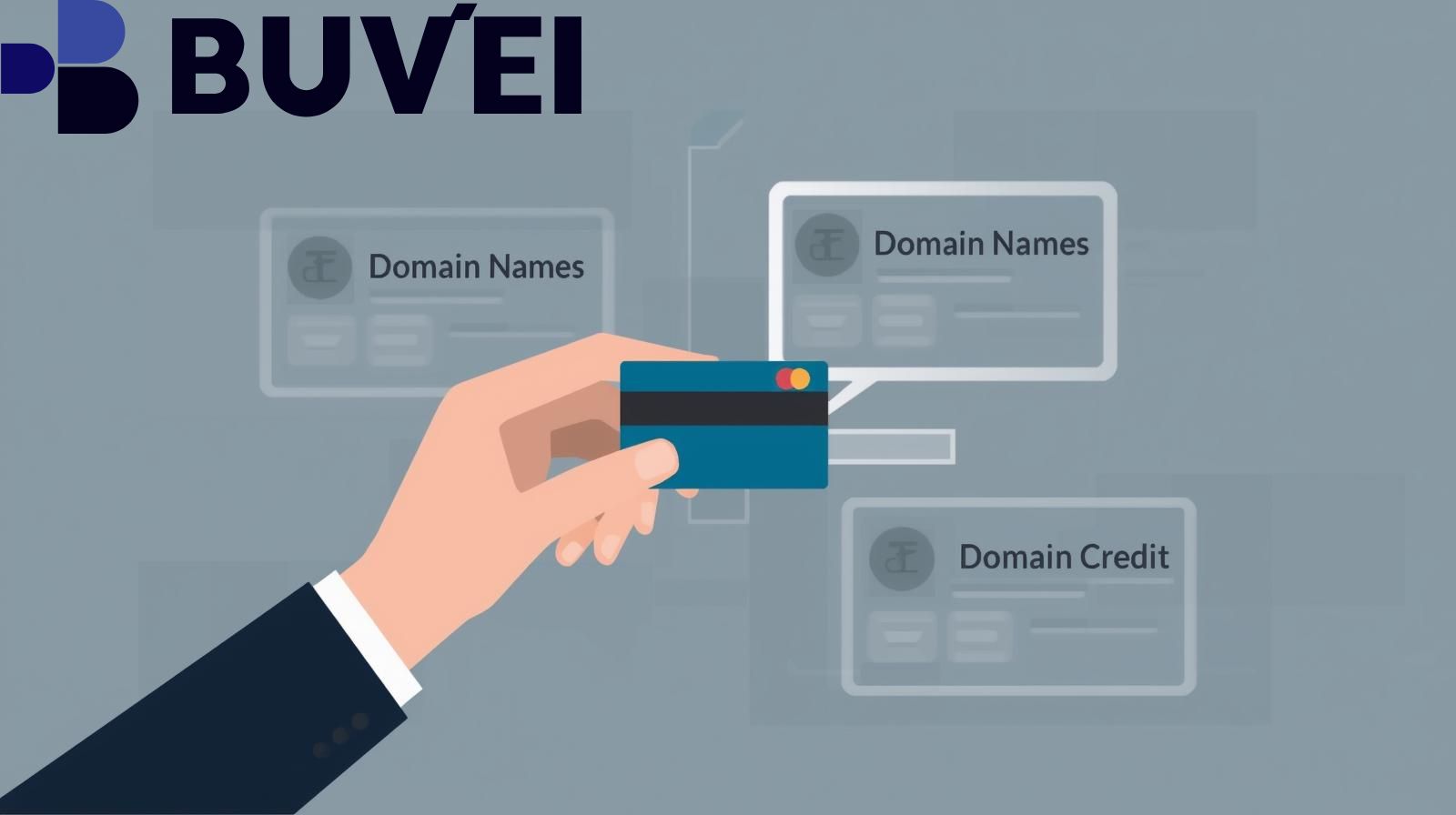
For startups, developers, freelancers, and online businesses, domain registration is often the very first step. Platforms like Namecheap and GoDaddy dominate the global domain market. However, despite their popularity, many users encounter unexpected payment failures—especially when using virtual cards.
As a result, a common question arises: can you pay for domains on Namecheap and GoDaddy with virtual cards, and if so, how do you avoid declines?
In this guide, we’ll break down how domain registrars process card payments, why virtual cards often fail, what actually makes a virtual card work, and how Buvei virtual cards can help ensure smooth purchases and renewals.
How Domain Registrars Process Card Payments
To begin with, domain registrars treat payments differently from most standard e-commerce platforms.
Unlike one-time purchases, domain payments often involve:
-
Recurring annual renewals
-
Pre-authorization checks
-
Risk screening tied to fraud and abuse prevention
-
Cross-border billing (often USD-based)
Moreover, registrars like Namecheap and GoDaddy are particularly sensitive to payment stability because domains are digital assets that can be abused for spam or malicious activity.
Therefore, payment systems are designed to favor cards with consistent billing behavior, not just sufficient balance.
Why Virtual Cards Often Fail on Domain Purchases
Although virtual cards are widely accepted online, domain purchases introduce additional friction.
In practice, virtual cards fail on Namecheap or GoDaddy due to:
-
BINs labeled as prepaid or disposable
-
Missing or unstable recurring payment support
-
Failed pre-authorization holds
-
Mismatch between billing region and IP location
-
Card expiration that interferes with renewals
Additionally, many domain registrars perform silent renewal checks months after the initial purchase. Consequently, cards that work once may fail later during auto-renewal.
Over time, repeated renewal failures can even result in domain suspension or loss.
What Makes a Virtual Card Work for Domain Payments
Given these risks, not all virtual cards are equal when it comes to domain registrars.
In general, a virtual card works well for domain payments if it:
-
Supports recurring billing by default
-
Uses a reputable Visa or Mastercard BIN
-
Allows pre-authorization without immediate rejection
-
Maintains long-term validity (not short-lived)
-
Handles USD billing reliably
Furthermore, registrars favor cards that behave like traditional credit cards, even if they are virtual. As a result, disposable or single-use cards are especially likely to fail.
Using Buvei Virtual Cards for Namecheap & GoDaddy
This is where purpose-built virtual cards make a measurable difference.
Buvei virtual cards are designed for stable online subscriptions and recurring payments, which aligns closely with how domain registrars operate.
Specifically, Buvei works well for Namecheap and GoDaddy because it:
-
Supports Visa and Mastercard global acceptance
-
Allows recurring domain renewals without interruption
-
Handles USD-based billing smoothly
-
Avoids high-risk prepaid BIN classifications
-
Lets users manage limits without canceling renewals
As a result, users experience fewer checkout errors and more reliable auto-renewals—both critical for domain ownership.
Tips to Avoid Domain Renewal Failures
Finally, even with a reliable virtual card, correct setup is essential.
To reduce the risk of domain payment failures:
-
Enable auto-renewal only after confirming card stability
-
Keep a buffer balance above renewal fees
-
Avoid changing cards shortly before renewal dates
-
Use one dedicated virtual card for domain services
-
Monitor renewal notifications from the registrar
In addition, avoiding repeated failed attempts helps prevent registrar-level risk flags that can complicate future purchases.
Final Thoughts
In summary, yes—you can pay for domains on Namecheap and GoDaddy with virtual cards, but success depends on the card’s ability to handle recurring billing and registrar-level risk checks.
While many virtual cards fail due to prepaid limitations or unstable authorization, globally optimized solutions like Buvei significantly improve approval rates and renewal reliability.
For anyone managing domains long-term, choosing the right virtual card is not just about convenience—it’s about protecting your digital assets.