Alibaba Cloud is widely used for cloud computing, domains, and enterprise services across Asia and global markets. However, for crypto users, one major limitation remains: Alibaba Cloud does not accept direct cryptocurrency payments.
This guide explains Alibaba Cloud’s billing methods, how to use crypto without a credit card, and how to pay for Alibaba Cloud services step by step using Buvei virtual cards.

Alibaba Cloud Billing Methods Overview
Alibaba Cloud relies on traditional, compliance-driven billing systems. Currently supported payment methods include:
-
Credit and debit cards (Visa / Mastercard)
-
Local bank transfers (depending on region)
-
Enterprise or prepaid cloud accounts
Due to regulatory and settlement requirements, crypto wallets and on-chain payments are not supported for Alibaba Cloud services.
This applies to:
-
Cloud computing resources
-
Domain registrations and renewals
-
Storage, CDN, and security products
Using Crypto Without a Credit Card on Alibaba Cloud
Although direct crypto payments are not supported, Alibaba Cloud does accept standard card payments, which creates a practical workaround for crypto users.
The most common solution is:
Crypto → Virtual Card → Alibaba Cloud
By converting crypto (usually stablecoins) into a virtual card, users can:
-
Pay for Alibaba Cloud services without a personal credit card
-
Avoid exposing bank or corporate cards
-
Control spending limits for cloud usage
-
Replace payment methods quickly if issues occur
This approach is widely used for cloud platforms, SaaS tools, and international subscriptions.
Creating Buvei Virtual Cards with Crypto Funds
Buvei allows users to create virtual cards funded directly with crypto, making it suitable for Alibaba Cloud payments.
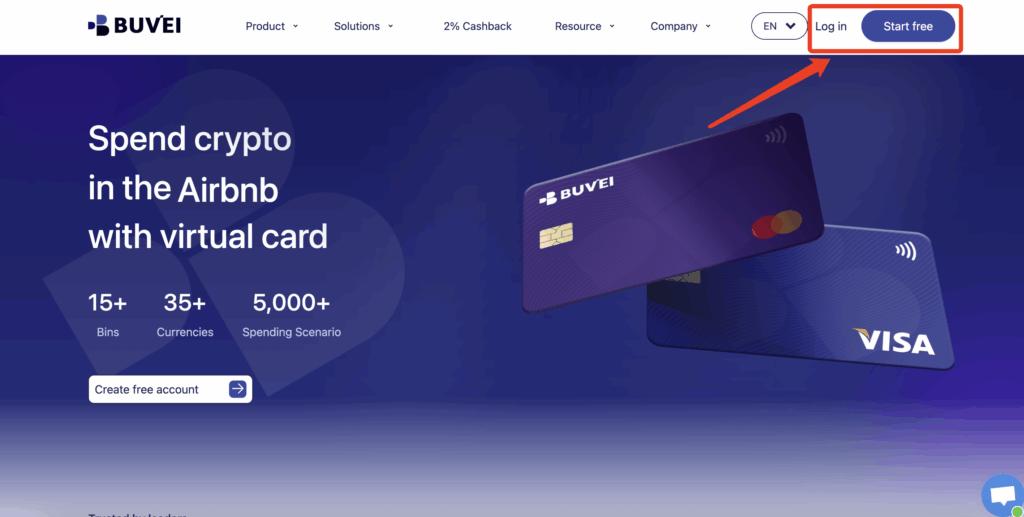
Step 1: Register a Buvei Account
Visit https://buvei.com and create a free account.
After completing email verification, log in to access the Buvei dashboard.
Step 2: Fund Your Buvei Wallet with Crypto
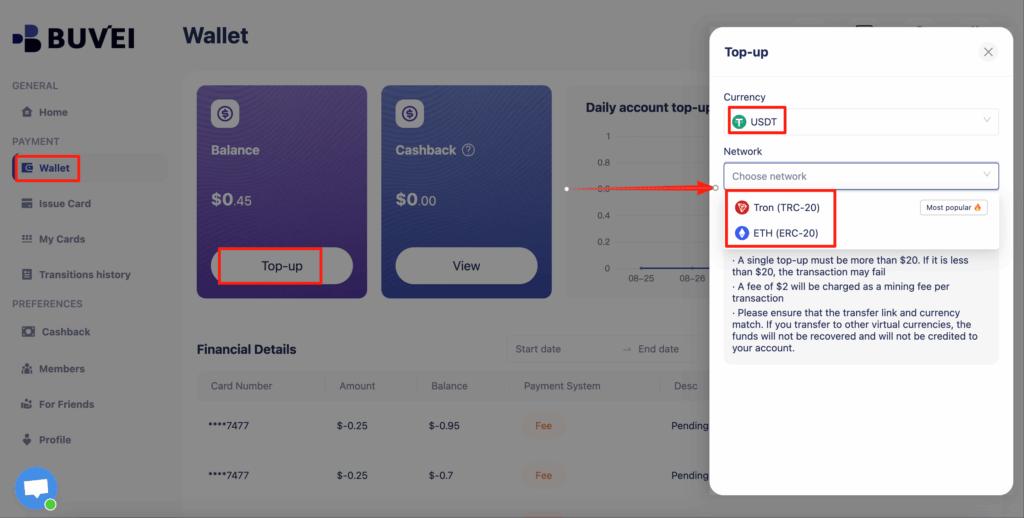
Go to the Wallet section and choose USDT (TRC20 or ERC20) as your funding method.
Buvei will generate a dedicated deposit address.
Send your funds, and once confirmed on-chain, your balance will appear instantly.
Step 3: Create a Virtual Card
Navigate to the Cards section and click Create Card.
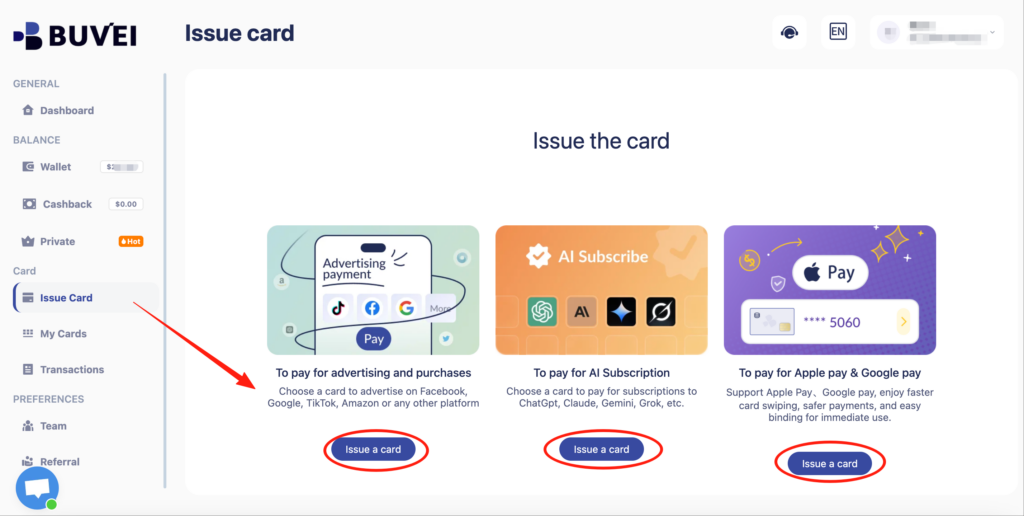
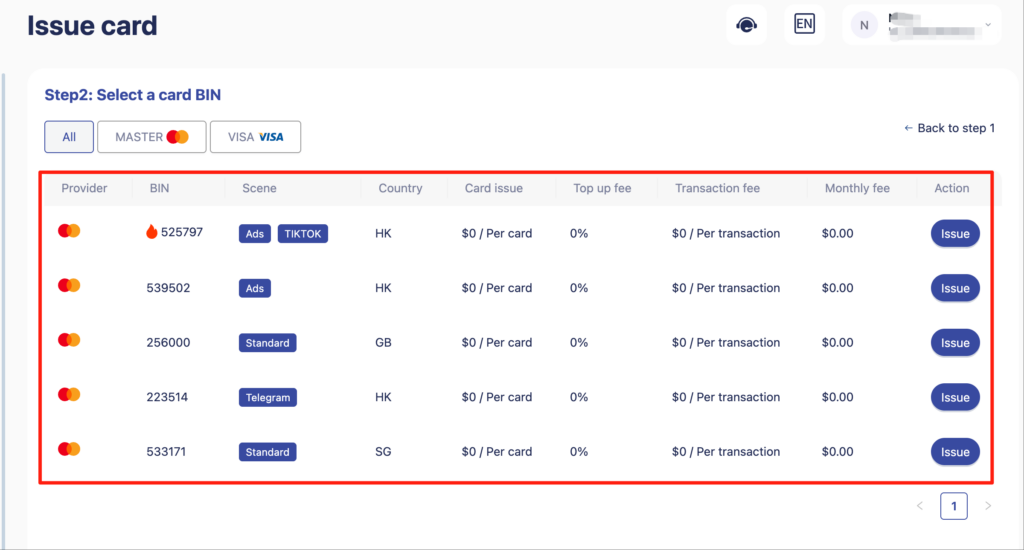 You will need to:
-
Select a BIN region (US BINs generally work best for cloud platforms)
-
Choose the card type
-
Enter the card name, card balance, and quantity
-
Confirm card issuance
Once issued, the virtual card is ready for use.
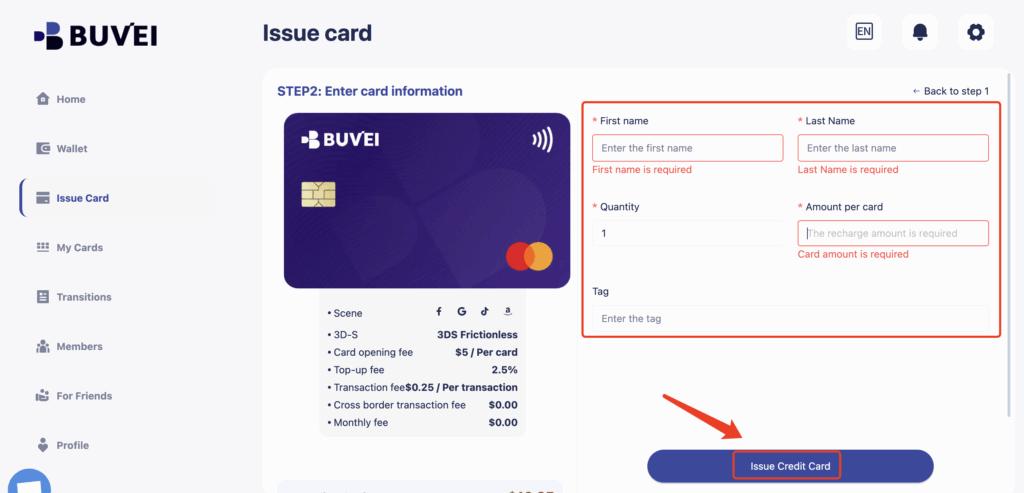
Step 4: Add the Card to Your Cloud Account
Use the Buvei virtual card details to complete the payment setup on your chosen cloud platform.
If an ad account receives warnings, payment retries, or early restrictions:
-
Stop using the existing card
-
Issue a new virtual card
-
Attach it only after resolving policy issues
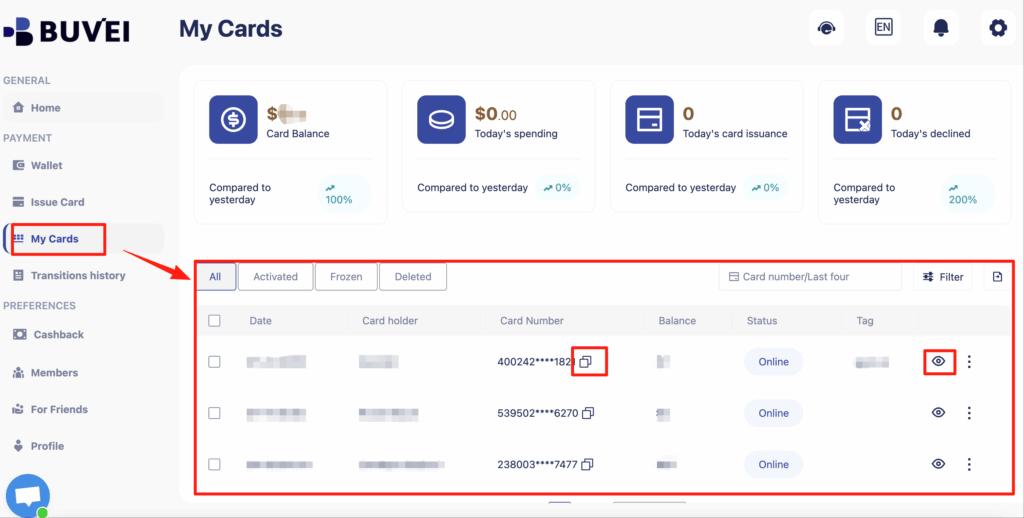
From My Cards, affiliates can monitor balances, spending activity, and transaction history—making it easier to spot early warning signs.
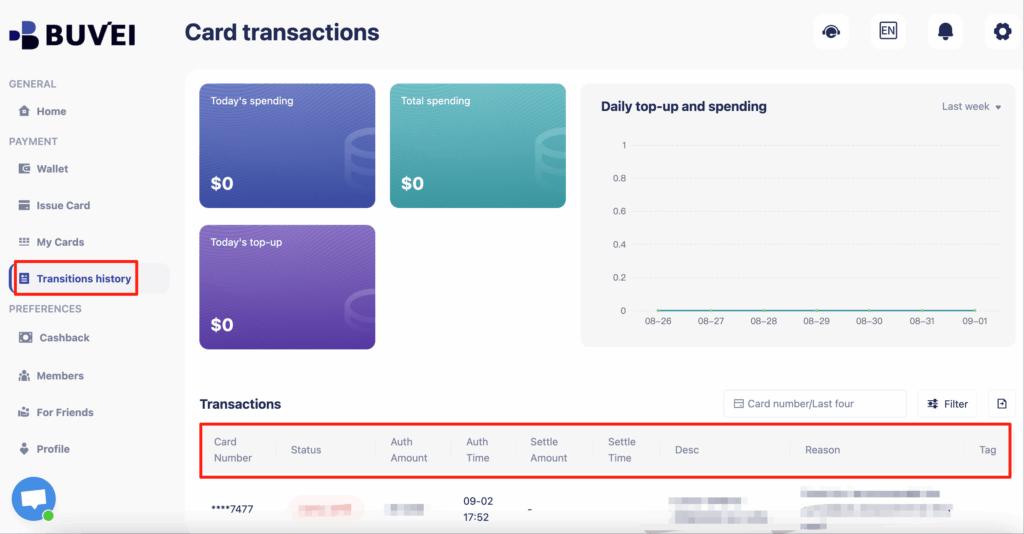
Buvei supports issuing multiple cards quickly, making it easy to match payment structure to campaign structure.
Step-by-Step: Paying Alibaba Cloud Services with Virtual Cards
After creating your Buvei virtual card, follow these steps:
-
Log in to your Alibaba Cloud account
-
Go to the Billing Management or service checkout page
-
Select Credit/Debit Card as the payment method
-
Enter your virtual card details:
-
Card number
-
Expiration date
-
CVV
-
-
Confirm the payment
For recurring services or renewals, ensure the virtual card remains funded before the billing date to avoid service interruptions.
Preventing Account Suspension Due to Billing Issues
Alibaba Cloud may restrict or suspend services if repeated payment failures occur. Common triggers include:
-
Insufficient balance during automatic deductions
-
Multiple failed retries with the same card
-
Expired or blocked cards
-
Sudden spikes in cloud usage without payment coverage
Best prevention practices:
-
Keep a balance buffer on your virtual card
-
Avoid retrying failed payments repeatedly
-
Replace declined cards instead of reusing them
-
Match card spend limits with expected cloud usage
Best Practices for Long-Term Cloud Payments
For stable, long-term Alibaba Cloud usage with crypto-funded cards:
-
Use dedicated virtual cards for cloud services
-
Separate cloud payments from other subscriptions
-
Monitor balances and transactions regularly
-
Track card expiration dates alongside service renewals
-
Rotate cards proactively if risk flags appear
With Buvei, users can monitor balances, top-ups, and all transaction activity from a single dashboard, making long-term cloud payment management more efficient.

Final Thoughts
While Alibaba Cloud does not support direct crypto payments, virtual cards provide a reliable and compliant bridge between crypto assets and traditional cloud billing systems. By using Buvei virtual cards, crypto users can pay for Alibaba Cloud services without relying on personal credit cards or banks.
For teams, developers, and businesses operating with crypto, Buvei offers a practical solution for stable Alibaba Cloud payments.