


Introduction
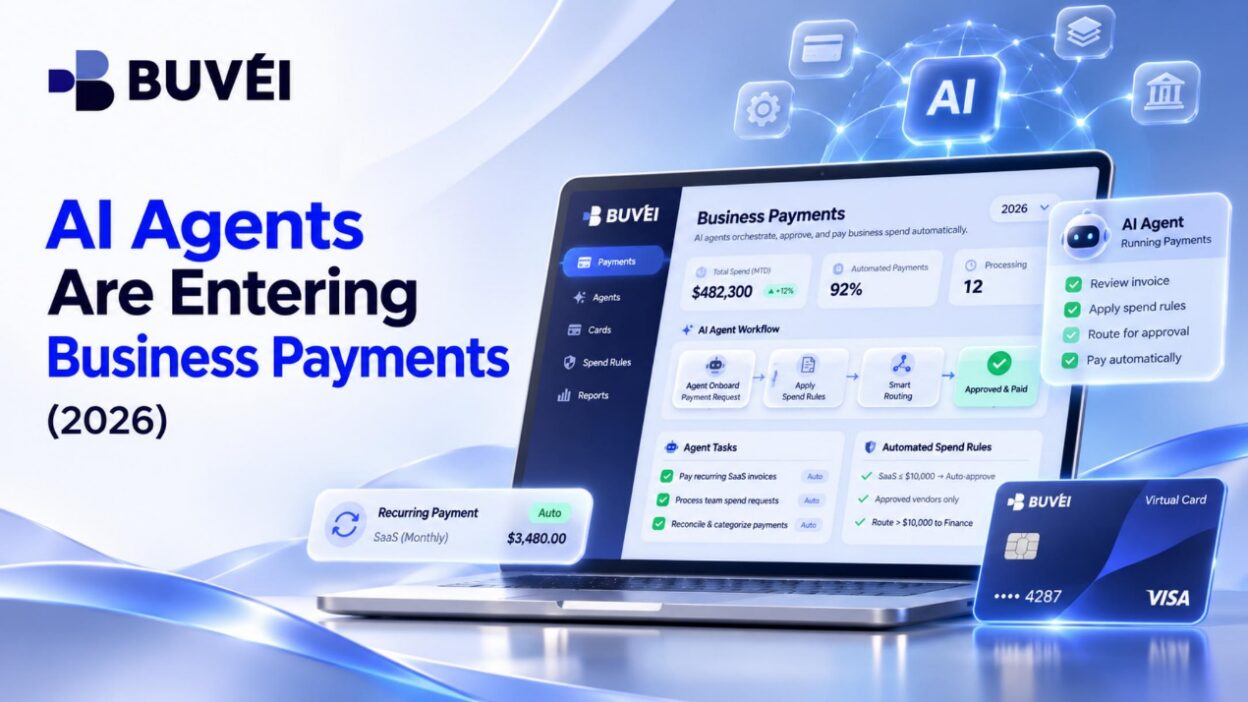
AI agent payments are beginning to change how businesses handle everyday transactions. Paying a supplier invoice can still involve several manual steps, even after the expense has been approved. Employees may need to log in to vendor portals, enter payment details, and submit transactions themselves. AI agents are starting to take on some of this work.
On October 20, 2026, Visa, BILL, and Billtrust announced a live pilot that allows authorized AI agents to complete approved supplier invoice payments through vendor portals. Mastercard is also developing this area through its Agent Pay for Machines initiative, which is designed to let AI agents purchase digital services within predefined permissions and spending limits.
These developments bring AI closer to the financial operations of everyday business. As companies begin using agents to handle payments, questions around spending authority, transaction security, and financial oversight are becoming harder to ignore.
What Are AI Agent Payments?
AI agent payments involve software agents initiating or completing transactions on behalf of individuals or businesses. Unlike conventional AI assistants that provide recommendations, agents can interact with external services and carry out tasks within authorized limits.
For simplicity, these payment workflows can be viewed in two broad categories:
- AI-assisted payments:AI reviews invoices or prepares payment details, while a person approves and submits the transaction.
- Agent-initiated payments:An authorized agent initiates and completes eligible transactions according to predefined instructions.
For example, an employee could ask an agent to review a software invoice, check it against an approved budget, and arrange payment. Depending on the payment system, the agent may complete the transaction without someone manually entering the payment details.
How AI Agents Are Changing Business Payments
The most practical applications are emerging in areas where companies already handle repetitive transactions and established payment procedures.
AI-Powered Invoice Payments
Invoice processing is a natural starting point. Businesses regularly receive bills from suppliers, software providers, and contractors. Checking details and entering payment information into different portals can take considerable time.
AI agents can help by extracting invoice details, checking amounts against purchase records, and submitting payments through supported systems.
The Visa, BILL, and Billtrust pilot puts this approach into practice. BILL's authorized Payment Agent uses tokenized payment credentials and buyer-approved instructions to complete invoice payments through Billtrust supplier portals. Visa's Trusted Agent Protocol helps the portal recognize and authenticate the agent without requiring buyers to share their login credentials.
Importantly, the buyer approves the payment instructions. The agent carries out the authorized transaction rather than independently deciding which invoices should be paid.
For finance teams handling large numbers of supplier invoices, removing these manual steps could save time without changing who has final payment authority.
Automated Procurement and Supplier Payments
AI agents could also help businesses manage purchasing. They may compare supplier prices, review purchasing conditions, prepare orders, and check proposed expenses against departmental budgets.
The payment stage requires more care. A routine software renewal and a large equipment purchase should not have the same approval requirements. Businesses will need to decide which transactions agents can handle and which require a manager's approval.
Agent-to-Service and Machine-to-Machine Payments
Another emerging use case involves AI agents purchasing digital resources directly.
An agent working on a project might need additional API capacity, access to a data provider, or computing resources. Through a compatible payment system, it could request and pay for those services within an approved budget.
Mastercard's Agent Pay for Machines is one example. It builds on the x402 protocol, which allows digital services to request online payments, and connects those transactions with Mastercard's payment infrastructure. Mastercard has opened Early Access to developers following end-to-end pilots with partners.
Potential applications include API access, AI model usage, data services, and computing resources. Wider adoption will depend on compatible infrastructure, merchant acceptance, and reliable payment authorization.
Security and Risks of AI Agent Payments
Giving software access to payment capabilities introduces risks that businesses cannot ignore. Three areas deserve particular attention.
Identity and Payment Authorization
Merchants and payment providers need to verify that an agent is legitimate and authorized to act for a particular business. Visa's Trusted Agent Protocol is one example of an approach designed to authenticate agents involved in digital commerce.
Businesses must also define what an agent can purchase, which suppliers it can pay, and how much it can spend. For example, routine software invoices might be allowed up to $500, while larger transactions require additional approval.
Fraud Prevention and Transaction Monitoring
Automated payments can happen quickly. Duplicate charges, unexpected amounts, and unfamiliar merchants need to be identified before they create larger problems.
Tokenized payment credentials can reduce the need to expose actual card details across different services. Businesses should also maintain transaction records showing what was requested, authorized, and ultimately charged.
Accountability and Human Oversight
When an agent makes a payment, companies still need to know who authorized it and how the transaction was carried out.
Human review should remain part of sensitive financial decisions, particularly when payments exceed approved limits or involve unfamiliar suppliers. Automating a transaction does not transfer financial responsibility away from the business.
How BUVEI Supports Business Payment Management
While agent-driven payments are developing, most businesses still pay for software, advertising, and online services through conventional card transactions. Managing these expenses becomes harder when different teams and projects share the same payment methods.
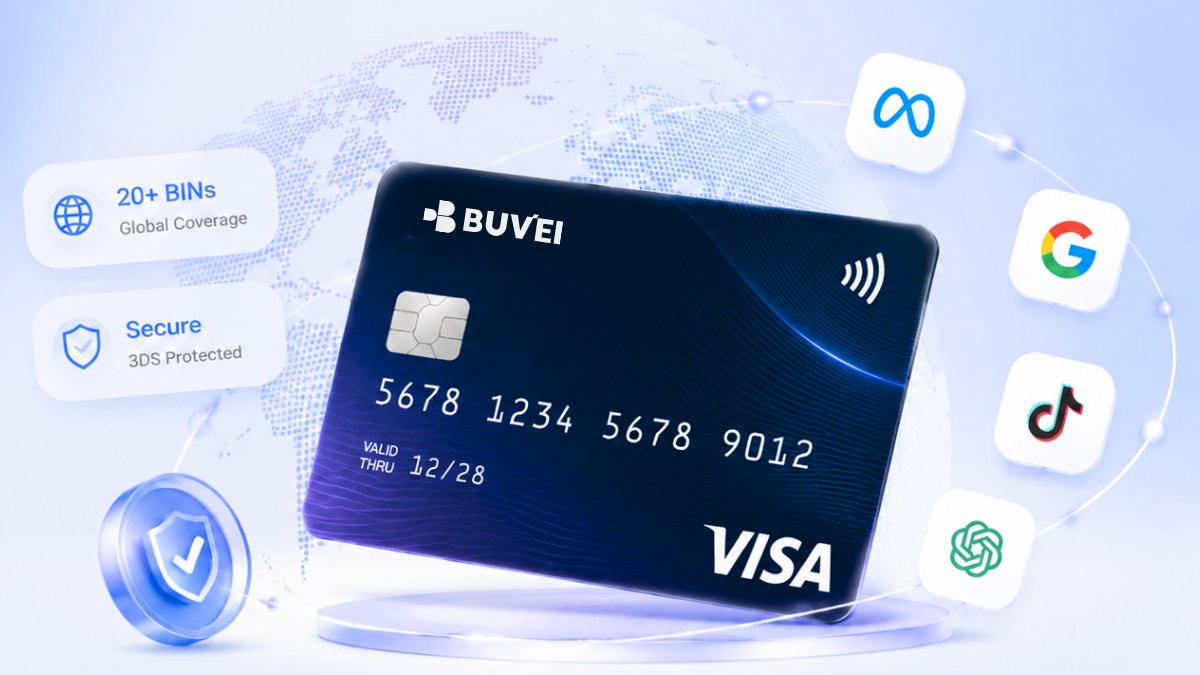
BUVEI provides virtual Visa and Mastercard cards with features designed to help businesses organize these payments.
Multiple BINs and Payment Compatibility
Card acceptance varies across platforms, which is why access to different BIN options can be useful.
BUVEI supports multiple Visa and Mastercard BINs across issuing regions. Its virtual cards support use cases ranging from advertising platforms such as Google Ads and Meta Ads to AI and SaaS subscriptions such as ChatGPT, Canva, and Notion. They can also be used for eligible international purchases and travel expenses.
Actual acceptance depends on the merchant, card type, issuing region, and applicable payment checks.
Multi-Card Management and Spending Controls
Using one card for every business expense makes it harder to identify individual charges. BUVEI allows users to issue and manage multiple virtual cards from one account.
A business could assign separate cards to ChatGPT, Canva, Notion, and different projects or departments. This makes payments easier to track and software expenses easier to organize.
Additional controls include batch card issuance and top-ups, custom spending limits, card freezing and unfreezing, and card closure. Top-up and payment fees are also visible through the platform.
Flexible Funding and Card Security
BUVEI supports USDT top-ups through TRC20 and ERC20 networks, providing another way to fund virtual cards. Users should always match the transfer network to the receiving address.
Cards can be issued quickly after registration, with verification requirements depending on the selected BIN and applicable account conditions.
Virtual cards also reduce the need to expose primary bank card information directly to individual merchants. BUVEI provides online customer support and access to dedicated account managers for additional assistance.
What Comes Next for AI Agent Payments?
Three developments will influence how quickly businesses adopt agent-driven payments:
- More autonomous transactions:Agents may handle additional purchasing, invoice processing, and routine payments within approved limits.
- Stronger payment controls:Identity verification, delegated authorization, and transaction monitoring will become increasingly important.
- Wider merchant acceptance:Payment networks and merchants will need reliable ways to recognize authorized agents and handle refunds and disputes.
AI capabilities alone will not determine how quickly this market develops. Payment infrastructure, merchant acceptance, and business trust will matter just as much.
Conclusion
AI agents may eventually handle a growing share of routine business payments, but executing a transaction is not the same as having unlimited financial authority.
Businesses will still need to decide what agents can purchase, how much they can spend, and when human approval is required. Businesses that can automate routine payments while keeping clear control over spending will be in a stronger position as AI takes on more financial tasks.