Introduction
Cross-border payments become more complex as businesses expand into new markets.
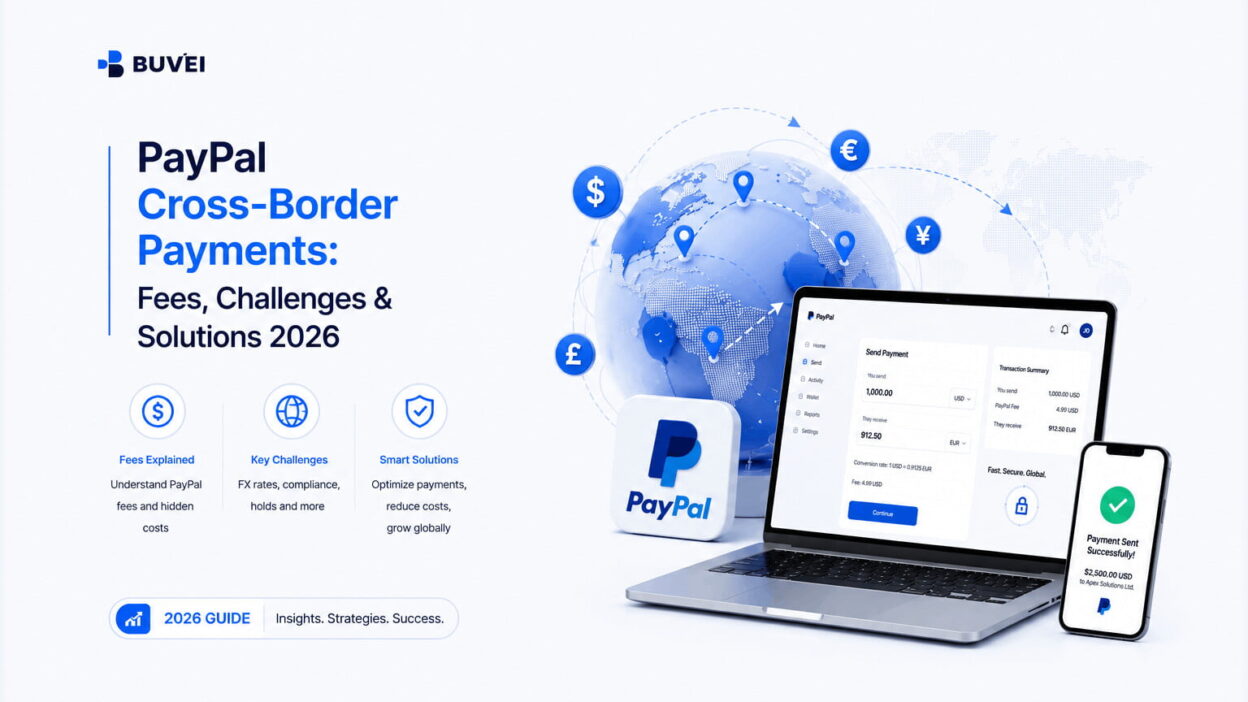
PayPal Cross-Border Payments provide a convenient way to send and receive money globally, but international teams still need to consider transaction fees, currency conversion costs, settlement speed, and payment flexibility as operations grow.
This guide explains how PayPal cross-border payments work, the costs involved, the challenges that appear at scale, and how businesses can build more efficient global payment workflows.
How PayPal Cross-Border Payments Work for Global Transactions
PayPal Cross-Border Payments allow businesses and individuals to send and receive money internationally through the PayPal network.
Unlike domestic transactions, international payments usually involve several stages, including:
- Payment processing
- Currency conversion
- Regional payment requirements
- Settlement across financial systems
Each step can influence transaction costs, processing time, and the final amount received.
For businesses operating globally, cross-border payments require more than moving funds between countries. They require better control over currencies, costs, and payment efficiency.
PayPal International Payment Fees and Currency Conversion Costs
International payment costs are an important consideration when using PayPal for global transactions.
The total expense may include:
- International transaction fees
- Currency conversion charges
- Receiving fees
- Exchange rate differences
For teams making frequent payments to overseas suppliers, advertising platforms, or digital services, these costs can add up over time.
For example, a media buying team managing campaigns across multiple markets may face additional expenses from repeated currency conversions and international transactions.
The true cost of PayPal international payments goes beyond the displayed transaction fee. Businesses should consider the complete payment process from payment initiation to final settlement.
Common PayPal Cross-Border Payment Challenges at Scale
PayPal supports many international payment scenarios, but managing payment activity becomes more complicated as operations expand across markets.
A workflow that works for occasional transactions may become harder to manage when teams handle more accounts, expenses, and payment activity.
Growing businesses often need better ways to organize:
- Multiple payment activities
- Regional spending
- Team expenses
- Increasing transaction volume
For example, a media buying agency running campaigns across multiple platforms may need separate payment methods to track spending, control budgets, and keep campaigns running smoothly.
As global operations grow, payment management becomes about more than completing transactions. Teams also need clearer visibility into where money is spent and how expenses are controlled.
Better payment organization helps businesses improve spending visibility and manage international payment workflows more efficiently.
Why Businesses Use Virtual Cards for International Payments
As digital and cross-border expenses increase, controlling payment activity across multiple platforms becomes more important.
Virtual cards allow teams to create dedicated payment methods for specific spending needs, including:
- Advertising campaigns
- SaaS subscriptions
- Online business services
- Global operating expenses
For example, a media buying team running Google Ads or Meta Ads campaigns can assign separate virtual cards to different accounts, making it easier to track budgets and manage spending.
Virtual cards give businesses greater control over international online payments while improving expense visibility across different platforms and markets.
How BUVEI Supports Global Payment Operations
Once payment activity spreads across markets and platforms, relying on a single payment method can become difficult to manage.
For teams running international advertising campaigns, SaaS operations, or digital services, separating expenses and maintaining spending visibility becomes increasingly important as transaction volume grows.
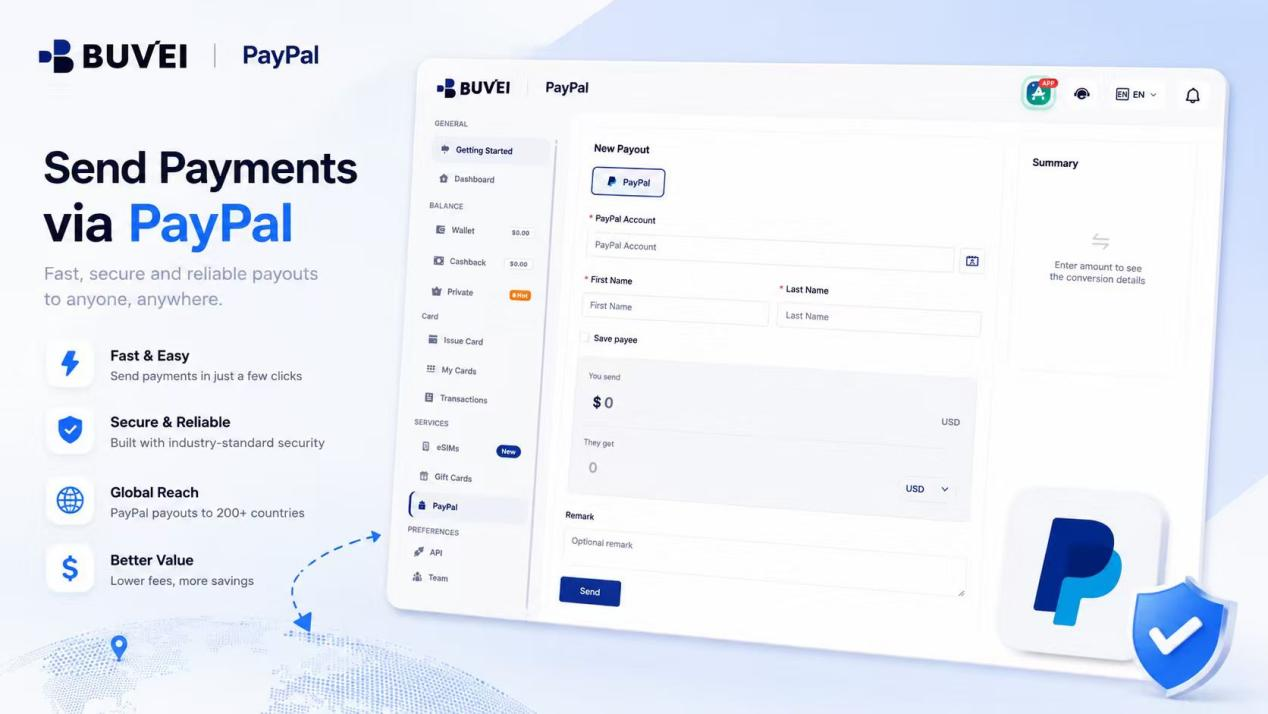
BUVEI helps teams organize global online spending through flexible virtual card infrastructure.
Key capabilities include:
- Dedicated virtual cards for different spending activities
- Multiple BIN options for diverse payment scenarios
- Spending controls for better expense management
- Support for global digital payment workflows
For example, a media buying team managing campaigns across different platforms can assign separate virtual cards to each account or project, making budget tracking and expense management more efficient.
Rather than replacing existing payment providers, BUVEI adds another layer of payment organization that helps teams manage global spending at scale.
By combining different payment solutions, businesses can create more flexible payment workflows and reduce reliance on a single payment channel.
Conclusion
PayPal Cross-Border Payments provide businesses with a convenient way to manage international transactions, but global operations require more than simple payment access.
Fees, currency conversion, payment visibility, and scalability all influence the efficiency of international payment workflows.
A flexible payment infrastructure helps businesses manage global expenses more effectively and build payment processes that support long-term growth.