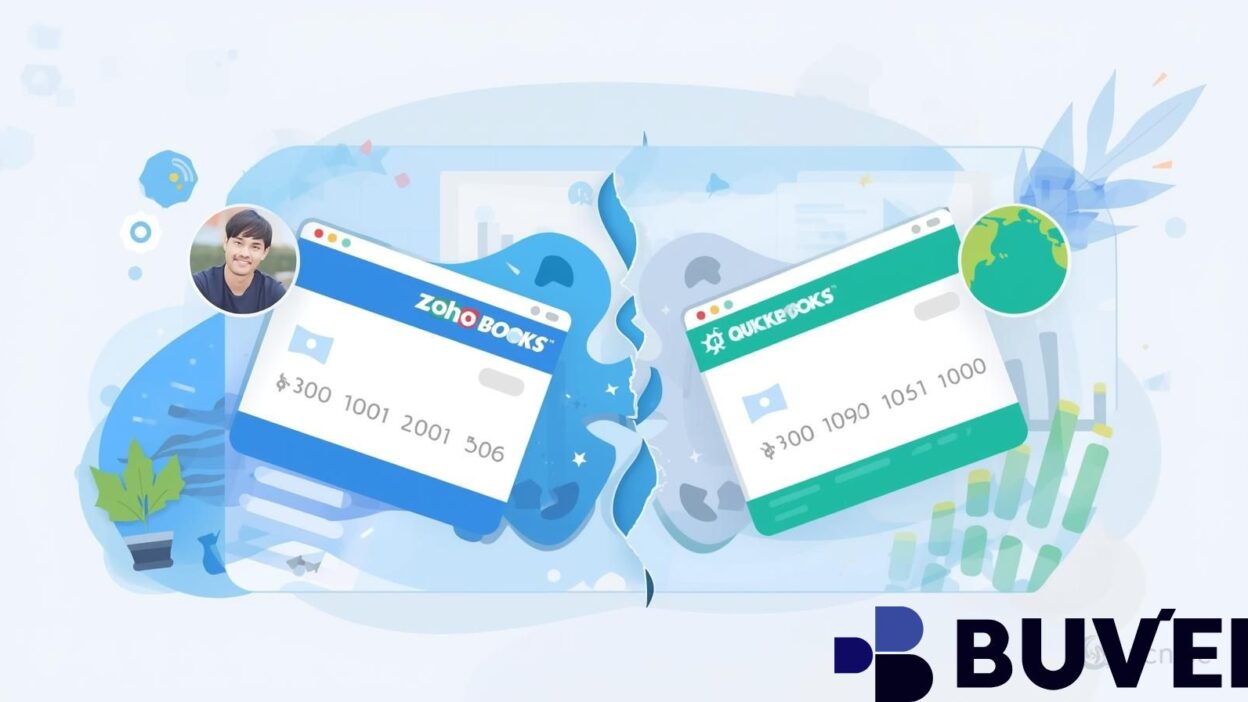
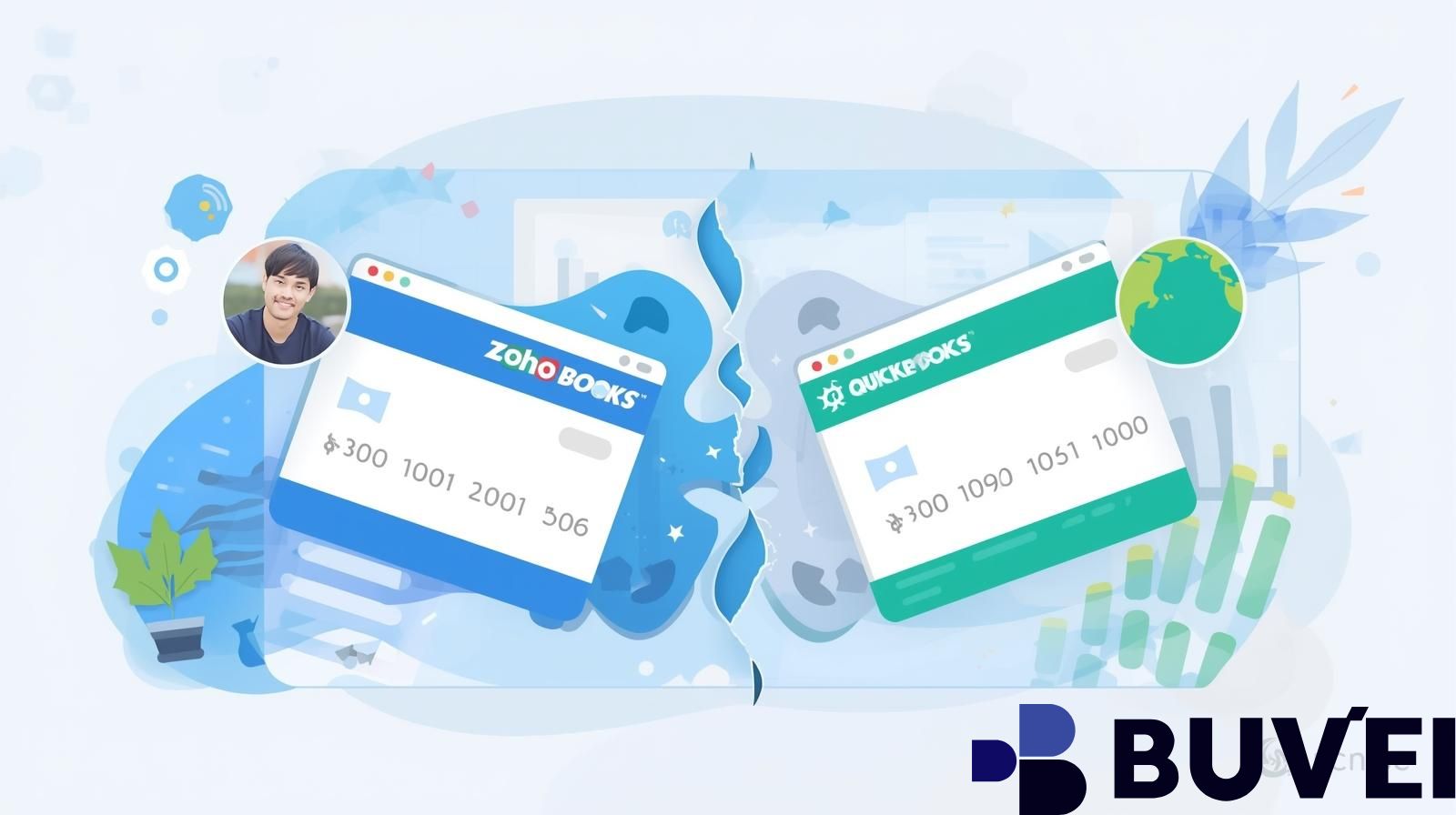
Managing business expenses has become more complex with the rise of virtual cards, especially for companies that handle multiple advertising platforms, SaaS subscriptions, and international payments. A major challenge lies in reconciliation—the process of matching transactions recorded in your accounting software with actual payments. Two popular accounting tools, Zoho Books and QuickBooks, offer solutions for this, but which handles virtual card reconciliation better?
In this article, we’ll compare both platforms, highlighting their strengths and weaknesses in managing virtual card transactions. We’ll also explore how tools like Buvei enhance payment success rates and simplify expense management.
Zoho Books and Virtual Card Reconciliation
Zoho Books is known for its affordability and ecosystem integration. When it comes to virtual card reconciliation:
-
Bank Feed Integration: Zoho Books supports direct bank and card feeds, allowing automatic transaction imports. However, its support for certain virtual card providers can be limited depending on region.
-
Automation Rules: Users can create workflows to automatically categorize expenses, a plus for businesses managing recurring payments like SaaS tools.
-
Strengths: Cost-effective, simple interface, strong automation for categorization.
-
Weaknesses: Limited third-party app marketplace compared to QuickBooks; weaker global virtual card support.
Verdict: Best suited for small businesses looking for affordability and automation but with fewer complex reconciliation needs.
QuickBooks and Virtual Card Reconciliation
QuickBooks dominates the small-to-medium business space with a more robust system:
-
Broad Card Compatibility: QuickBooks integrates with a wider range of payment providers, making it stronger for reconciling global virtual card payments.
-
Advanced Matching: QuickBooks automatically detects potential matches between card charges and recorded expenses, speeding up reconciliation.
-
Strengths: Excellent integration ecosystem, better international card feed coverage, strong reporting features.
-
Weaknesses: Higher pricing; steeper learning curve for new users.
Verdict: Ideal for businesses with larger transaction volumes, international payments, or multiple virtual card accounts.
How Buvei Enhances Virtual Card Management
While both Zoho Books and QuickBooks provide reconciliation support, businesses often face challenges like failed payments, limited BIN coverage, or slow top-ups. This is where Buvei provides unique value:
-
Multiple BIN Support: Ensures higher payment success rates across platforms like Google Ads, Meta Ads, TikTok Ads, and Microsoft Ads.
-
Strong Compatibility: Works not just for ad payments but also SaaS subscriptions (ChatGPT, Canva, Notion) and even daily purchases or travel.
-
USDT Top-up (TRC20/ERC20): Reduces remittance fees while ensuring fast arrival times.
-
Instant Issuance & Easy Use: Virtual cards can be created instantly without complex KYC, enabling quick setup.
By pairing Buvei with either Zoho Books or QuickBooks, companies can reduce failed transactions, improve reconciliation accuracy, and maintain clearer expense control.
Which Should You Choose?
When deciding between Zoho Books and QuickBooks for virtual card reconciliation, consider these factors:
-
Business Size:
-
Small businesses or startups may prefer Zoho Books for its affordability.
-
Medium to large businesses benefit more from QuickBooks’ advanced integration and reporting.
-
-
Transaction Volume:
-
Low-to-moderate volumes: Zoho Books is sufficient.
-
High volumes across multiple regions: QuickBooks is more efficient.
-
-
Virtual Card Provider:
-
Both platforms perform better when paired with Buvei, ensuring transactions are more reliable and easier to reconcile.
-
Summary
Both Zoho Books and QuickBooks provide valuable tools for virtual card reconciliation, but their strengths differ: Zoho Books is budget-friendly and automation-focused, while QuickBooks offers stronger integrations and global support.
By integrating either platform with Buvei, businesses gain access to:
-
Higher payment success rates via multiple BIN support
-
Fast and low-cost USDT top-ups
-
Instant card issuance and transparent fees
-
Secure, PCI DSS-compliant transactions
This combination allows companies to streamline reconciliation, minimize failed payments, and gain greater financial clarity.
Call to Action
Looking to simplify your virtual card reconciliation process? Whether you use Zoho Books or QuickBooks, pairing them with Buvei ensures smoother transactions, stronger compatibility, and better cost control.
Start with Buvei today and experience reliable, secure, and efficient virtual card payments.