Introduction
Wise Business has become a popular solution for companies managing international payments. With multi-currency accounts and simplified cross-border transfers, it helps businesses handle global transactions more efficiently.
However, as companies grow, payment requirements often become more complex. Businesses today are not only sending money internationally; they are managing SaaS subscriptions, AI tools, advertising platforms, vendor payments, and distributed team expenses across different markets.
At this stage, the challenge is no longer simply moving money. Companies need better ways to control spending, automate payment workflows, and build scalable payment operations.
This is why many growing businesses are exploring Wise Business alternatives based on virtual card infrastructure.
Why Businesses Choose Wise Business
Wise Business solves a clear problem for companies: making international payments easier.
For businesses that operate across multiple countries, Wise provides a convenient way to manage currencies, transfer funds, and handle global transactions without relying entirely on traditional banking systems.
This makes Wise Business a practical option for companies with straightforward payment needs, such as paying international suppliers, managing overseas transactions, or handling basic business expenses.
However, as organizations expand, their payment challenges often move beyond transfers and currency management. A growing company may need to manage hundreds of digital services, multiple departments, employee spending, and customized payment processes. At this point, a traditional business payment account may no longer provide enough flexibility.
When Growing Businesses Need More Than Wise Business
The way companies spend money has changed significantly. Modern businesses rely heavily on digital services. Software subscriptions, AI platforms, cloud solutions, and online vendors have become essential parts of daily operations. For finance teams, this creates new challenges:
- understanding who is spending company funds
- controlling expenses across teams
- managing recurring payments
- improving financial visibility
The problem is not a lack of payment options. The problem is the lack of structured payment management.
Companies increasingly need payment systems that allow them to create dedicated payment methods, define spending rules, and integrate payment operations into their existing workflows.
This is where virtual card infrastructure provides a different approach.
Wise Business vs Virtual Card Infrastructure: Understanding the Difference
The key difference between Wise Business and virtual card infrastructure is not simply the card itself. It is the role each solution plays.
Wise Business is primarily designed for businesses that need efficient global money movement. Virtual card infrastructure is designed for companies that need to build and manage scalable payment programs.
| Category | Wise Business | Virtual Card Infrastructure |
| Primary purpose | International payments and currency management | Scalable payment program management |
| Main focus | Moving money globally | Controlling and automating payments |
| Card capabilities | Standard business card usage | Flexible virtual card issuing |
| Spending management | Basic controls | Custom spending rules and workflows |
| Integration | Account-based payment usage | API-driven payment capabilities |
| Scalability | Suitable for simpler requirements | Designed for complex business operations |
The decision is not about choosing one universal solution. It depends on whether a business needs a payment account or a payment infrastructure layer.
Why Businesses Are Moving Toward Virtual Card Infrastructure
Virtual cards have become increasingly important because businesses need more control over digital spending.
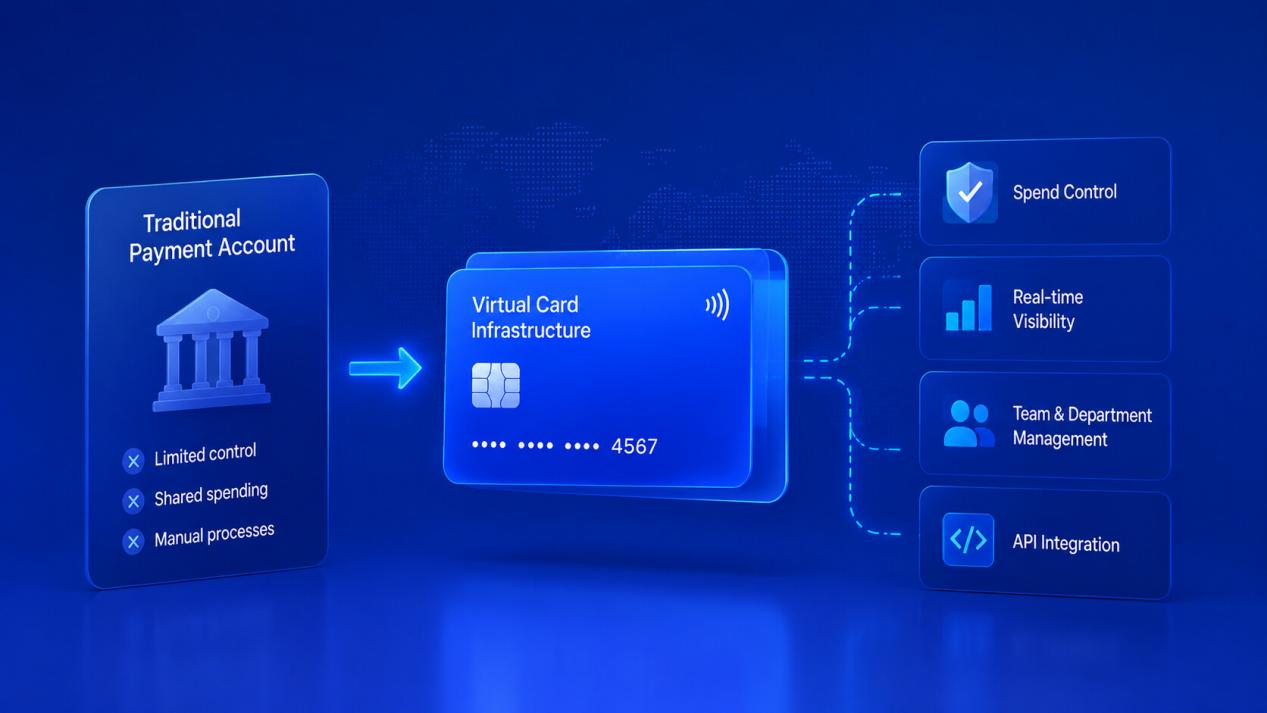
Traditional corporate cards often provide limited flexibility. A single payment method may be shared across teams, making it difficult for finance departments to understand spending patterns or enforce internal policies.
Virtual card infrastructure changes this model by allowing companies to create payment methods based on specific business requirements. For example, a company may create separate payment environments for software subscriptions, marketing expenses, vendor payments, or internal team spending.
This approach improves financial visibility while allowing businesses to manage payments in a more structured way.
Virtual Card Infrastructure for Modern Business Use Cases
Different industries are adopting virtual card solutions for different reasons.
SaaS Companies Managing Digital Expenses
Software companies often manage a large number of subscriptions across different teams. Virtual cards allow these businesses to organize software spending more effectively while improving visibility into recurring payments. Instead of managing all subscriptions through shared payment methods, companies can create more structured payment workflows.
Fintech Platforms Building Payment Experiences
For fintech companies, payments are not only an internal operation. Payments can become part of the product itself. Fintech platforms may need infrastructure that allows them to create virtual card programs, connect payment capabilities through APIs, and provide customized financial experiences for their users.
Global Businesses Managing Distributed Spending
Companies operating across different markets often face challenges with international spending and team expenses. Virtual card infrastructure provides a more flexible approach for managing payments across regions, departments, and business functions.
Why BUVEI Provides a Different Approach to Virtual Card Solutions
Many businesses understand the value of virtual cards but do not want to build the entire payment infrastructure themselves.
Creating a complete card program requires significant investment in payment partnerships, issuing systems, transaction management, compliance processes, and ongoing maintenance.
BUVEI provides an infrastructure-based approach that allows businesses to access virtual card capabilities without developing every component internally. Instead of becoming payment infrastructure providers themselves, companies can focus on building their products while using scalable payment foundations.
Building Flexible Virtual Card Programs
BUVEI helps businesses create virtual card programs designed around their specific operational needs. Whether a company needs virtual cards for internal spending management, embedded payment experiences, or business payment workflows, flexible infrastructure allows organizations to adapt their payment systems as they grow.
Connecting Payments Through APIs
Modern businesses require payment capabilities that work together with their existing platforms. API-based infrastructure enables companies to integrate payment functions into their own systems and workflows. This allows businesses to create customized payment experiences rather than relying only on standard financial products.
Wise Business vs Virtual Card Infrastructure: Which Solution Is Right?
Wise Business remains a strong option for companies that mainly need international transfers and simple multi-currency payment capabilities. However, businesses with more complex requirements may need a different approach.
Companies managing large digital expenses, multiple teams, fintech products, or embedded payment experiences often require more flexible infrastructure.
The right choice depends on business goals. If the priority is moving money globally, a traditional business payment account may be sufficient. If the goal is building scalable payment operations, virtual card infrastructure provides a stronger foundation.
Conclusion
Wise Business has helped many companies simplify international payments. However, as businesses continue to adopt more digital services and global payment workflows, their needs are evolving.
Modern companies require more than payment access. They need better control, visibility, and flexibility.
Virtual card infrastructure provides a scalable way for businesses to manage digital spending, automate payment processes, and build customized payment programs.
For companies looking beyond traditional business payment accounts, solutions like BUVEI provide the infrastructure needed to create flexible virtual card experiences and support long-term growth.
Sources
Wise. Wise Business Account Features and Company Information
Wise. Wise Virtual Cards
Wise Platform. Business and Financial Service Provider Solutions
BUVEI. Global Virtual Cards for Digital Payments
BUVEI. White-Label Virtual Card Issuing Solution
BUVEI. How BUVEI’s Payment Technology Powers Virtual Cards