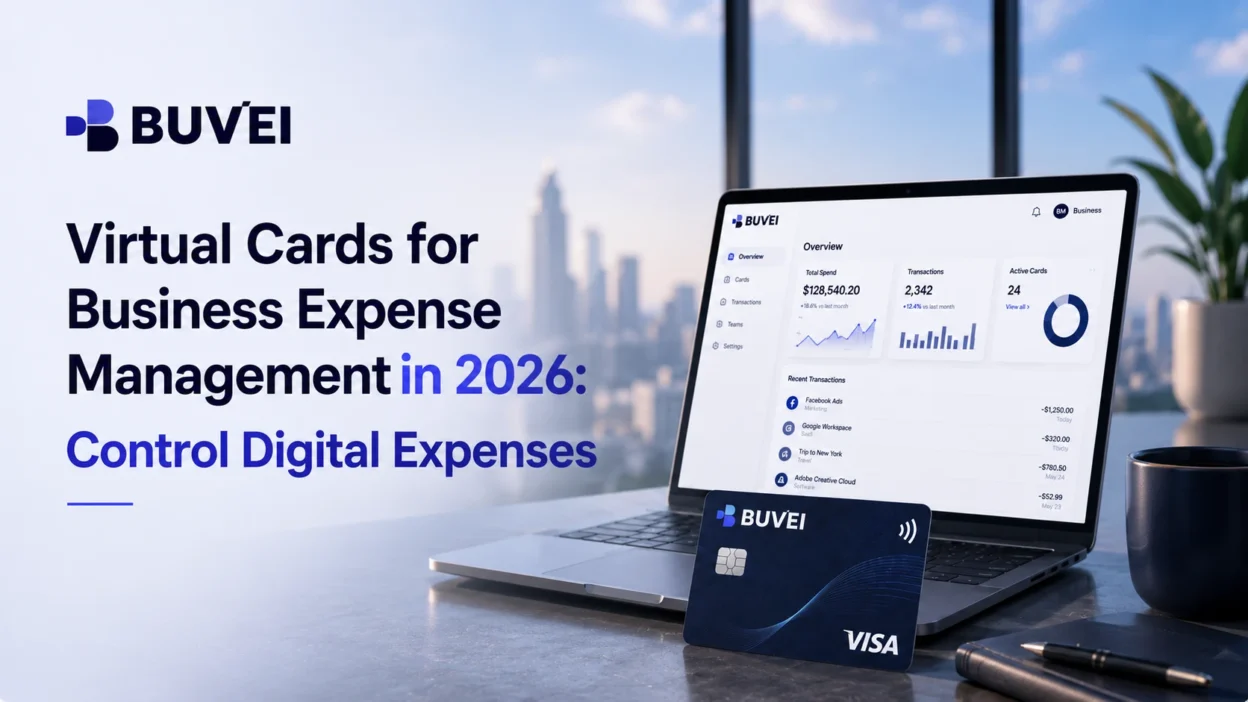
Business virtual cards are becoming an important solution for companies managing increasingly digital spending environments. Companies today rely on a growing ecosystem of SaaS platforms, AI tools, cloud services, and online vendors to operate efficiently. However, as digital expenses become more distributed across teams and platforms, managing payments has become increasingly complex.
Traditional corporate payment methods were not designed for this level of flexibility. Finance teams need better visibility, stronger controls, and more adaptable ways to manage business expenses.
Virtual cards are emerging as a modern solution, helping businesses create structured payment workflows and improve control over digital spending.
Why Digital Business Expenses Are Becoming Harder to Manage in 2026
The nature of business spending has fundamentally changed. In the past, company expenses were often concentrated around traditional suppliers, centralized procurement processes, and predictable purchasing patterns. Today, businesses operate through a much broader digital ecosystem. Companies rely on software subscriptions, AI services, cloud platforms, online vendors, and global digital providers to support daily operations.
This creates a new challenge. The difficulty is no longer simply controlling how much businesses spend. The challenge is understanding where payments occur, who owns each expense, and how spending decisions align with business goals.
For finance teams, digital expenses are increasingly distributed across departments and platforms. Different teams may adopt different tools, while recurring subscriptions continue generating ongoing payments.
As digital operations expand, businesses need more structured approaches to managing expenses, improving visibility, and maintaining financial control.
Why Traditional Corporate Payments Cannot Support Modern Business Spending
Traditional corporate cards continue to serve important business needs. However, they were built for a different payment environment. Modern companies require greater flexibility as spending becomes more digital, distributed, and dynamic.
Limited Visibility Into Digital Expenses
When payments are spread across multiple teams, platforms, and vendors, finance teams need deeper visibility into spending activity. A single corporate card may support multiple subscriptions and services, making it difficult to understand:
- who owns each expense
- which services are actively being used
- whether ongoing payments still create business value
Without sufficient visibility, companies may struggle to optimize spending decisions and maintain effective financial oversight.
Lack of Flexible Spending Controls
Different teams often have different payment requirements. A development team may need access to technical platforms, while marketing teams may use different software services and digital tools.
Traditional payment methods often provide limited flexibility for managing these different scenarios. Modern businesses increasingly require configurable spending controls that allow payment policies to be aligned with departments, projects, vendors, and operational requirements.
Manual Processes Slow Down Financial Operations
As digital payment activity increases, manual expense management becomes harder to maintain. Finance teams may spend significant time reviewing transactions, managing approvals, and reconciling payments. A scalable approach requires more automated workflows that reduce operational complexity while maintaining financial control.
How Virtual Cards Improve Digital Expense Management
Virtual cards are helping businesses move from static payment methods toward more programmable and adaptable spending workflows. Their value extends beyond replacing physical cards. They provide businesses with a way to create payment structures that match specific operational requirements.
Create Purpose-Built Payment Methods
Virtual cards allow businesses to create dedicated payment methods for different spending scenarios. Companies can establish separate workflows for:
- SaaS subscriptions
- vendor payments
- department-level spending
This improves expense ownership and gives finance teams clearer visibility into business payments. Instead of managing all expenses through shared payment methods, businesses can create more organized and controlled spending environments.
Improve Spending Control and Transaction Visibility
Modern businesses need more than payment access. They need better oversight of how payments are created, managed, and monitored.
Virtual cards enable businesses to introduce stronger controls through spending policies, transaction tracking, and structured payment workflows. This allows organizations to support employee and department spending while maintaining stronger financial discipline.
Automate Digital Expense Management
As businesses adopt more digital services, automation becomes increasingly important. Virtual card infrastructure enables companies to connect payment activity with internal systems and financial processes. This reduces manual work and creates more efficient expense management workflows.
Why Businesses Need Virtual Card Infrastructure for Scalable Payments
A small number of virtual cards may solve immediate operational needs. However, businesses scaling their payment operations require something more foundational.
They need infrastructure. A scalable virtual card infrastructure supports the broader payment lifecycle, including:
- card issuing
- transaction management
- payment workflows
- system integrations
- reporting capabilities
Building these capabilities internally requires significant engineering resources, payment expertise, compliance management, and ongoing operational investment.
For most businesses, the goal is not to become a payment infrastructure provider. The goal is to access reliable payment capabilities without managing every complex layer behind them.
Beyond Virtual Cards: Building Complete Payment Workflows
Virtual cards represent one component of a broader payment ecosystem. Growing businesses need infrastructure that supports authorization processes, transaction management, reporting, and operational workflows.
Without scalable infrastructure, companies may face increasing complexity as the number of users, cards, and transactions grows. A flexible infrastructure approach allows businesses to expand payment capabilities without rebuilding their systems repeatedly.
API-Based Infrastructure for Modern Business Payments
Modern businesses depend on connected technology systems. Payment capabilities need to integrate with financial platforms, internal applications, and operational workflows.
API-based virtual card infrastructure allows businesses to embed payment functionality directly into their existing systems. This enables companies to create customized payment experiences while maintaining flexibility as business requirements evolve.
Scaling From Simple Expenses to Enterprise Payment Programs
Business payment requirements change as organizations grow. A startup may initially manage a limited number of digital expenses. An enterprise may eventually need to support multiple teams, markets, and large transaction volumes.
Scalable virtual card infrastructure provides the foundation required to support this growth without introducing unnecessary operational complexity.

Virtual Card Use Cases for Business Payments and Digital Expenses
Virtual card solutions are being adopted across different business scenarios.
SaaS Subscription Management
Software subscriptions represent one of the fastest-growing categories of digital business expenses. Companies often manage dozens or hundreds of software services across different departments. Virtual cards help businesses create better control over subscription payments while improving visibility into ongoing software spending.
Employee and Department Spending
Different teams often have different spending requirements. Virtual cards allow businesses to create structured payment environments for departments, projects, and operational needs. This provides employees with payment flexibility while helping finance teams maintain stronger control.
Vendor and Online Payment Management
Many businesses rely on online vendors, service providers, and digital platforms. Virtual cards provide a flexible approach to managing these payments while improving transaction tracking and operational efficiency.
Embedded Finance and Payment Platforms
Software companies and fintech platforms are increasingly embedding payment capabilities into their own products. For these businesses, virtual card infrastructure provides a way to introduce payment experiences without building complete card issuing systems internally. This enables companies to create new financial workflows while focusing on their core products.
How BUVEI Enables Scalable Virtual Card Payment Infrastructure
Managing business expenses at scale requires more than issuing virtual cards. Companies need reliable infrastructure that supports payment operations, integrations, and future growth.
BUVEI enables businesses to embed virtual card capabilities into their products and operations without taking on the complexity of building payment infrastructure from the ground up. Instead of investing significant resources into creating issuing systems, managing payment operations, and maintaining complex infrastructure, businesses can leverage scalable payment capabilities while focusing on innovation and customer experience.
Launch Virtual Card Programs Without Building Infrastructure
Behind every scalable virtual card program is a complex operational foundation. Businesses need infrastructure that supports:
- card lifecycle management
- transaction processing
- payment controls
- reporting requirements
BUVEI provides the foundation businesses need to introduce virtual card programs while reducing the complexity of building and maintaining payment systems internally.
Manage Virtual Cards Through Flexible APIs
Modern payment products require flexible integrations. API-driven virtual card infrastructure allows businesses to connect payment capabilities directly with their existing platforms and workflows. This enables companies to create customized payment experiences rather than relying only on traditional financial products.
Support Growing Business Payment Requirements
As businesses expand, their payment requirements evolve. Companies may need to support more users, additional payment scenarios, and increasingly complex operational requirements. BUVEI provides scalable infrastructure designed to support businesses as they move from early payment programs toward larger payment operations.
How to Choose a Virtual Card Infrastructure Partner for Business Payments
Selecting the right virtual card infrastructure partner is an important strategic decision. Businesses should evaluate whether a provider can support both current requirements and future growth.
Scalability
The infrastructure should support increasing transaction volumes, users, and payment scenarios as business needs evolve.
Integration Flexibility
APIs and developer tools should allow businesses to connect payment capabilities with existing systems.
Security Controls
Businesses need reliable tools for monitoring transactions, managing risks, and maintaining payment security.
Global Payment Capabilities
As companies expand internationally, flexible payment infrastructure becomes increasingly important.
Conclusion
Business expense management is becoming more complex as companies adopt more digital services, software platforms, and online payment solutions. Traditional payment methods may not provide the visibility, flexibility, and scalability required for modern digital spending. Virtual cards provide businesses with a more efficient way to control digital expenses and create structured payment workflows.
However, the future of business spending is not only about issuing cards. It is about building scalable payment infrastructure that supports evolving business requirements. With virtual card infrastructure solutions like BUVEI, companies can create flexible payment programs while focusing resources on innovation, growth, and customer experience.