Over the past few years, something interesting has happened in Europe’s digital payment landscape.
When digital banks introduce their card services, virtual cards are no longer presented as an extra feature. They have become one of the core products.
Platforms such as Revolut, Wise, and other digital financial services increasingly place virtual cards alongside traditional physical cards. This raises an interesting question:
Are Europeans actually using virtual cards more often, or are they simply becoming another standard part of modern banking?
The answer is not that Europeans are replacing physical cards with virtual ones. Instead, the growth of virtual cards reflects a broader change in how people manage online payments, subscriptions, and digital spending.
Virtual cards are becoming popular because they solve a very modern problem: people now have more online payments to manage than ever before.
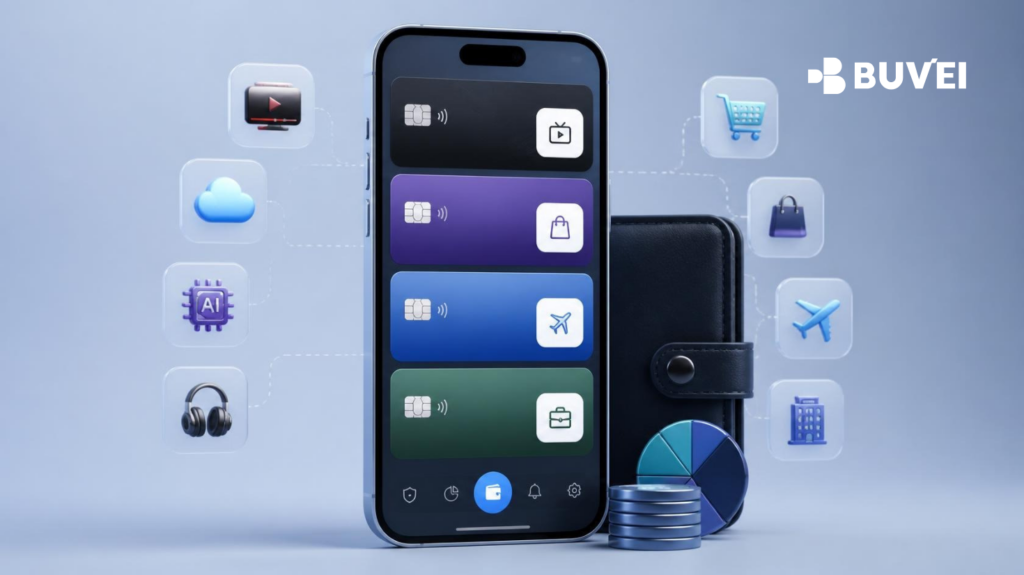
Europe’s Digital Spending Environment Creates More Use Cases for Virtual Cards
When people think about online payments, they often think about shopping.
But in Europe, online spending has become much broader.
Consumers regularly pay for:
- Streaming platforms such as Netflix and Spotify
- AI and productivity tools
- Flight tickets and hotel bookings
- Online memberships
- Gaming services
- Digital subscriptions
- Recurring payments for apps and platforms
As more services move online, payment information is stored across more and more platforms.
A single bank card may be connected to dozens of different services. While this makes payments convenient, it also creates a challenge: how can users better organize and control their online spending?
This is where virtual cards provide real value.
Virtual cards are not designed to replace traditional bank cards. Instead, they provide users with a more flexible way to separate, manage, and monitor different types of payments.
For example:
- One virtual card for subscriptions
- One virtual card for online shopping
- One virtual card for travel expenses
This simple separation gives users much better visibility over their digital spending.
The Subscription Economy Is Accelerating Virtual Card Adoption
Europe has one of the most developed subscription markets in the world.
From entertainment and music to software tools and AI services, monthly payments have become part of everyday life.
However, managing multiple subscriptions can quickly become complicated.
Many European users have started using separate virtual cards specifically for subscription payments. The reason is not only security — it is also convenience.
With a dedicated subscription card, users can:
- Easily track recurring charges
- Identify unfamiliar payments faster
- Cancel subscriptions without affecting other payments
- Keep their main bank card separate from online services
This represents a shift in mindset.
Virtual cards are not only about preventing fraud. They are about giving users more control over how they manage money.
Digital Banks Have Made Virtual Cards Easier to Access
Another important factor behind the growth of virtual cards is the rise of digital banking.
Traditional banking often required customers to visit branches, wait for physical cards, and complete complicated processes.
Digital banks changed this experience.
Today, users can often:
- Open accounts through mobile apps
- Create virtual cards instantly
- Freeze or replace cards immediately
- Manage payments directly from their phones
Because virtual cards are built directly into digital banking platforms, they no longer feel like a separate financial product.
They have become a natural part of everyday banking.
When technology becomes simple enough, adoption happens naturally.
European Users Are Looking for More Control, Not Just More Security
Many discussions about virtual cards focus heavily on security.
Security is certainly an important advantage, but it is not the only reason people use virtual cards.
What stands out more is the idea of control.
Users want the ability to decide:
“This card is only for subscriptions.”
“This card is only for online purchases.”
“This card can be used temporarily and removed afterward.”
This approach matches a broader trend in modern financial products: users want more flexibility and more choices.
Instead of one payment method for everything, people are beginning to create different payment tools for different situations.
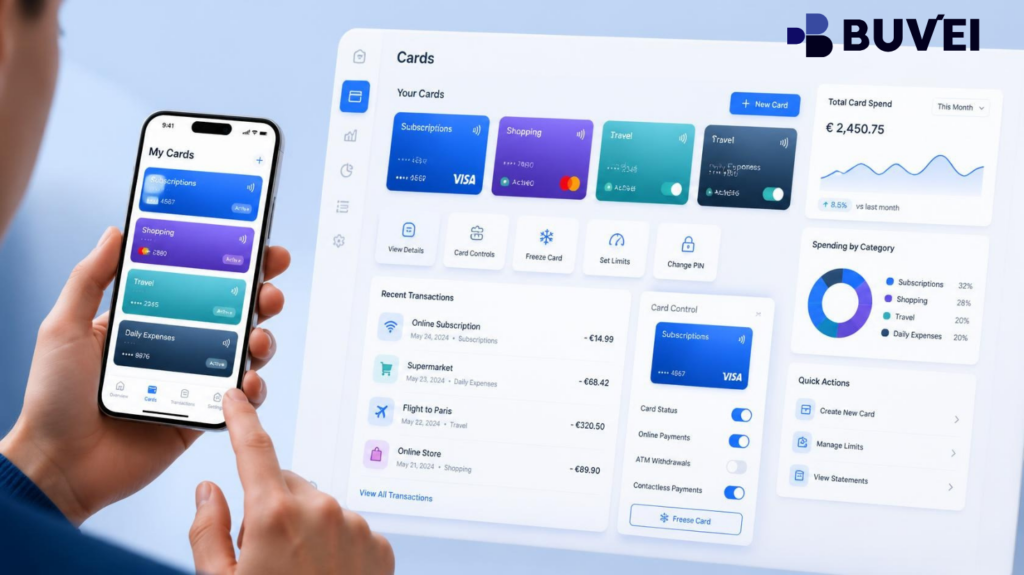
Buvei: Making Virtual Payments More Flexible for Global Users
As virtual cards become a normal part of digital payments, users are looking for solutions that are simple, flexible, and easy to manage.
This is where platforms like Buvei are entering the market.
Buvei provides users with a convenient way to access and manage virtual card solutions for online payments, helping users handle different payment scenarios more efficiently.
Whether it is managing subscriptions, separating online spending, or making payments across different digital platforms, virtual cards provide a more flexible approach to modern finance.
The future of payments is not necessarily about replacing physical cards.
It is about giving users more options.
Virtual Cards Are Becoming Invisible Infrastructure
Many technologies follow the same path.
At first, people talk about them because they are new.
Later, they become so common that people stop noticing them.
Virtual cards in Europe are moving into this stage.
They have not replaced physical cards. They have not completely changed how people pay.
Instead, they have quietly become part of the broader payment ecosystem.
Some people use them for subscriptions.
Some use them when traveling.
Some use them only for online shopping.
But the important change is that virtual cards are no longer seen as a special technology.
They are becoming a normal financial tool.
Final Thoughts
The growth of virtual cards in Europe is not caused by a single trend.
It is the result of several changes happening at the same time:
- Online payments are becoming more common
- Subscription services are becoming part of daily life
- Digital banking is becoming more mature
- Users want more control over their finances
Together, these trends have created an environment where virtual cards naturally fit into everyday payment habits.
The future of payments may not be about choosing between physical cards and virtual cards.
It may simply be about having the right payment tool for every situation.
And as digital finance continues to evolve, virtual cards are likely to become an increasingly important part of how people manage money online.