Get it on Google Play
Buvei – Multi-BIN Virtual Cards, Issued Instantly
Download on the App Store
Buvei – Multi-BIN Virtual Cards, Issued Instantly
🎉 Sign up today and get $5 in free card opening credit

Brazil Already Has Pix. Why Do Virtual Cards Still Matter?

When I first started learning about Brazil's payment landscape, one question immediately came to mind: if Pix has become so widely adopted, why are virtual cards still receiving so much attention?From what I find, Pix has already become an essential part of everyday life in Brazil. Whether it's transferring money, making purchases, paying bills, or even buying from small local merchants, Pix supports a wide range of payment scenarios. It seems to be a highly mature and well-established payment system.So why do businesses still need virtual cards?As I explored the topic further and looked into real-world business payment scenarios, I realized my initial assumption was too simplistic. Pix and virtual cards are not competing solutions—they. They are designed to address fundamentally different payment needs.

How Pix Has Changed Payments in Brazil

For consumers in Brazil, Pix is undoubtedly one of the most convenient payment methods available today. Its instant settlement, ease of use, and low transaction costs have quickly made it the country's preferred payment solution.Whether it's sending money to friends, paying at physical stores, or shopping online, Pix covers the vast majority of everyday domestic payment scenarios. For local transactions, it has become an exceptionally efficient solution.

Businesses Face Different Payment Requirements

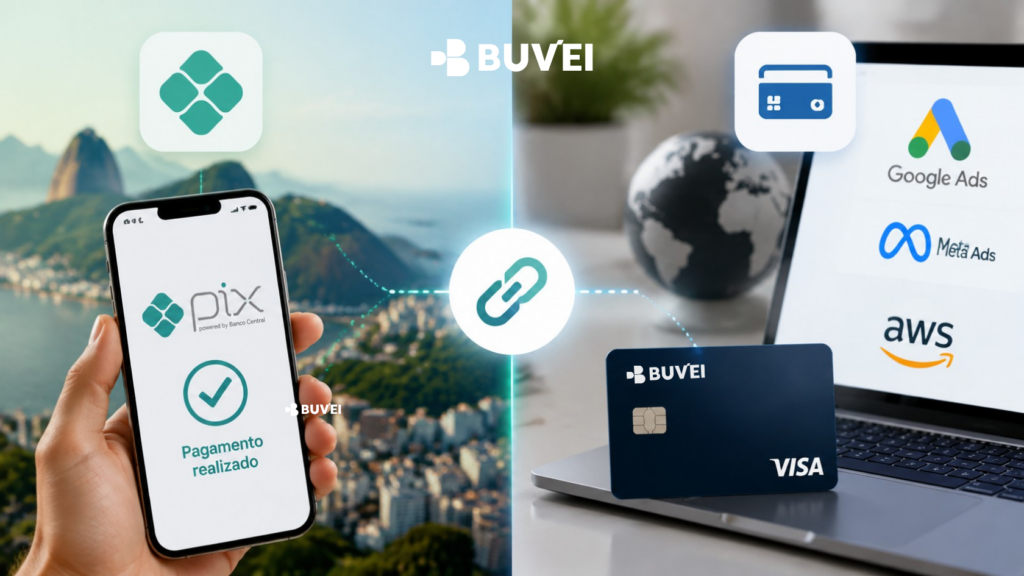
As I continued researching the market, I realized that business payment needs differ significantly from those of individual consumers.Beyond domestic operations, many businesses regularly pay for international services, including digital advertising, cloud infrastructure, and SaaS platforms such as Google Ads and Meta Ads. Most of these global platforms continue to rely on Visa or Mastercard for payment processing and do not support Pix as a payment method.In other words, even if a Brazilian business uses Pix extensively for domestic transactions, it still relies on payment cards to complete international payments. This also explains why card payments continue to play an essential role in Brazil's payment ecosystem.

What Problems Do Virtual Cards Actually Solve?

When I first entered the industry, I assumed that a virtual card was simply a digital version of a physical bank card.However, I soon realized that for businesses, the real value of virtual cards goes far beyond making payments—it. It lies in payment management and spending control.Consider a company that uses a single corporate card to pay for advertising campaigns, software subscriptions, and employee purchases. Managing expenses in this way can quickly become inefficient, making it difficult to track spending or control budgets.Virtual cards offer a more flexible approach. Businesses can issue separate cards for different teams, projects, or spending categories, making expense tracking more transparent while improving budget control and operational efficiency.

For companies managing multiple online platforms, this flexibility can significantly simplify daily operations. Instead of sharing one corporate card across different departments, businesses can create dedicated virtual cards for specific purposes, such as marketing campaigns, software subscriptions, or vendor payments.

Platforms like Buvei provide businesses with virtual card solutions that combine payment flexibility with expense management features, helping companies monitor spending, improve financial transparency, and operate more efficiently across borders.
The Future of Business Payments in Brazil

As Brazil's digital economy continues to grow, businesses will increasingly need payment solutions that work both locally and globally.

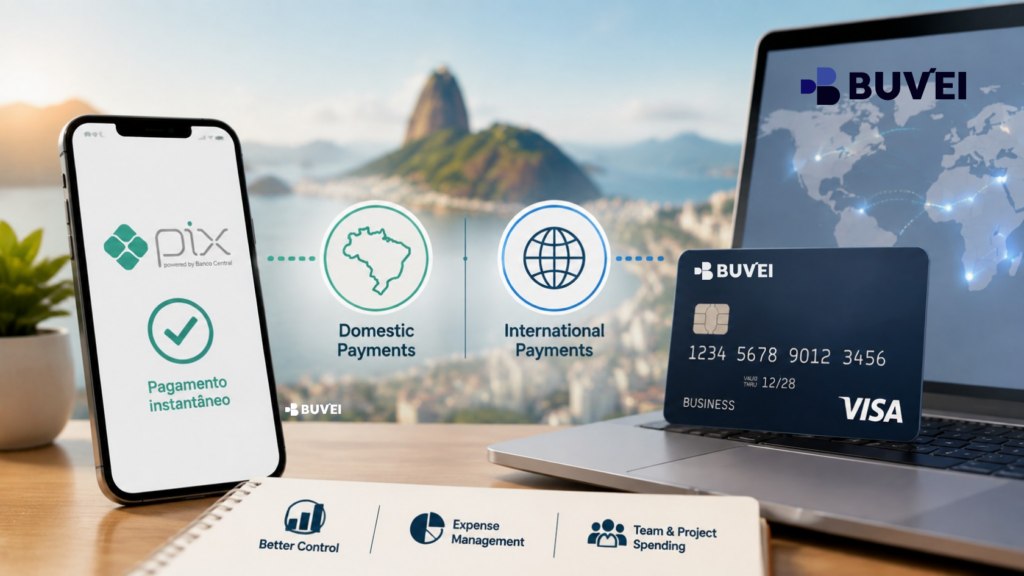
While Pix has transformed domestic payments, global business operations require tools that support international platforms, recurring payments, and expense management.

Virtual card providers like Buvei represent this next layer of payment infrastructure, helping businesses bridge the gap between local payment ecosystems and the global digital economy.

Final Thoughts
Looking back at my original question—if. If Pix is already so convenient, why do virtual cards still have a place in Brazil?—the answer now seems much clearer.It's not because one payment method is better than the other. Rather, they are designed for different use cases.Pix is highly effective for domestic payments, while virtual cards are primarily used for international payments and corporate expense management. As more Brazilian businesses expand globally, these needs are unlikely to disappear simply because Pix has become more popular.One of the biggest lessons I've learned while exploring Brazil's payment market is that the emergence of a new payment method does not necessarily replace existing ones. More often than not, different payment solutions coexist, each serving distinct business and consumer needs.
Previous Article

Card Issuing Partner Solutions for Scalable Virtual Cards

Next Article

Why Virtual Cards Are Becoming the New Normal in Europe’s Digital Payment Market

Write a Comment

Leave a Comment

Your email address will not be published. Required fields are marked *

Stay Updated with Buvei

Discover the latest insights on virtual cards, global payments, AI tools, and digital finance trends.
Insights for smarter digital payments ✨ ✨
Buvei cards

Buvei's cards are here!

More than 20 BIN cards, covering Facebook, Google, Tiktok, ChatGpt and more