
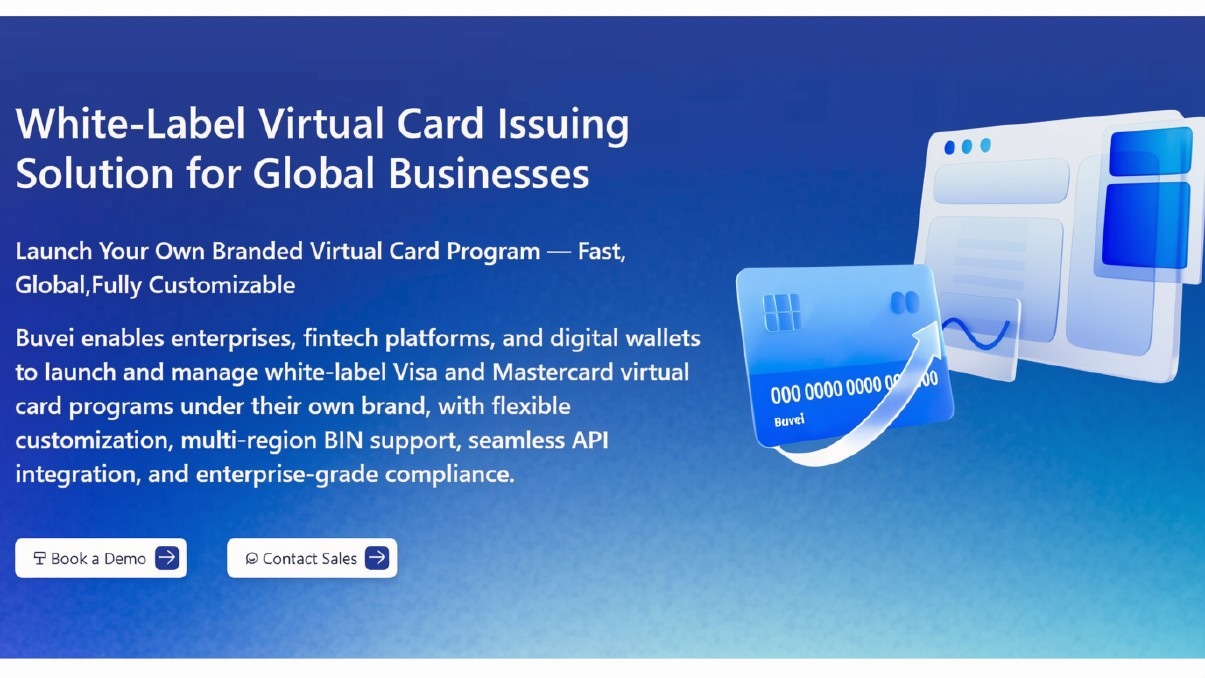
A White-Label Virtual Card Program allows fintech companies, SaaS platforms, and digital businesses to launch branded payment products without building card issuing infrastructure from scratch.
As embedded finance continues to grow, more companies are looking for faster ways to create virtual card solutions without developing complex payment systems internally.
The difficult part is not creating a virtual card number. The real challenge is building the infrastructure required to manage issuing, payment authorization, compliance, settlement, and operational scalability.
A white-label virtual card program gives businesses access to existing issuing infrastructure instead of requiring them to develop every payment component internally. Platforms like BUVEI help companies launch and scale branded virtual card programs with multi-region BIN support, API connectivity, and enterprise payment controls.
This guide walks through the key steps behind launching a white-label virtual card program, from selecting an issuing platform to building a scalable payment infrastructure.
Why Companies Are Moving Toward White-Label Virtual Card Programs
How a White-Label Virtual Card Program Reduces Payment Infrastructure Complexity
Building a virtual card product involves far more than issuing cards. Companies need reliable connections between card networks, payment processors, compliance systems, and internal platforms.
For businesses entering the payments space, developing these capabilities internally can become a long-term engineering and operational commitment.
A white-label issuing platform removes much of this complexity by providing the infrastructure required to launch and manage card programs more efficiently.
How White-Label Virtual Card Programs Enable Faster Product Launches
One of the biggest advantages of white-label virtual cards is the ability to launch branded payment products while maintaining control over the customer experience.
Businesses can customize their card experience through:
- Branded virtual cards
- Custom user interfaces
- Spending controls
- Customer-facing payment workflows
This allows fintech companies, SaaS platforms, and digital businesses to provide payment capabilities without building an entire issuing system internally.
How to Launch a White-Label Virtual Card Program Quickly
1. Define Your Virtual Card Use Case
The first decision is understanding where virtual cards fit into your product strategy.
Common use cases include:
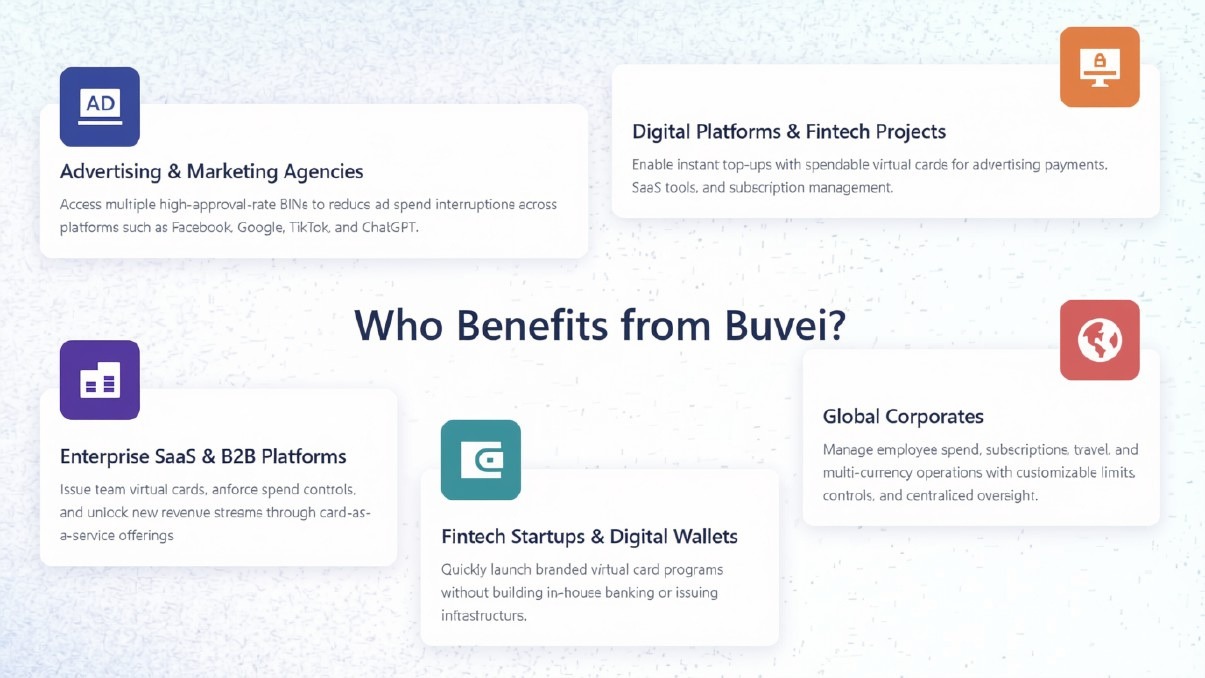
- Fintech companies launching branded payment cards
- SaaS platforms managing subscriptions and business expenses
- Advertising platforms supporting digital ad payments
- Digital wallets adding payment functionality
- PSPs expanding their payment services
A clear use case helps determine the required features, integrations, and operational requirements for the card program.
2. Choose the Right Virtual Card Issuing Platform
Selecting the right issuing platform is one of the most important decisions when launching a white-label virtual card program.
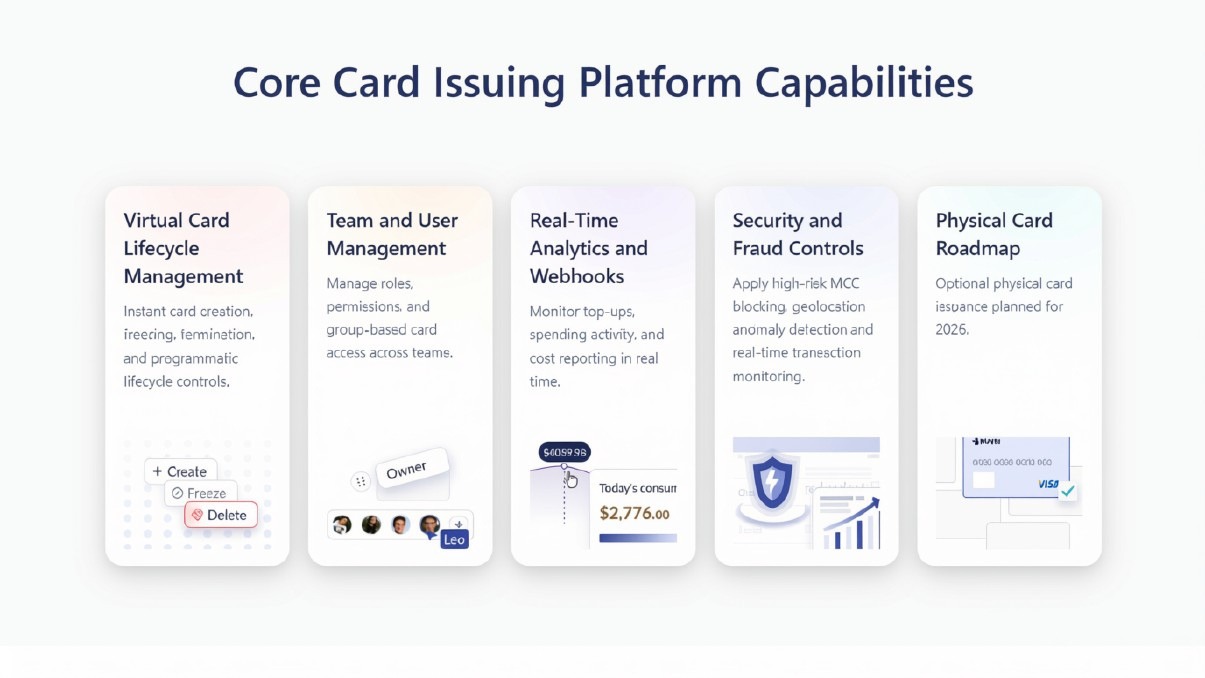
The right issuing partner should provide more than basic card creation. Key capabilities include:
- Visa and Mastercard virtual card issuance
- Multi-region BIN availability
- API-based card management
- Enterprise dashboards and controls
- Compliance and risk management capabilities
- Scalable settlement infrastructure
Beyond initial deployment, the platform should support long-term growth as transaction volume and user demand increase.
3. Customize Your White-Label Virtual Card Program Experience
A successful white-label card program should feel like a natural part of your own product ecosystem.
Key customization options include:
- Card designs
- User dashboards
- Spending policies
- Billing information
A flexible branded experience helps companies strengthen customer relationships while maintaining control over how users interact with their payment products.
4. Integrate and Test Your Card Program
Once the card experience is configured, businesses can connect the issuing platform with their existing systems.
API integration is where the virtual card program becomes part of the company’s product ecosystem. Businesses can test card creation, payment authorization, transaction reporting, and user management workflows before moving into production.
5. Scale Your White-Label Virtual Card Program Globally
After testing is complete, companies can move their virtual card program into production.
As transaction volume grows, businesses need infrastructure that supports:
- Real-time reporting
- User management
- Payment optimization
- Global expansion
A scalable issuing platform allows companies to grow their card programs without rebuilding their payment infrastructure.
Key Features to Look for in a White-Label Virtual Card Platform
Multi-Region BIN Support for Global Payments
For global businesses, payment acceptance is often influenced by regional card infrastructure. A multi-region BIN strategy allows companies to issue cards that better match different markets, helping reduce location-related authorization issues and improve payment reliability.
BUVEI supports multi-region BIN options across key markets, including the US, UK, Hong Kong, Singapore, and other regions.
This capability is designed for businesses handling:
- Cross-border payments
- SaaS subscriptions
- Advertising spend
- Global e-commerce transactions
By matching card issuing options with different payment environments, businesses can improve payment flexibility across international markets.

Virtual Card API and Automated Card Management
API capabilities are essential for businesses that want to integrate virtual cards directly into their own platforms.
A scalable virtual card API should support the entire card lifecycle, from initial issuance and activation to transaction monitoring and card termination. This allows businesses to automate operations instead of manually managing individual card activities.
BUVEI’s API infrastructure allows businesses to automate card operations and manage virtual card programs more efficiently.
Enterprise Controls, Compliance, and Digital Wallet Support
As virtual card programs grow, businesses require stronger operational controls and security features.
Important capabilities include:
- Enterprise dashboards
- User permissions
- Spending limits
- Transaction reporting
- KYC/AML processes
- Fraud monitoring
- MCC-based controls
BUVEI provides enterprise-grade management and risk control capabilities to help businesses operate secure virtual card programs at scale.
Support for Apple Pay and Google Pay tokenization also enables more flexible payment experiences for end users.
Launch Your White-Label Virtual Card Program with BUVEI
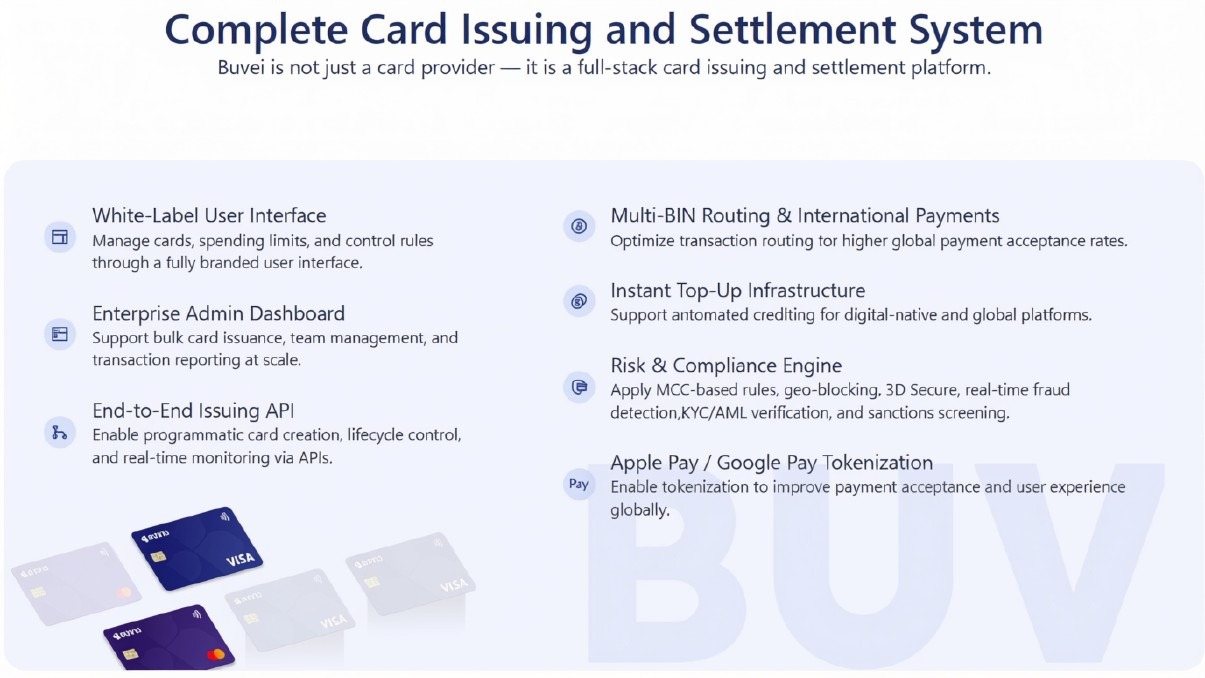
BUVEI provides a full-stack white-label virtual card issuing platform designed for businesses that want to launch branded Visa and Mastercard virtual card programs.
With flexible issuing capabilities, multi-region BIN support, API-driven card management, enterprise controls, compliance infrastructure, settlement capabilities, and digital wallet support, BUVEI helps fintech companies, SaaS platforms, digital wallets, and global businesses build scalable payment solutions without developing complex issuing systems internally.