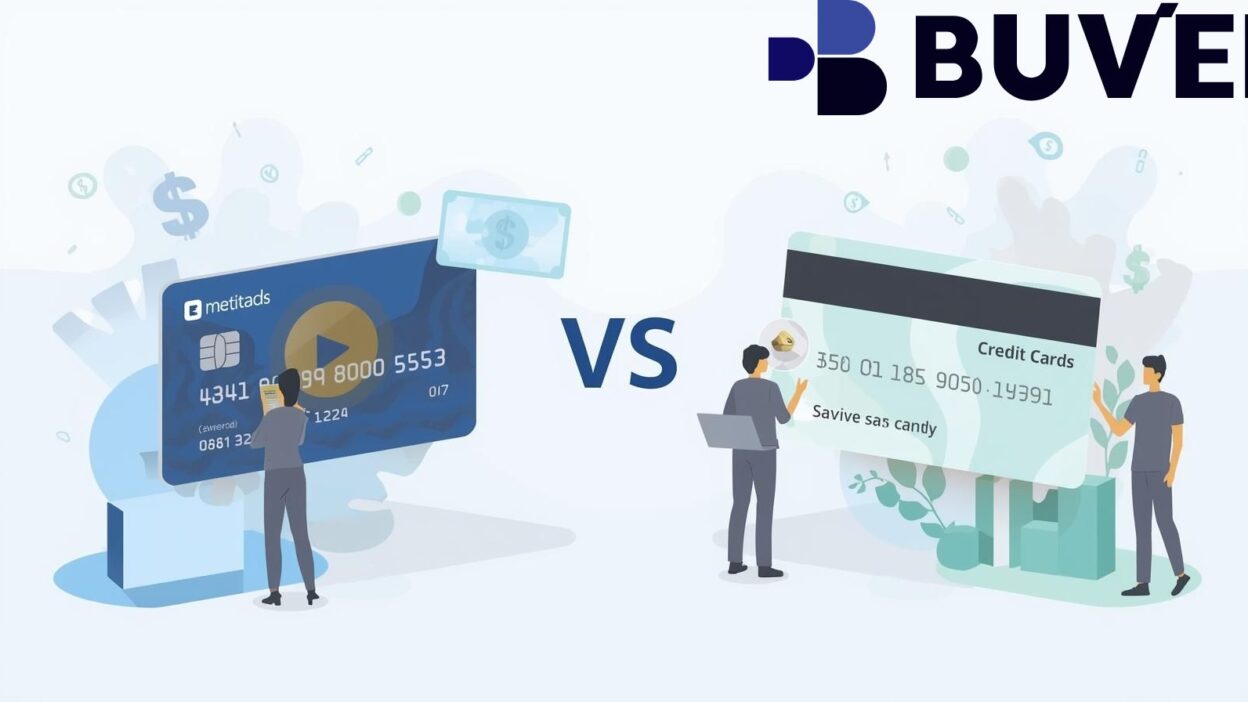
Running ads on Meta (Facebook & Instagram) requires not just smart campaign strategies but also smart payment choices. For advertisers, the payment method can directly affect cost efficiency, payment success rates, and even campaign stability. Two popular options are traditional credit cards and virtual cards. But when it comes to saving more on Meta Ads, which one delivers the bigger advantage?
In this article, we’ll compare the two, highlight key differences, and explain why many advertisers are moving toward virtual cards like those offered by Buvei for better cost control and flexibility.
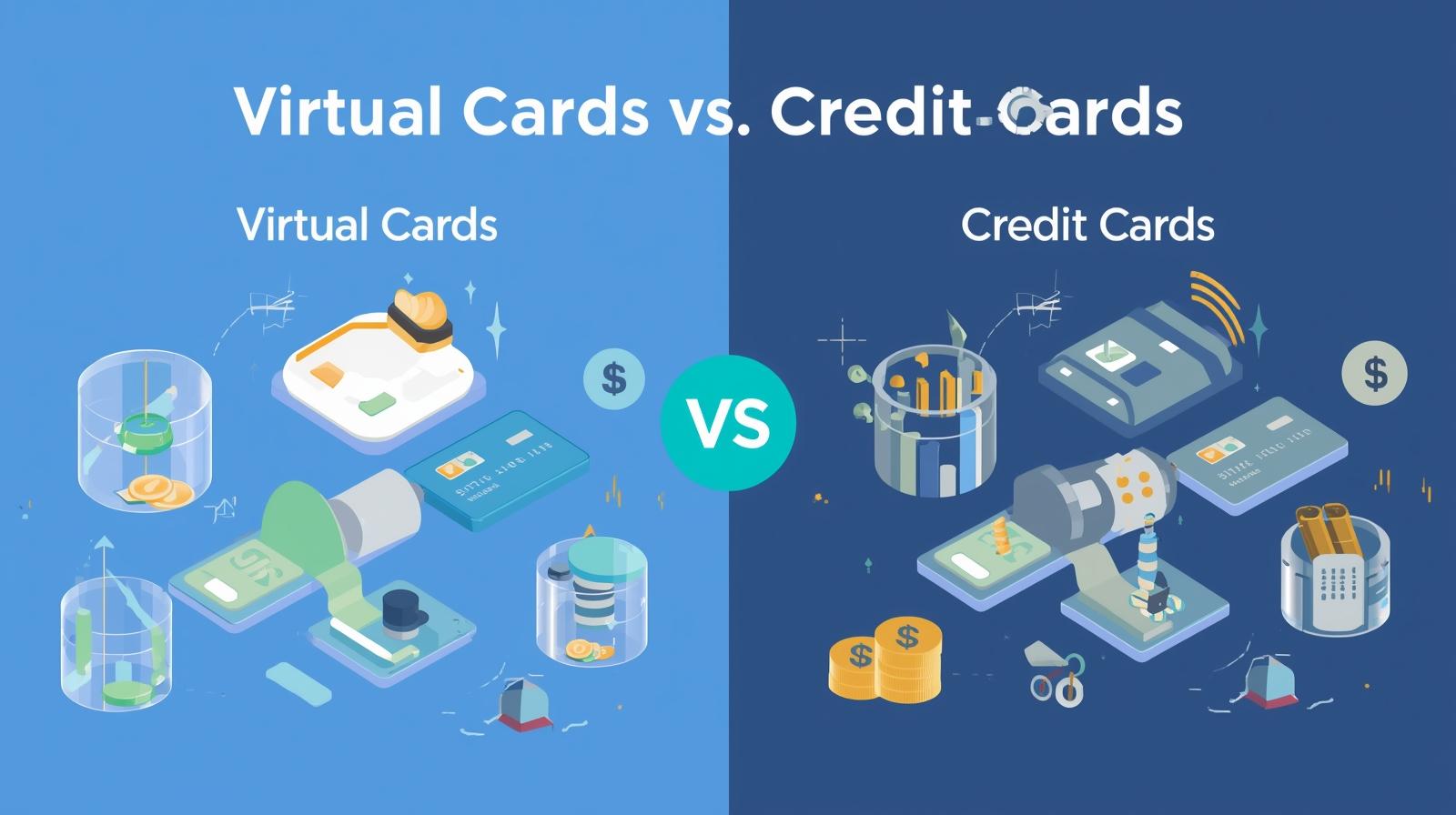
Payment Success Rates: A Key Factor for Ads
Meta Ads campaigns can be disrupted when payments fail due to bank restrictions, currency mismatches, or risk checks.
-
Traditional Credit Cards:
Banks often decline international ad transactions, flagging them as “suspicious.” This leads to campaign pauses and missed opportunities, which cost both time and money. -
Virtual Cards:
Providers like Buvei support multiple BIN regions (Visa/Mastercard), which significantly improves success rates. With optimal BIN selection for different platforms, advertisers can reduce failed transactions and keep ads running smoothly.
Advantage: Virtual Cards – higher reliability keeps campaigns active without interruption.
Cost Efficiency and Fee Structure
Transaction fees and hidden charges can quietly eat into your ad budget.
-
Traditional Credit Cards:
They may charge high foreign transaction fees, late posting of payments, or even unexpected interest if balances aren’t cleared quickly. These additional costs accumulate, raising your overall ad spend. -
Virtual Cards:
Solutions like Buvei offer a transparent fee structure with no hidden charges. Advertisers can set card limits, top-up easily with USDT (TRC20/ERC20) to reduce remittance fees, and benefit from fast balance arrivals.
Advantage: Virtual Cards – predictable, transparent fees make budgeting simpler and more cost-efficient.
Flexibility in Usage
Advertisers today often run campaigns across multiple platforms and tools.
-
Traditional Credit Cards:
A single physical card is usually linked to a bank account and may face restrictions on recurring payments or platform compatibility. -
Virtual Cards:
With Buvei, users gain strong payment compatibility across Meta Ads, Google Ads, TikTok Ads, Microsoft Ads, and even SaaS tools like ChatGPT, Canva, and Notion. Plus, instant card issuance allows advertisers to quickly create multiple cards for testing, scaling, or managing different accounts.
Advantage: Virtual Cards – flexibility and speed empower advertisers to adapt faster.
Security and Team Management
Protecting financial data and managing multiple accounts are critical for serious advertisers.
-
Traditional Credit Cards:
Exposing a real bank card online carries risks of fraud or theft. Managing multiple accounts with a single card can also complicate reconciliation and limit scalability. -
Virtual Cards:
With Buvei, advertisers can issue multiple cards under one account, enabling multi-account management and team collaboration. Payments are secured under PCI DSS standards, and real bank details remain hidden, ensuring privacy.
Advantage: Virtual Cards – safer transactions and easier management.
Summary
When comparing virtual cards vs. traditional credit cards for Meta Ads, the clear winner for most advertisers is virtual cards. They offer higher payment success rates, transparent fees, faster top-ups, broader compatibility, stronger security, and easier scalability.
Buvei stands out in this space, giving advertisers the tools they need to maximize ROI on Meta Ads while simplifying financial management.
Ready to optimize your Meta Ads spend?
Explore Buvei’s virtual card solutions today and unlock better control, lower costs, and safer ad payments.