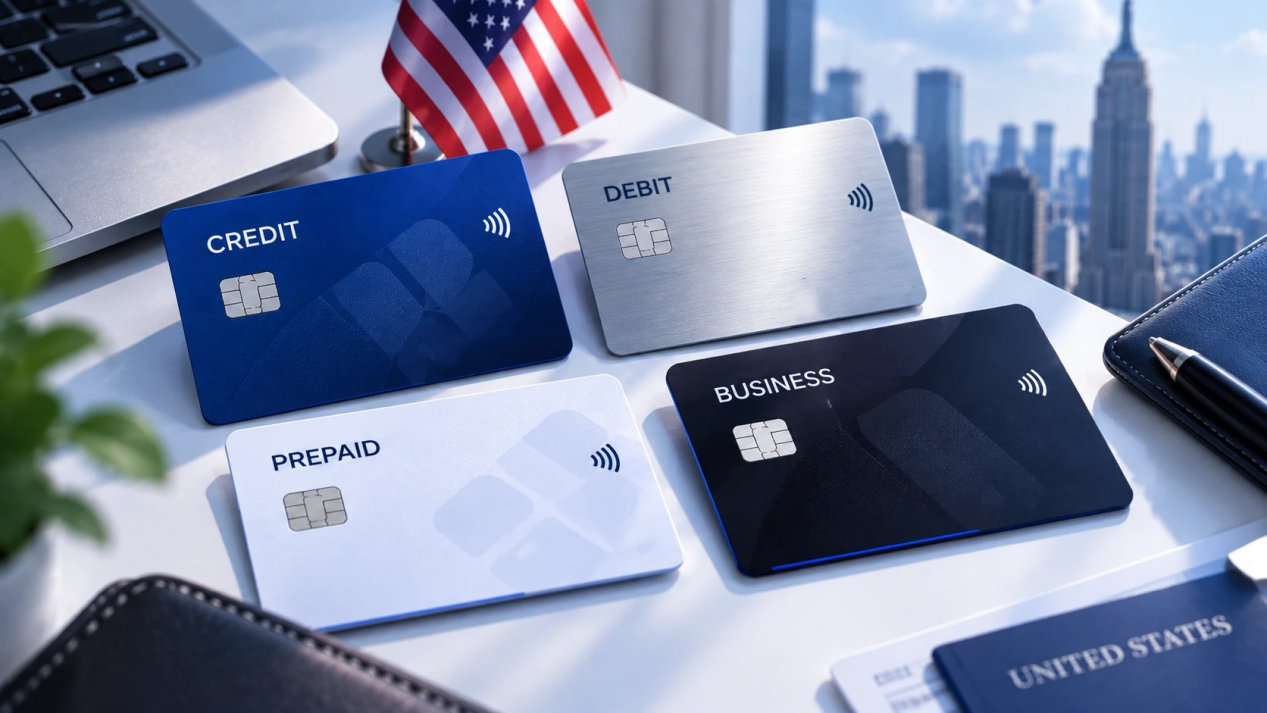
U.S. bank cards come in several forms, and the differences matter when you choose a card for a specific type of spending. Credit cards provide access to a line of credit, debit cards draw from a linked bank account, prepaid cards use funds loaded in advance, and business cards are designed for company-related expenses.
For everyday purchases, these distinctions may be straightforward. Online payments can be more complicated, especially when you are paying for subscriptions, SaaS platforms, advertising, or services based outside the U.S. Traditional bank cards can handle many of these transactions, but virtual cards provide another way to manage online spending.
This guide explains the main types of U.S. bank cards, how they differ, and where virtual cards fit into the broader payment landscape.
Types of Bank Cards Commonly Used in the U.S.
The table below compares the main card types by their primary distinction and typical uses.
| Card Type | Main Distinction | Common Uses |
| Credit Card | Uses a credit line and is repaid later | Everyday purchases, travel, online payments |
| Debit Card | Draws from a linked bank account | Everyday spending, ATM withdrawals, online purchases |
| Prepaid Card | Uses funds loaded onto the card | Controlled spending and gift-related purchases |
| Business Card | Designed for business expenses; may be credit or debit | SaaS, advertising, travel, and operating costs |
| Virtual Card | A digital card format for online payments | Subscriptions, SaaS, and online services |
These categories can overlap. For example, a business may use a business credit card for general expenses and virtual cards for selected online payments.
Credit Cards
A credit card lets you make purchases against a credit line provided by the issuer. You receive a statement and repay the amount according to the card’s terms.
Credit cards are commonly used for everyday purchases, travel, online shopping, and recurring payments. Some cards also offer rewards such as cash back, points, or travel benefits.
The main consideration is repayment. Carrying a balance beyond the billing period may result in interest charges, while annual fees and other costs depend on the card agreement. Your available credit also changes as you make purchases and repay the balance.
For online payments, credit cards are widely supported by merchants and subscription services. They can be useful when you want to make purchases without drawing directly from the funds currently available in your checking account.
Debit Cards
A debit card is generally linked to a checking or other bank account. Purchases normally draw from the money available in that account rather than from a separate credit line.
Debit cards are widely used for groceries, restaurants, online shopping, ATM withdrawals, and other everyday expenses. They provide direct access to money held in your bank account without requiring you to manage a revolving credit balance.
Bank policies vary when it comes to overdrafts, transaction holds, and unauthorized payments. Some checking accounts allow overdrafts, so having a debit card does not always mean a transaction can never exceed the available balance.
For routine spending, a debit card remains a straightforward way to pay with money held in your bank account.
Prepaid Cards
Prepaid cards use funds loaded onto the card in advance. Some are reloadable, while others are intended for limited or one-time use.
They can be useful when you want to allocate a specific amount for spending without using your primary bank account or a credit line. Fees, reload options, registration requirements, and other terms vary between products.
Prepaid cards are not limited to gift cards. Some are designed for broader spending or reloadable use, while gift cards may have different restrictions and protections depending on the product. BUVEI also offers prepaid virtual cards that can be funded before use and used for online payments, with features such as spending controls and multiple card options.
For online purchases, check whether the particular prepaid card supports the transaction you need. Some products may require registration before certain features, such as online use or reloading, are available.
Business Cards
Business cards are designed for company-related expenses rather than personal spending. They can be used for software subscriptions, advertising, travel, and other business costs, while helping companies keep business expenses separate from personal finances.
For businesses that primarily make online payments, virtual cards can also be used as a business spending tool. BUVEI provides virtual Visa and Mastercard cards that can be used for online purchases, subscriptions, and other business expenses. Businesses can issue multiple cards, set spending controls, and monitor transactions from a centralized platform.
This can be useful when different teams, projects, or recurring expenses need to be managed separately, particularly when physical cards are not necessary for every payment.
Traditional Bank Cards and Virtual Cards
Traditional credit and debit cards already work for many online purchases. So why would someone use a virtual card?
The main difference is how the card is issued and managed. A traditional bank card is usually a physical card that can also be used online. A virtual card exists digitally and is primarily intended for card-not-present transactions.
A virtual card does not have to replace an existing debit or credit card. It can simply provide a separate payment option for online spending, including subscriptions, software services, and business expenses.
Why Use a Virtual Card for Online Payments?
Separate card credentials can make online spending easier to organize. For example, someone who pays for several SaaS platforms may prefer to keep subscription charges separate from everyday purchases.
Businesses may also use virtual cards for different services, teams, or spending categories. Where supported by the provider, spending limits and transaction monitoring can make it easier to review payment activity.
These features do not guarantee that every merchant will accept a virtual card. Payment approval can depend on the merchant, card network, billing information, transaction type, and restrictions set by the card provider.
When Virtual Cards May Make Sense
Virtual cards can be relevant in several digital payment situations.
Online subscriptions and SaaS: AI tools, productivity platforms, design software, cloud services, and other digital products often involve recurring payments. Separate virtual cards can help users identify and manage these charges.
Business and advertising spending: Companies that pay multiple online platforms may want to separate advertising expenses from other operating costs. Virtual cards can support this approach when the provider offers suitable card management features.
International online payments: Payments to overseas services may involve different currencies, merchant locations, and billing requirements. A virtual card with suitable regional or currency support may provide another payment option, although acceptance still depends on the merchant and provider.
How BUVEI Fits Into Digital Payments
For users who make frequent online payments, BUVEI offers Visa and Mastercard virtual cards that can be used alongside traditional bank cards.
Multiple BIN regions and currency options are available for different online payment requirements. Users can also create multiple cards and manage them through the platform rather than relying on one card for every online expense.
For business spending, features such as spending controls and transaction monitoring can help users review and organize digital payment activity. These capabilities may be relevant to SaaS subscriptions, advertising expenses, and other online services.
BUVEI is not intended to replace a traditional bank card in every situation. A debit or credit card may still be more suitable for everyday purchases, ATM transactions, or merchants that require a physical card. Virtual cards are an additional option for users who want more flexibility when managing online-focused spending.
Conclusion
Credit, debit, prepaid, and business cards serve different payment needs in the U.S. Credit cards use a credit line, debit cards draw from a bank account, prepaid cards use loaded funds, and business cards are designed around company spending.
For users and businesses that pay for online services, virtual cards provide another option for managing subscriptions, SaaS expenses, advertising payments, and international transactions.