Introduction
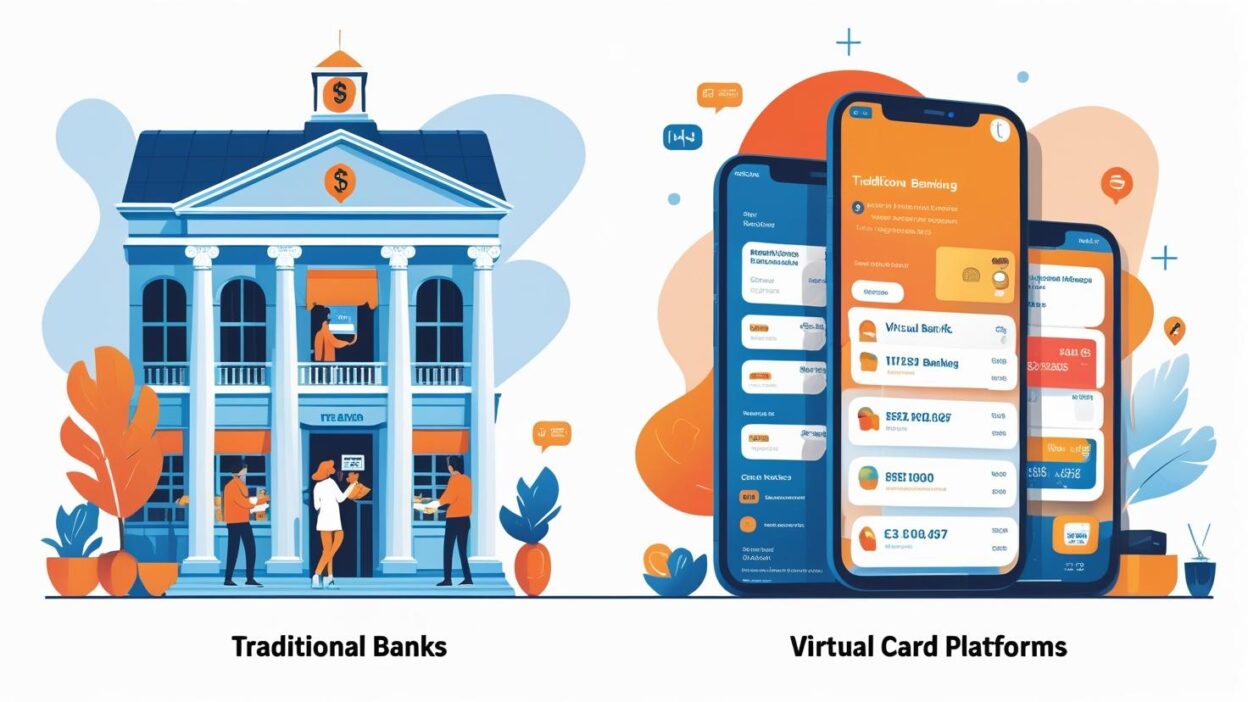
The financial world is rapidly evolving, and the debate between traditional banks and virtual card platforms has become more relevant than ever. In the digital age, where speed, convenience, and global compatibility are key, consumers and businesses alike are reassessing which option better meets their needs.
Traditional banks offer stability and long-standing trust, while virtual cards provide flexibility, instant issuance, and advanced security features. As regulations such as PCI DSS and GDPR reshape how payments are handled, finding the right financial solution requires balancing tradition with innovation.
Let’s break down the strengths and weaknesses of each, and explore why many businesses are turning to modern virtual card platforms like Buvei for everyday payments, digital marketing, and global commerce.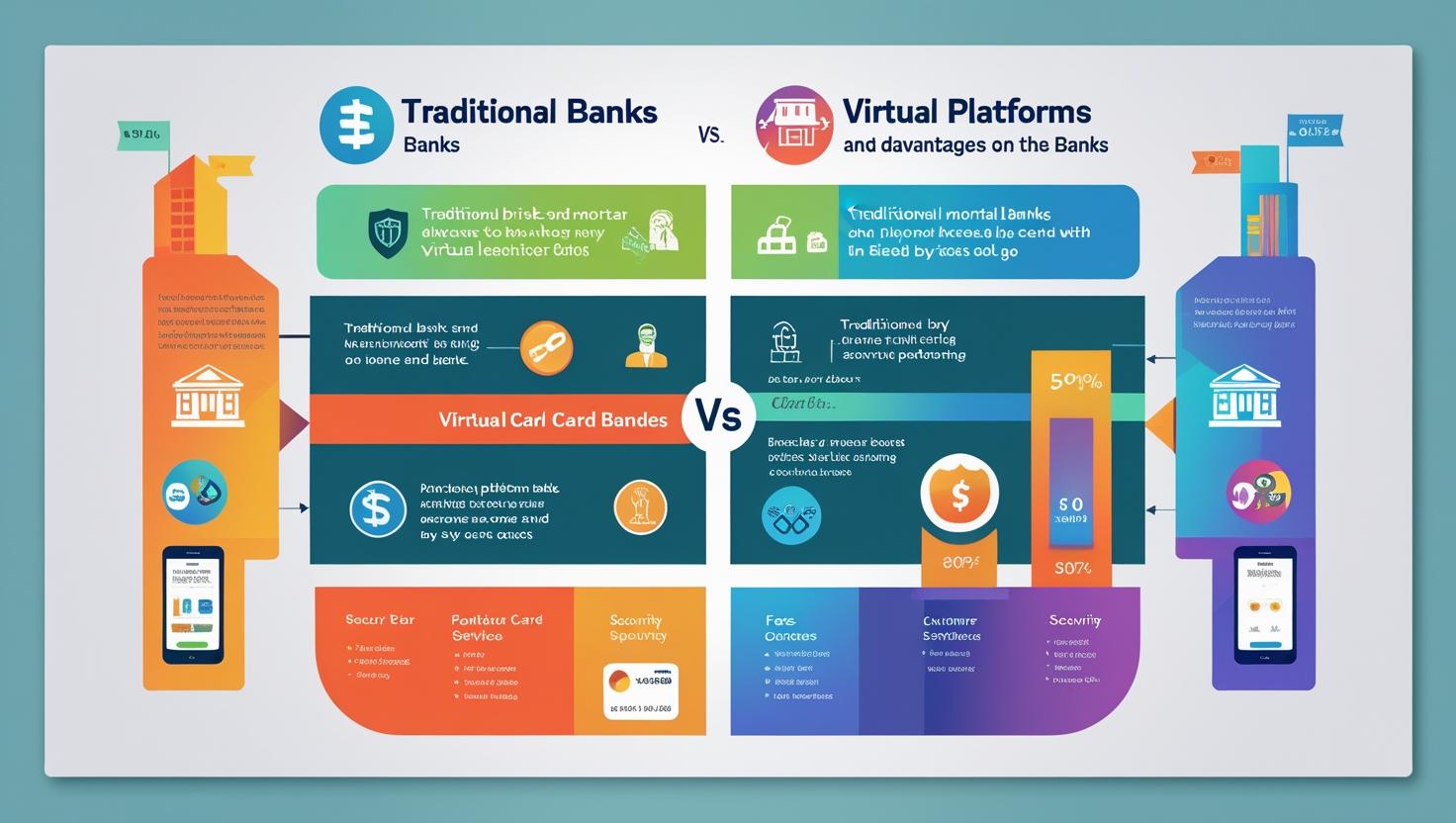
Security and Privacy: Protecting Sensitive Information
Security has always been a central concern in finance. Traditional banks rely on established infrastructure, offering features like two-factor authentication and anti-fraud protections. However, physical cards and static banking details often expose users to risks such as theft, phishing, and card skimming.
Virtual card platforms take a more dynamic approach:
-
Each card number can be generated instantly and used independently, reducing exposure.
-
Payments avoid sharing real bank account information, minimizing theft risk.
-
Leading platforms comply with PCI DSS, ensuring global payment security standards are met.
Here, BUVEI offers an added advantage with its transparent fee structure and privacy protection, enabling users to transact securely while maintaining control over spending.
Flexibility and Global Compatibility
While traditional banks operate within rigid systems, they sometimes lag in adapting to the needs of international users—especially businesses engaging in cross-border digital payments. Currency conversion fees, geographic restrictions, and slow transfer times can create unnecessary hurdles.
Virtual cards, by contrast, excel in flexibility:
-
They support multiple BINs (Visa/Mastercard), boosting success rates for global payments.
-
Compatible with major platforms like Google Ads, Meta Ads, TikTok Ads, Microsoft Ads, as well as SaaS subscriptions (ChatGPT, Canva, Notion, etc.).
-
Perfect for both business operations and everyday purchases, from digital marketing campaigns to travel bookings.
For example, Buvei’s Multiple BIN Support allows businesses to optimize their payment routes, ensuring higher approval rates and fewer declines across platforms—a key advantage for global advertising and e-commerce.
Cost and Efficiency: Managing Fees in the Digital Economy
One of the biggest frustrations with traditional banks is their high fee structure. Wire transfers, international remittances, and currency exchanges often come with hidden costs and delays, which can slow down business operations and drain resources.
Virtual cards solve this challenge with efficiency and transparency:
-
USDT top-ups (TRC20/ERC20) enable fast, low-cost funding while bypassing excessive bank fees.
-
Funds typically arrive instantly, compared to multi-day delays with banks.
-
Users can set custom spending limits for better budget control.
BUVEI simplifies this with instant card issuance and a transparent fee structure, allowing businesses to save money while gaining full visibility into their financial activity.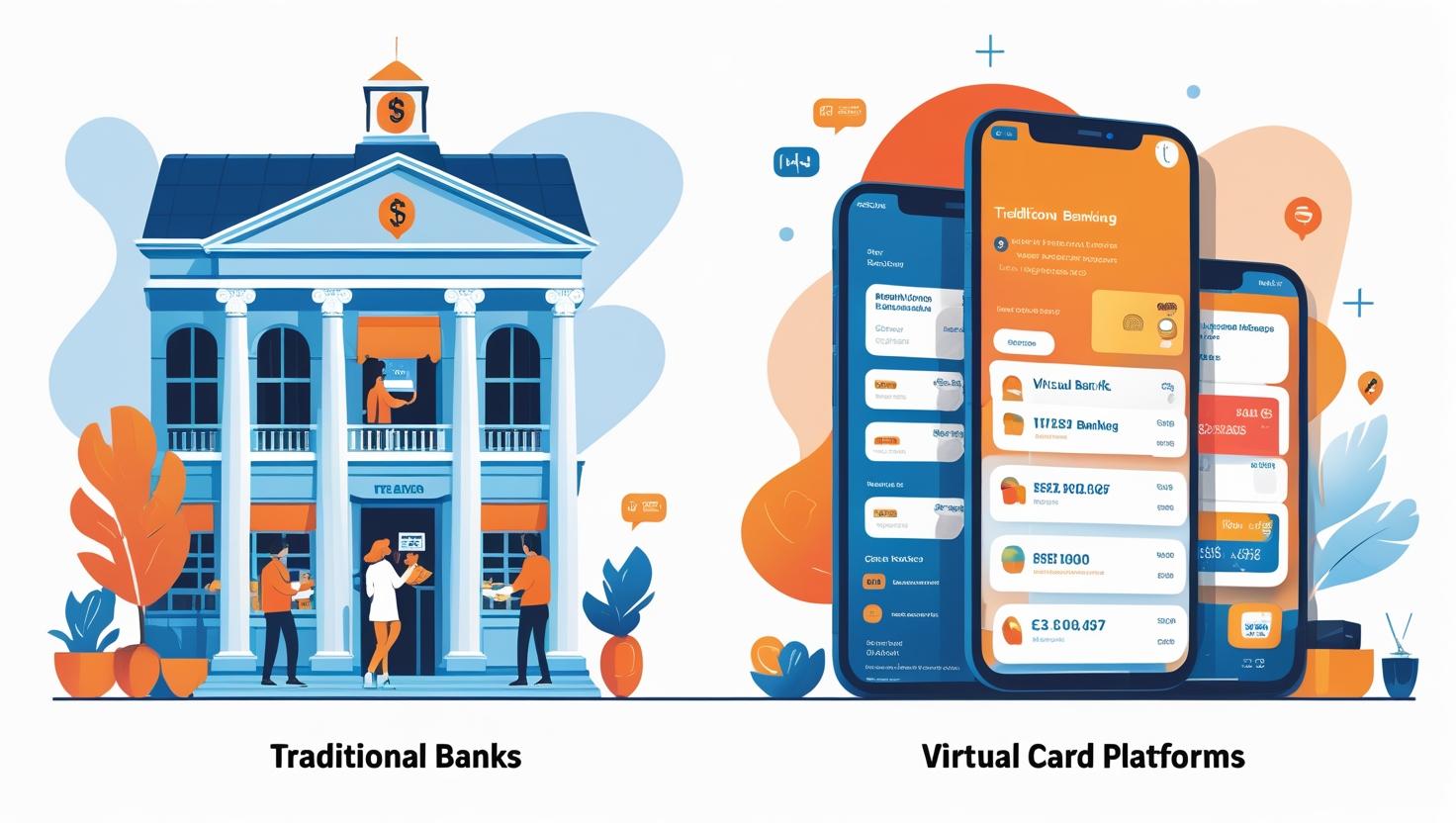
Convenience and Modern Business Needs
Traditional banking often involves lengthy onboarding processes and strict KYC requirements, which can slow down startups or digital-first businesses. For teams needing quick access to multiple cards, the process is inefficient.
Virtual card platforms streamline the experience:
-
Instant issuance allows new cards to be created within minutes, no complex paperwork required.
-
Multi-account management supports batch card creation and top-ups, making it ideal for teams running multiple ad campaigns.
-
Real-time customer service ensures problems are solved quickly, compared to the slower response times often seen with banks.
Buvei, for instance, offers real-time support and dedicated account managers, giving businesses the personalized service they need to thrive in competitive digital markets.
Summary
Both traditional banks and virtual card platforms have their strengths. Banks provide stability and legacy trust, but in the fast-paced digital economy, businesses and individuals require more flexibility, transparency, and efficiency.
Virtual cards stand out as the better fit for the digital age, offering:
-
Enhanced security and privacy with PCI DSS compliance
-
Global compatibility across platforms and industries
-
Cost efficiency with transparent fees and USDT top-ups
-
Convenience through instant issuance and modern multi-card management
As businesses scale and consumer habits continue to shift online, virtual card platforms like BUVEI provide the tools needed to succeed—without the friction and fees of traditional banking.
In the future, the most successful companies will likely combine the stability of banks with the innovation of virtual payment solutions, but for those embracing digital growth today, virtual cards are the smarter choice.