As AI tools become core infrastructure for developers and businesses, managing API billing is more important than ever. Platforms like OpenAI rely on stable payment methods to ensure uninterrupted access.
However, many users face issues when paying for API usage—especially across regions or with certain card types. That’s why virtual cards OpenAI API payments are increasingly the go-to solution for developers in 2026.
How OpenAI API Billing and Verification Work
Understanding the billing model is key to avoiding issues.
Payment Structure
- Usage-based billing (pay-as-you-go)
- Monthly invoicing or automatic charging
Card Verification
- Small authorization charge during setup
- Requires valid card details and sufficient balance
Key Requirement
Your payment method must support:
- International transactions
- Recurring billing
- Stable authorization
Without these, payments may fail—even if funds are available.
Common Reasons Virtual Cards Get Declined
Not all virtual cards are created equal. Many users encounter declines due to configuration issues.
1. Unsupported BIN Regions
- Some cards are not accepted globally
- Region mismatch can trigger declines
2. Insufficient Balance
- Even small authorization charges can fail
- Usage spikes can exceed limits
3. Disabled Recurring Payments
- Some cards block recurring billing
- API payments require continuous authorization
4. Low Trust Score
- New or rarely used cards may be flagged
- Lack of transaction history
5. Currency and Processing Issues
- Cards without USD support may fail
- Conversion problems
Understanding these factors helps you choose the right setup.
Choosing a Virtual Card for OpenAI API (Buvei Example)
When selecting a virtual card provider, reliability matters more than anything.
What to Look For
- Multi-BIN support
- High approval rates
- Support for recurring billing
- Multi-currency compatibility
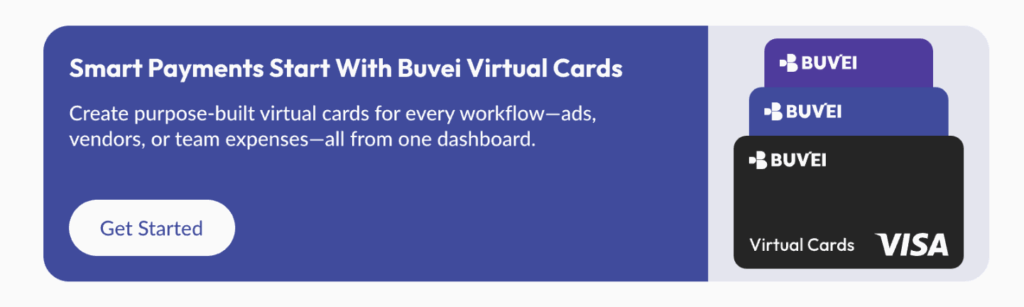
Why Buvei Is a Strong Option
Buvei offers features tailored for API payments:
- Multi-BIN cards → Better acceptance for global platforms
- USD compatibility → Essential for API billing
- Flexible card creation → Create dedicated cards per project
- Crypto funding (USDT) → Fast and efficient deposits
This makes it suitable for developers managing ongoing API usage.
Recommended Settings for OpenAI API Payments
To reduce payment failures, configuration is critical.
Use a Dedicated Card
- One card per API account
- Avoid mixing payments
Set Sufficient Limits
- Cover expected monthly usage
- Include buffer for spikes
Enable Recurring Billing
- Ensure card supports automatic charges
Choose the Right BIN Region
- U.S. BINs are typically more reliable
Maintain Activity
- Use the card regularly
- Build transaction history
These settings improve approval rates and stability.
How to Avoid Renewal Failures
Recurring billing is where most users encounter problems.
Monitor Usage
- Track API consumption
- Avoid unexpected overages
Keep Balance Updated
- Ensure funds are available before billing cycles
Replace Cards Proactively
- If a card shows instability, switch early
Avoid Frequent Failed Attempts
- Multiple declines can trigger restrictions
Use Backup Cards
- Prepare secondary cards for redundancy
This approach ensures uninterrupted API access.
Final Thoughts
As AI adoption accelerates, having a reliable payment setup is essential. Virtual cards OpenAI API users rely on today provide flexibility, control, and improved success rates compared to traditional payment methods.
A well-configured OpenAI API payment virtual card setup can help you avoid declines, manage costs, and scale usage without interruptions. Platforms like Buvei make it easy to implement this system, giving developers and businesses the tools they need to operate efficiently in 2026.