Introduction
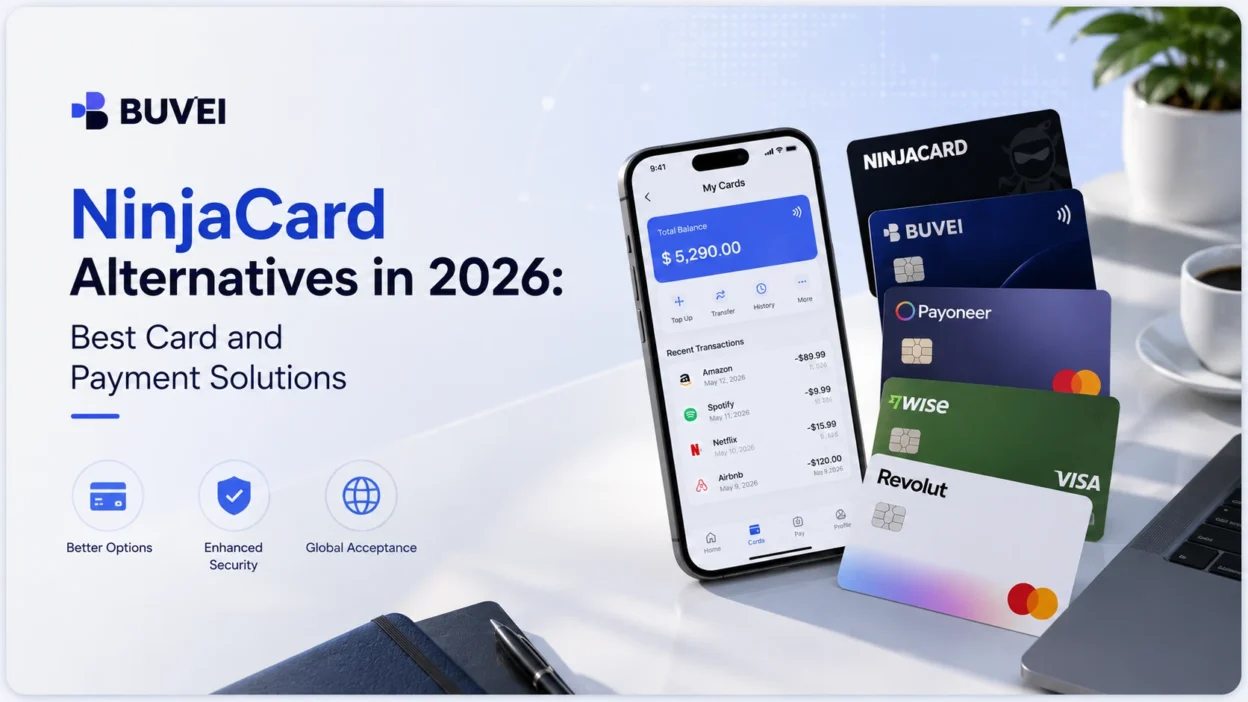
NinjaCard combines banking, debit card, and credit-related services in one financial platform. However, users searching for NinjaCard alternatives may have different needs, such as dedicated virtual cards, international payments, or better control over online and business spending.
This guide compares NinjaCard with BUVEI, Revolut, Wise, Privacy.com, and Airwallex to help you find the right card or payment solution for different needs in 2026.
Why Consider a NinjaCard Alternative?
The main reason to consider a NinjaCard alternative is that different users need different types of payment tools. NinjaCard focuses on banking and card services, including checking and savings accounts and a Visa debit card, while its FlexLine product provides a revolving line of credit.
Businesses and online professionals may instead need virtual cards for SaaS subscriptions, advertising platforms, AI tools, e-commerce, and other digital services. Others may prioritize international transfers, multi-currency spending, or more structured business payment management.
As a result, the best NinjaCard alternative depends on the type of payments you make and how you want to manage your spending.
Best NinjaCard Alternatives in 2026
The providers below serve different payment needs rather than offering identical products. Instead of ranking them from first to last, each option is categorized according to what it does best.
BUVEI — Best for Virtual Card and Online Payment Management
BUVEI takes a more specialized approach than NinjaCard, focusing on virtual cards and online payment management rather than combining banking and credit services.
BUVEI provides virtual Visa and Mastercard solutions for businesses and online users who need flexible payment methods for digital services and online transactions. Its current virtual card offering supports use cases including SaaS, advertising, travel, and e-commerce, with per-card spending limits and enterprise controls.
For businesses managing multiple digital services, separate virtual cards can help organize payments across different spending categories. For example, a company can use different cards for software subscriptions, advertising expenses, or specific projects rather than relying on one payment method for every transaction.
BUVEI also provides tools for managing cards and business spending, including sub-accounts, role-based permissions, real-time reconciliation, and API access for enterprise users.
The key difference between NinjaCard and BUVEI is their product focus. NinjaCard centers on banking, debit card spending, and credit services, while BUVEI is built around virtual card issuance and online payment use cases.
Best for: Businesses, freelancers, agencies, and online professionals who need virtual cards for SaaS subscriptions, digital services, advertising, and online business expenses.
Revolut — Best for Digital Banking and Multi-Currency Spending
Revolut combines digital banking, card services, currency exchange, and international payments. Its business offering includes physical and virtual cards, spending controls, and support for subscriptions, suppliers, and team spending.
Compared with NinjaCard, Revolut may be a better fit for users and businesses that regularly spend internationally or want a broader digital banking ecosystem.
Best for: Digital banking and multi-currency spending.
Wise — Best for International Money Management
Wise focuses on international transfers, multi-currency accounts, and cross-border financial services. Its business products are designed to help companies manage international money and spending across supported markets.
For businesses working with international clients, suppliers, or contractors, Wise can be useful for managing payments across currencies. Its primary focus, however, is international money management rather than dedicated virtual card management for online subscriptions and digital services.
Best for: International transfers and multi-currency financial management.
Privacy.com — Best for Privacy-Focused Online Payments
Privacy.com focuses on virtual cards and online payment privacy. Its cards can help users avoid sharing their primary payment details directly with merchants while providing additional controls over certain transactions.
Features such as merchant-specific cards, spending controls, and disposable card options can make it useful for users who prioritize transaction-level control. Its availability is primarily focused on the U.S. market, which may limit its suitability for international users.
Best for: U.S. users who prioritize online payment privacy and virtual card controls.
Airwallex — Best for Global Business Payments
Airwallex provides global business accounts, international payments, currency management, and business card products. Its virtual and physical cards can support business spending, while its broader platform is designed for companies operating across multiple markets.
Compared with NinjaCard, Airwallex is more focused on global business financial infrastructure and is therefore better suited to companies with international operations.
Best for: Global businesses that need international payment infrastructure and corporate spending management.
NinjaCard Alternatives Compared
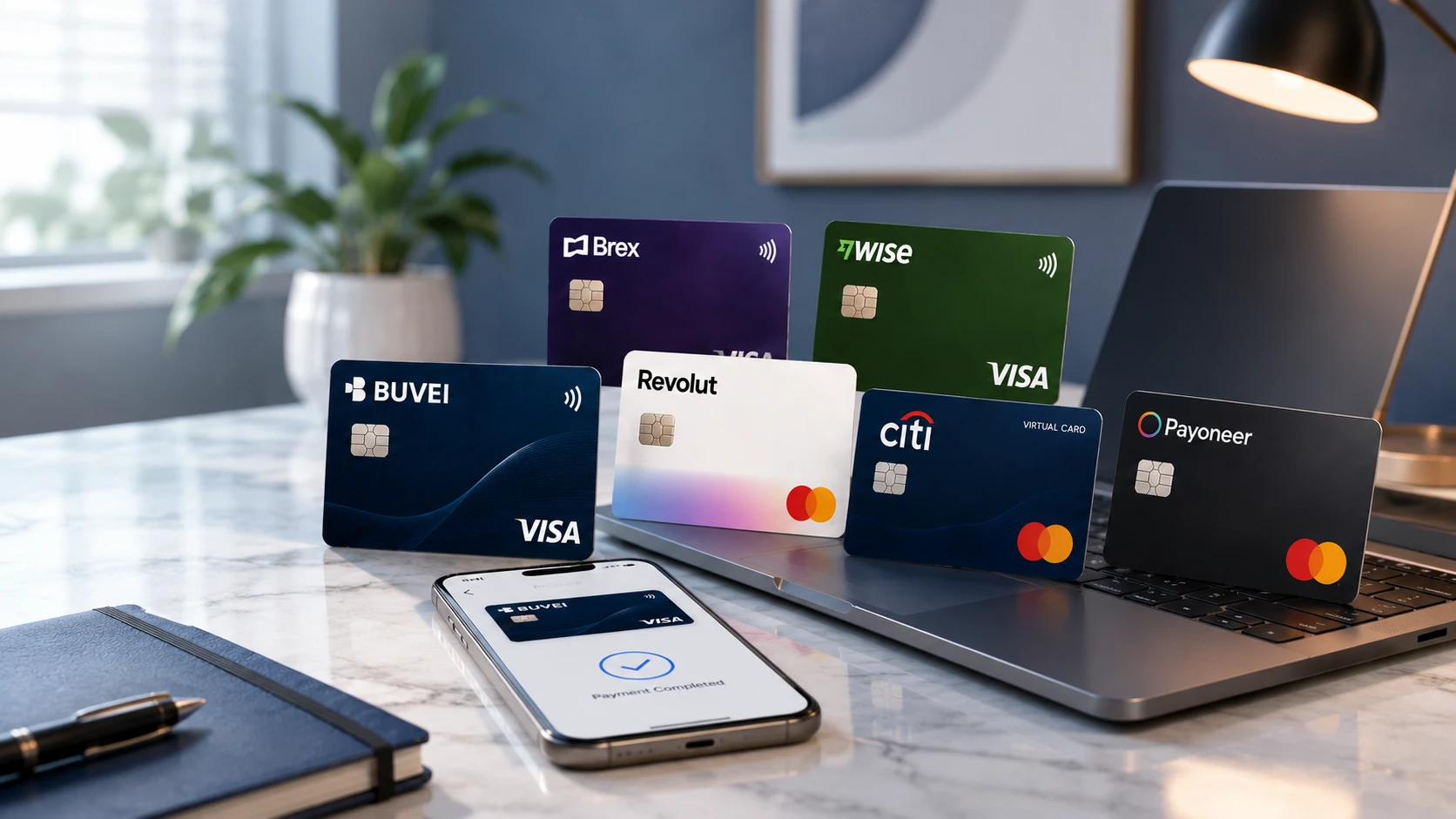
These providers differ primarily in their product focus and target use cases.
| Provider | Primary Focus | Card / Payment Model | Best For |
| NinjaCard | Banking & credit | Debit card + credit | Everyday banking |
| BUVEI | Virtual card payments | Virtual cards | Online & digital payments |
| Revolut | Digital banking | Physical + virtual cards | Multi-currency spending |
| Wise | International payments | Account + card | Cross-border transactions |
| Privacy.com | Payment privacy | Virtual cards | Online payment controls |
| Airwallex | Global business payments | Account + physical/virtual cards | Business spending |
The comparison shows that these providers are not direct substitutes in every situation. Each addresses a different part of the broader card and payment market.
NinjaCard vs BUVEI: Which Solution Is Right for You?
NinjaCard and BUVEI are designed around different financial needs.
NinjaCard is more suitable for users who want a broader financial account with banking and card services. Its FlexBanking product provides checking and savings functionality alongside a Visa debit card, while FlexLine provides eligible users with access to a revolving line of credit.
BUVEI takes a more specialized approach to virtual cards and online payments. Its use cases are particularly relevant to businesses and online professionals managing SaaS subscriptions, digital tools, advertising payments, and other recurring online expenses. BUVEI also provides per-card spending controls and enterprise card-management capabilities.
The choice ultimately depends on what you need your card to do.
NinjaCard may be a better fit if you need checking and savings services, everyday debit card spending, or access to credit.
BUVEI may be a better fit if you need dedicated virtual cards, online payment management, SaaS and digital subscriptions, or digital business expense management.
In simple terms, NinjaCard is more focused on banking and broader financial services, while BUVEI provides a specialized solution for virtual card-based online payments.
How to Choose a NinjaCard Alternative
Start by identifying your primary payment need.
If you need everyday banking and a debit card, NinjaCard may still be suitable. Users focused on digital banking and multi-currency spending may consider Revolut, while Wise is more focused on international money management.
Privacy.com is designed around online payment privacy, and Airwallex targets businesses with global payment requirements.
For users whose main priority is virtual cards for SaaS subscriptions, digital services, advertising, and online business expenses, BUVEI offers a more focused alternative.
Frequently Asked Questions
What are the best NinjaCard alternatives in 2026?
The best alternative depends on your payment needs. Revolut is suited to digital banking and multi-currency spending, Wise focuses on international money management, Privacy.com emphasizes online payment privacy, and Airwallex targets global businesses. BUVEI is particularly focused on virtual cards and online payment management.
Is NinjaCard a virtual card provider?
NinjaCard's primary products are centered on banking, debit card, and credit services rather than a dedicated virtual card platform. Its FlexBanking product includes a Visa debit card, while FlexLine is a revolving line of credit. Users specifically looking for dedicated virtual cards may therefore want to compare specialized alternatives such as BUVEI.
Which NinjaCard alternative is best for virtual cards?
The right choice depends on how you plan to use the cards. BUVEI is focused specifically on virtual cards and online payment management, while providers such as Revolut, Wise, Privacy.com, and Airwallex offer digital or virtual card capabilities as part of broader financial or business payment products. Revolut Business, for example, supports virtual cards for online spending, subscriptions, and recurring payments.
Conclusion
NinjaCard can be a useful option for users looking for banking, debit card, and credit-related services. However, different payment requirements may make another provider a better fit.
Revolut and Wise are better suited to international financial management, Privacy.com focuses on online payment privacy, and Airwallex is designed around global business payments.
For businesses, freelancers, agencies, and online professionals whose primary need is virtual cards for SaaS subscriptions, digital services, advertising, and online expenses, BUVEI offers a more specialized approach to online payment management.
Sources
NinjaCard. FlexBanking: Checking, Savings and Debit Card Services
Revolut Business. Corporate Cards and Virtual Card Solutions
Wise Business. International Business Account and Payment Solutions
Privacy.com. Virtual Cards and Online Payment Controls
Airwallex. Virtual Cards and Business Expense Management Solutions
BUVEI. Global Virtual Cards for Online Payments and Digital Expenses