Introduction
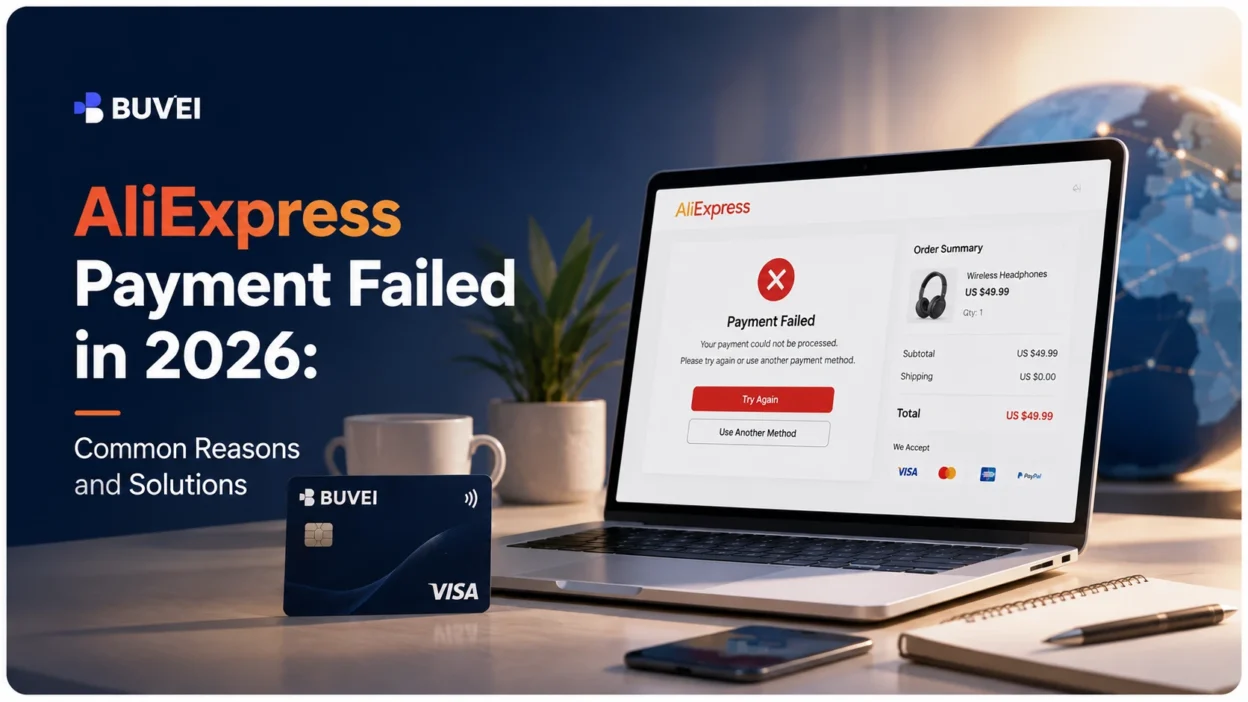
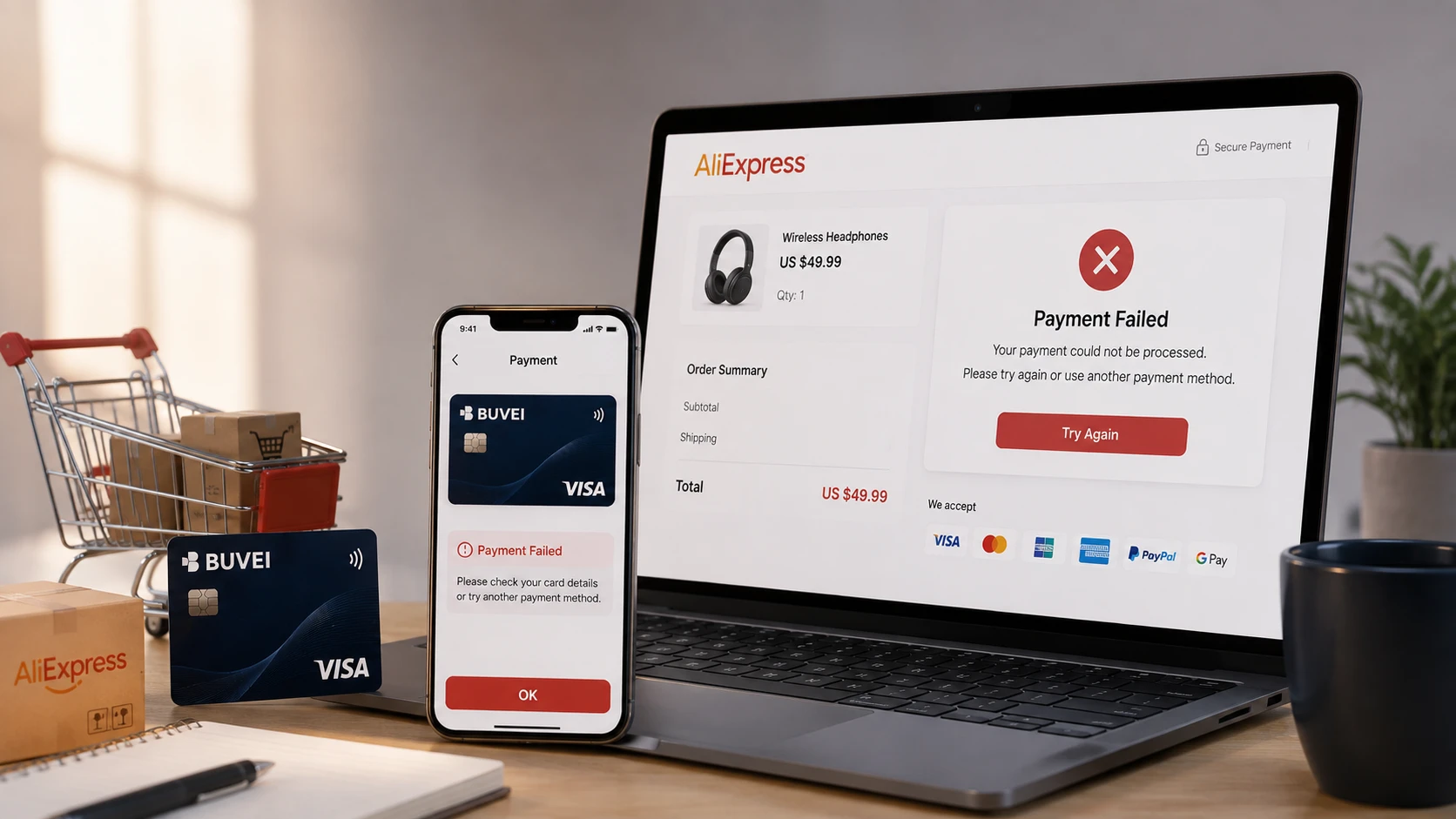
As cross-border shopping continues to grow, payment issues on platforms like AliExpress have become a common concern for international shoppers. Many users experience declined cards, failed transactions, or payment verification problems when completing purchases.
AliExpress payment failed issues can happen for different reasons, including card restrictions, security checks, regional limitations, and payment compatibility challenges. This article explores why AliExpress payments fail in 2026 and how different payment methods, including virtual cards, are changing the way users manage online transactions.
Why AliExpress Payment Failures Are Becoming More Common in 2026
AliExpress connects buyers and sellers from different countries, making international payment processing an important part of the shopping experience. However, cross-border transactions involve multiple systems, including banks, card networks, payment providers, and regional regulations.
Payment failures do not always indicate a problem with AliExpress itself. In many cases, transaction issues come from card providers, payment verification systems, or compatibility differences between payment methods and online merchants.
As online shopping becomes more global, users are also paying more attention to payment flexibility, security, and better control over digital transactions.
Growing Cross-Border Payment Challenges
International shopping often involves payments between different countries, currencies, and financial systems. A card that works for local purchases may experience issues when used for overseas transactions.
Factors such as international payment settings, currency conversion, and regional banking policies can affect whether a transaction is approved.
For frequent cross-border shoppers, choosing a payment method that supports international transactions has become increasingly important.
Stronger Payment Security Checks
Online marketplaces and payment providers continue to improve security systems to reduce fraudulent transactions.
These systems may review factors such as transaction behavior, card information, account activity, and payment location. While these checks help protect users, they can sometimes result in legitimate payments being declined.
As digital payments become more secure, users are increasingly looking for payment solutions that provide both convenience and better transaction control.
Common Reasons Behind AliExpress Payment Failures
Card Issuer Restrictions
One of the most common reasons for AliExpress payment failures is a restriction from the card issuer.
Banks and card providers may decline transactions due to international payment settings, fraud prevention systems, spending limits, or unusual transaction activity.
For users making purchases from international platforms, checking whether their card supports overseas online payments is an important step in improving payment reliability.
Payment Verification Problems
Payment verification is another factor that can affect transaction success.
Online merchants and payment networks may require additional verification to confirm payment ownership. Problems such as incorrect billing information, inconsistent account details, or failed verification checks may cause a transaction to be rejected.
These security measures are designed to protect users, but they can sometimes create additional challenges during checkout.
Card Compatibility Issues
Different payment methods have different levels of compatibility with online merchants. Credit cards, debit cards, prepaid cards, and virtual cards may perform differently depending on the payment network, merchant requirements, and regional availability.
For international shoppers, payment compatibility has become an important consideration. A payment method that works on one platform may not always work on another.
Virtual cards are becoming increasingly popular because they provide dedicated payment details for online transactions and give users more flexibility when managing digital spending.
Regional and Currency Limitations
International payments can also be affected by regional and currency-related factors. Differences in supported currencies, country restrictions, and local payment regulations may influence transaction approval. For users shopping globally, having a payment method that supports international usage can make online purchases more convenient.

Credit Card, PayPal, and Virtual Cards: Which Payment Method Works Best for AliExpress?
Different payment methods provide different advantages depending on user needs.
| Payment Method | Advantages | Limitations |
| Credit Card | Widely accepted and familiar for international payments | Uses primary card details directly |
| PayPal | Provides an additional payment layer where available | Availability varies by region and transaction |
| Virtual Card | Offers dedicated payment details and flexible spending management | Acceptance depends on provider and merchant compatibility |
Credit Cards
Credit cards remain one of the most commonly used payment methods for AliExpress. They are convenient and widely accepted, especially for users who regularly make international purchases.
However, using a primary credit card across multiple online platforms may expose personal payment information more frequently. Some users prefer alternative solutions that provide more separation between online purchases and their main financial accounts.
PayPal
PayPal can provide an additional layer between users and merchants. For users who prefer not to directly enter card details on multiple websites, PayPal may offer a convenient alternative. However, PayPal availability and acceptance can vary depending on the user's region, merchant settings, and transaction type.
Virtual Cards
Virtual cards provide another approach to online payments by allowing users to create dedicated digital payment methods.
Compared with traditional cards, virtual cards can provide more flexibility for managing online transactions, especially for users who regularly shop internationally, subscribe to digital services, or make payments across multiple platforms.
Why Virtual Cards Are Becoming Popular for Online Shopping
The growth of e-commerce has changed how users think about payment security and transaction management.
Many consumers no longer want to rely on a single payment method for every online transaction. Instead, they are looking for solutions that provide more control over digital spending.
Virtual cards can help users organize online payments by providing separate card details for different payment scenarios. This approach can be useful for international shopping, subscriptions, advertising platforms, and other digital services.
Virtual cards are not a universal solution for every payment issue, as acceptance depends on merchant requirements and payment networks. However, they provide users with another flexible option for managing online transactions.
Virtual Cards vs Traditional Cards for Online Shopping
Traditional payment cards are designed for broad everyday spending, while virtual cards focus more specifically on digital payment scenarios.
| Feature | Traditional Cards | Virtual Cards |
| Online payment use | Available | Designed for digital transactions |
| Payment details | Usually tied to physical card | Separate digital card details |
| Spending management | General controls | More flexible management options |
| Multiple payment methods | Limited | Easier to organize |
For users who frequently make online purchases, virtual cards can provide a more structured way to manage digital expenses.
How BUVEI Virtual Cards Support Flexible Online Payments
As online commerce becomes increasingly global, users and businesses need payment solutions that can support different digital payment scenarios.
BUVEI Virtual Card provides virtual card solutions designed for online payments, digital services, and international transactions. Instead of relying on a single traditional payment method, users can manage online payments through dedicated virtual card solutions.
For international shoppers and digital businesses, this approach can provide better payment organization and more flexibility when managing online expenses.
BUVEI Virtual Cards can support different online payment scenarios, including:
- International online shopping
- Digital subscriptions
- SaaS platforms
- Advertising services
- Other global online merchants
Virtual cards can help users separate payment activities, improve transaction management, and maintain better visibility over digital spending.
While payment acceptance always depends on merchant requirements and payment networks, having a flexible virtual card solution gives users another option when managing online transactions across different platforms.
Frequently Asked Questions
Why does AliExpress reject my card?
AliExpress may reject a card because of bank restrictions, payment verification issues, transaction limits, regional limitations, or compatibility problems between the card and payment system.
Can I use a virtual card for AliExpress payments?
Virtual card acceptance depends on the card provider, payment network, and AliExpress payment requirements. Users should check whether their virtual card supports international online transactions.
Why does AliExpress reject my virtual card?
A virtual card may be declined due to merchant compatibility, payment restrictions, insufficient balance, or provider limitations. Virtual card acceptance depends on multiple payment factors.
Is it safe to use a credit card on AliExpress?
Credit cards can be safe when users follow standard security practices. However, some users prefer virtual cards because they provide separate payment details and additional control over online transactions.
Conclusion
AliExpress payment failures can happen for different reasons, including card restrictions, verification requirements, payment compatibility issues, and regional limitations.
As cross-border shopping continues to expand, users are increasingly looking for payment solutions that provide more flexibility and control. Virtual cards offer another option for managing online transactions, especially for users who frequently shop internationally or use multiple digital services.
For businesses and individuals managing global online payments, choosing the right payment solution can help create a more organized and flexible payment experience.