
As digital finance moves toward greater decentralization and real-world integration, new infrastructure is emerging to bridge the gap between traditional finance and Web3 ecosystems. One of the most promising developments is the creation of blockchain-native credit bureaus—systems designed to enable on-chain lending and credit assessments without sacrificing data privacy or regulatory integrity.
In this context, the recent partnership between Keeta, a high-performance blockchain protocol, and Solo, a platform for creating verified digital credentials, marks a significant leap forward. Both projects are backed by former Google CEO Eric Schmidt, highlighting the seriousness of their vision and the scale of the opportunity.
What the Partnership Delivers
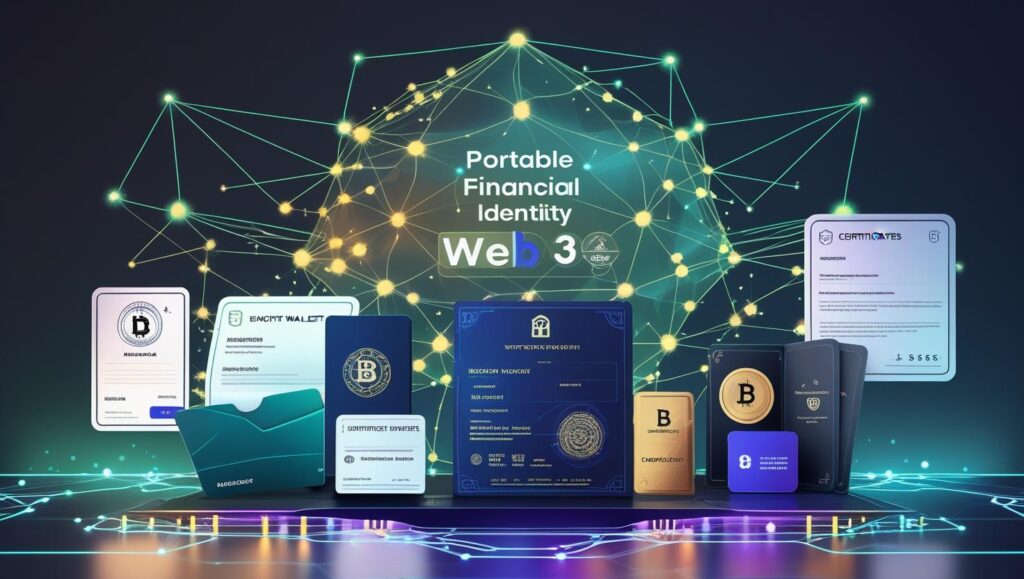
Keeta and Solo are working to build a decentralized credit verification framework that transforms how financial identity is constructed and used online. At the heart of this initiative is Solo’s PASS—a digital certificate that aggregates fragmented financial credentials into a verified, tokenized identity.
PASS includes Know Your Customer (KYC), Know Your Business (KYB), income verification, crypto asset holdings, and business credentials. The result is a secure, portable financial identity that enables individuals and businesses to access credit markets, wallets, decentralized applications (dApps), and embedded finance products globally—with full user permission and privacy controls.
Keeta positions itself as the only blockchain platform capable of supporting this type of institutional-grade credit product, thanks to its high-speed network and compliance-forward architecture.
Why This Matters for Payments and Fintech
For platforms like Buvei operating in virtual card issuance, spend management, and embedded finance, this development signals the beginning of a new credit layer—one that’s decentralized, privacy-preserving, and globally accessible.
Rather than relying on fragmented credit reports or opaque risk scoring, fintechs and payment providers can plug into a system where user data is verifiable, tokenized, and actively permissioned by the user. This opens new doors for:
-
Real-time credit decisioning for underbanked or global users
-
Pseudonymous lending based on trusted digital credentials
-
Portable credit scoring across apps, regions, and ecosystems
-
Embedded finance solutions with granular risk controls
As more users earn income through digital channels—especially in stablecoins or decentralized platforms—the demand for verifiable yet privacy-preserving credit credentials will only increase. PASS represents a modular way to meet that demand while enabling faster time-to-credit and deeper financial inclusion.
Embedded Compliance at Scale
A key challenge for any blockchain-native credit bureau is regulatory alignment. Keeta claims to tackle this head-on by offering robust security controls, verified user onboarding, and automated compliance protocols—factors critical for institutions looking to issue or underwrite loans based on on-chain data.
This means that PSPs, banks, and embedded finance providers won’t just benefit from faster lending; they’ll also operate within a framework that addresses risk, governance, and identity integrity.
Buvei’s View: Building the Future of On-Chain Credit
At Buvei, we believe that the future of financial infrastructure lies in interoperability, trust, and user-controlled data. The collaboration between Keeta and Solo aligns closely with our own vision—where spend management and credit infrastructure evolve together to serve modern businesses.
As Web3 and traditional finance converge, verified on-chain identities like PASS could become the new standard for B2B payments, card issuing, and global expense management.
Looking Ahead
The first phase of the Keeta–Solo partnership is expected to launch in 2025, with verified profiles rolling out gradually. If successful, this project may lay the foundation for a trillion-dollar lending layer that’s secure, decentralized, and scalable.
For payment and fintech leaders seeking to future-proof their infrastructure, this development isn’t just interesting—it’s a call to prepare for a new paradigm in credit and identity.