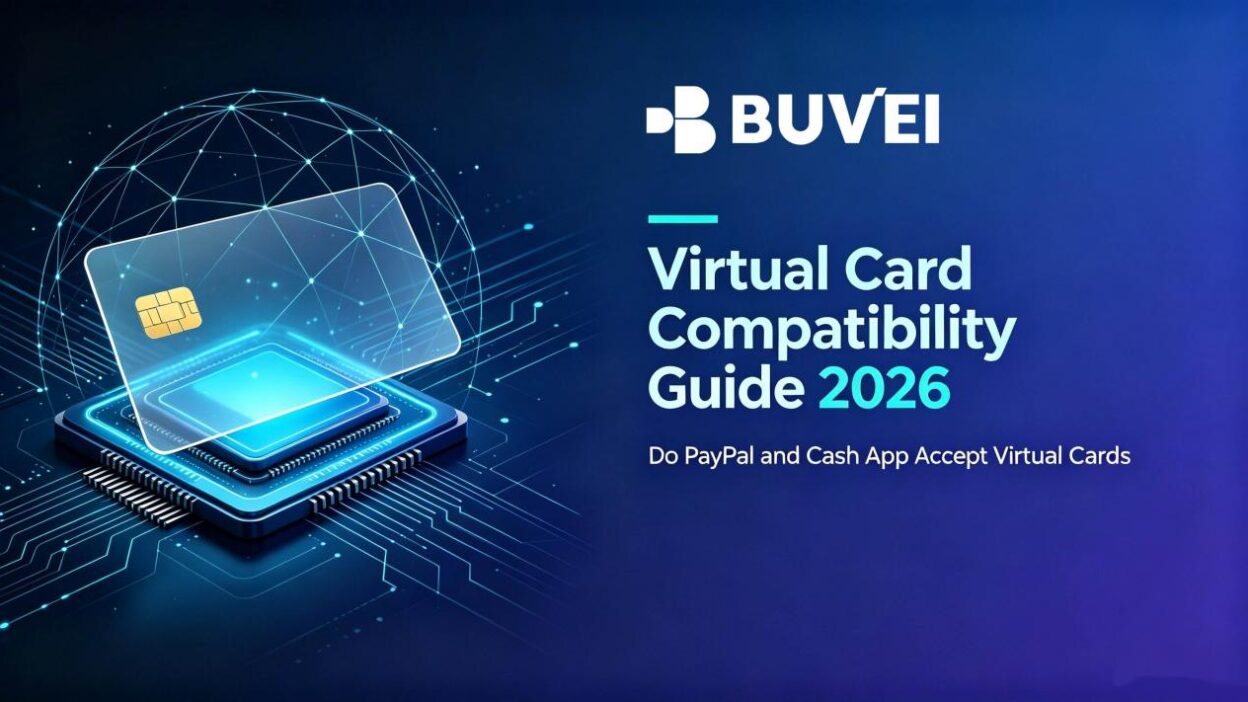
Virtual cards are increasingly used for online purchases, SaaS subscriptions, advertising, and digital services. But can they be used with platforms such as PayPal and Cash App?
The answer depends on factors such as the card network, issuer, card type, verification requirements, billing information, and regional availability. A virtual card that works for online purchases may not necessarily work with every payment platform.
This guide explains how virtual card compatibility works, whether virtual cards can be used with PayPal and Cash App, why payments may be declined, and what businesses should consider when choosing a virtual card solution.
What Determines Virtual Card Compatibility?
A virtual card is not automatically accepted by every payment platform. Compatibility depends on the platform’s requirements as well as the card’s network, issuer, usage restrictions, and verification capabilities.
Card Network and Issuer
Many payment platforms support major networks such as Visa and Mastercard. However, network support alone does not guarantee acceptance.
The issuer, issuing region, card program, and transaction restrictions can also affect compatibility. Two virtual cards using the same network may produce different results because they are issued under different programs.
Card Type and Usage Scenario
Reusable virtual cards are generally better suited to recurring payments such as SaaS subscriptions, advertising accounts, and digital services.
Disposable or limited-use cards are more appropriate for certain one-time purchases but may have limitations when a platform requires recurring transactions or repeated verification.
Choosing a card type that matches the intended payment scenario can help reduce payment failures.
Verification and Billing Requirements
Payment platforms may verify a card before allowing it to be added or used.
A virtual card can fail verification if billing information does not match the information provided on the platform. Account details, card information, regional settings, and additional authorization requirements may also affect whether a card is successfully linked.
For businesses, spending controls and transaction visibility are also important when evaluating a virtual card solution.
Do Virtual Cards Work With PayPal?
Yes, some virtual cards can be used with PayPal, but not every virtual card is guaranteed to work.
PayPal may accept eligible payment cards, but compatibility depends on factors such as the card network, issuer, card type, billing information, verification requirements, and region.
A virtual card that works for direct online purchases may not necessarily work when added to PayPal because additional verification or authorization may be required.
How PayPal Virtual Card Compatibility Works
When a virtual card is added to PayPal, the platform may verify the card and attempt an authorization transaction. Factors that can influence acceptance include:
- Card network and card type
- Issuer and card program policies
- Billing information
- Card balance and spending limits
- Regional availability
- Verification requirements
Reusable virtual cards are generally more suitable for recurring payment scenarios because they are designed for continued use.
Why Does PayPal Reject a Virtual Card?
A virtual card may fail when being added to PayPal or when making a payment for several reasons.
Verification failure can occur if PayPal cannot confirm the card information or complete the required authorization.
Card restrictions can also cause problems. Certain prepaid, disposable, or limited-use cards may not be suitable for platforms that require ongoing payment access.
Billing information mismatches are another common issue. If the billing information associated with the card does not match the information provided to PayPal, the card may be rejected.
Regional restrictions and issuer policies can also affect compatibility.
Do Virtual Cards Work With Cash App?
Some virtual cards may work with Cash App, but compatibility depends on the card and account requirements.
Being a Visa or Mastercard virtual card does not automatically guarantee that it can be linked or used successfully. Cash App may apply its own requirements when evaluating supported payment methods. Compatibility can depend on:
- Card network
- Card type
- Issuer policies
- Account eligibility
- Verification requirements
- Regional availability
Can You Link a Virtual Card to Cash App?
Some virtual cards may work with Cash App if they meet the platform’s supported payment requirements.
Users should also distinguish between Cash App’s own card features and an external virtual card issued by another provider. Third-party cards may be subject to different eligibility and verification requirements.
Virtual Cards and Digital Wallet Compatibility
Virtual card compatibility can also matter when using digital wallets such as Apple Pay and Google Pay. Whether a card can be added generally depends on issuer support, card eligibility, wallet requirements, and regional availability.
For businesses, broader compatibility can provide more flexibility across SaaS platforms, advertising networks, e-commerce websites, and other online services. However, compatibility is only one part of an effective virtual card strategy. Spending controls, transaction visibility, and organized card management can also be important.
Why Do Virtual Cards Get Declined?
Even when a virtual card appears compatible, a transaction can still fail. Common reasons include:
- Unsupported card type:Some platforms may restrict certain virtual, prepaid, disposable, or limited-use cards.
- Verification problems:Additional authentication or authorization requirements may prevent successful linking.
- Incorrect billing information:Differences between account information and card details can cause rejection.
- Insufficient balance:The available balance may not be enough to complete the transaction.
- Spending limits:Card-level controls may prevent a transaction from exceeding its configured limit.
- Regional restrictions:Some card programs and payment platforms may only support specific markets.
- Issuer restrictions:The issuer may block certain transaction types or merchant categories.
For businesses managing multiple cards, transaction visibility and configurable controls can make it easier to identify payment problems and manage spending.
How to Check Virtual Card Compatibility Before Payment
Before using a virtual card with a new platform, businesses should evaluate several factors. First, confirm whether the platform supports the card network and card type. A reusable virtual card may be more suitable for recurring subscriptions, while a limited-use card may be better for certain one-time purchases. Businesses should also verify:
- Billing information
- Available balance
- Spending limits
- Card status
- Regional availability
- Verification requirements
- Merchant and transaction restrictions
For companies managing multiple online payments, compatibility alone may not be enough. Finance and payment teams may also need to create cards for different purposes, control spending, monitor transactions, and identify failed payments efficiently.

How BUVEI Helps Businesses Manage Virtual Card Payments
For businesses, virtual card compatibility is only one part of a broader payment management strategy.
Companies may use virtual cards for SaaS subscriptions, advertising expenses, digital services, online purchases, and other business payments. As transaction volumes grow, managing these payments manually can become increasingly difficult.
BUVEI provides scalable virtual card solutions designed to help businesses manage online payments with greater flexibility and control.
Flexible Virtual Card Management
BUVEI helps businesses manage virtual cards across different payment scenarios, allowing companies to organize payments according to their operational needs. Businesses can use virtual cards for:
- SaaS subscriptions
- Advertising platforms
- Digital services
- Online business expenses
- Recurring merchant payments
Separating payment activities can make it easier to organize expenses and maintain clearer control over different payment channels.
Spending Controls
As businesses manage more cards and online transactions, spending control becomes increasingly important. BUVEI supports flexible card controls that can help businesses manage spending according to their operational requirements. Configurable spending limits and card-level controls can help companies establish clearer boundaries for different payment purposes.
Transaction Visibility
Businesses also need visibility into payment activity. BUVEI provides transaction visibility that can help companies monitor virtual card activity and identify unsuccessful or unexpected transactions. This can be particularly useful for businesses managing multiple subscriptions, advertising accounts, digital services, and other recurring expenses.
Scalable Virtual Card Infrastructure
As a business grows, its payment requirements can become more complex. Virtual cards can help companies create a more structured payment environment instead of relying on a limited number of physical cards or manually tracking multiple payment methods.
BUVEI’s scalable virtual card infrastructure is designed to support businesses managing multiple cards and payment scenarios while maintaining greater control over payment operations.
BUVEI Virtual Cards for Different Business Payment Scenarios
Virtual cards can support different types of business expenses, and each use case may require its own approach to card management.
SaaS Subscriptions
Businesses often manage multiple software subscriptions across departments and teams. Dedicated virtual cards can help organize recurring payments and make subscription-related expenses easier to track.
BUVEI virtual cards can support businesses looking for a more structured approach to managing recurring SaaS payments.
Advertising Expenses
Digital advertising often involves recurring transactions and multiple advertising accounts. Using separate virtual cards can help businesses organize advertising expenses and apply appropriate spending controls.
BUVEI’s virtual card management capabilities can support a more organized approach to advertising-related payments.
Digital Services
Businesses may use virtual cards for cloud services, online platforms, digital tools, and other internet-based services. Dedicated virtual cards can help separate different payment activities and make online expenses easier to manage.
Online Business Expenses
Virtual cards can also support a wide range of online business purchases. With appropriate card controls and transaction monitoring, companies can create a more structured approach to online spending while maintaining visibility into payment activity.
Virtual Card Compatibility Comparison
| Platform | Compatibility | Key Factors | Common Issues |
| PayPal | Card-dependent | Network, issuer, card type, verification, billing information | Linking failure, verification issues, issuer restrictions |
| Cash App | Card/account-dependent | Card type, network, issuer, account eligibility | Card restrictions, verification issues, regional limitations |
| Apple Pay | Issuer-dependent | Wallet support, card eligibility, region | Unsupported card integration, issuer restrictions |
| Google Pay | Issuer-dependent | Card availability, issuer support, regional availability | Verification problems, unsupported card type |
The key takeaway is that being a virtual card does not automatically make a card compatible with every platform.
Businesses should evaluate the card program, intended usage scenario, issuer policies, platform requirements, spending controls, and transaction management capabilities before choosing a virtual card solution.
Frequently Asked Questions
Can I add a virtual card to PayPal?
Some virtual cards can be added to PayPal, but compatibility depends on the card provider, card type, network, verification requirements, billing information, and regional availability.
Does PayPal accept virtual cards?
PayPal may accept eligible virtual cards, but not every virtual card will work. Issuer policies, card restrictions, and PayPal’s payment requirements can affect acceptance.
Can I link a virtual card to Cash App?
Some virtual cards may work with Cash App if they meet the platform’s supported payment requirements. Compatibility can vary depending on the card network, issuer, card type, account eligibility, and region.
Why is my virtual card declined?
A virtual card may be declined because of an unsupported card type, verification issues, incorrect billing information, insufficient balance, spending limits, issuer restrictions, or regional limitations.
What should businesses look for in a virtual card solution?
Businesses should consider more than platform compatibility. Important factors include card controls, spending limits, transaction visibility, card management capabilities, scalability, and support for different business payment scenarios.
Conclusion
Virtual card compatibility depends on the card network, issuer, card type, verification requirements, and platform policies. Before using a virtual card with PayPal, Cash App, or other digital payment platforms, businesses should consider both compatibility and payment management needs.
BUVEI provides scalable virtual card solutions with flexible spending controls and transaction visibility, helping businesses manage payments across SaaS subscriptions, advertising, digital services, and other online expenses.