


Choosing virtual cards for freelancers in Singapore takes more than finding a card with no issuance fee. Foreign exchange costs, funding charges, and declined subscriptions can all affect your budget, while account eligibility determines which services you can actually use.
This guide compares five options for SaaS subscriptions, AI tools, online advertising, and international spending, helping you choose a virtual card that fits your freelance workflow.
What to Check When Choosing Virtual Cards for Freelancers
Before choosing a provider, compare three essentials.
Total cost: Check issuance fees, monthly plans, funding charges, and foreign exchange costs. A card with no issuance fee may still cost more over time.
Payment compatibility: Confirm that the card supports your intended merchants and recurring payments. Acceptance varies by merchant and card program.
Spending controls and eligibility: Multiple cards, spending limits, and transaction records can help organize expenses. Also check whether you qualify for a personal account or need a registered business.
5 Virtual Cards for Freelancers in Singapore
| Provider | Best for | Main consideration |
|---|---|---|
| BUVEI | Dedicated online payments | Card options, spending controls, and merchant acceptance |
| Wise | International spending | Currency conversion and card access requirements |
| Revolut | Everyday online payments | Exchange rules and account terms |
| Aspire | Registered freelance businesses | Business eligibility and expense features |
| Airwallex | Multi-currency business expenses | Company requirements and conversion costs |
These providers serve different needs rather than forming a universal ranking. Compare their account requirements, costs, and supported payment scenarios before applying.
1. BUVEI — Best for Dedicated Online Payments
BUVEI is worth considering if a large share of your freelance expenses goes toward AI subscriptions, SaaS tools, design software, cloud services, and online advertising.
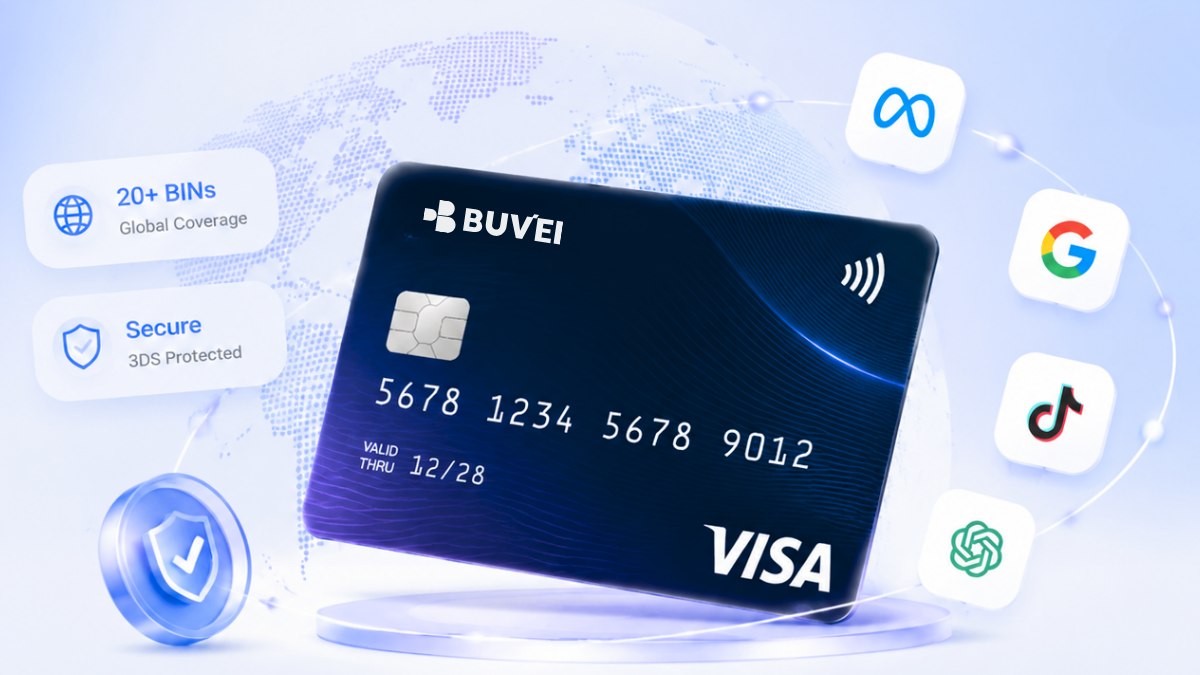
Its virtual-card offering includes Visa and Mastercard options across multiple BINs, card-management features, and per-card spending limits. These features can help users organize online expenses rather than running every subscription and advertising charge through a single card.
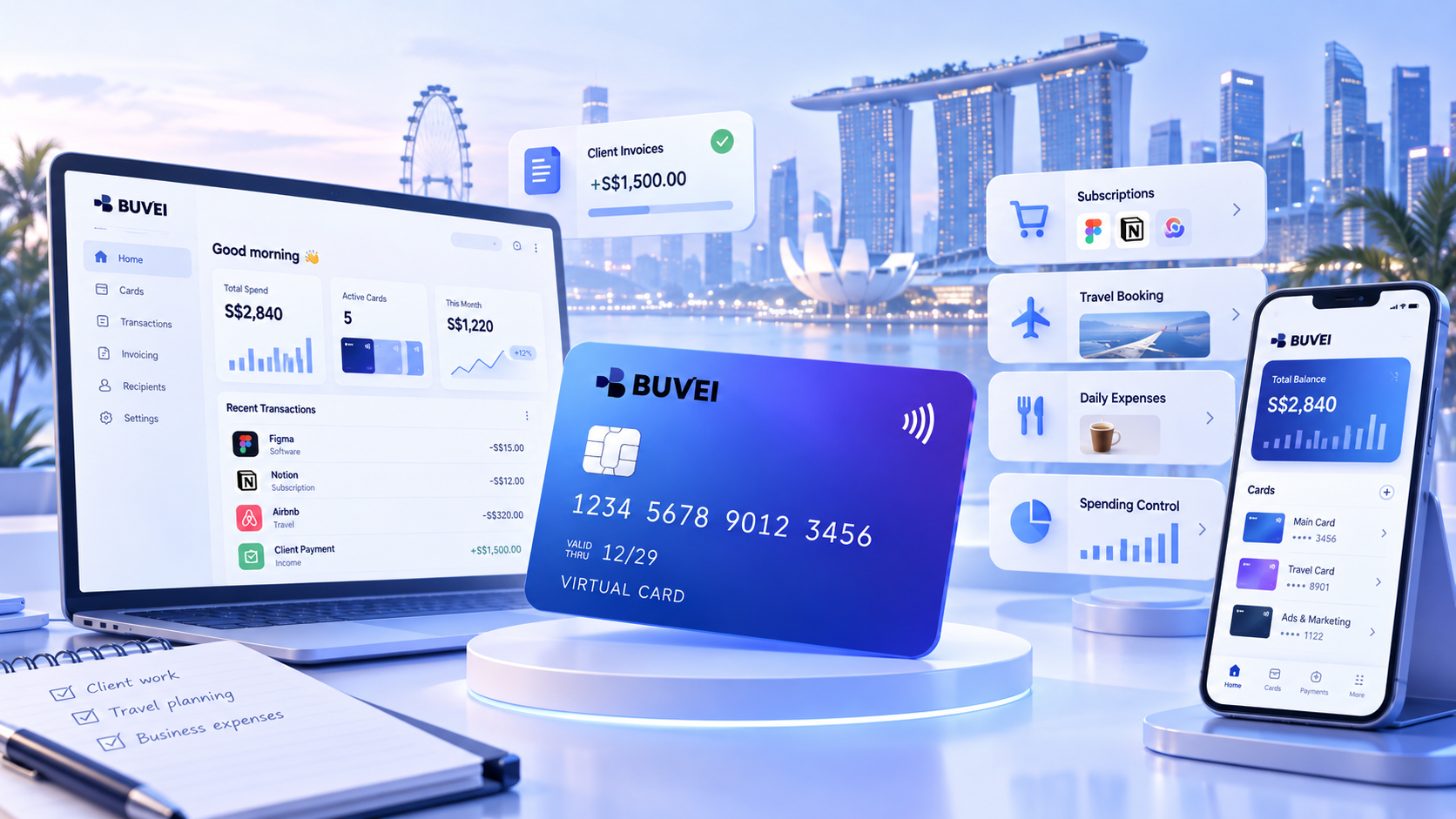
For example, you could allocate separate cards to software subscriptions and advertising expenses, where your available card options support that arrangement. Reviewing transactions by card can make recurring charges easier to identify and help keep spending within a planned budget.
Before applying from Singapore, check the current account requirements, available card programs, fees, funding methods, and merchant compatibility. Multiple BIN options do not guarantee that a particular merchant will accept a card, and a virtual card used to pay expenses should not be assumed to include a separate service for receiving client payments.
Best for: Freelancers who want to organize online payments across subscriptions, advertising, and other digital services.
2. Wise — Best for International Spending
Wise is worth considering if you regularly pay overseas suppliers or buy software in foreign currencies. Its multi-currency account supports holding and spending different currencies, while its virtual card can be used for eligible online purchases.
Wise uses the mid-market exchange rate and charges conversion fees when currency exchange is required. In Singapore, users need to order a physical card before accessing the virtual card, so check the current requirements and pricing before applying.
Best for: Freelancers who prioritize international spending and transparent currency-conversion pricing.
3. Revolut — Best for Everyday Online Payments
Revolut's Singapore personal app offers virtual cards for online purchases and recurring payments. Features such as card freezing and spending limits can help users manage subscriptions and routine expenses.
Foreign exchange rules and other charges depend on the applicable plan and transaction. Personal and business eligibility also differ, so independent freelancers should confirm which account type fits their circumstances.
Best for: Eligible individuals who want a convenient virtual card for everyday online purchases and subscriptions.
4. Aspire — Best for Registered Freelance Businesses
Aspire focuses on business payments and expense management. Its offering includes virtual cards, spending controls, and rewards on eligible advertising and SaaS spending. Its Basic plan is advertised with no monthly fee, although reward conditions and other charges should be checked.
Aspire is more relevant to freelancers operating through an eligible registered business who want to organize marketing, software, and other business expenses in one place.
Best for: Registered freelance businesses with recurring software and advertising expenses.
5. Airwallex — Best for Multi-Currency Business Expenses
Airwallex provides virtual business cards for company and employee spending. Its features include multiple cards, spending limits, and transaction visibility, helping businesses manage expenses across teams and categories.
The platform is designed for businesses rather than individuals seeking a personal virtual card. Check company eligibility, currency conversion costs, and other account fees before applying.
Best for: Registered businesses with international suppliers or more complex expense-management needs.
Which Virtual Card Fits Your Freelance Work?
If you work without a registered company: Start with eligible personal accounts and check their permitted uses. Don't assume a business card is available simply because you're self-employed.
If you have a registered business in Singapore: Compare business-focused providers based on expense controls, transaction records, currency conversion, and the total cost of international payments.
If you mainly pay for SaaS and AI tools: Prioritize recurring-payment compatibility, funding availability, and clear transaction records. Confirm that your chosen card is accepted by the services you use.
If you manage advertising accounts or frequent international payments: Compare funding fees, foreign exchange costs, spending limits, and merchant requirements. Dedicated virtual cards may help organize digital expenses, while a multi-currency account may be more useful for holding and converting foreign currencies.
Common Mistakes When Choosing a Virtual Card
Choosing based only on the issuance fee. Funding and currency-conversion costs may outweigh the initial saving.
Ignoring account eligibility. Some providers require a registered business, while personal accounts have different terms of use.
Assuming every merchant accepts virtual cards. Acceptance depends on the merchant and the specific card program.
Failing to track recurring expenses. Organize payments by project or category where possible, and review transaction records regularly.
Frequently Asked Questions
Can Freelancers in Singapore Get a Virtual Card Without Registering a Company?
Some providers offer personal virtual cards to eligible Singapore residents. Business-focused services may require a registered entity, so check account requirements and terms before applying.
What Are the Best Virtual Cards for Freelancers in Singapore?
There is no single best option for everyone. BUVEI is worth evaluating for dedicated online payments, Wise for international spending, Revolut for personal online purchases, and Aspire or Airwallex for registered-business expenses.
Can Freelancers Use Virtual Cards for SaaS Subscriptions and Advertising?
Yes, when the provider, card program, and merchant support the transaction. Check recurring-payment requirements, funding availability, spending limits, and merchant acceptance before relying on a card for an essential subscription or advertising account.
Conclusion
The best virtual cards for freelancers in Singapore depend on your account eligibility, payment costs, and spending needs. BUVEI is an option for organizing dedicated online payments, Wise and Revolut serve different personal and international-spending needs, and Aspire and Airwallex focus on registered-business expenses.
Compare the total cost, check account terms, and confirm merchant acceptance before choosing. The right card is the one that fits your freelance workflow—not simply the one with the lowest advertised fee.
Sources
- BUVEI: Virtual Cards
- Wise: Virtual Card in Singapore · Singapore Card Pricing
- Revolut: How to Use a Virtual Card
- Aspire: Singapore Pricing
- Airwallex: Virtual Cards in Singapore