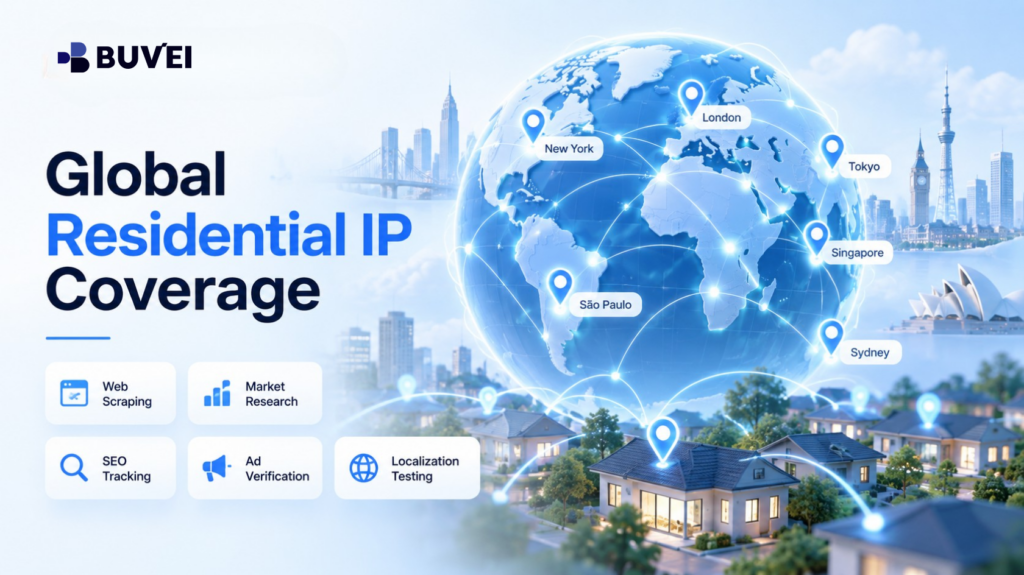
Residential proxies are widely used by businesses and individuals that need reliable access to online data from different locations. Common applications include web scraping, market research, price monitoring, SEO tracking, ad verification, and localization testing.
For users who purchase proxy services internationally, payment is another important consideration. Many proxy providers operate across borders, which can make traditional payment methods less convenient, especially when managing recurring subscriptions or multiple digital services.
Virtual cards offer a practical solution for these situations. They provide a dedicated payment method for online services and can make it easier to manage international digital expenses.
But payment is only one part of the process. Choosing a residential proxy provider with the right network, coverage, pricing, and technical features is equally important.
What Are Residential Proxies?
Residential proxies use IP addresses associated with residential internet service providers. When a request is routed through a residential proxy, the destination website sees the proxy's IP address rather than the user's original IP.
Unlike a single static connection, a residential proxy network can provide access to many IP addresses across different geographic locations.
This makes residential proxies useful for:
- Web scraping and public data collection
- Price and product monitoring
- SEO and search result tracking
- Market research
- Ad verification
- Localization testing
- E-commerce research
- Competitor monitoring
For example, a company researching several international markets may need to access localized versions of websites. Residential proxies allow users to select IPs from relevant locations without maintaining physical connections in every market.
Why Pay for Residential Proxies with a Virtual Card?
When purchasing international digital services, businesses need payment methods that are convenient and easy to manage.
Convenient International Payments
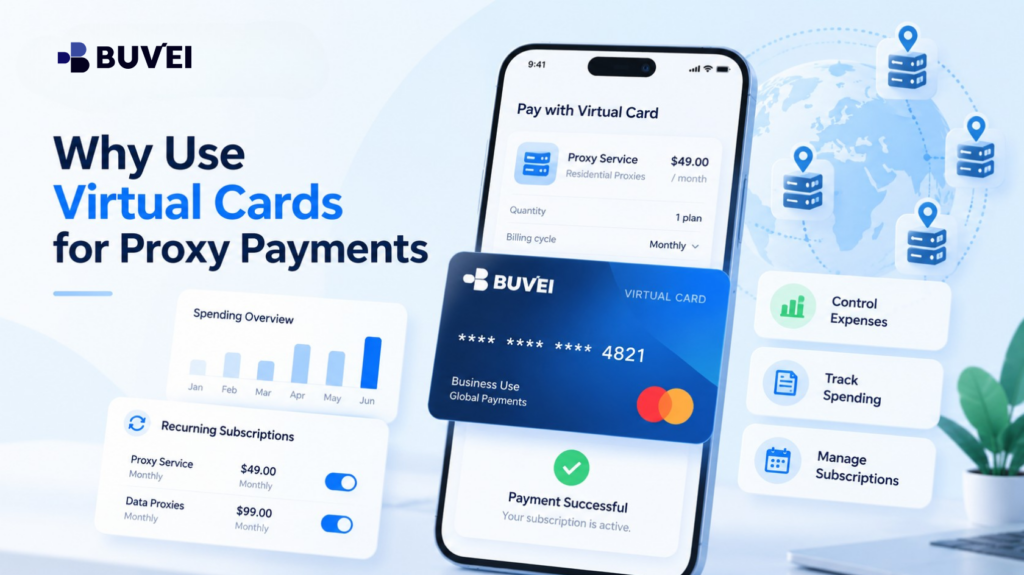
Virtual cards can be used for online transactions with merchants that accept card payments. This can make it easier to purchase services from international proxy providers without relying on a single physical corporate card.
Easier Expense Management
Companies may use different proxy plans for different teams or projects. A dedicated virtual card can help separate these expenses and make transaction records easier to organize.
For agencies, for example, proxy expenses can be associated with specific client projects rather than being mixed with other operational costs.
Better Spending Control
Virtual card platforms may provide spending limits or other controls. This can be useful when multiple employees need access to online services while the company still wants to maintain control over its digital expenses.
Recurring Payments
Many proxy providers offer monthly or recurring plans. If recurring card payments are supported, a virtual card can simplify subscription management and reduce the need for repeated manual payments.
Swiftproxy: Residential Proxies for Global Online Operations
After choosing a payment method, the next step is selecting a proxy provider that can support the actual requirements of your project.
Swiftproxy provides residential proxy infrastructure designed for businesses, developers, marketers, researchers, and other users who need access to a broad range of residential IPs.
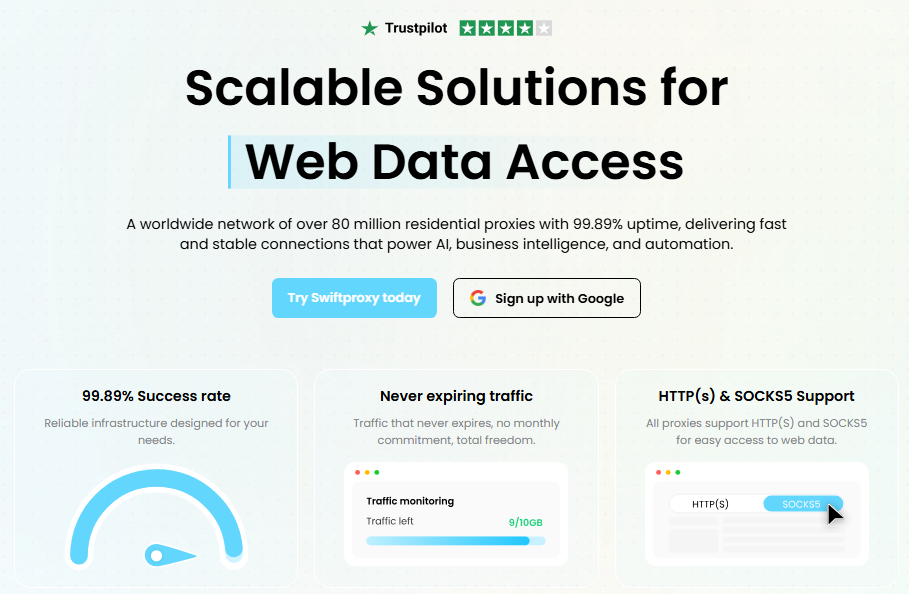
90M+ Residential IPs
A large IP pool is important for projects that generate substantial amounts of traffic.
Instead of repeatedly relying on a limited number of addresses, users can distribute requests across a broader residential network. This provides greater IP diversity and more flexibility when scaling a project.
Swiftproxy's 90M+ residential IP network gives users access to a large pool of addresses across multiple markets.
This can be useful for large-scale web scraping, market research, SEO monitoring, price tracking, and other applications where IP diversity matters.
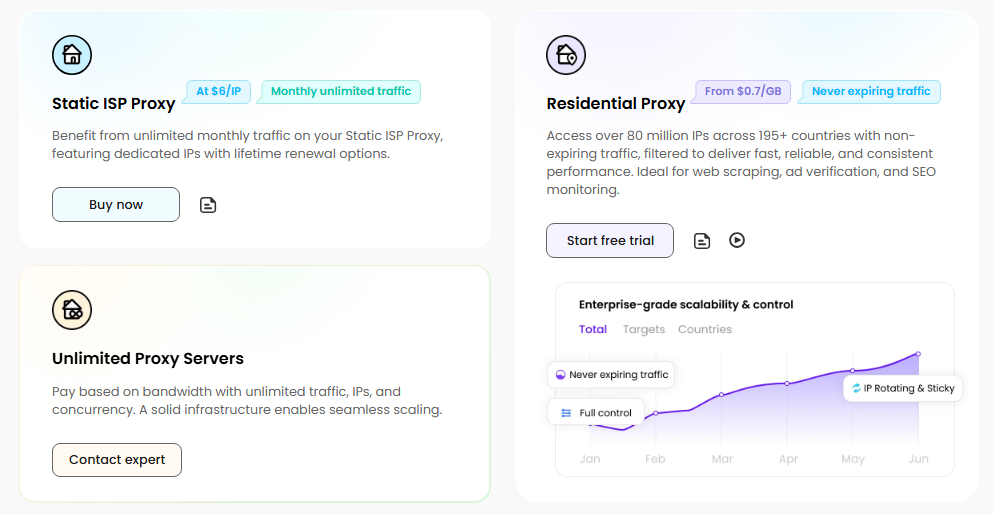
Coverage Across 195+ Locations
Geographic coverage is another important factor when choosing a residential proxy provider.
Swiftproxy supports 195+ locations, including major markets such as the United States, United Kingdom, Canada, Germany, France, Japan, and Brazil.
This allows users to select proxy locations based on the requirements of their project.
For example, an international e-commerce business can use different locations to research regional prices, while an SEO team can monitor localized search results.
Flexible IP Rotation
Different projects require different approaches to IP management.
For high-volume requests, rotating IPs can distribute traffic across multiple addresses. For workflows that require session persistence, changing the IP too frequently may not be appropriate.
Swiftproxy supports flexible rotation configurations, allowing users to choose an approach that matches their specific workflow.
This makes the network suitable for both short-term requests and longer-running automated tasks.
Sticky Sessions
Some applications require multiple requests to remain associated with the same IP address.
Sticky sessions can be useful for these situations. Instead of changing the IP after every request, users can maintain the same residential IP for a defined session period.
This can be helpful for workflows involving multiple connected requests, browser automation, or other applications where session consistency is important.
City and ASN Targeting
Country-level targeting is sometimes insufficient for professional data collection.
A project may require an IP from a specific city or network provider. Swiftproxy offers more granular targeting options, including city-level and ASN targeting where available.
These capabilities can be useful for localized market research, regional testing, and other projects where the origin of the connection matters.
HTTP(S) and SOCKS5 Support
Swiftproxy supports both HTTP(S) and SOCKS5, providing compatibility with a wide range of applications.
Users can integrate the proxies with scraping tools, browsers, automation scripts, and other software without being restricted to a single protocol.
This flexibility is particularly useful for developers and teams that already have an established technical workflow.
Non-Expiring Residential Traffic
One feature that can be useful for users with changing workloads is Swiftproxy's non-expiring residential traffic.
Purchased residential traffic remains available until it is used rather than being tied to a short expiration period.
For users whose proxy consumption varies from month to month, this can make traffic management more flexible. Businesses can purchase the amount they need without having to rush to consume unused bandwidth before a fixed expiration date.
Free Testing
Proxy performance can vary depending on the target website, geographic location, and use case.
For this reason, testing a proxy network before committing to a larger plan can be useful.
Swiftproxy offers free testing, allowing users to evaluate the network against their own requirements before scaling their usage.
This is especially useful for teams working with specific websites or locations where proxy performance needs to be verified in advance.
Managing Proxy Expenses with Buvei
For businesses that regularly purchase international digital services, proxy payments are often only one part of a larger expense management process.
Companies may also pay for advertising platforms, SaaS subscriptions, AI tools, cloud services, analytics software, and other online infrastructure.
Buvei provides virtual card and global payment solutions that can help businesses organize international online payments.
Using virtual cards for specific services or projects can make it easier to separate expenses and maintain better visibility over digital spending.
For example, a marketing agency could dedicate one payment method to proxy infrastructure while using other cards for advertising or SaaS subscriptions. This creates a clearer structure for tracking expenses across different projects.
Final Thoughts
For businesses that rely on residential proxies, both infrastructure and payment management deserve attention.
Virtual cards can make international proxy payments easier to organize, particularly for companies managing multiple subscriptions, teams, or projects.
On the proxy side, Swiftproxy offers a broad residential network with 90M+ IPs across 195+ locations, flexible IP rotation, sticky sessions, city and ASN targeting, HTTP(S) and SOCKS5 support, non-expiring residential traffic, and free testing.
This combination of network flexibility and straightforward payment management can help businesses build a more efficient infrastructure for global online operations.
Before purchasing, test the proxy service against your specific use case and consider factors such as location coverage, traffic requirements, session behavior, compatibility, and pricing. A well-matched proxy and payment setup can make recurring international digital operations significantly easier to manage.