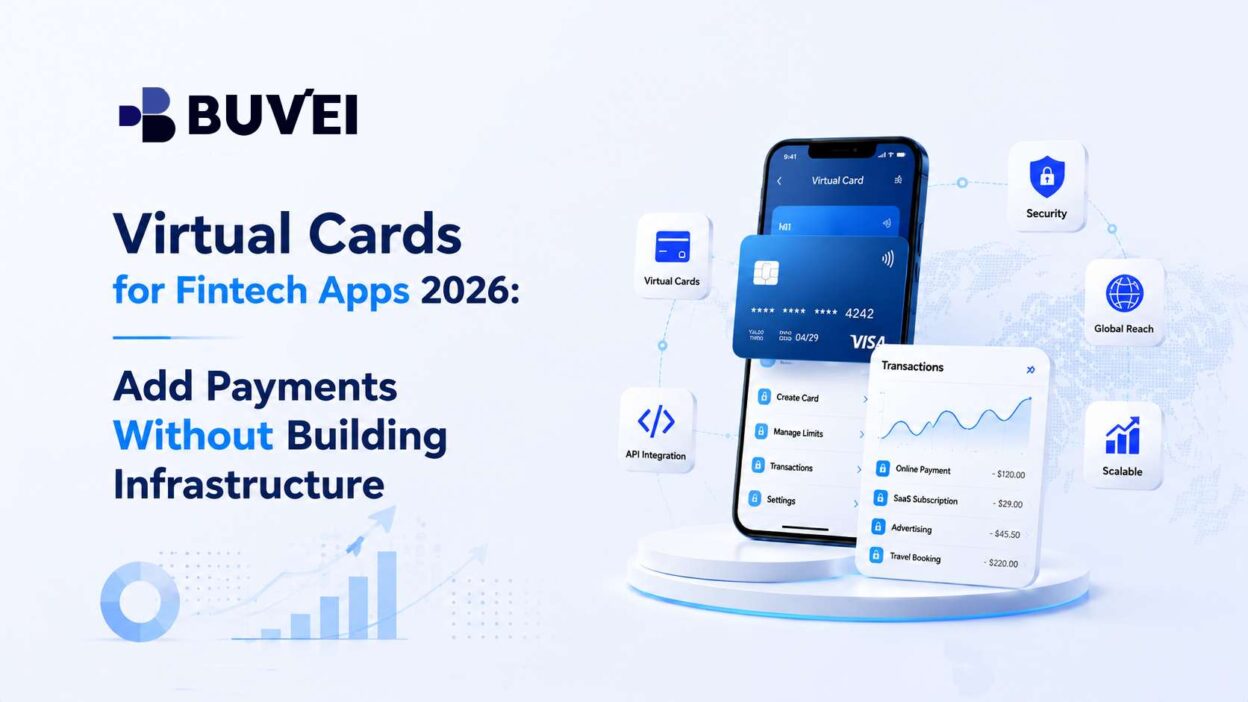
Fintech virtual cards are transforming how financial platforms deliver payment experiences. Users now expect seamless payment experiences, instant access to digital cards, and flexible spending solutions built directly into the platforms they use.
However, adding virtual card capabilities requires much more than generating digital card numbers. Behind every card program are complex systems for issuing, compliance, transaction processing, security, and payment infrastructure.
For many fintech companies, the challenge is not whether to offer virtual cards, but how to add payment capabilities without spending years building the entire infrastructure themselves.
This is why virtual card infrastructure has become a strategic approach for fintech apps that want to launch payment solutions faster while reducing the complexity of building and managing card systems internally.
Why Fintech Apps Are Adding Virtual Cards in 2026
Fintech companies are expanding their products from basic financial tools into complete payment ecosystems. Virtual cards allow these platforms to introduce payment capabilities while improving user experience, operational control, and product flexibility. Common business drivers include:
- Enhancing user payment experiences:
Fintech apps can provide instant digital cards, faster access to payments, and more convenient transaction management directly on their platforms. - Expanding financial product offerings:
Virtual cards enable new use cases such as expense management, subscription payments, embedded finance services, and business payment solutions. - Improving operational control:
Companies can create customized payment workflows with spending controls, transaction monitoring, and better visibility into payment activity.
As fintech competition increases, virtual cards are becoming less of an additional feature and more of a core payment capability that helps platforms differentiate their products.
The Challenge of Building Card Infrastructure From Scratch
Although virtual cards appear simple from the user perspective, the infrastructure behind a reliable card program is highly complex. For fintech companies, building a complete card ecosystem internally means managing multiple technical and operational layers.
Card Issuing and Payment Partnerships
Virtual card programs require connections with card networks, issuing partners, and payment processors. These relationships support essential functions such as authorization, transaction processing, and settlement.
Developing these partnerships internally requires time and specialized payment expertise. For many fintech companies, especially early-stage businesses, this can slow down product development and divert resources away from customer-focused innovation.
Instead of focusing on improving their financial products, teams may spend significant effort building and maintaining payment infrastructure.
Compliance and Security Requirements
Financial products operate in a highly regulated environment. Fintech companies need to manage requirements related to:
- customer verification
- transaction monitoring
- payment security
- regulatory compliance
As transaction volumes increase, maintaining secure and compliant operations becomes increasingly challenging. Building these capabilities internally requires continuous investment in technology, security processes, and operational resources.
Technical Infrastructure Complexity
A complete virtual card system involves much more than generating digital card numbers. Companies need to support:
- card lifecycle management
- authorization workflows
- spending controls
- transaction reporting
These systems must remain reliable as user numbers and payment activity grow. For many fintech companies, the challenge is not creating a payment feature. The challenge is maintaining the infrastructure required to support that feature at scale.
Virtual Card Infrastructure: A Faster Alternative to Building
For many fintech businesses, the key decision is not whether virtual cards provide value. The real question is whether building the entire infrastructure internally provides enough of an advantage over integrating with an established provider.
Building internally provides maximum control, but it also requires significant investment in engineering resources, compliance operations, payment partnerships, and long-term maintenance. This is why many fintech companies are adopting infrastructure-based approaches.
Virtual card infrastructure providers allow businesses to access essential payment capabilities without developing every component of the card ecosystem themselves.
Launch Virtual Card Programs Without Building Everything Internally
Virtual card infrastructure enables fintech apps to introduce payment capabilities without creating the entire card ecosystem from the ground up. Instead of developing issuing systems, payment workflows, and management tools internally, companies can integrate existing infrastructure and focus on improving their core product experience.
This approach helps fintech businesses launch faster while maintaining flexibility as their products evolve.
For example, a fintech platform can create virtual card programs for consumers, business accounts, expense management, or specific payment scenarios without rebuilding the underlying payment architecture.
Connect Payment Capabilities Through APIs
Modern fintech products depend on seamless integrations. Payment capabilities need to work together with user accounts, financial dashboards, internal systems, and customer workflows.
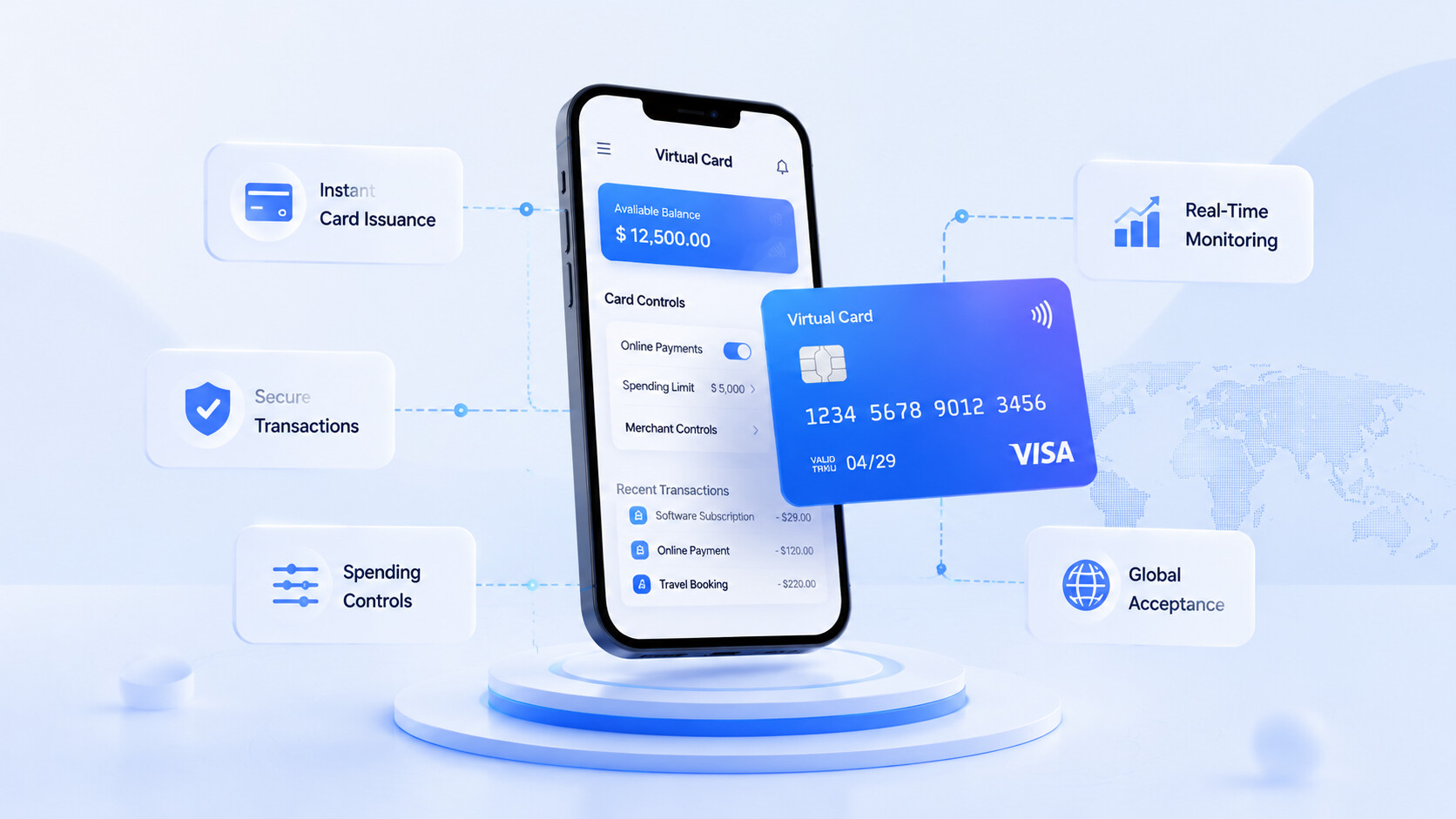
API-based virtual card infrastructure allows fintech companies to integrate payment features directly into their applications. This enables businesses to manage:
- virtual card creation
- transaction data
- spending controls
- payment workflows
Instead of offering a standalone payment tool, fintech companies can create embedded payment experiences directly inside their own products.
Scale From Early Products to Enterprise Operations
Many fintech companies begin with limited payment requirements. However, as products grow, infrastructure needs become more complex.
Companies need systems that can support larger user bases, multiple card programs, different spending policies, and international payment scenarios without requiring major rebuilds.
A scalable infrastructure approach allows fintech platforms to expand payment capabilities while maintaining operational efficiency.
How Fintech Apps Use Virtual Cards in Real Business Scenarios
Virtual cards are being adopted across different fintech business models.
Digital Wallet Platforms
Digital wallets are evolving beyond storing funds and processing transfers. By adding virtual cards, wallet providers can offer users more complete payment experiences, including online purchases, subscriptions, and digital spending tools. This helps platforms increase user engagement while creating additional financial service opportunities.
Neobanks and Digital Banking Apps
Digital banking providers use virtual cards to improve customer experiences. Instant card creation, flexible spending controls, and digital payment access allow neobanks to provide modern alternatives to traditional banking services. Virtual cards also help these platforms differentiate their products in an increasingly competitive market.
Expense Management Platforms
Expense management solutions use virtual cards to provide businesses with better payment control. Companies can create dedicated payment methods for employees, departments, or vendors instead of relying on shared payment accounts. This improves spending visibility and simplifies financial operations.
Embedded Finance Platforms
Many SaaS companies and marketplaces are adding financial services directly into their products. For these businesses, virtual card infrastructure provides a way to introduce payment capabilities without becoming traditional financial institutions. This allows software companies to create new financial experiences while focusing on their core products.
What Fintech Companies Should Look for in a Virtual Card Infrastructure Partner
Choosing the right infrastructure partner is an important strategic decision. A suitable provider should support both current product requirements and future growth. Key considerations include:
Scalability
Fintech companies need infrastructure that can grow from early-stage products to larger payment operations without requiring significant architectural changes.
Integration flexibility
Developer-friendly APIs allow businesses to connect payment capabilities with existing platforms, workflows, and customer experiences.
Security and control
Reliable infrastructure should provide tools for monitoring transactions, managing spending policies, and reducing payment risks.
Global capabilities
As fintech products expand into new markets, businesses need infrastructure that can support broader payment requirements.
The right infrastructure partner should provide secure, flexible, and scalable foundations that allow fintech companies to launch products faster and adapt as payment needs evolve.
Why Fintech Companies Choose BUVEI for Virtual Card Infrastructure
BUVEI helps fintech companies add virtual card capabilities without building the entire payment infrastructure themselves. Instead of investing years into developing issuing systems, payment workflows, compliance processes, and operational tools internally, businesses can leverage BUVEI’s infrastructure to accelerate product development.
Unlike traditional payment solutions that focus only on transaction processing, virtual card infrastructure needs to support the complete card lifecycle — from issuing and management to controls, monitoring, and integration.
BUVEI is designed for companies that need scalable virtual card programs built around their specific business requirements.
Whether a fintech platform needs virtual cards for users, expense management, embedded payments, or other financial applications, flexible infrastructure is essential.
With virtual card issuing capabilities, API integration options, and business-focused payment workflows, BUVEI enables companies to create efficient payment experiences without managing every complex component of the card ecosystem. The advantage of infrastructure solutions is that fintech teams can focus on product innovation and customer experience while relying on scalable payment foundations.
When Should Fintech Companies Build Instead of Integrate?
Building payment infrastructure internally can still make sense for certain organizations. Large financial institutions with established banking relationships, extensive engineering resources, and dedicated compliance teams may choose to develop parts of their infrastructure themselves.
However, for many fintech companies, integration provides a faster and more efficient path.
The right approach depends on business scale, technical capabilities, regulatory requirements, and long-term product strategy. For companies focused on launching fintech products quickly and scaling efficiently, working with an infrastructure provider can reduce complexity while accelerating innovation.
Conclusion
Virtual cards are becoming a core payment capability for fintech apps looking to deliver better financial experiences. However, building card infrastructure internally requires significant investment in technology, compliance, partnerships, and ongoing operations.
Virtual card infrastructure provides fintech companies with a faster way to add payment capabilities while maintaining flexibility and scalability.
By integrating solutions like BUVEI, fintech businesses can focus on creating better financial products while accessing the infrastructure needed for long-term growth.
For companies looking to build scalable payment experiences without managing the complexity of card infrastructure, BUVEI provides the foundation needed to launch and expand virtual card programs efficiently.