Introduction
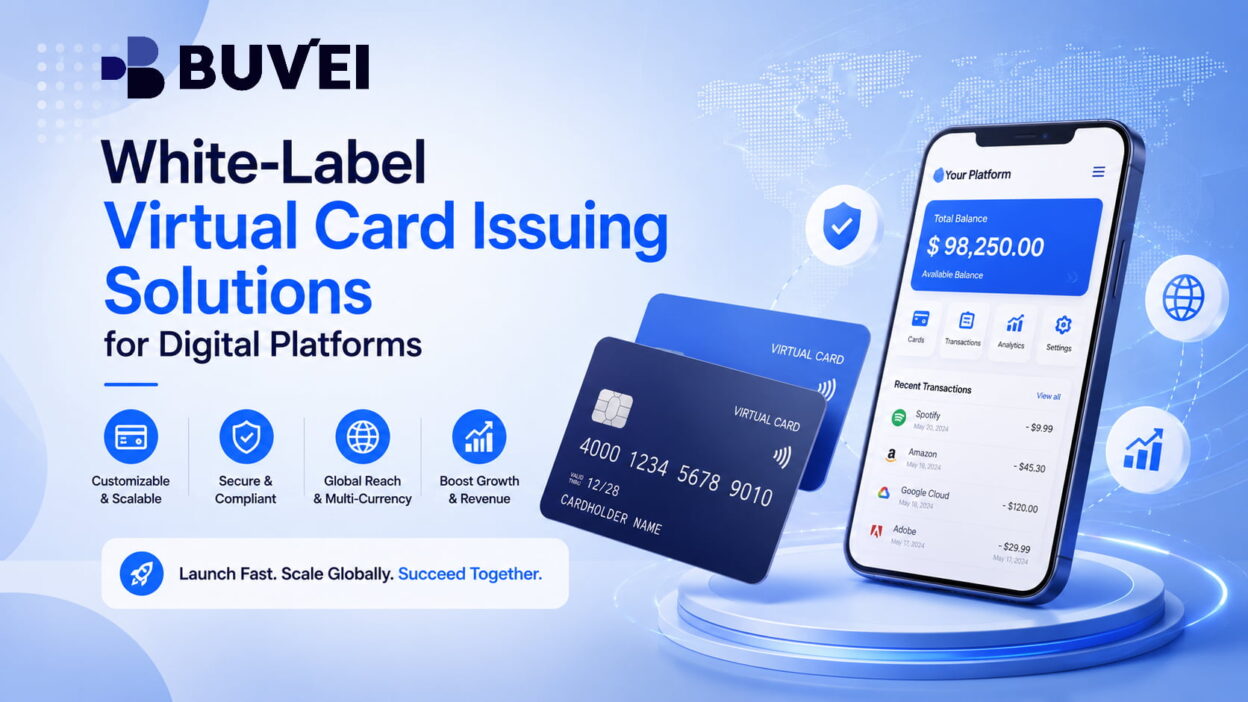
First of all, white-label virtual card issuing solutions help companies launch branded card programs faster. Specifically, they remove the need to build complex payment infrastructure from scratch. Behind every virtual card is a technology layer that manages issuing, payment processing, transaction controls, and security.
Nevertheless, for FinTech companies, SaaS platforms, and digital businesses, building this infrastructure internally is often a major undertaking. To elaborate, it requires specialized technology, compliance processes, operational resources, and ongoing maintenance.
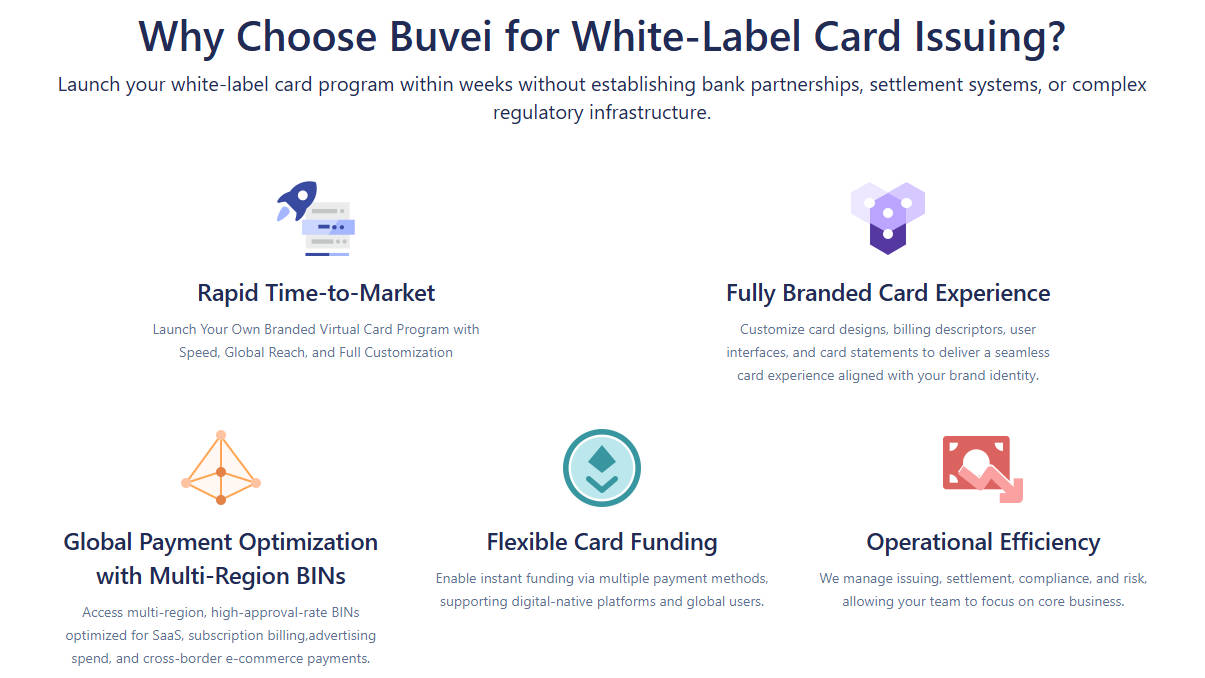
Instead, companies can use white-label solutions to accelerate deployment while keeping control over their customer experience. Rather than building and maintaining every layer of card infrastructure internally, teams save massive development costs.
Ultimately, by relying on specialized card infrastructure behind the scenes, businesses can focus their resources on improving products, customer experience, and market growth.
What Are White-Label Virtual Card Issuing Solutions?
To begin with, white-label virtual card issuing solutions allow companies to create branded virtual card programs using external issuing infrastructure.
The provider manages the technical foundation required for card creation, transaction processing, and card lifecycle management. Meanwhile, the company controls the customer-facing experience.
Generally speaking, a typical white-label virtual card solution includes:
- Virtual card issuing
- Card management
- Spending controls
- Transaction monitoring
- Program customization
On the other hand, we must clarify the core gap between a standard Virtual Card API and a white-label solution: their functional scopes are completely different.
In short, a Virtual Card API mainly provides the connection between applications and card infrastructure. By contrast, a white-label platform provides a broader foundation for launching and operating a complete card program.
Furthermore, virtual card programs operate within broader card payment networks and authorization systems, such as those provided by global payment networks like Visa.
As a result, this approach is increasingly used by FinTech platforms, SaaS companies, marketplaces, and digital businesses that want to embed payment capabilities into their products.
Why Businesses Adopt White-Label Virtual Card Issuing Platforms
Nowadays, for many digital platforms, payments are becoming part of the product experience rather than a standalone service.
Even so, the biggest challenge is that building payment infrastructure requires much more than creating a card interface. Beyond front-end design, companies also need issuing systems, transaction monitoring, security controls, reporting tools, and operational processes.
In fact, the key question is not simply whether a company can build these systems internally. Rather, teams need to judge whether maintaining payment infrastructure creates a meaningful advantage compared with focusing resources on the core product.
In summary, white-label virtual card solutions help companies solve three common operational challenges.
Faster White-Label Virtual Card Program Launches
Building a card issuing system from the ground up requires significant development time. At the same time, companies must invest in compliance, security, and operational processes before launch.
Prior to official launch, companies need to connect multiple components, manage compliance requirements, and build operational workflows before introducing a customer-facing product.
With existing issuing infrastructure, teams can move faster and spend more time improving their product experience rather than rebuilding payment foundations.
Lower Infrastructure Complexity with White-Label Solutions
For example, payment infrastructure does not become easier after launch.
However, as card usage grows, companies must manage:
- Transaction monitoring
- Security operations
- Compliance requirements
- System maintenance
For many businesses, managing every layer internally creates unnecessary operational complexity.
As a result, a white-label platform provides access to established infrastructure while allowing internal teams to focus on growth and customer needs.
Flexible Payment Products with White-Label Virtual Cards
For example, different businesses use virtual cards in different ways.
For instance, a FinTech platform may need customer payment cards. A SaaS company may require employee expense solutions. A marketplace may need supplier payment workflows.
White-label infrastructure gives companies the flexibility to design card programs around their own business models.
Key Features of White-Label Virtual Card Issuing Solutions
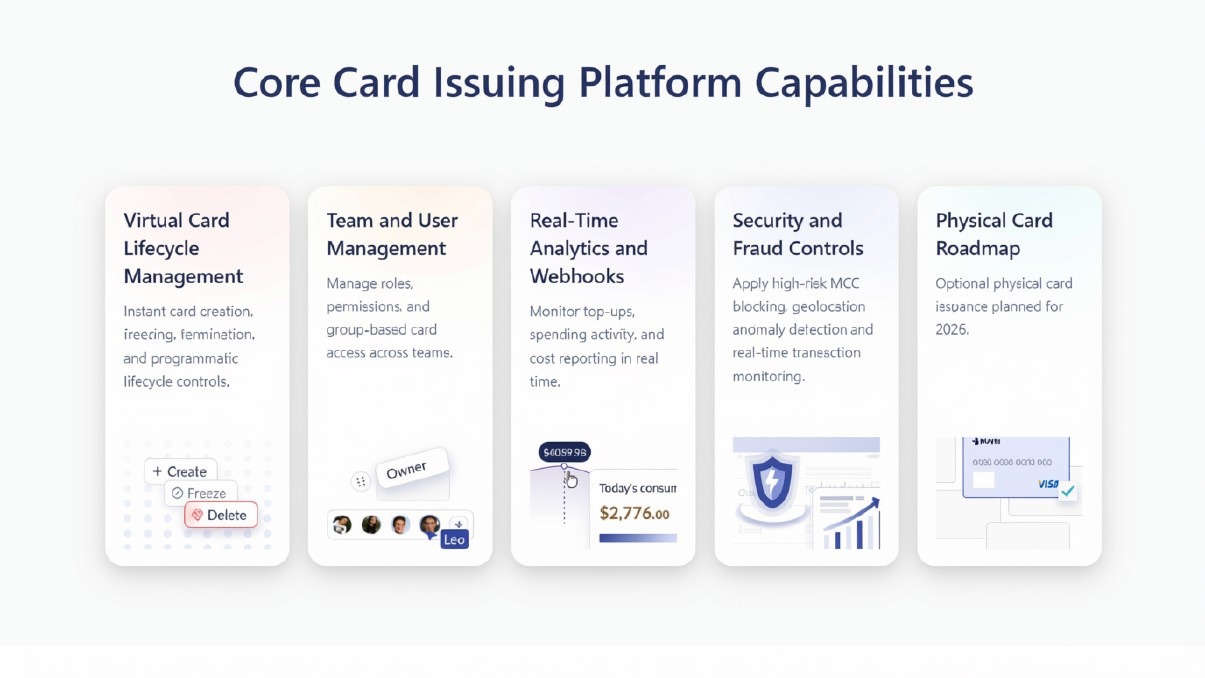
A successful virtual card program requires more than card generation. The underlying infrastructure needs to support automation, flexibility, and operational control.
Virtual Card Issuing API Integration for White-Label Programs
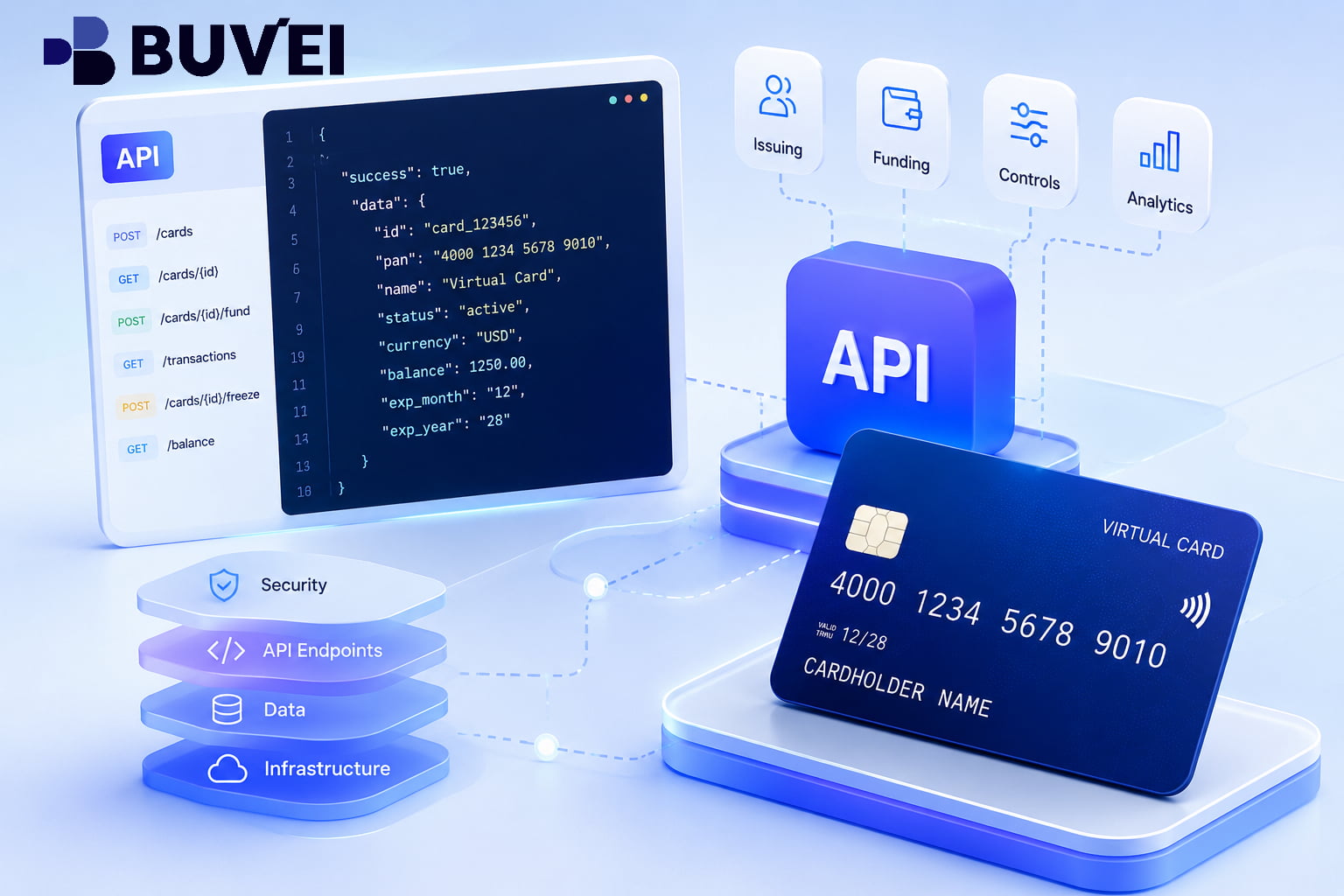
A Virtual Card Issuing API connects a company’s systems with card infrastructure.
This connection allows product teams to automate key operations, including:
- Virtual card creation
- Card activation
- Card lifecycle management
- Transaction data access
For software platforms, API connectivity turns virtual cards into a built-in product capability instead of a separate payment tool.
Multi-BIN Support in White-Label Virtual Card Programs
As companies expand into different markets, payment requirements often become more complex.
Different regions, customer groups, and use cases may require different card configurations. Therefore, flexible infrastructure becomes increasingly important for businesses operating across multiple markets.
Therefore, multi-BIN support gives companies more flexibility by allowing them to manage multiple virtual card programs through a single infrastructure layer.
This is especially valuable for businesses that need:
- Regional payment flexibility
- Multiple card programs
- Different payment workflows
- International expansion support
Rather than creating separate payment systems for each market, flexible BIN management allows companies to adapt their card programs more efficiently.
Card Controls and Customization for White-Label Programs
Virtual cards are increasingly used as tools for managing business spending, not just completing payments.
In addition, companies need visibility and control over how cards are used across different teams, customers, and workflows. For example, spending limits and transaction rules can help businesses manage expenses more effectively.
Common controls include:
- Spending limits
- Transaction restrictions
- User permissions
- Payment rules
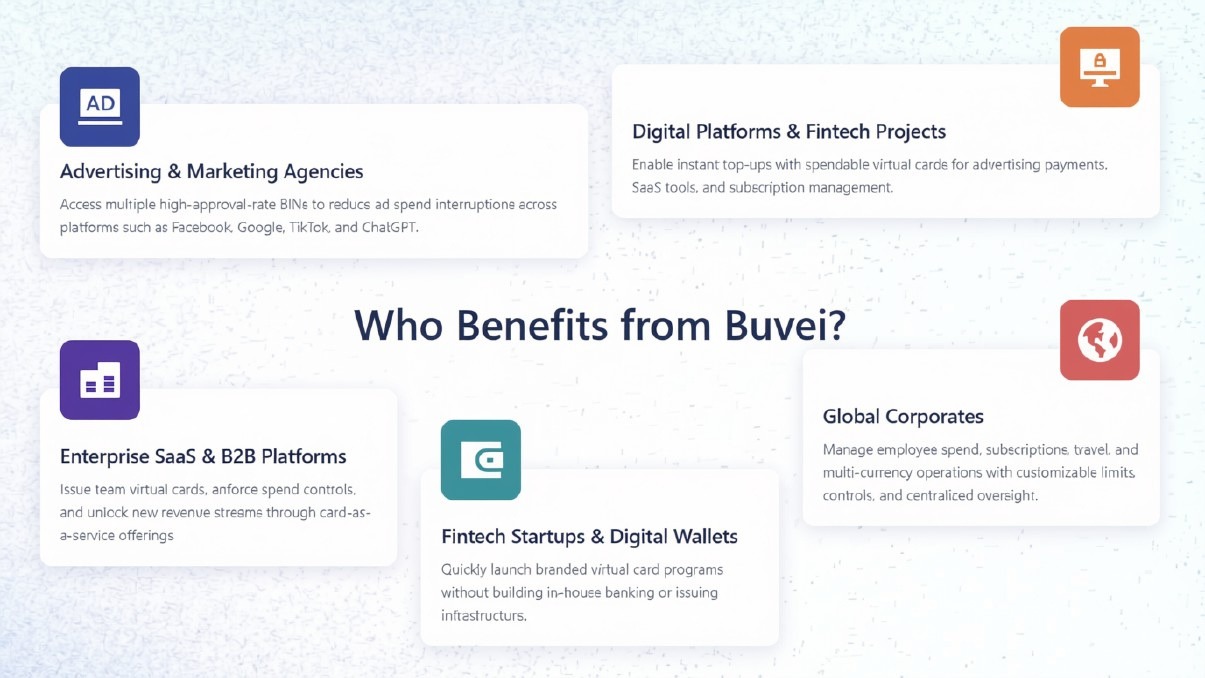
These capabilities make virtual cards suitable for a wide range of scenarios, including business expenses, advertising payments, subscription management, and embedded finance products.
The value of customization is not only visual branding. It is the ability to design payment workflows that match how a business actually operates.
White-Label Virtual Card Issuing vs Virtual Card API: Key Differences
Virtual Card APIs and white-label virtual card solutions are often mentioned together, but they solve different problems.
A Virtual Card API focuses on connectivity. It allows applications to communicate with card infrastructure and automate functions such as card creation, management, and transaction data retrieval.
In contrast, a white-label virtual card solution goes beyond API access. It provides the broader infrastructure required to launch a branded card program, including:
- Issuing capabilities
- Card management tools
- Program configuration
- Operational support
In simple terms:
A Virtual Card API connects software with payment infrastructure. A white-label virtual card solution provides the foundation for building and operating a card product.
For companies adding payment features into an existing platform, API access may be enough. For businesses creating their own branded payment experience, a white-label solution provides a more complete approach.
How to Choose a White-Label Virtual Card Issuing Provider
Choosing an issuing provider is not only a technical decision. The provider becomes part of the infrastructure supporting the entire card program.
Therefore, companies should evaluate several areas before selecting a partner.
White-Label Virtual Card Issuing Capabilities
Therefore, the provider should support the requirements of the intended card program, including:
- Supported card networks
- Regional availability
- BIN options
- Virtual card functionality
Different business models require different configurations, so flexibility is important.
Virtual Card Issuing API Integration
Furthermore, a reliable Virtual Card Issuing API should make integration straightforward for development teams.
Important factors include:
- Clear documentation
- Stable API performance
- Automation capabilities
- Developer support
Good API design reduces integration friction and allows teams to launch and manage card programs more efficiently.
Scalable and Secure White-Label Virtual Card Infrastructure
A virtual card program that works for a small user base may face different challenges at enterprise scale.
Businesses should consider whether the provider can support:
- Higher transaction volumes
- Growing user numbers
- Additional markets
- More complex payment workflows
More importantly, security capabilities help maintain reliable payment operations as programs expand. For example, transaction monitoring, fraud prevention, and user controls help businesses manage risks at scale.
How BUVEI Delivers Stable White-Label Virtual Card Issuing Infrastructure
Building a branded virtual card product requires reliable infrastructure behind the customer experience.
For companies that need flexible card issuing capabilities without developing the entire payment stack internally, BUVEI provides white-label virtual card issuing infrastructure designed for scalable payment workflows.
BUVEI supports:
- White-label virtual card programs
- Multi-BIN virtual card infrastructure
- API-based card issuing
- Transaction controls
With multi-BIN support across regions including the US, Hong Kong, the UK, and Singapore, BUVEI helps businesses build card programs that fit different markets and payment requirements.
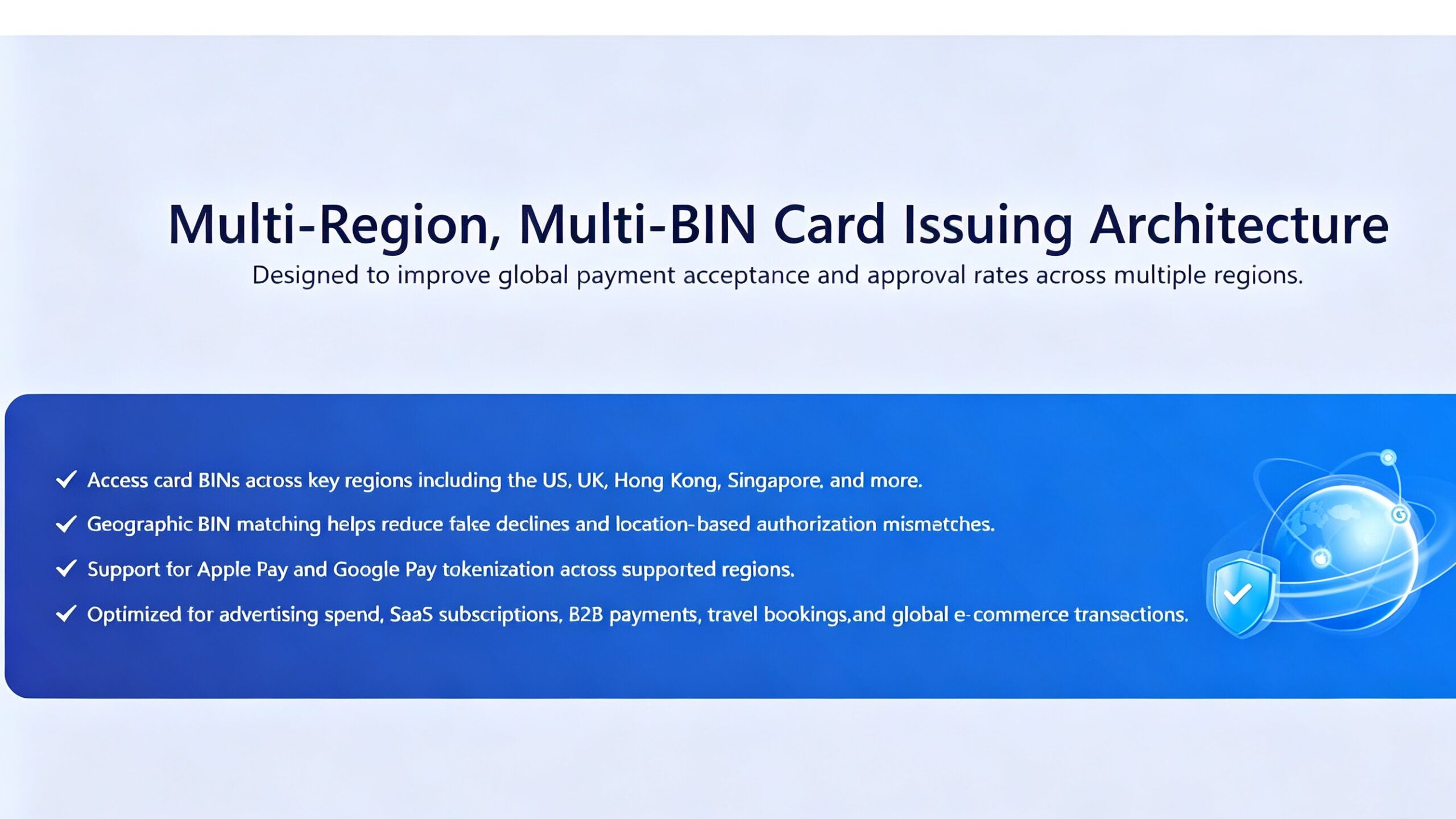
This is particularly useful for companies managing:
- Advertising payments
- International transactions
- Multiple payment accounts
- Complex payment workflows
Rather than maintaining separate systems for every payment scenario, businesses can use flexible virtual card infrastructure while keeping control over their own products and customer experience.
FAQ
What are white-label virtual card issuing solutions?
White-label virtual card issuing solutions allow companies to launch branded virtual card programs using external issuing infrastructure while maintaining control over their product experience and customer-facing features.
What is the difference between a Virtual Card API and a white-label virtual card solution?
A Virtual Card API provides technical connectivity between applications and card infrastructure.
A white-label virtual card solution includes broader capabilities such as issuing infrastructure, card management, customization options, and operational support.
Can companies launch virtual cards without becoming a bank?
Yes.
Many businesses use white-label issuing platforms to access card infrastructure without building a complete banking system or becoming traditional card issuers.
Final Takeaways About White-Label Virtual Card Issuing
Virtual cards are becoming an important part of modern digital products, especially as more companies adopt embedded finance models.
However, for FinTech companies, SaaS platforms, and digital businesses, the challenge is rarely creating a digital card interface. The harder part is building the infrastructure required to support reliable payments at scale.
White-label virtual card issuing solutions provide a practical way to launch branded payment products while avoiding the complexity of building complete card infrastructure internally.
For businesses developing customized virtual card programs, BUVEI provides white-label issuing infrastructure with API connectivity, multi-BIN support, and flexible card management capabilities.