
Ever tried paying for something online and hesitated for a second—
“Should I use a virtual card… or just stick with a prepaid card?”
It sounds like a small decision. But in reality, the difference between virtual credit cards and prepaid cards can affect everything from payment success rates to security and flexibility.
We tested both options across common scenarios—subscriptions, online shopping, and ad payments—to see what actually works better.
The conclusion is pretty clear:
both have their place, but they solve very different problems.
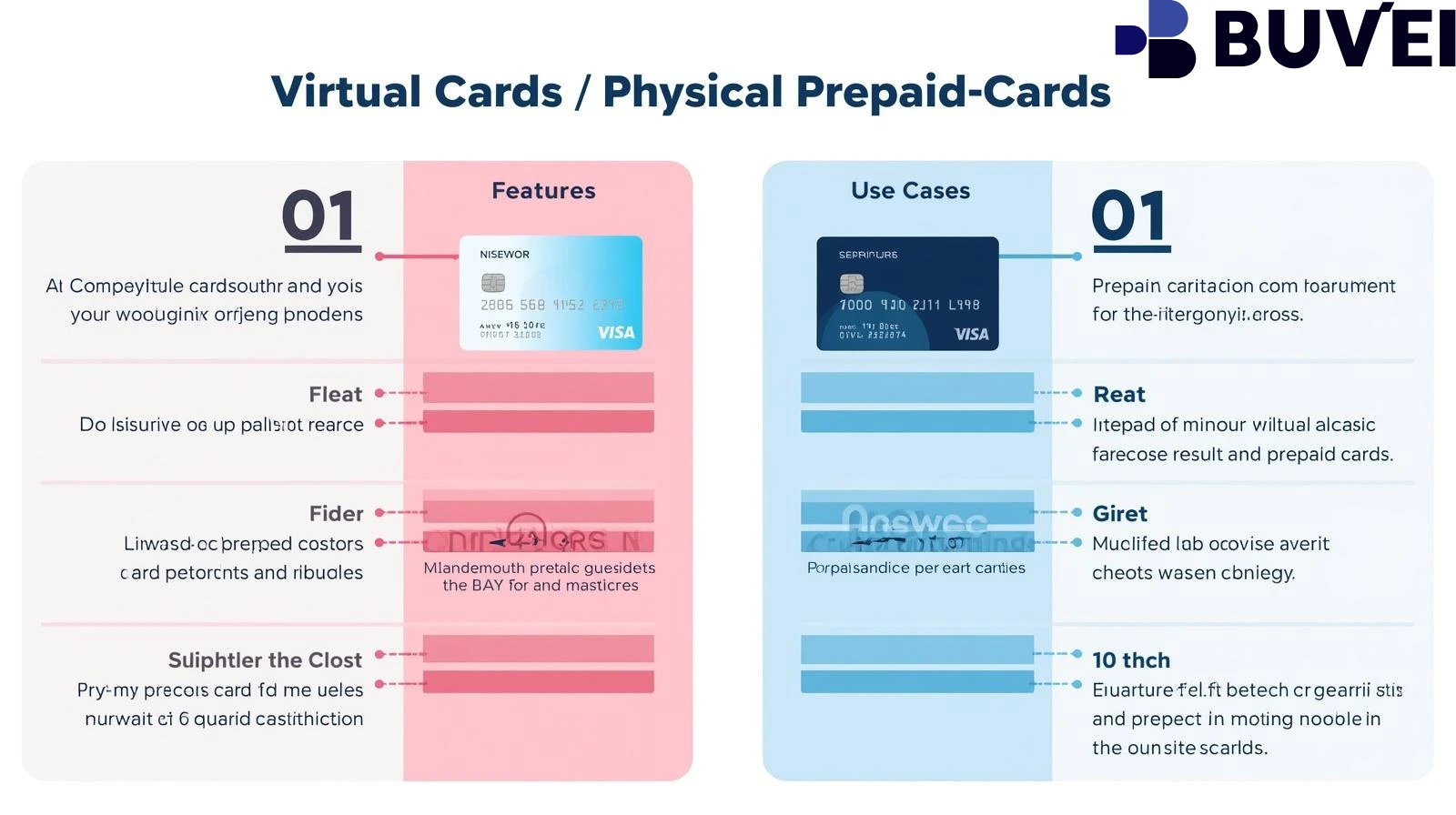
What People Actually Mean by “Virtual Credit Cards”
At a basic level, a virtual credit card is exactly what it sounds like:
- A card that exists digitally
- No physical version required
- Can be generated instantly
But that’s just the surface.
In practice, virtual cards are designed for:
- Online payments
- Subscription management
- Ad spending
- Cross-border transactions
And here’s where it gets interesting:
Most modern virtual cards aren’t tied to traditional banks in the same way. Some platforms—like Buvei—let you create multiple cards, choose different BINs, and even fund them using crypto.
So it’s less like “a digital version of your card”
and more like a flexible payment tool you control.
What Are Physical Prepaid Cards (And How They’re Used)
Prepaid cards are more familiar.
You’ve probably seen them:
- Gift cards
- Reloadable debit-style cards
- Travel cards
They work like this:
You load money onto the card first,
then spend from that balance.
No credit. No borrowing.
Where prepaid cards still work well
They’re useful for:
- In-store purchases
- Budget control
- One-time payments
- Gifting
But once you move into online or global payments, limitations start to show.
The Real Differences: What Changes in Practice
On paper, both seem similar.
In reality, they behave very differently.
Let’s break down what actually matters.
Flexibility
Virtual cards:
- Create instantly
- Generate multiple cards
- Set custom limits
Prepaid cards:
- Usually one card per account
- Slower to issue
- Limited customization
What we noticed:
Virtual cards are far more adaptable, especially if you're managing multiple payments.
Security
Virtual cards:
- Don’t expose your real bank info
- Easy to delete or replace
- Ideal for risky transactions
Prepaid cards:
- Still expose card details
- Harder to rotate quickly
Bottom line:
Virtual cards offer better control when something goes wrong.
Acceptance
This one is more nuanced.
Prepaid cards:
- Often accepted in physical stores
- May fail on subscriptions or ads
Virtual cards:
- Optimized for online platforms
- Better performance on SaaS and ads
In reality:
If you're paying for digital services, virtual cards tend to work more consistently.
When Should You Use Each Option?
Instead of asking “which is better,” it’s more useful to ask:
“Which one fits your use case?”
Use prepaid cards when:
- You need a physical card
- You're shopping offline
- You want simple budget control
- You're giving it as a gift
Use virtual credit cards when:
- You're paying for subscriptions
- You're running ads
- You're making international payments
- You want better security and control
What We Found After Testing Both
At first, prepaid cards seemed like the safer, simpler option.
But once we started using them for:
- SaaS tools
- Ad platforms
- Cross-border payments
…the limitations became obvious.
Virtual cards, on the other hand, handled these scenarios much better—especially when flexibility and reliability mattered.
Common Mistakes People Make
Even with the right setup, a few things can still go wrong.
Using prepaid cards for subscriptions
They often fail or get declined.
Not separating payments
Using one card for everything increases risk.
Ignoring BIN selection
Wrong region = higher failure rates.
Not testing first
Always start small before scaling.
Why Platforms Like Buvei Stand Out
Not all virtual cards are built the same.
What we noticed with platforms like Buvei is that they focus on real usage—not just basic features.
Key advantages include:
- Multiple BIN support (better approval rates)
- Compatibility with ads and SaaS
- Fast USDT top-ups
- Instant card creation
- Multi-card management
In practice, this makes a big difference—especially if you're dealing with multiple payments or scaling operations.

Conclusion
When comparing virtual credit cards vs prepaid cards, the answer isn’t just about features—it’s about how you actually use them.
Prepaid cards are simple and familiar.
But they’re limited in modern online scenarios.
Virtual credit cards, on the other hand, offer:
- More flexibility
- Better security
- Stronger performance for digital payments
If your focus is online payments, subscriptions, or ads, switching to virtual cards is usually the smarter move.