
Running arbitrage campaigns requires speed, flexibility, and strong risk control. Payment issues are one of the fastest ways to lose ad accounts, burn budgets, and damage scaling potential. That is why many experienced media buyers rely on multiple virtual cards instead of traditional bank cards.
In this guide, you will learn how virtual cards support arbitrage workflows and how platforms like Buvei help affiliates manage campaigns more safely.

Why Arbitrage Campaigns Require Multiple Virtual Cards
Arbitrage usually involves running traffic across multiple platforms, offers, and funnels at the same time. This creates complex payment behavior.
Media buyers ofteanage:n m
-
Multiple ad accounts
-
Different traffic sources (Facebook, TikTok, Google, native, etc.)
-
Separate offers and funnels
-
Multiple agencies or client brands
-
Different geos and currencies
Using only one card for everything creates a high-risk footprint. Platforms can easily detect abnormal activity and trigger reviews.
Multiple virtual cards allow you to:
-
Separate spend by campaign
-
Isolate risk between accounts
-
Reduce account linking signals
-
Maintain cleaner payment histories
Risks of Using Traditional Cards for Arbitrage Ads
Traditional bank cards are not designed for aggressive ad scaling.
Common problems include:
-
One card linked to too many ad accounts
-
Sudden spend increases triggering fraud alerts
-
Bank declines on international ad platforms
-
Card blocks during high-volume scaling
-
Permanent loss of card after one platform ban
Once a physical card is flagged, everything connected to it becomes vulnerable. This can destroy entire arbitrage operations overnight.
That is why professional buyers move toward disposable and segmented virtual cards.
How Crypto-Funded Virtual Cards Improve Account Safety
Crypto-funded virtual cards offer additional advantages for arbitrage:
-
No direct link to personal bank identity
-
Flexible funding using USDT
-
Easy creation of multiple cards
-
Better control over card limits
-
Reduced dependency on local banking restrictions
With platforms like Buvei, users can generate new cards on demand and assign them to different traffic sources, offers, or ad accounts. This structure creates a much cleaner risk profile.
Instead of one card powering everything, you build a controlled payment architecture.
Creating Multiple Virtual Cards with Buvei for Arbitrage
Buvei is commonly used by affiliates because it supports fast card creation and flexible funding through crypto.
Here is the full setup process.
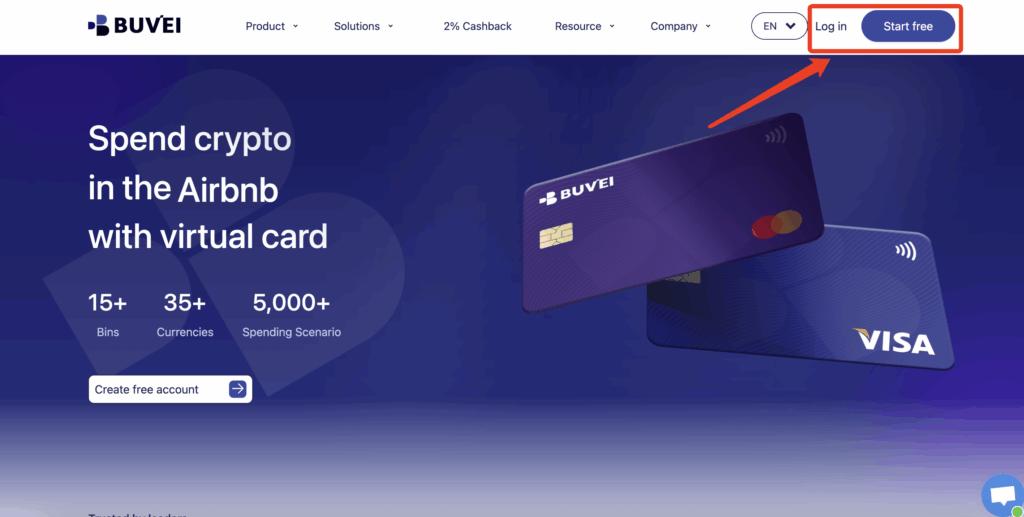
Step 1: Register a Buvei Account
Visit https://buvei.com and create a free account.
After completing email verification, log in to your Buvei dashboard.
Step 2: Fund Your Account
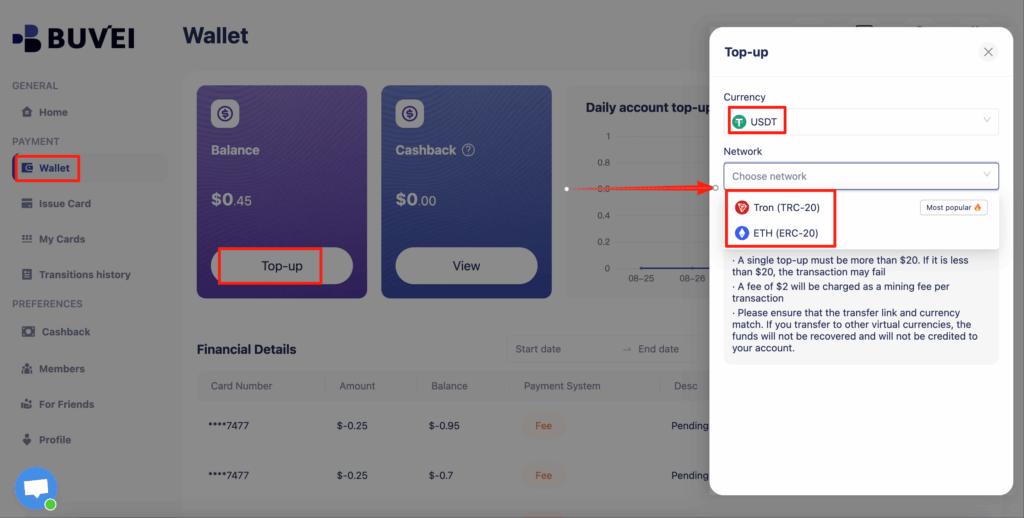
Go to the Wallet tab.
Top up using USDT (TRC20 or ERC20).
You will receive a unique deposit address.
Send your funds to this address.
After confirmation, your balance will appear in your wallet and be available immediately.
Step 3: Create Virtual Cards
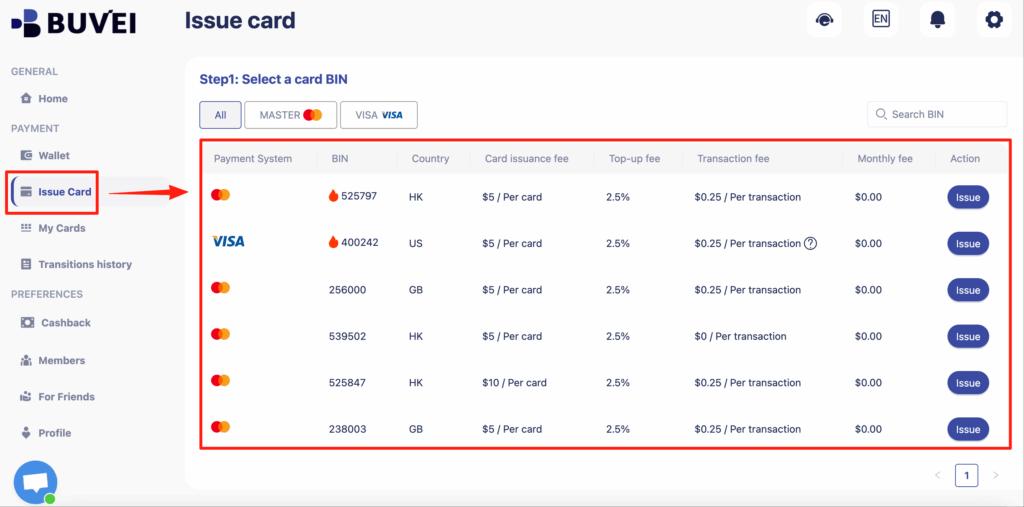
Go to the Cards tab.
Choose your preferred BIN region (US BIN is recommended for higher approval rates).
Select your card type.
Click create.
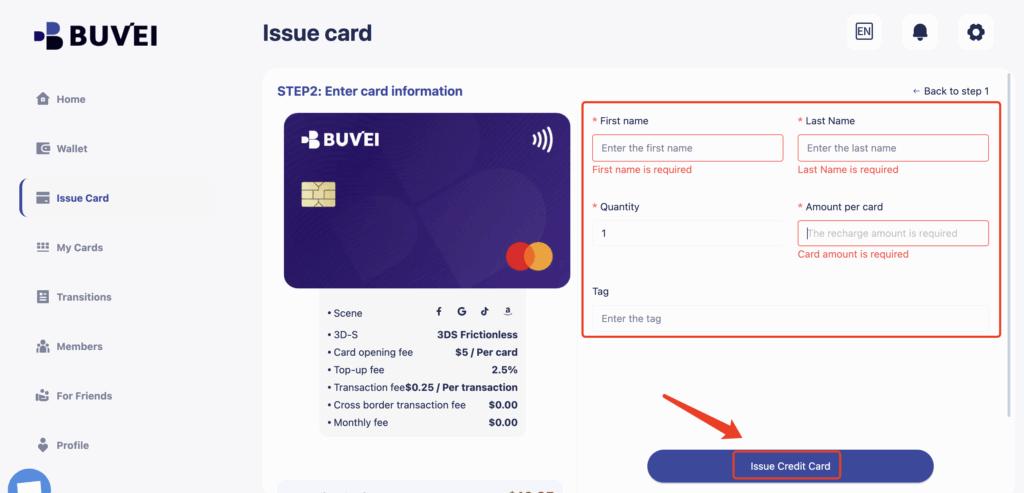
Fill in the card details, including card name, amount, and number of cards.
Click issue card.
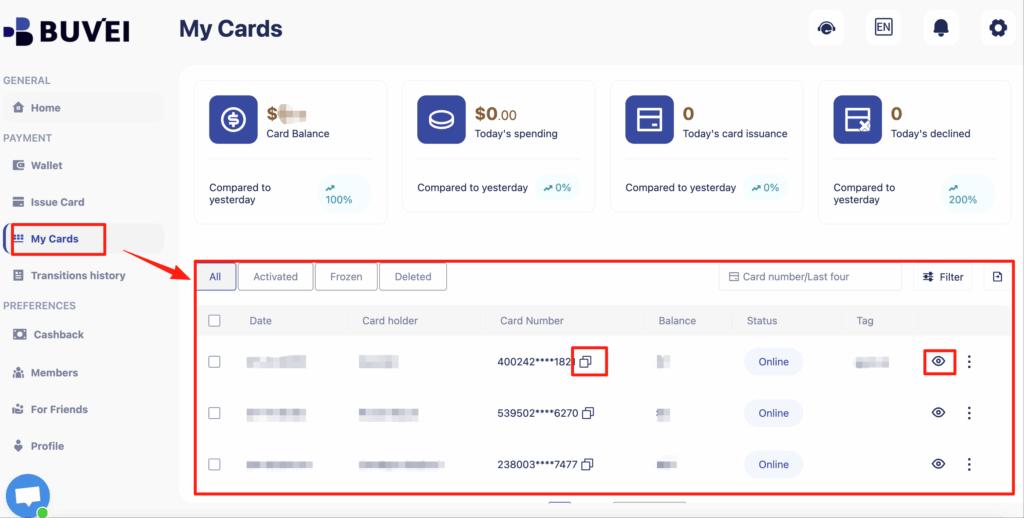
After creation, go to My Cards to view:
-
Card number
-
Expiry date
-
CVV
-
Card balance
-
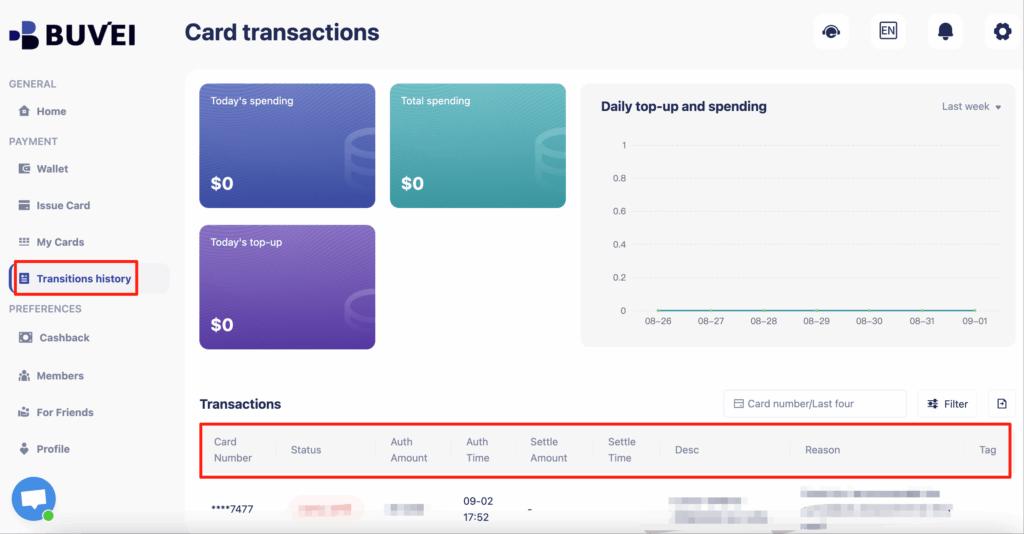
Transaction history
You can now create separate cards for different campaigns, platforms, or teams.
Card Allocation Strategy for Traffic Sources & Offers
Smart arbitrage teams organize cards intentionally instead of randomly.
Common structures include:
-
One card per ad account
-
One card per traffic source (Facebook, TikTok, Google)
-
One card per offer
-
One card per client brand
-
One card per media buyer
This approach helps:
-
Keep billing history clean
-
Reduce cross-account signals
-
Make troubleshooting easier
-
Protect the rest of the operation if one account fails
Buvei makes this workflow practical because creating new cards takes only seconds.
Daily Spend Control & Risk Isolation Techniques
Virtual cards become even more powerful when combined with proper spend control.
Best practices include:
-
Load only what you plan to spend that day
-
Use low balances for testing campaigns
-
Increase limits gradually as performance proves stable
-
Never keep large unused balances on risky cards
-
Rotate cards for experimental traffic sources
This way, even if an account gets flagged or banned, your financial exposure stays limited.
Buvei’s dashboard allows users to monitor balances and transactions across all cards, making spend control much easier at scale.

Final Thoughts
Arbitrage success is not only about creatives and funnels. It is also about infrastructure. Payment structure is part of your competitive advantage.
Using multiple crypto-funded virtual cards — especially with a flexible platform like Buvei — gives you better control, stronger safety, and more scalable operations.