
Affiliate marketers rely heavily on advertising platforms like Facebook Ads, Google Ads, TikTok Ads, and native ad networks. However, ad accounts are fragile. One payment issue can trigger reviews, restrictions, or permanent bans.
Because of this, experienced affiliates now use virtual cards as a risk management tool rather than just a payment method.
Let’s explore how this works.

Why Affiliate Ad Accounts Get Banned Easily
Ad platforms focus heavily on risk signals, not just ad content. Common reasons accounts get flagged include:
-
Suspicious payment behavior
-
Multiple accounts sharing the same card
-
Sudden spending spikes
-
High chargeback history
-
Frequent failed authorization attempts
-
Card region mismatching IP or account country
Even if your ads comply with policies, payment behavior alone can trigger automated reviews.
Payment Triggers That Lead to Account Reviews
Many affiliates lose accounts because of invisible payment triggers, such as:
-
Reusing the same bank card across many ad accounts
-
Using prepaid cards with weak authorization
-
Cards that fail $1–$5 verification charges
-
Cards with inconsistent billing history
-
Sudden card changes on aged accounts
-
Cards from risky BIN ranges
Ad platforms view these behaviors as potential fraud patterns.
That’s where properly managed virtual cards become essential.
How Virtual Cards Reduce Affiliate Risk Exposure
Smart affiliates use virtual cards to separate risk across assets.
With a high-quality virtual card provider, you can:
-
Use one card per ad account
-
Isolate risk (one ban does not affect others)
-
Rotate cards when needed
-
Control spending limits per account
-
Match BIN region with account geography
-
Reduce suspicious payment patterns
This structure dramatically improves long-term account survival.
Real-World Affiliate Payment Protection Strategies
Experienced affiliates commonly use strategies like:
-
One virtual card per Facebook ad account
-
Separate cards for testing vs scaling campaigns
-
Low-limit cards for warming new accounts
-
Dedicated cards for agency-managed clients
-
Rotating cards before payment flags appear
-
US BIN cards for platforms that trust US-issued payments more
This is why many performance marketers now prefer flexible platforms like Buvei, which allow quick card creation and control.
How Affiliates Create and Rotate Virtual Cards with Buvei
Here is the exact Buvei setup process affiliates commonly use:
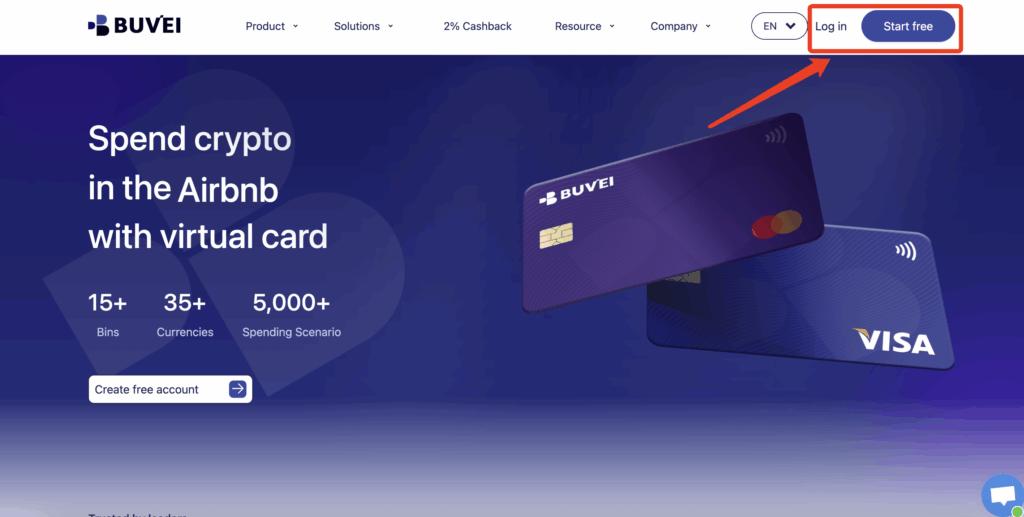
Step 1: Register a Buvei Account
Visit https://buvei.com and create a free account.
After completing email verification, log in to access the Buvei dashboard.
Step 2: Fund Your Account
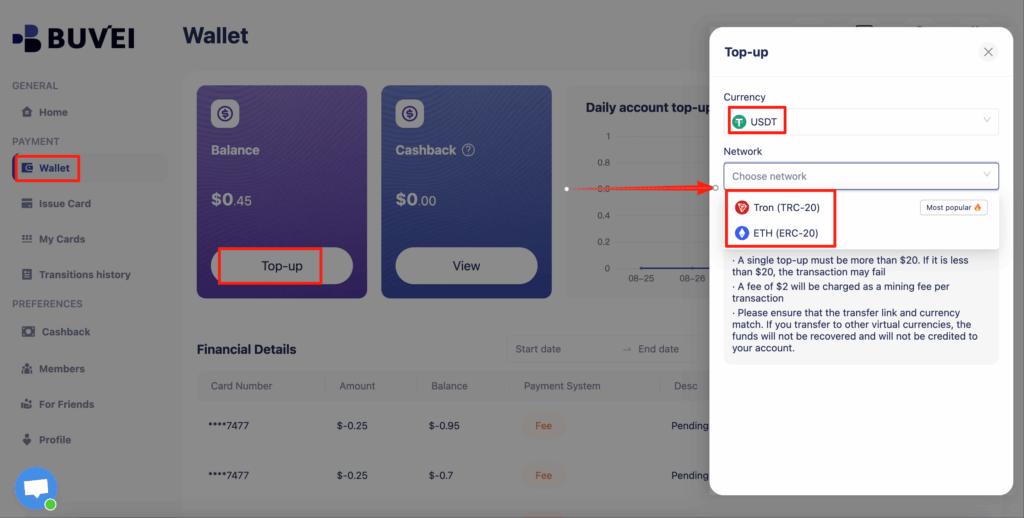
Go to the Wallet tab and top up using supported stablecoins such as USDT (TRC20 or ERC20).
You will receive a unique deposit address — copy it and send funds.
After confirmation, your balance appears instantly.
Step 3: Create Virtual Cards
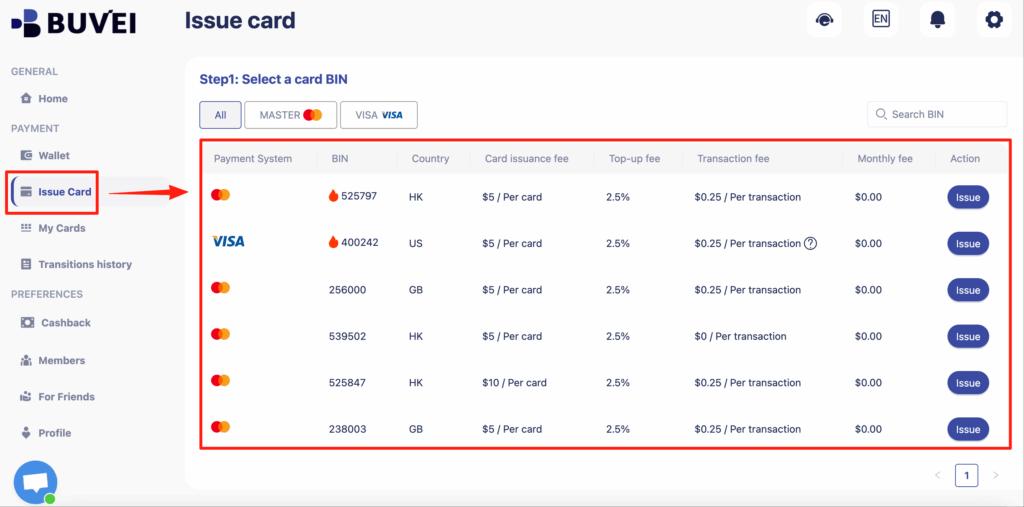
Go to the Cards tab
Choose your preferred BIN region (US BIN recommended for ad platforms)
Select your card type
Click create
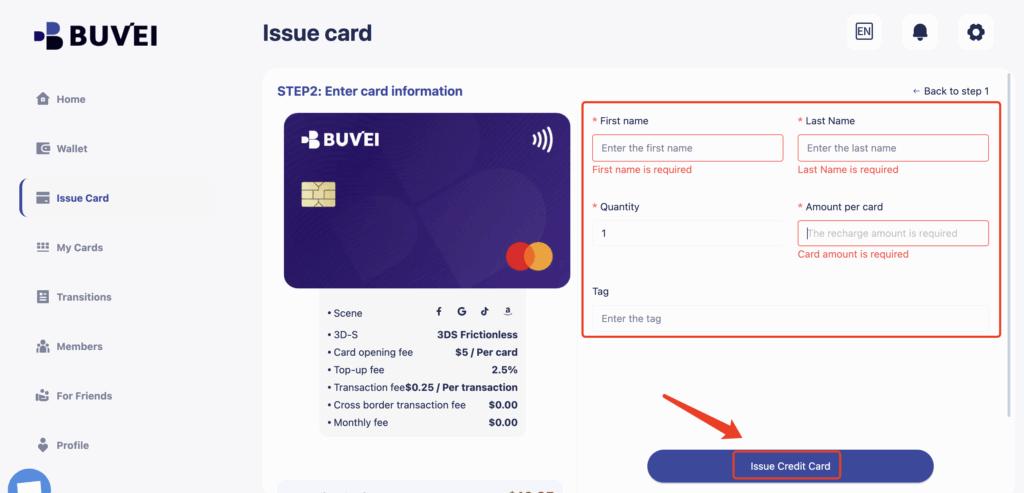
Fill in card details (card name, amount, quantity)
Click issue card
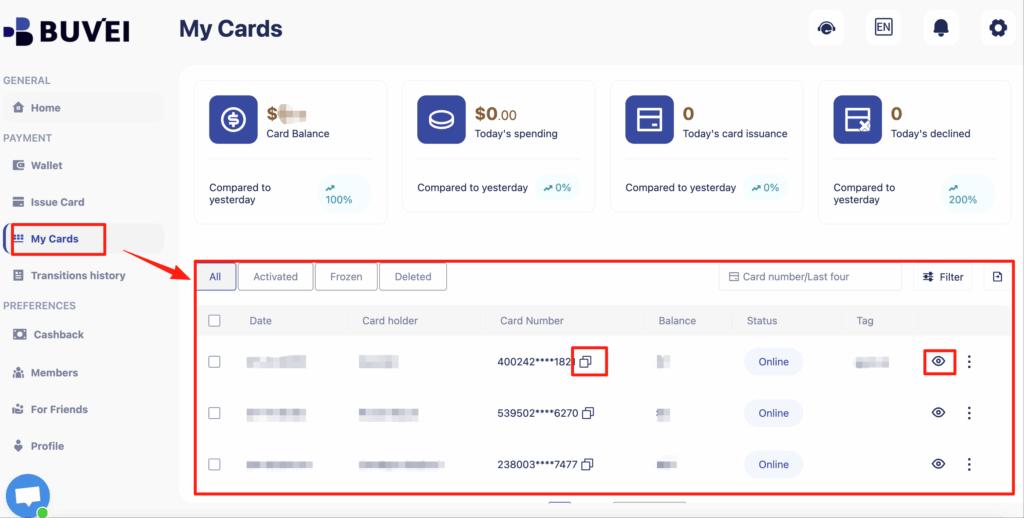
You can then view full card details inside My Cards:
-
Card number
-
Expiry date
-
CVV
-
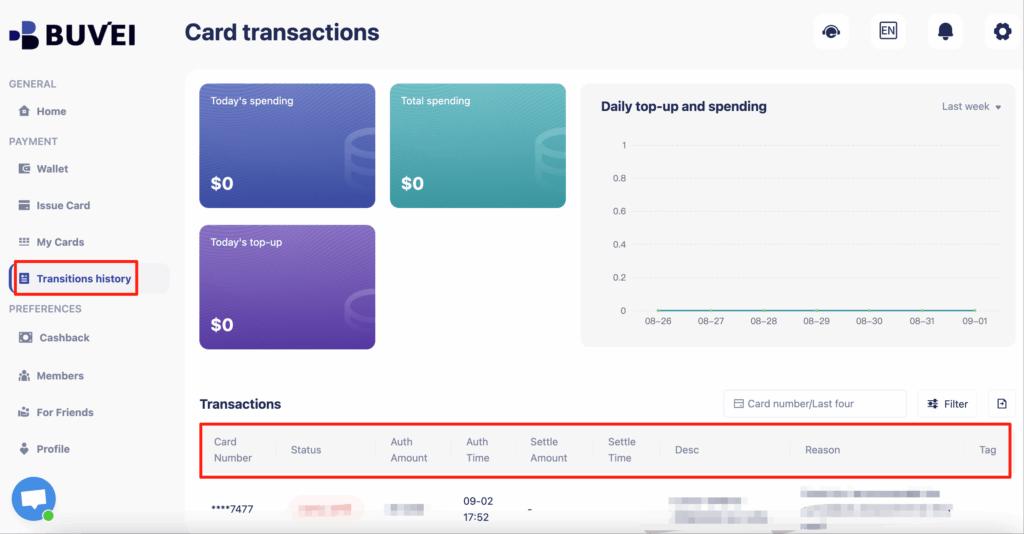
Transaction history
-
Spending overview
Affiliates often create multiple cards at once and assign each to a different ad account.
Long-Term Account Safety Best Practices
Virtual cards alone are powerful, but combining them with good practices delivers the best results.
Here are proven habits used by professional affiliates:
-
Always match card region with account region when possible
-
Avoid sudden large budget jumps on new cards
-
Keep spending behavior consistent
-
Do not reuse the same card across unrelated accounts
-
Replace cards early when you see unusual declines
-
Use dedicated cards for each ad ecosystem
With disciplined structure and a reliable provider like Buvei, many affiliates run large portfolios with far fewer bans.

Final Thoughts
Affiliate marketing is no longer just about creatives and funnels.
It’s also about infrastructure and risk management.
Payment behavior plays a critical role in account trust.
That’s why more professional marketers now rely on virtual card systems like Buvei to:
-
Protect their ad assets
-
Reduce platform risk
-
Scale safely
-
Maintain long-term operations