In today’s rapidly evolving digital commerce landscape, fraud prevention and user trust are top priorities for businesses handling online payments. One of the most effective tools in this fight is 3D Secure (3DS) — a security protocol that adds an extra layer of authentication to card-not-present transactions.
If you run an e-commerce store, a SaaS business, or any platform that accepts online payments, understanding and implementing 3DS can significantly reduce chargebacks and improve customer confidence.
What Is 3D Secure?
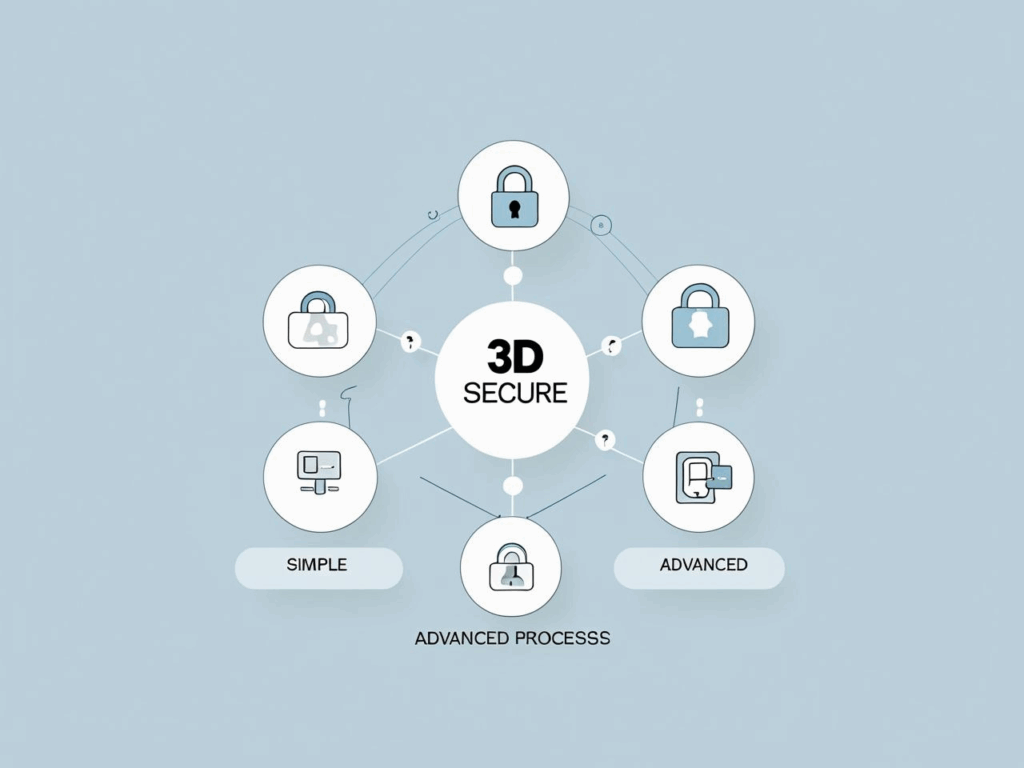
3D Secure (short for "Three-Domain Secure") is an additional step in the online card payment process. It was initially developed by Visa (as Verified by Visa) and later adopted by Mastercard (Mastercard Identity Check), American Express (SafeKey), and other major networks.
The “three domains” in question are:
-
Issuer domain (the bank that issued the card)
-
Acquirer domain (the merchant’s bank)
-
Interoperability domain (the infrastructure, like card networks and payment gateways)
When a customer initiates an online transaction, the system may prompt them to complete an identity verification step, such as entering a one-time password (OTP), approving via banking app, or biometric authentication.
How Does It Work?
Here’s a simplified step-by-step of how 3D Secure functions:
-
Customer initiates a payment on a merchant’s website using a credit/debit card.
-
Card is checked for 3DS enrollment by the issuing bank.
-
If enrolled, a challenge flow (authentication step) is triggered.
-
Customer verifies their identity (via OTP, fingerprint, etc.).
-
If successful, transaction is approved and completed.
There are two flows within 3DS:
-
Frictionless Flow: No challenge is presented — risk is deemed low.
-
Challenge Flow: Authentication is required — used when risk is higher.
With the introduction of 3D Secure 2.0 (3DS2), the process became mobile-friendly, faster, and less intrusive to user experience compared to the original version.
Why 3D Secure Matters for Merchants
Implementing 3DS offers a number of benefits:
✅ Fraud Reduction
By authenticating the user before the transaction completes, 3DS helps stop unauthorized card use.
✅ Liability Shift
When 3DS is used, liability for fraudulent transactions may shift from the merchant to the issuing bank — reducing financial risk for merchants.
✅ Regulatory Compliance
3DS is a key mechanism for complying with PSD2's Strong Customer Authentication (SCA) requirement in the EU and UK.
✅ Enhanced User Trust
Customers are more likely to trust a site that uses robust payment authentication measures.
Key Use Cases
-
E-commerce businesses targeting Europe or regulated markets
-
Digital wallets and neobanks looking to minimize fraud exposure
-
High-risk industries (e.g., online gaming, financial services) seeking extra security layers
-
Subscription businesses managing recurring payments that require dynamic authentication
Best Practices for Implementing 3DS
-
Use 3DS2 over 3DS1: It supports biometrics, device data, and risk-based authentication.
-
Ensure mobile optimization: 3DS2 is mobile-native — don’t frustrate your app users.
-
Work with a PSP or gateway that supports adaptive authentication: Some modern gateways (like Adyen, Stripe, Checkout.com) enable seamless frictionless flows for trusted transactions.
-
Monitor 3DS challenge rates: Too many authentication prompts can reduce conversions.
Common Misconceptions
-
“3DS always adds friction” — Not true with 3DS2 and good risk scoring.
-
“Only Europe requires 3DS” — While PSD2 made it mandatory in the EU, many regions are adopting similar standards for fraud prevention.
-
“3DS hurts conversion” — When configured well, it may increase trust and reduce abandoned carts.
Looking Ahead: 3DS and the Future of Secure Payments
As online fraud becomes more sophisticated, payment security must evolve. 3DS is no longer optional in many jurisdictions — it’s becoming the global standard for secure online transactions.
With advancements like machine learning risk scoring, biometric authentication, and behavioral analytics, 3DS2 will continue to grow more intelligent and frictionless over time.
Final Thoughts
Whether you're selling in Europe, Latin America, or North America, implementing 3D Secure is no longer a "nice-to-have" — it's a must for serious online businesses.
For fintechs, e-commerce players, and payment service providers, 3DS is a critical tool for building trust, reducing fraud, and staying compliant in an increasingly regulated landscape.
👉 Looking to integrate 3DS seamlessly into your payment flow? At Buvei, we help businesses deploy secure, scalable, and compliant payment infrastructure — including smart 3DS strategies tailored to your market.