Introduction
In today's fast-paced business world, managing payments and business expenses is more important than ever. Companies are increasingly turning to corporate cards to streamline their spending processes. Among the options available, virtual cards and physical corporate cards are the most common choices.
While both types of cards serve the same fundamental purpose—allowing companies to manage and control spending—there are significant differences in how they function and the benefits they offer.
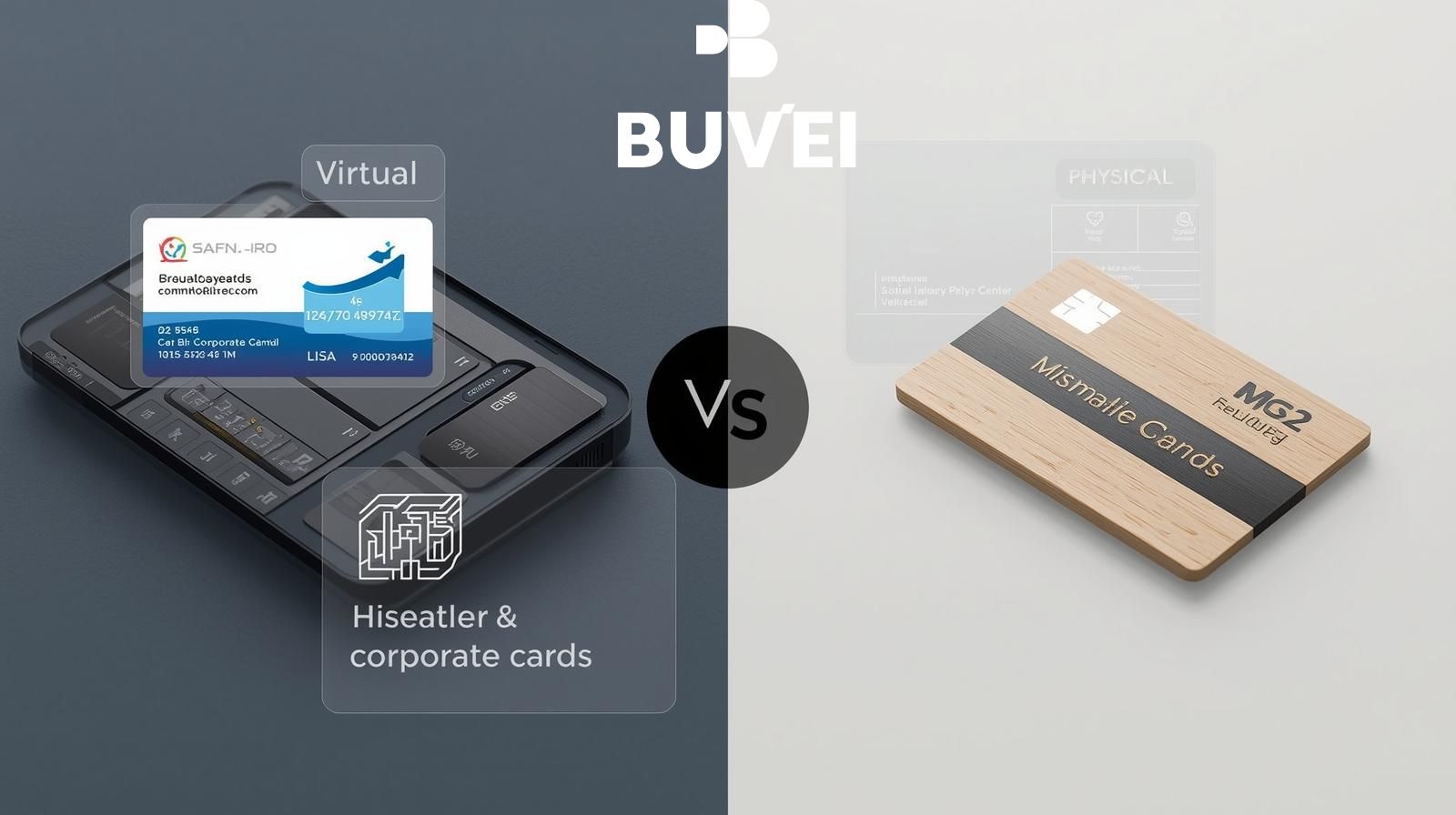
In this article, we will compare virtual cards and physical corporate cards, outlining the pros and cons of each, and explore how Buvei’s virtual card solution stands out in this evolving financial landscape.
What Are Virtual Cards?
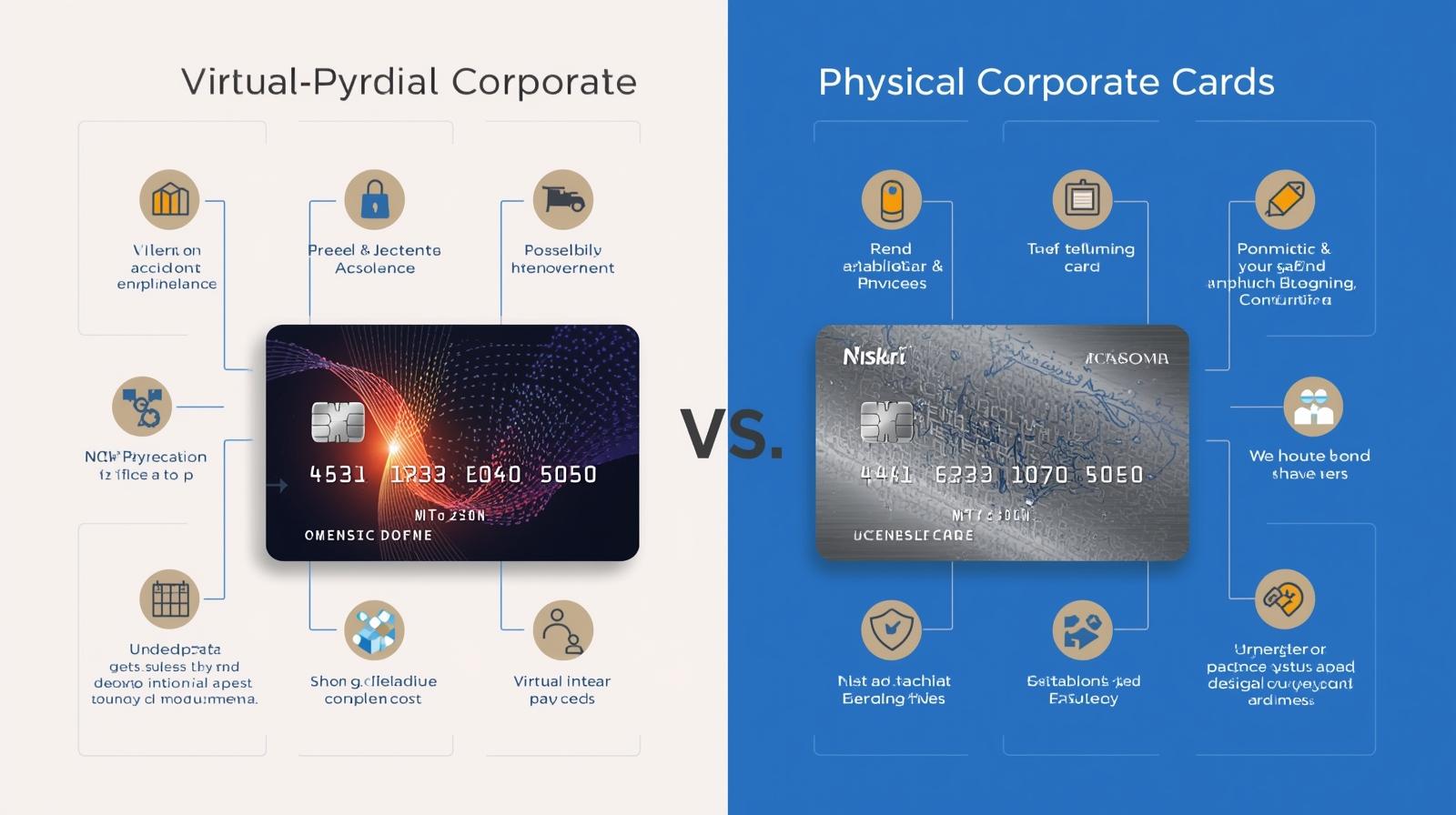
A virtual corporate card is a digital card that businesses can use for online payments. Unlike physical cards, they exist only in a digital format, and are typically issued immediately after registration. Virtual cards are often used for specific online transactions, subscriptions, or one-time purchases, offering enhanced security features and flexibility.
Benefits of Virtual Cards:
-
Enhanced Security
Virtual cards offer higher security than physical cards because they are not linked directly to the company’s bank account. This reduces the risk of fraud or theft, as virtual cards can be used for single transactions, keeping your primary accounts safe. -
Instant Issuance
One of the key advantages of virtual cards is the ability to receive an instant card upon registration, eliminating the wait time associated with receiving a physical card. -
Control and Flexibility
Virtual cards give businesses the ability to set spending limits and usage restrictions on individual cards, ensuring more precise control over spending. Additionally, multiple virtual cards can be created for different purposes. -
Lower Costs
Virtual cards tend to have lower fees compared to physical corporate cards. There’s no need to pay for card printing or mailing costs, and many virtual card providers offer cost-effective options. -
No Risk of Losing Physical Cards
As virtual cards are entirely digital, there's no risk of losing or misplacing them. Users can access and manage them through an online platform or mobile app.
What Are Physical Corporate Cards?
A physical corporate card is a traditional card issued by a bank or payment provider. It can be used for in-person purchases or online payments, just like a regular credit or debit card. These cards are often linked to the company’s bank account or credit line, and they offer a more tactile and familiar experience for employees who make payments on behalf of the company.
Benefits of Physical Corporate Cards:
-
Widely Accepted
Physical cards are widely accepted across the world, both online and in-store. They provide employees with more versatility in how they can make payments, especially for in-person purchases. -
Established Relationships
Physical cards are often linked to an established relationship with the bank or financial institution, which may offer better credit lines and other banking benefits, such as rewards or loyalty points. -
Employee Empowerment
Giving employees a physical card can empower them to make business purchases on their own without needing to go through the finance department for approval. -
Greater Familiarity
For businesses used to traditional payment methods, physical cards provide a familiar and straightforward experience. Employees don’t need to learn new systems or adapt to a digital-first approach.
Virtual Cards vs Physical Corporate Cards: Pros and Cons
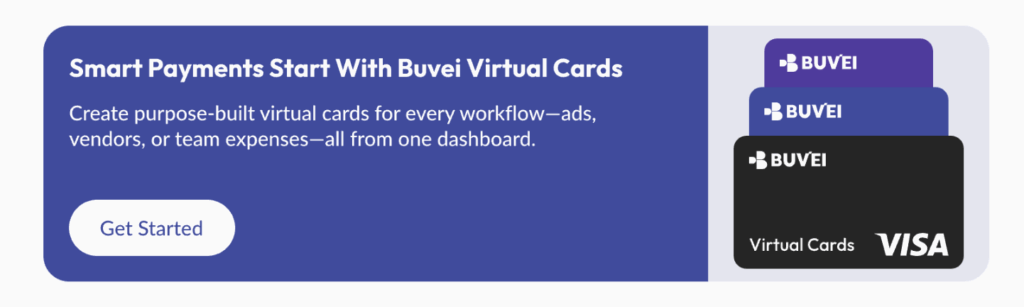
Now that we have a clear understanding of what virtual and physical corporate cards are, let's compare them side by side:
Pros of Virtual Cards:
-
Enhanced Security
Virtual cards reduce the risk of fraud by limiting exposure to primary bank account information. Buvei’s virtual cards are PCI DSS-compliant, ensuring a high level of security for online transactions. -
Instant Card Issuance
With virtual cards, there is no waiting time. Buvei allows businesses to issue virtual cards immediately upon registration, enabling you to make payments or complete verifications without delay. -
Control Over Spending
With the ability to set spending limits, virtual cards offer businesses better control over their finances. You can also restrict cards to specific purposes, reducing the chance of misuse. -
Cost-Effective
Since virtual cards are digital, they don’t come with the costs associated with physical card production and shipping. They also offer low top-up fees and transparent fee structures.
Cons of Virtual Cards:
-
Limited Acceptance for In-Person Purchases
While virtual cards are ideal for online transactions, they can’t be used for in-person purchases unless linked to a mobile wallet or payment system. -
Lack of Physical Card
Some businesses prefer having a physical card for employees to use in various situations. Virtual cards don’t provide the same tactile experience.
Pros of Physical Corporate Cards:
-
Widely Accepted
Physical cards are universally accepted, both online and in physical stores. This makes them ideal for businesses that require in-person transactions. -
Greater Credit Limit Flexibility
Many banks offer physical corporate cards with higher credit limits, which can be useful for companies with large or frequent purchases. -
Familiar Experience
Employees are accustomed to using physical credit cards, which can make it easier for companies to transition to corporate cards.
Cons of Physical Corporate Cards:
-
Higher Costs
Physical cards come with production and shipping costs, and in many cases, higher annual fees. Additionally, physical cards are more prone to fraud, especially if they are lost or stolen. -
Slower Issuance
It takes time to issue physical cards and send them to employees, which can cause delays in payment processing and business transactions. -
Less Control Over Spending
Unlike virtual cards, physical corporate cards offer less granular control over spending limits or specific purchases, making it harder for businesses to track expenses accurately.
How Buvei's Virtual Cards Stand Out
Buvei offers a variety of advantages that make it the ideal choice for businesses looking for virtual cards:
-
Multiple BIN Support: Buvei provides global BIN coverage for Visa and Mastercard, allowing businesses to select the best BIN for different advertising platforms, improving payment success rates across the board.
-
Flexible Payment Compatibility: Buvei’s virtual cards can be used for Google Ads, Meta Ads, TikTok Ads, and other platforms, as well as for SaaS subscriptions (like ChatGPT and Notion).
-
USDT Top-up: Buvei offers USDT (TRC20/ERC20) top-ups, providing low-cost, fast fund transfers, making it an ideal choice for international transactions.
-
Instant Issuance and Easy Management: Buvei’s virtual cards are issued instantly, and businesses can manage multiple cards from a single account, saving both time and effort in team collaboration.
-
Real-Time Customer Support: With real-time customer service, Buvei ensures that businesses have the support they need, reducing downtime and ensuring smooth operations.
Conclusion
Both virtual cards and physical corporate cards have their pros and cons, but for businesses looking for secure, flexible, and cost-effective solutions, virtual cards are often the better choice. Services like Buvei take the benefits of virtual cards to the next level by providing instant card issuance, enhanced security, multiple BIN support, and cost-effective top-ups.
If your business is looking to improve payment management, streamline transactions, and enhance security, a Buvei virtual card may be the perfect solution.