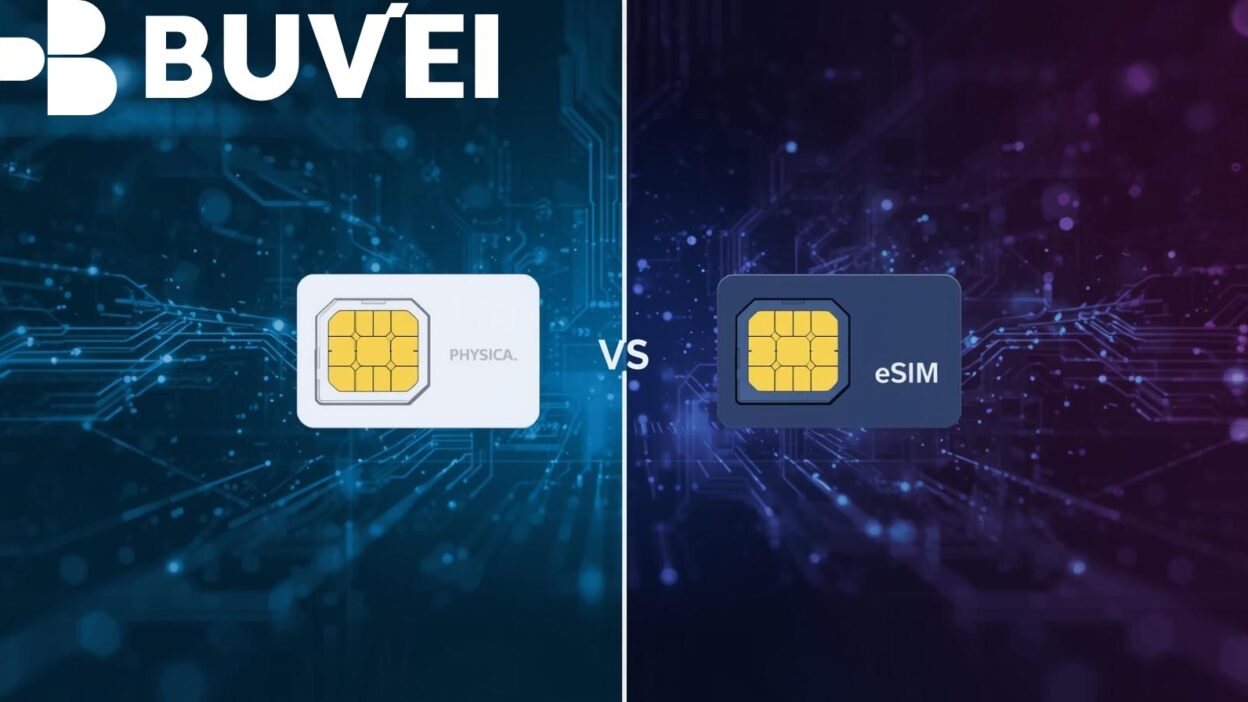
The way we connect our devices is changing rapidly. Traditional SIM cards are being replaced by digital solutions that promise greater flexibility, security, and scalability. Two of the most discussed technologies in 2025 are the eSIM (embedded SIM) and the Virtual SIM (vSIM).
While eSIM has already gone mainstream — used in iPhones, smartwatches, tablets, and IoT devices — the Virtual SIM takes things a step further by completely separating your digital identity from physical hardware.
So, which one is better in 2025? This article compares Virtual SIM vs eSIM across four key dimensions — compatibility, security, cost, and future potential — and concludes with a clear guide for consumers and enterprises.

Compatibility and Flexibility
1.1 Device Support and Availability
-
eSIM:
eSIM technology, based on the eUICC (Embedded Universal Integrated Circuit Card) standard, is already supported by most premium smartphones, tablets, wearables, and even vehicles. It enables users to activate a carrier plan digitally without inserting a physical SIM card.However, not every device supports eSIM yet — budget models, older phones, and some IoT modules still rely on traditional SIM cards. Global adoption varies by region and operator readiness.
-
Virtual SIM:
A Virtual SIM (also known as vSIM) goes beyond the hardware layer. It virtualizes the subscriber identity, allowing your mobile profile to exist in a secure cloud or software layer instead of being tied to a specific chip.In theory, this allows instant switching between devices without needing to download or install a profile manually. Some telecoms and enterprises are experimenting with vSIM systems for fleet management and IoT networks, but large-scale commercial use is still emerging.
Verdict:
In 2025, eSIM remains the more widely supported and stable option, while Virtual SIM offers promising flexibility but limited commercial deployment.
1.2 Multi-Profile and Cross-Device Switching
-
eSIMs allow you to store multiple carrier profiles on one device and switch between them as needed — perfect for travelers, dual-number users, or IoT devices with multi-network requirements.
-
Virtual SIMs, on the other hand, aim for real-time identity migration across multiple devices. For example, you could move your mobile identity from a smartphone to a tablet or IoT gateway instantly, without re-provisioning.
Verdict:
eSIM is flexible enough for most users today. But in the future, Virtual SIM could make network switching and device hopping truly seamless.
Security and Privacy
2.1 Tamper Resistance and Authentication
-
eSIM:
Security is one of eSIM’s strongest advantages. Embedded inside a secure element, eSIMs use remote SIM provisioning (RSP) to manage profiles securely over encrypted channels. They are much harder to clone, steal, or tamper with compared to physical SIMs.That said, eSIM’s security depends on proper implementation of the GSMA RSP protocol, certificate validation, and secure OTA (Over-the-Air) communication. Some research papers have pointed out potential risks in poorly configured RSP servers.
-
Virtual SIM:
Virtual SIM technology introduces a new security model. Instead of relying on local hardware, it secures identity through cloud-based encryption, tokenization, and multi-factor authentication.This offers flexibility but also new risks — if the cloud identity system is compromised, attackers could theoretically hijack user sessions remotely.
Verdict:
In 2025, eSIM provides a proven, hardware-level security framework, while Virtual SIM security depends on robust identity management and strong encryption policies.
2.2 Privacy and Data Control
-
eSIMs tie a user’s identity directly to a specific device, making tracking and regulatory compliance straightforward for carriers — but sometimes restrictive for users who value anonymity.
-
Virtual SIMs have the potential to enhance privacy. Because user identity is virtualized, it’s possible to create temporary or region-specific numbers and control which devices share your identity.
Verdict:
Virtual SIM could enable new privacy models in the future, but eSIM currently offers more reliable, standardized data protection and compliance features.
Cost, Ecosystem, and Operational Efficiency
3.1 Industry Adoption
-
eSIM has full GSMA standardization and global operator support. In 2025, over 300 mobile carriers provide eSIM activation across smartphones, wearables, and IoT devices.
-
Virtual SIM, however, lacks a unified commercial standard. Most pilot deployments are proprietary — developed by carriers, cloud providers, or enterprise solution vendors.
Verdict:
eSIM dominates in ecosystem maturity and carrier interoperability.
3.2 Cost Efficiency
-
For consumers: eSIM eliminates the need for physical SIM distribution. Plans can be activated instantly online, reducing activation time and logistics.
-
For operators: eSIMs reduce plastic waste, manufacturing costs, and distribution expenses.
In contrast, Virtual SIM could bring even greater long-term cost benefits by removing the need for hardware chips altogether — but the initial investment in cloud infrastructure and identity management is significant.
3.3 Enterprise and IoT Applications
-
eSIM is now widely used in IoT, automotive, and M2M applications, where devices must switch networks remotely without physical access.
-
Virtual SIM could eventually offer centralized identity orchestration — allowing companies to manage millions of device profiles dynamically in the cloud.
Verdict:
For enterprise IoT in 2025, eSIM remains the reliable standard, while Virtual SIM represents the future of scalable identity management.
Future Outlook: Hybrid Models and Integration
4.1 Rise of iSIM and Virtual Identity Layers
The next evolutionary step beyond eSIM is iSIM (integrated SIM), where SIM functionality is embedded directly into the device’s processor (SoC).
Combining iSIM with Virtual SIM could create a hybrid model — hardware-secure at the base layer, with flexible cloud-based identity management on top.
This fusion would allow real-time provisioning, enhanced security, and full device portability — the best of both worlds.
4.2 Gradual Transition (2025–2030)
Over the next five years, the market will likely see a coexistence of physical SIMs, eSIMs, and emerging virtual SIM solutions.
-
In developed regions, eSIM and iSIM adoption will grow rapidly.
-
In developing markets, physical SIMs will persist due to infrastructure gaps.
-
Virtual SIMs will remain in enterprise, automotive, and IoT experimentation phases.
4.3 Which Is Better in 2025?
| Criteria | eSIM | Virtual SIM |
|---|---|---|
| Device Compatibility | Widely supported | Limited commercial use |
| Flexibility | Multiple profiles | Instant identity migration |
| Security | Hardware-secure | Depends on cloud encryption |
| Privacy | Device-bound | Potentially higher anonymity |
| Ecosystem | Mature (GSMA-backed) | Emerging |
| Cost | Low distribution cost | High initial setup cost |
| Future Potential | Stable evolution | Disruptive innovation |
Verdict:
In 2025, eSIM is the better choice for consumers, telecom operators, and most IoT deployments due to its maturity, compatibility, and security.
Virtual SIM is a forward-looking technology — ideal for enterprises, virtual networks, and identity-as-a-service platforms exploring post-hardware mobility.
Conclusion
As the world moves toward fully digital connectivity, both eSIM and Virtual SIM are reshaping how users connect to mobile networks.
In 2025:
-
eSIM remains the mainstream, secure, and proven option for smartphones and IoT.
-
Virtual SIM is innovative and flexible, pointing toward a future where your network identity is cloud-based, transferable, and hardware-free.
Ultimately, the two technologies are not competitors but complementary — eSIM provides today’s reliable infrastructure, while Virtual SIM defines tomorrow’s borderless, intelligent connectivity.、