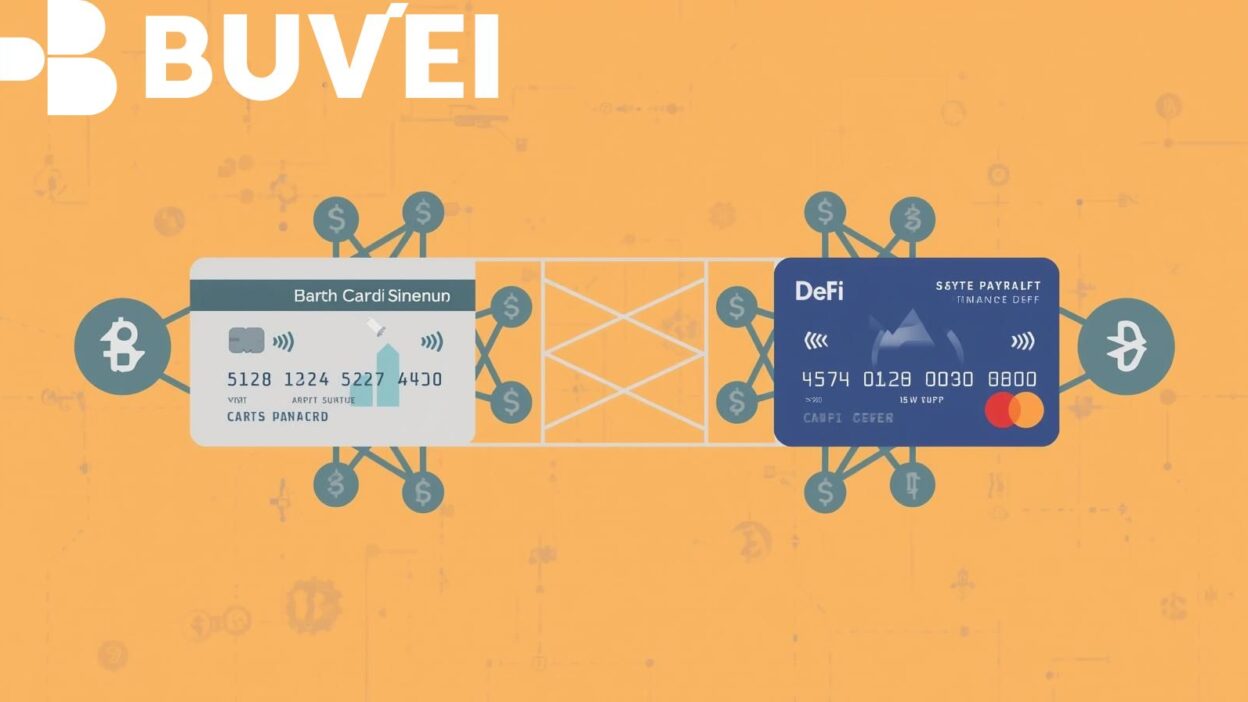
The boundaries between the realms of traditional finance (TradFi) and decentralized finance (DeFi) are increasingly blurring. One of the most visible convergence points is in payment infrastructure: virtual cards powered by crypto. As users demand frictionless ways to spend digital assets in daily life—online shopping, subscriptions, cross-border payments—platforms that bridge blockchains and incumbent payments rails are becoming essential.
In this article, we examine how virtual cards and DeFi are converging, outline key strategies to build credibility and reliability in this space, and highlight how Buvei is positioned to lead in this evolving domain.

Why Virtual Cards Matter in the Crypto-Fiat Bridge
Virtual cards are digital (non-physical) payment cards that function like debit or credit cards but exist entirely in software.
From the crypto side, they solve a critical usability gap:
-
Instant Conversion at Checkout: When a user makes a purchase, the virtual card infrastructure automatically converts cryptocurrency (or stablecoins) to fiat in real time. Merchants simply see a standard card transaction.
-
Wider Merchant Acceptance: Because the card is backed by established payment networks (Visa, Mastercard), it enjoys acceptance anywhere that traditional cards are accepted.
-
User Control & Budgeting: Users can set spending limits, issue one-time or multi-use cards, freeze or cancel them instantly — features that reduce risk compared to carrying on-chain funds.
-
Seamless Experience: Instead of requiring users to manually convert crypto to fiat, withdraw to a bank, and then spend, virtual cards compress the process into one seamless path.
In short: virtual cards are a key bridge in the “internet of money” concept, enabling digital value to flow into everyday commerce.
How DeFi Primitives Reinforce Virtual Card Systems
DeFi (smart contracts, liquidity pools, on-chain oracles, yield strategies) can enhance virtual card ecosystems in multiple ways:
-
On-chain liquidity & auto conversion
Virtual card platforms can integrate decentralized exchanges (DEXes) or on-chain automated market makers (AMMs) to source liquidity and dynamically convert underlying crypto to fiat (or stablecoins). This can lead to more competitive rates and less reliance on centralized exchanges. -
Oracles & price feeds
Accurate, secure real-time oracles (e.g., Chainlink) ensure correct pricing when converting assets at the point of sale. In fact, Mastercard has already been working with Chainlink to deepen the TradFi–DeFi integration. -
Yield farming & interest layering
Idle balances (e.g. in stablecoins) can be deployed into yield strategies until needed, improving capital efficiency. The system can dynamically materialize the funds only when a transaction is triggered. -
Composability & modular infrastructure
DeFi architectures are composable: modules (liquidity, settlement, credit) can be plugged into the virtual card stack. This allows rapid experimentation and upgrades. -
Smart contract settlement & transparency
Transaction settlement can happen on-chain or via hybrid models, offering transparent audit logs and traceable flows of funds. Over time, this can help foster trust in the platform's integrity.
By combining virtual card rails with DeFi building blocks, platforms can reduce dependence on legacy infrastructure, optimize costs, and innovate faster.
Challenges & Strategies for Trust, Compliance, and Reliability
To thrive in the convergence zone between crypto and traditional finance, a virtual card platform must address key challenges. Below are four strategic pillars:
A. Regulatory compliance & identity frameworks
-
Implement robust KYC / KYB procedures to comply with anti-money laundering and counter-terrorism financing laws.
-
Use identity attestation and revocation mechanisms to align with regulatory standards across jurisdictions.
-
Structure operations with modular licensing surrogates (e.g. partnering with licensed card issuers).
B. Security, risk management & fraud prevention
-
Use multi-layered security: tokenization, 3D Secure, transaction monitoring, anomaly detection.
-
Apply policy limits and velocity rules to minimize exposure to exploitation.
-
Leverage smart contract audit frameworks (e.g. formal verification) when DeFi modules are involved.
C. Reliability, uptime & resilience
-
Architect redundant infrastructure (failover systems, mirrored API endpoints, fallback liquidity sources).
-
Plan for edge cases (e.g. oracle failure, abrupt liquidity withdrawal, network congestion).
-
Maintain transparent SLA and incident disclosure to foster trust.
D. Transparency & external audits
-
Publish regular proof-of-reserves or on-chain verifiable audits.
-
Commission third-party security reviews or certifications.
-
Maintain open communication channels with users and regulators.
By applying these strategies, a platform can reinforce its reliability and build trust in a space where users must feel confident bridging their crypto savings into real-world spending.
Use Cases & Future Outlook (and Buvei’s Edge)
Use Cases
-
Subscription payments & SaaS: Users can pay recurring bills with crypto via virtual cards, without manual conversion.
-
Global e-commerce: Cross-border shoppers can use their crypto to pay at international merchants without worrying about FX transfers.
-
Expense management / business cards: Crypto-native businesses, freelancers, or DAOs can issue virtual cards, control budgets, and monitor spending.
-
On-demand credit: For users with crypto collateral, instant credit or overdraft facilities could be tied to virtual cards.
Future Trends
-
Embedded finance in DeFi apps: DeFi interfaces may natively include spending options (e.g. in dashboards or wallets).
-
Tokenized credit lines & dynamic credit limits: Users might get spending limits backed by their DeFi collateral.
-
Cross-chain cards: Cards that pull from assets across multiple chains.
-
Regtech and real-time compliance: On-chain compliance checks and regulatory enforcement mechanisms.
Buvei’s Value Proposition
-
Seamless integration: Buvei’s architecture is designed to integrate with wallets, exchanges, and DeFi modules to deliver frictionless crypto-to-fiat conversion at point of sale.
-
Global reach & card network support: Buvei supports major payment networks to ensure broad merchant acceptance.
-
Scalable compliance: Buvei provides modular compliance tooling (KYC, AML, identity) built into its platform so clients can deploy globally more easily.
-
Security & reliability by design: Buvei emphasizes transparent audits, robust failover systems, and security best practices.
-
Developer and enterprise support: Via APIs and SDKs, Buvei enables partners (wallets, DeFi apps, exchanges) to embed virtual card issuance in their products.
Conclusion
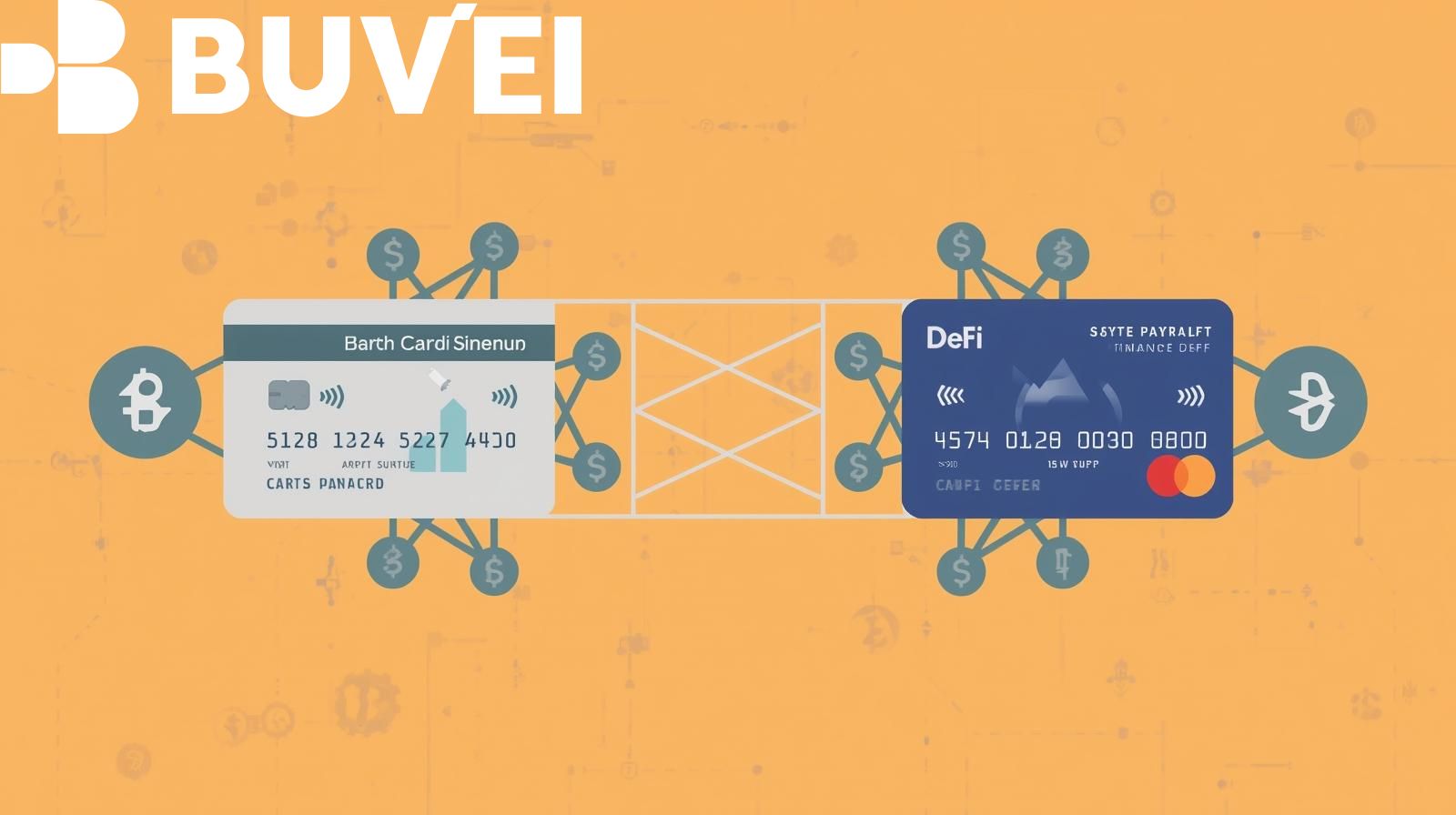
The convergence of virtual cards and DeFi represents a powerful nexus in the evolution of finance. As the lines between digital assets and everyday money blur, users demand seamless ways to bridge the two — a role virtual cards are uniquely positioned to play. Yet success lies not just in technical novelty, but in credibility, trust, compliance, and reliability.
By adopting DeFi primitives (liquidity, oracles, composability) while adhering to rigorous compliance and audit strategies, platforms can usher in a new integrated finance paradigm. Buvei is positioned to lead this transformation, offering a bridge between crypto wallets and the global payments system, while ensuring security, regulatory alignment, and scalability.