
Virtual cards for cryptocurrency wallet top-ups are becoming an essential payment tool as crypto platforms tighten compliance and users seek safer, more flexible funding methods. In 2026, virtual cards offer a practical bridge between traditional payments and digital assets.
This guide explains how crypto wallet top-ups work, whether virtual cards are accepted, and how to create and use a virtual card step by step with Buvei.
How Cryptocurrency Wallet Top-Ups Work
Most cryptocurrency wallets and exchanges allow users to add funds in two main ways:
-
On-chain deposits (sending crypto from another wallet)
-
Off-chain payments (card payments, bank transfers, or third-party processors)
Card-based top-ups are popular because they are fast and user-friendly, but they often come with higher scrutiny, regional restrictions, and fraud checks.
This is where virtual cards provide an advantage.
Can Virtual Cards Be Used for Crypto Wallet Top-Ups?
Yes — many crypto wallets and exchanges accept virtual cards, provided they meet certain criteria.
Virtual cards work best for crypto top-ups when they:
-
Support international card networks (Visa/Mastercard)
-
Use trusted BIN regions (often US or EU)
-
Allow online and recurring transactions
However, acceptance varies by platform, and not all virtual cards perform equally well for crypto-related payments.
What to Look for in Virtual Cards for Crypto Wallets
When choosing a virtual card for crypto wallet top-ups, prioritize the following features:
International BIN Support
Crypto platforms often apply stricter rules to card origin. Cards with US BINs typically show higher approval rates.
Flexible Funding Options
The ability to fund cards with USDT or other stablecoins makes it easier for crypto-native users to manage liquidity.
Spending Limits and Controls
Virtual cards allow you to cap exposure and isolate risk per wallet or platform.
Transparent Fees
Clear top-up and transaction fees help avoid surprises during crypto purchases.
Common Issues When Using Virtual Cards for Crypto Top-Ups
Even with virtual cards, users may encounter issues if best practices aren’t followed:
-
Transactions declined due to insufficient balance
-
Platform restrictions on prepaid or anonymous cards
-
Currency mismatch between card and platform
-
Overusing one card across multiple crypto services
Using dedicated virtual cards per platform greatly reduces these risks.

How to Create and Use a Virtual Card with Buvei (Step-by-Step)
Below is a practical walkthrough for using Buvei virtual cards for crypto wallet top-ups.
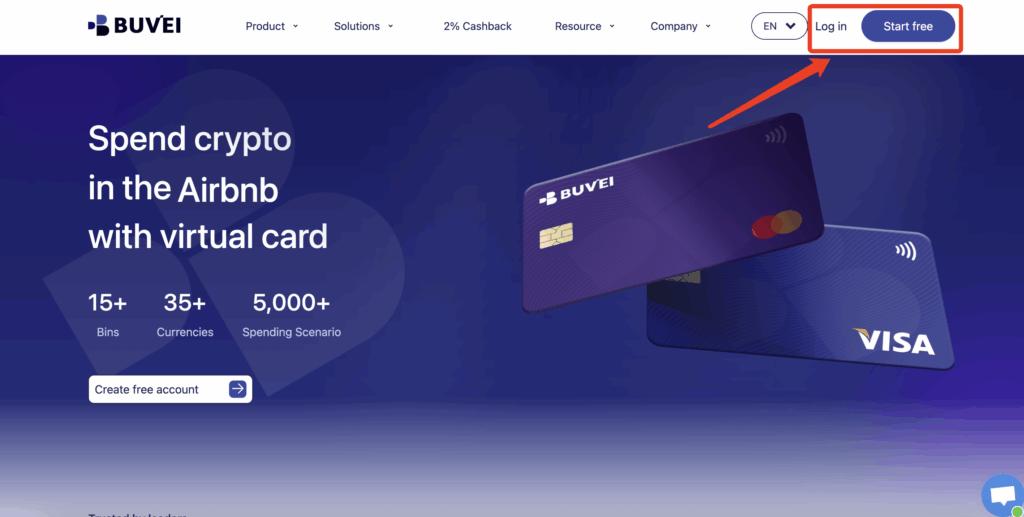
Step 1: Register a Buvei Account
Go to https://buvei.com and create a free account.
After completing email verification, log in to access the Buvei dashboard.
Step 2: Top Up Your Buvei Wallet
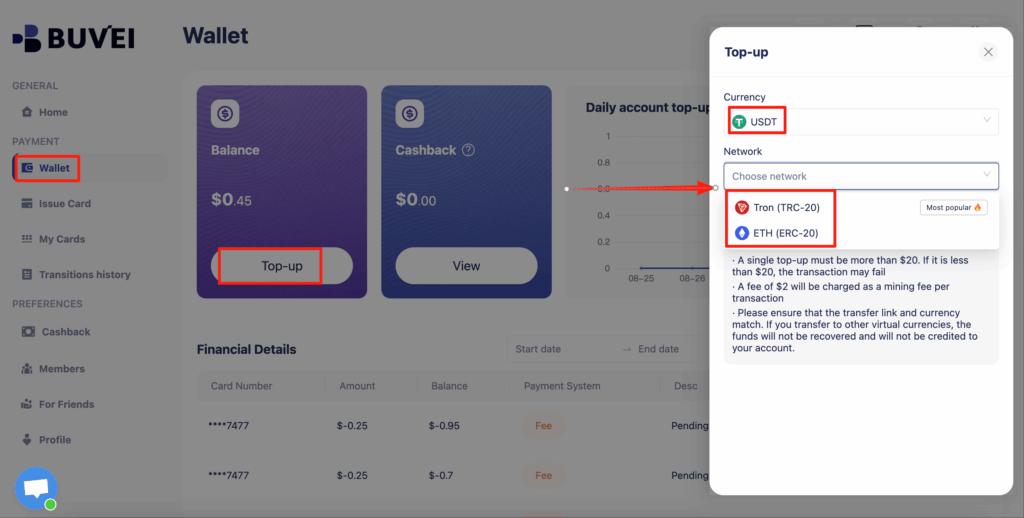
Navigate to the Wallet tab and choose USDT (TRC20 or ERC20) as your funding method.
Buvei will provide a dedicated deposit address—copy it and send your funds.
Once confirmed on-chain, your balance appears instantly.
Step 3: Create a Virtual Card
Go to the Cards section and click Create Card.
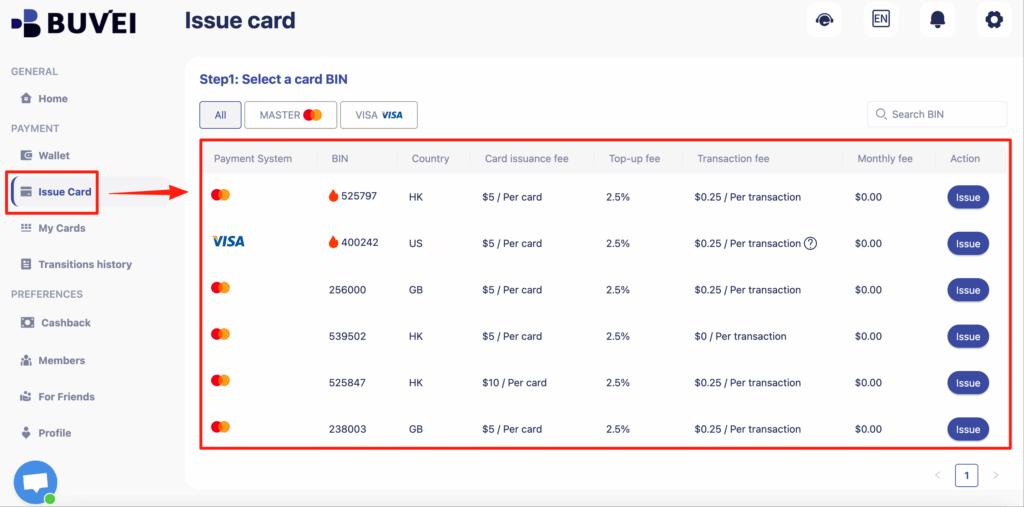
You will need to:
-
Select your preferred BIN region (US BIN recommended)
-
Choose the card type
-
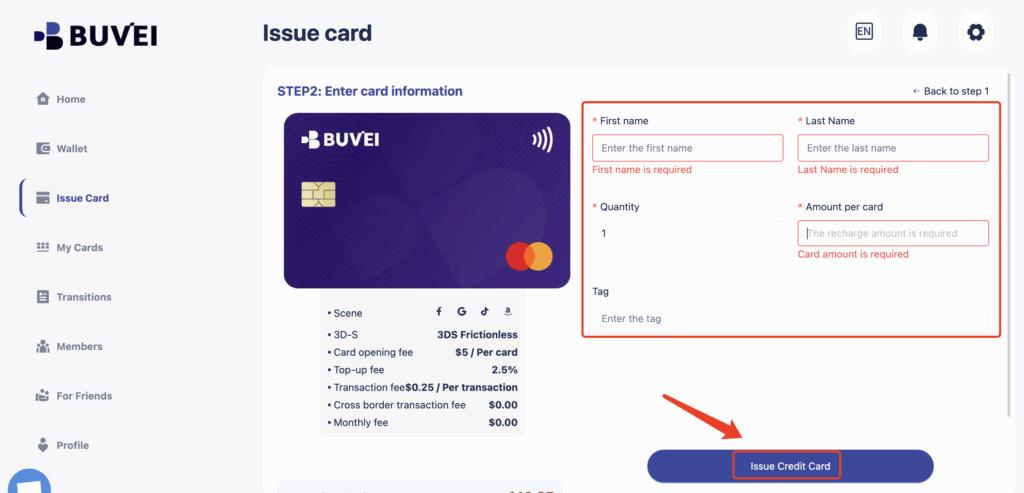
Enter card details such as card name, card balance, and card quantity
-
Click Issue Card
Step 4: Use the Virtual Card for Crypto Wallet Top-Ups
After issuance, go to My Cards to view:
-
Card number
-
Expiration date
-
CVV
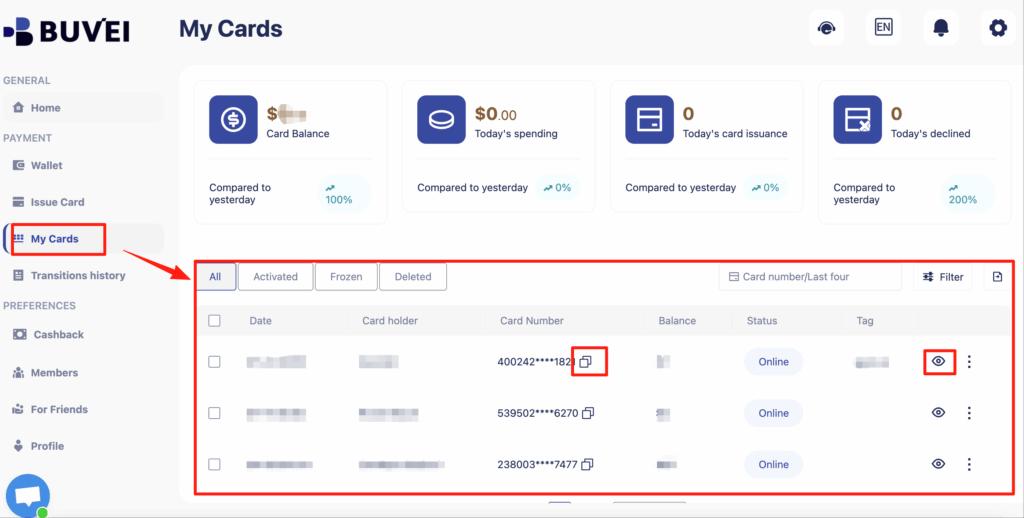
Use these details to complete your crypto wallet or exchange top-up.
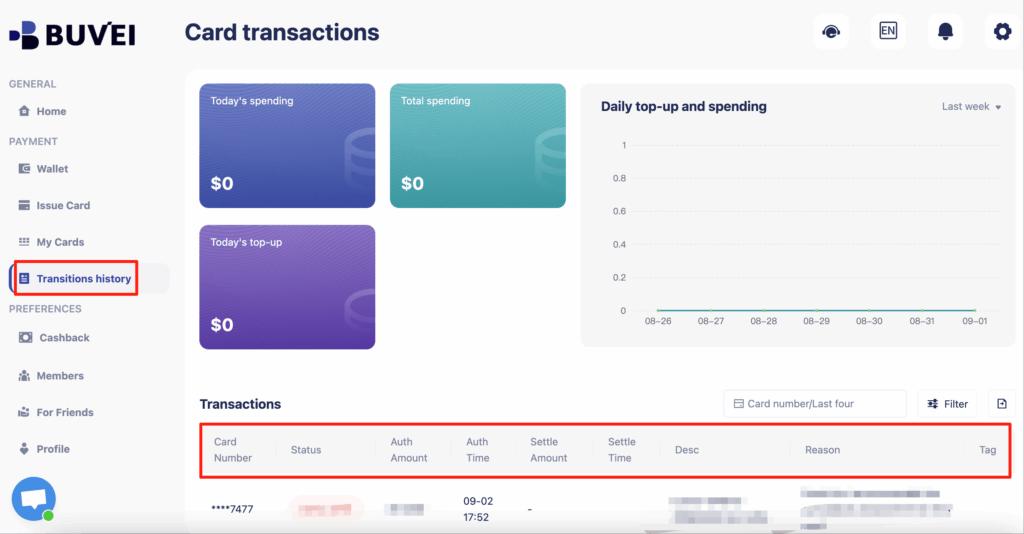
From the same page, you can track balances, top-ups, and all transaction activity, making it easy to monitor crypto-related spending.
Final Thoughts
Virtual cards for cryptocurrency wallet top-ups offer a safer and more flexible alternative to traditional bank cards in 2026. By separating crypto payments from your main banking credentials and using cards optimized for global acceptance, users can reduce declines and improve funding reliability.
For crypto users looking for fast setup, stable funding via USDT, and international compatibility, Buvei virtual cards provide a practical solution for crypto wallet top-ups.