Advertising arbitrage relies on speed, scale, and margin efficiency. But for many arbitrage marketers, payment blocks—not traffic or creatives—become the real bottleneck.
From sudden card declines to full ad account payment suspensions, billing instability can instantly shut down profitable campaigns. This guide explains why payment blocks happen in advertising arbitrage and how virtual cards help prevent them, with practical, step-by-step execution.

What Is Advertising Arbitrage and Why Payment Issues Arise
Advertising arbitrage involves buying traffic at a lower cost and monetizing it at a higher return—often across platforms like:
-
Google Ads
-
Facebook / Meta Ads
-
TikTok Ads
-
Native ad networks
Because arbitrage campaigns:
-
Scale quickly
-
Rotate accounts frequently
-
Run high-volume transactions
They often trigger payment risk systems, especially on ad platforms with strict billing controls.
Common Reasons for Payment Blocks in Arbitrage Campaigns
The most frequent causes include:
-
Repeated payment retries after declines
-
Sudden spikes in daily ad spend
-
Using a single card across multiple ad accounts
-
BIN-region mismatches
-
Insufficient balance during automatic charges
-
Card history linked to previously flagged accounts
Once flagged, platforms may:
-
Pause campaigns
-
Restrict spending
-
Disable billing methods
-
Suspend entire ad accounts
How Using Virtual Cards Helps Avoid Payment Blocks
Virtual cards allow arbitrage marketers to isolate risk and control spend, rather than exposing one primary card to all activity.
Key benefits include:
-
One card per ad account or campaign
-
Adjustable spending limits
-
Easy replacement if a card is flagged
-
Reduced cross-account linkage
-
Cleaner billing history
This structure aligns better with how ad platforms evaluate payment risk.
Setting Up Multiple Virtual Cards for Advertising Arbitrage
A scalable arbitrage setup typically uses:
-
One virtual card per ad account
-
One funding wallet
-
Separate limits based on campaign budget
This approach minimizes cascading failures when a single card is blocked.
Step-by-Step: How to Rotate Virtual Cards to Avoid Payment Issues
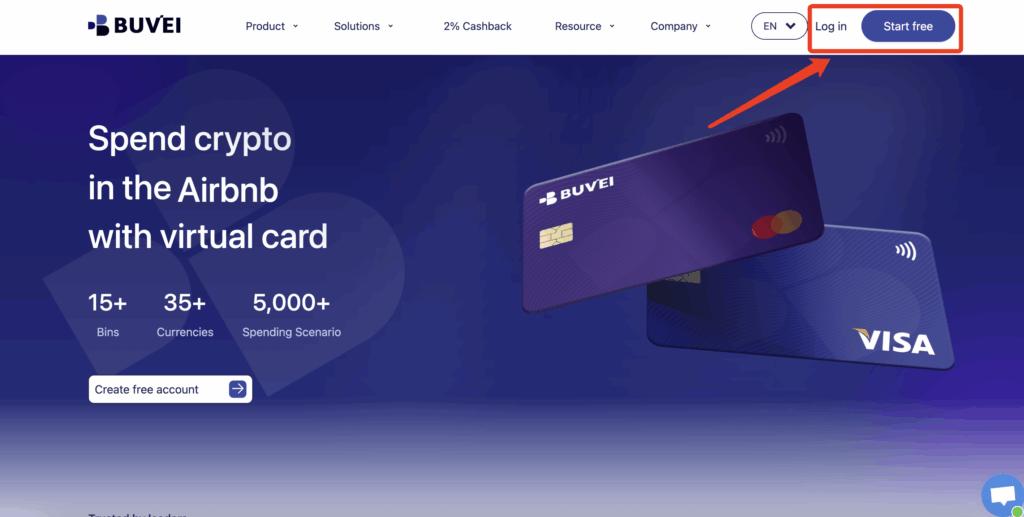
Step 1: Register a Buvei Account
-
Visit https://buvei.com
-
Create a free account
-
Complete email verification
-
Log in to the Buvei dashboard
Step 2: Fund Your Account with Crypto
-
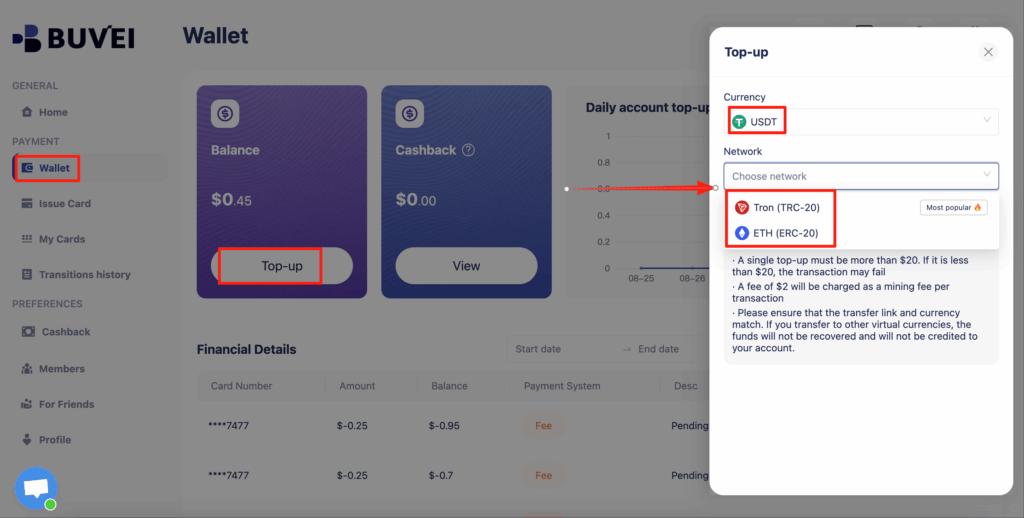
Go to the Wallet tab
-
Select USDT (TRC20 or ERC20)
-
Copy your dedicated deposit address
-
Send your USDT
-
Funds become available after confirmation
This allows fast, low-cost funding without traditional banking delays.
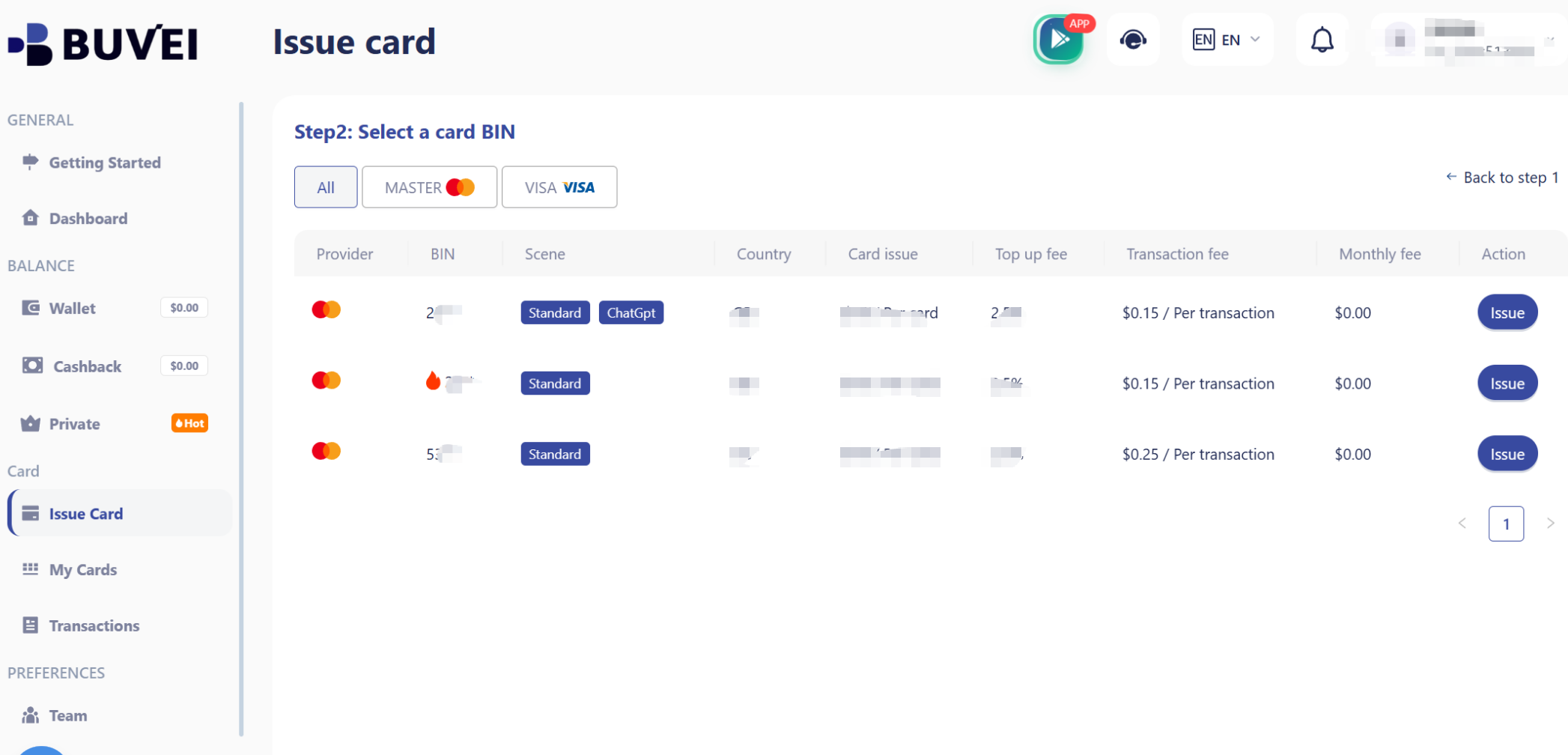
Step 3: Create Multiple Virtual Cards
-
Navigate to the Cards tab
-
Select BIN region (U.S. BIN recommended for ads)
-
Choose your card type
-
Click create
-
Enter:
-
Card name (e.g., “FB Ads – Account A”)
-
Card amount (match daily spend + buffer)
-
Card quantity
-
-
Click Issue Card
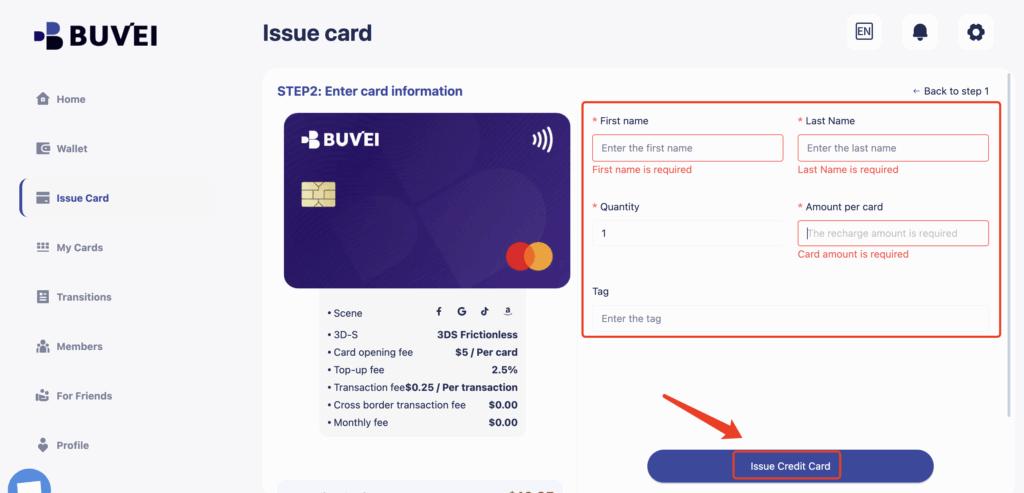
Repeat this process for each ad account.
Step 4: Assign Cards to Ad Accounts
-
Add each virtual card to its designated ad account
-
Avoid sharing cards across accounts
-
Set spend limits slightly above expected usage
Step 5: Rotate Cards Strategically
Rotate virtual cards when:
-
Scaling spend significantly
-
Launching new accounts
-
A card shows early warning declines
Do not rotate:
-
During active billing cycles
-
Immediately after a failed charge
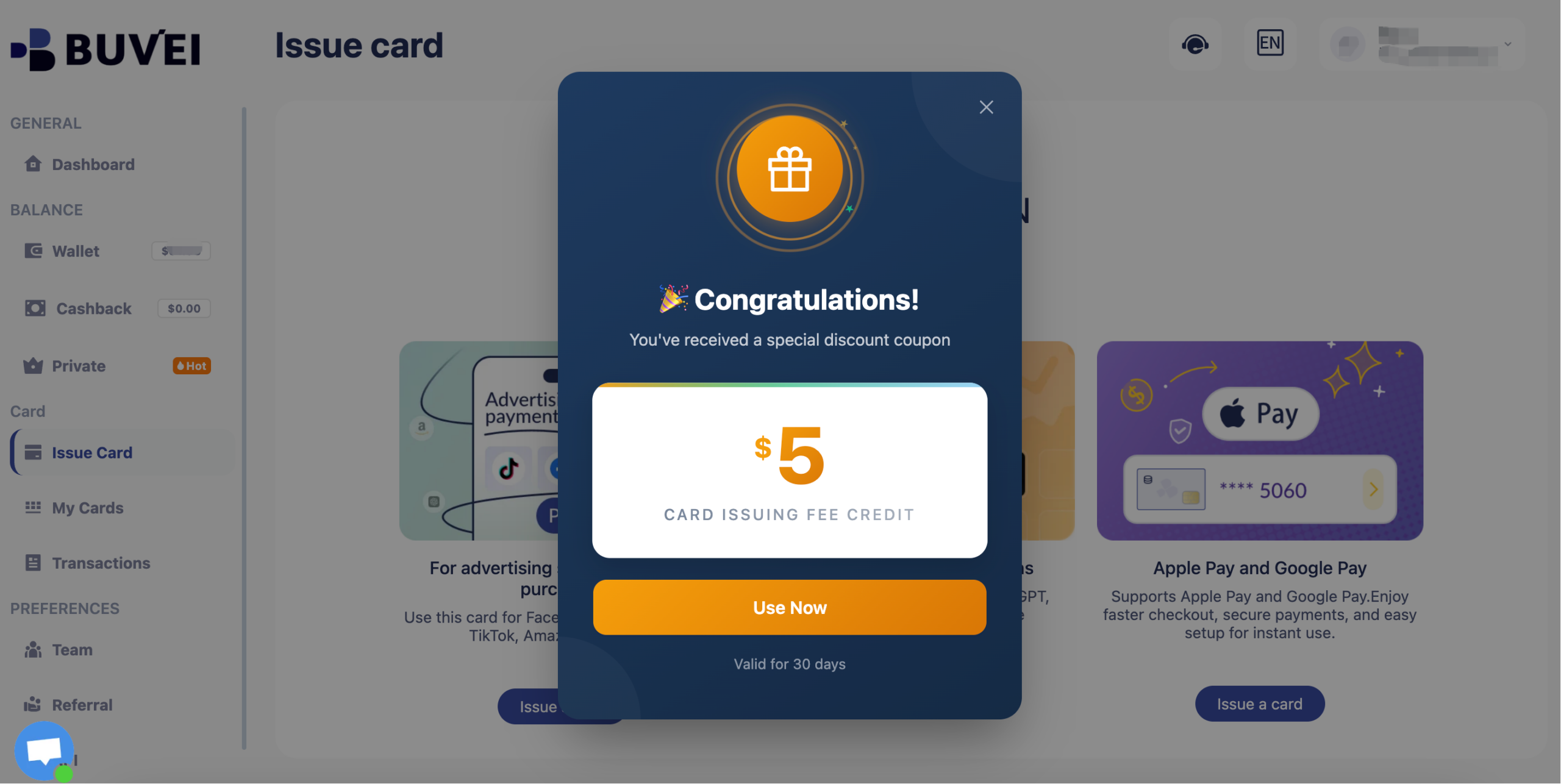
New users receive a $5 virtual card issuance coupon upon registration
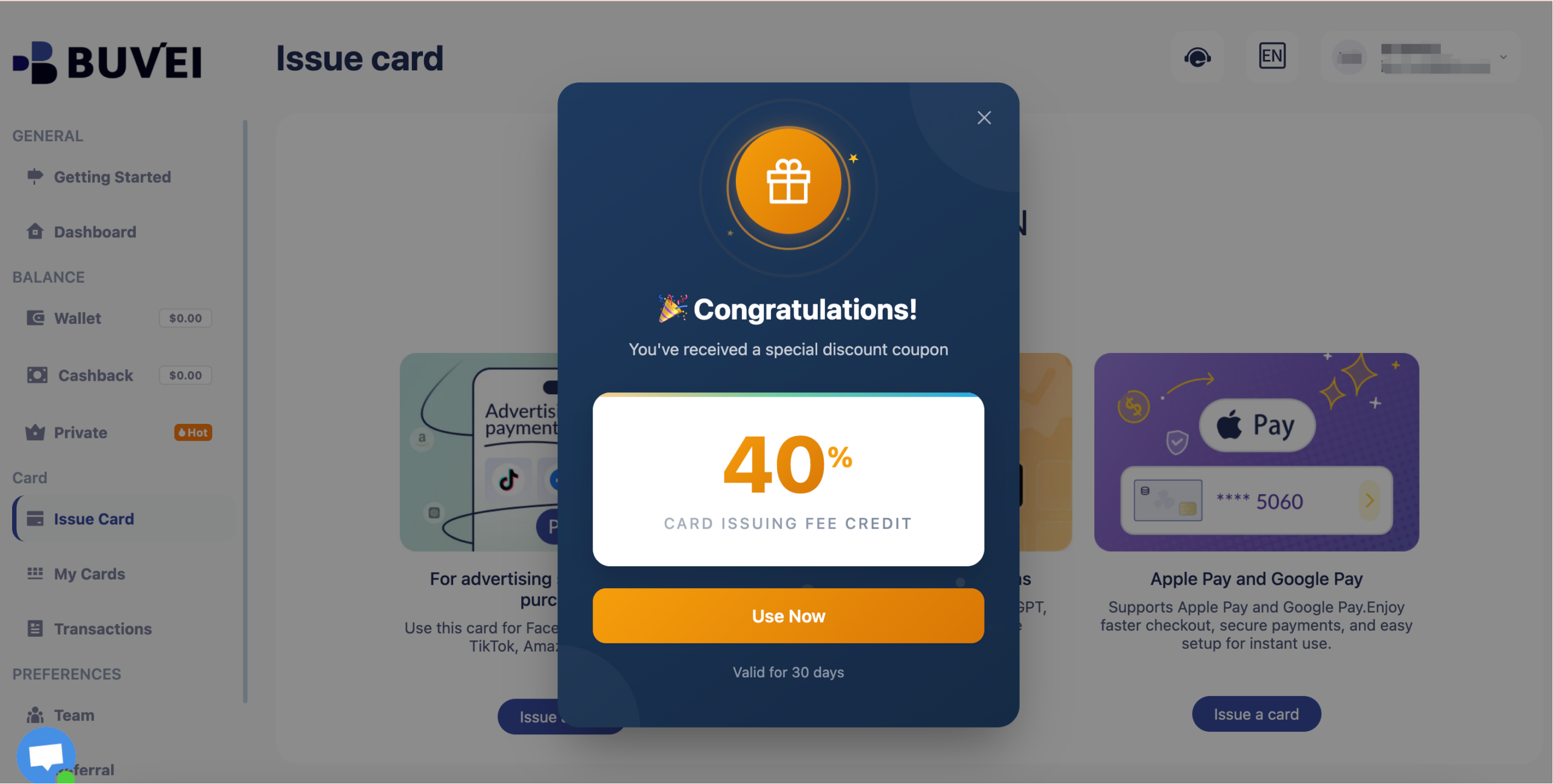
Inactive users may receive up to 40% discount coupons
Best Practices for Keeping Advertising Accounts Safe
-
Avoid repeated payment retries
-
Maintain buffer balance on each card
-
Monitor daily spend closely
-
Use stable BIN regions
-
Keep card usage consistent
-
Separate test accounts from scaled accounts
Virtual cards should be treated as risk-control tools, not just payment methods.
Conclusion
In advertising arbitrage, payment stability is just as important as traffic quality. Payment blocks are often predictable—and preventable—when the right structure is used.
By using Buvei virtual cards, arbitrage marketers gain:
-
Multi-card management from one account
-
Crypto-friendly USDT funding
-
U.S. BIN compatibility for ad platforms
-
Transparent fees and instant issuance
For teams running multiple campaigns at scale, this setup offers the control and flexibility needed to keep ads live—and profitable.