
Understanding Crypto Exchange Payments
Funding crypto exchange accounts on platforms like Binance, KuCoin, and Bybit may seem straightforward, but users often face challenges due to regional restrictions, bank limitations, or high transaction fees. Typically, exchanges accept credit/debit cards, bank transfers, and stablecoins like USDT. While traditional cards can work, they sometimes fail due to international payment regulations or platform-specific BIN restrictions.
Virtual cards provide a flexible and secure alternative, allowing traders to fund accounts quickly while maintaining privacy. By using a multi-BIN virtual card, you can increase the success rate of transactions on multiple exchanges, avoiding common declines seen with standard bank-issued cards.

Why Use Virtual Cards for Crypto Payments
Virtual cards are increasingly popular for cryptocurrency payments for several reasons:
-
Enhanced Payment Compatibility
Unlike traditional cards, virtual cards can work seamlessly on multiple platforms including Binance, KuCoin, Bybit, and even on SaaS tools like ChatGPT, Notion, or Canva. -
Multi-BIN Support
Some exchanges may reject cards based on BIN regions. A virtual card that supports multiple BINs allows you to select the optimal BIN for each platform, significantly improving payment success rates. -
Security and Privacy
Virtual cards protect your real bank information, reducing risks of theft or unauthorized access. Many virtual cards, including Buvei, comply with PCI DSS international payment security standards. -
Real-Time Management
You can issue multiple virtual cards from a single account, set custom limits, and track transactions instantly—a big advantage for both individual traders and teams.
Preparing Your Virtual Card for Crypto Funding
Before funding your crypto account, ensure your virtual card meets these criteria:
-
Supports stablecoin top-ups (USDT TRC20/ERC20) for faster, low-fee funding
-
Flexible limits to control spending per transaction
-
Instant issuance so you can start trading immediately
-
Compatibility with your target exchange
For example, Buvei virtual cards allow you to top up with USDT, select the BIN region, and create multiple cards for different exchanges—all with transparent fees and real-time tracking.
Step-by-Step Guide: Creating a Virtual Card with Buvei
Follow these steps to start funding your crypto account using Buvei:
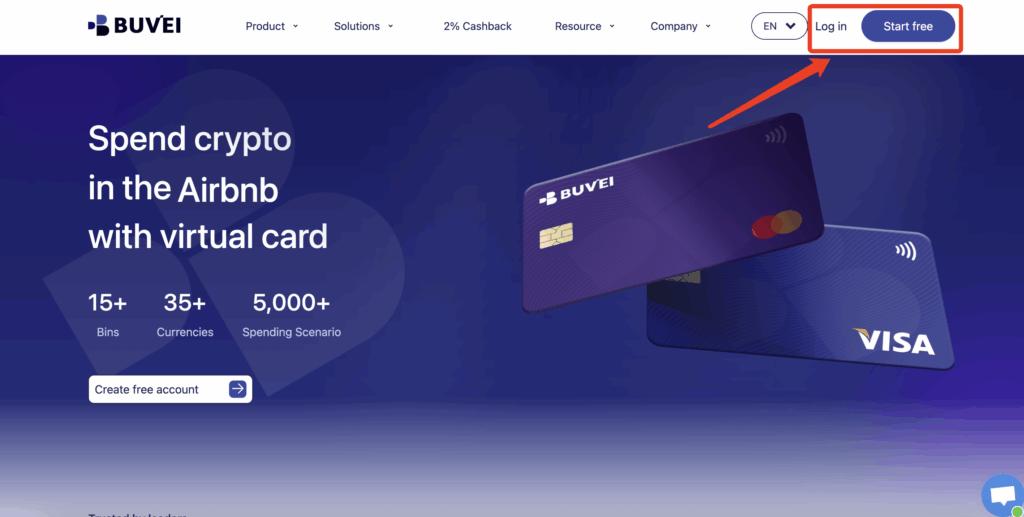
1. Register Your Buvei Account
-
Visit Buvei.com and create a free account
-
Verify your email and log in to access the Buvei dashboard
-
Tip: Buvei requires minimal KYC, making registration quick and hassle-free
2. Fund Your Wallet
-
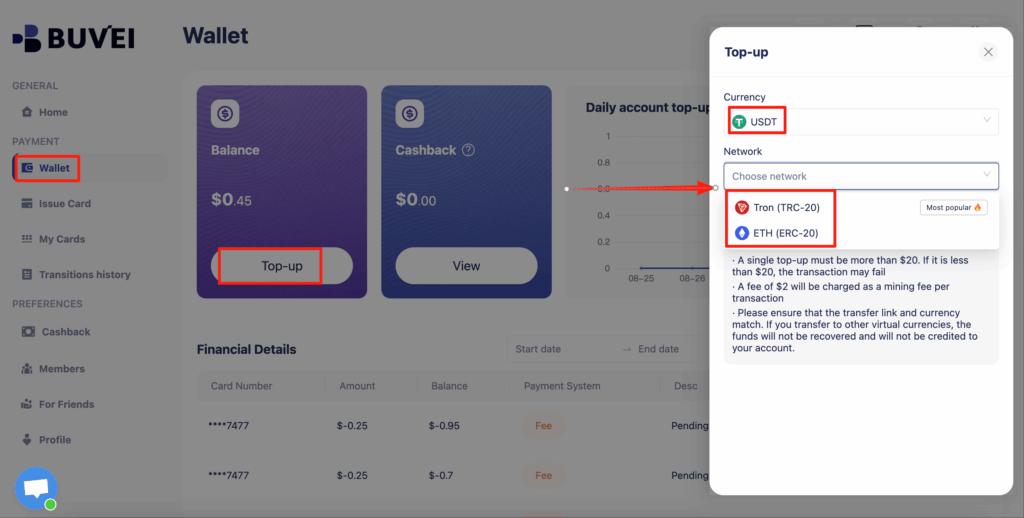
Navigate to the Wallet tab
-
Select USDT (TRC20/ERC20) for top-up
-
Copy the unique wallet address and send your USDT
-
Confirm the transaction; your balance updates instantly
-
Why it matters: Using USDT minimizes remittance fees and accelerates your funding process
3. Create and Configure Your Virtual Card
-
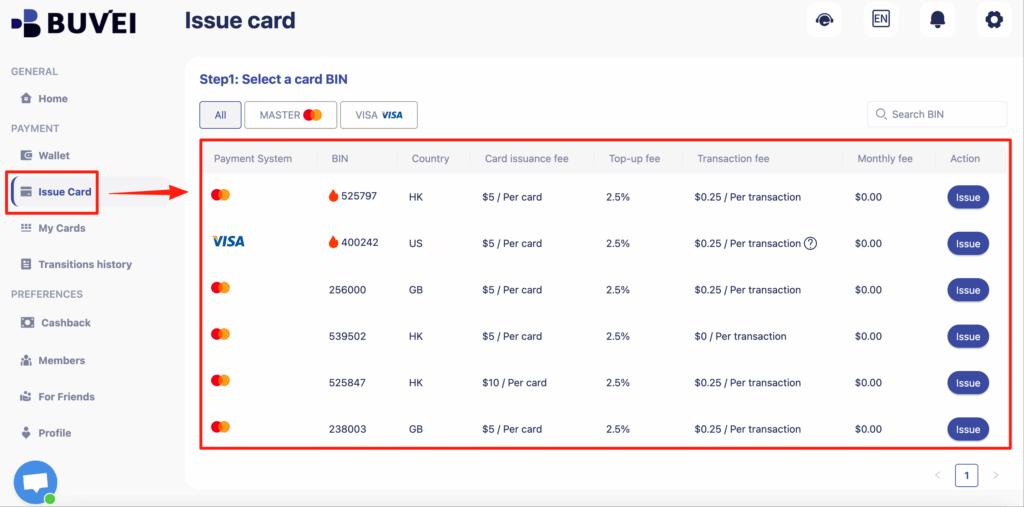
Navigate to the “Cards” tab
-
Select your preferred BIN region
(U.S. BINs are commonly recommended for SaaS subscriptions) -
Choose the card type
-
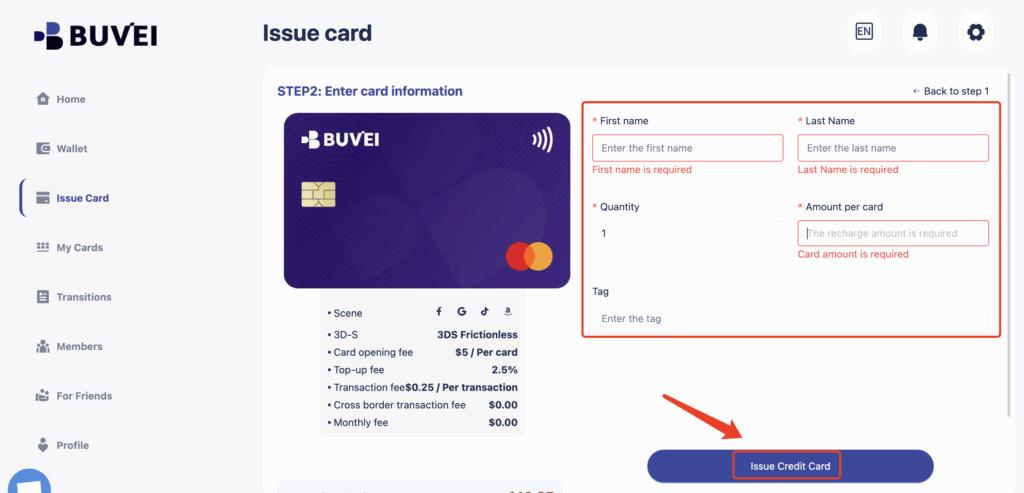
Click “Create Card”
-
Enter:
-
Card name (e.g., “Zoom Pro Subscription”)
-
Funding amount
-
Number of cards
-
-
Click “Issue Card”
-
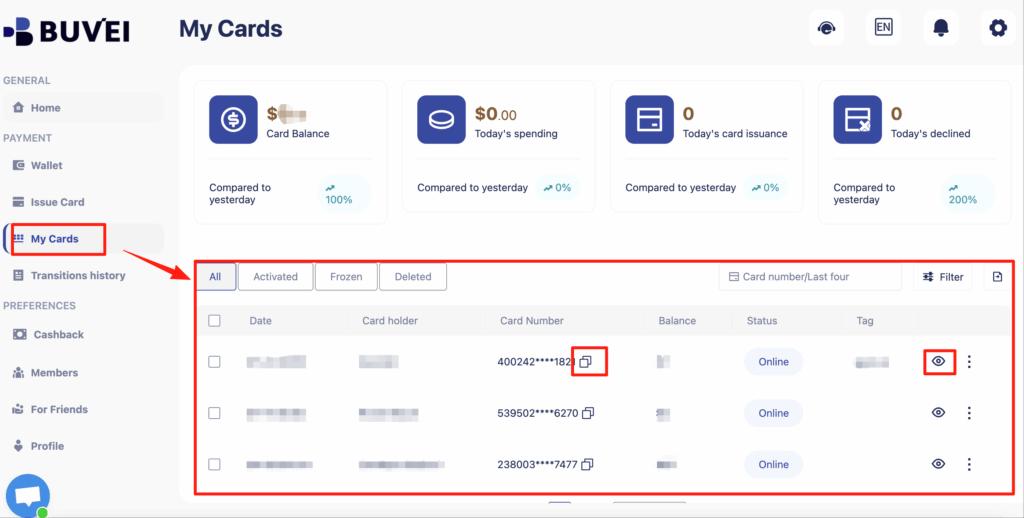
Once created, check My Cards for card number, CVV, and expiry date
-
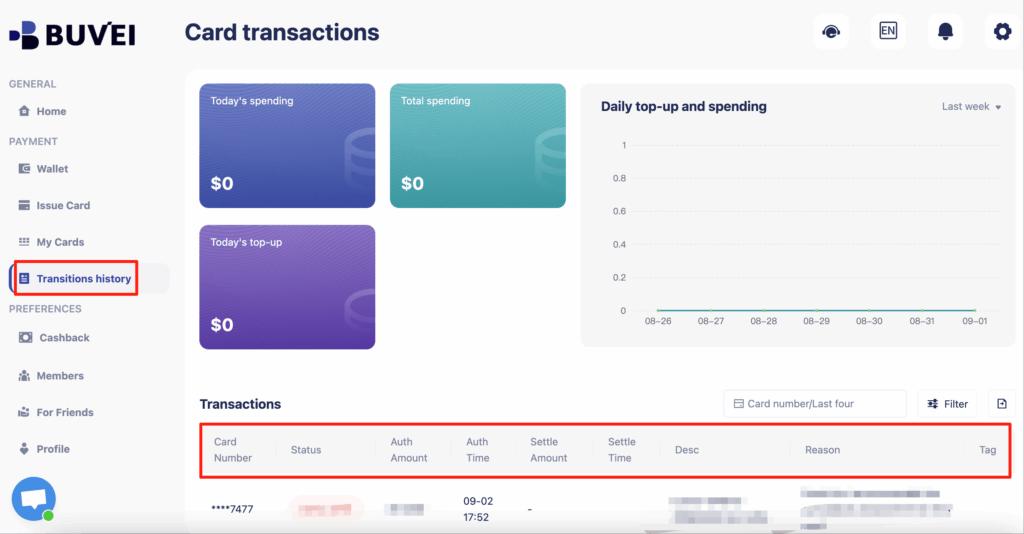
Pro tip: Buvei supports batch card creation, perfect for managing multiple exchange accountsYou can also track balances, top-ups, and all transaction activity from this page.
4. Use Your Card on Crypto Exchanges
-
Log in to Binance, KuCoin, or Bybit
-
Select Credit/Debit Card as the payment method
-
Enter your Buvei virtual card details
-
Confirm the transaction
-
Monitor transactions from your Buvei dashboard in real-time
Troubleshooting Common Issues
Even with virtual cards, some challenges may arise:
-
Payment Declines
-
Check BIN compatibility
-
Ensure sufficient card balance
-
Use the recommended U.S. BIN for most global exchanges
-
-
Card Limits and Transaction Errors
-
Adjust card limits in the Buvei dashboard before initiating a transfer
-
Split larger deposits across multiple virtual cards if needed
-
-
Security Concerns
-
Avoid sharing your card details
-
Enable 2FA and monitor activity via Buvei dashboard
-

Final Tips for Safe and Efficient Crypto Payments
-
Always top up with USDT TRC20/ERC20 to reduce fees and speed up funding
-
Use multi-BIN cards to improve success rates on exchanges
-
Track transactions in real-time and manage multiple cards for team use
-
Take advantage of Buvei’s transparent fees and instant card issuance
With these steps, funding your crypto exchange accounts becomes faster, safer, and more reliable, letting you focus on trading rather than payment hurdles.