


Introduction
Advertising expenses, software subscriptions, and international purchases often require different payment arrangements. When everything runs through the same bank card, tracking expenses becomes harder, budgets get mixed together, and a problem with one payment method can affect other transactions. BUVEI virtual cards offer a way to separate these expenses and manage different payments independently.
But having a virtual card is only part of the equation. The range of available BINs, compatibility with different merchants, funding options, and control over individual cards all matter when choosing a platform.
BUVEI brings these capabilities together with more than 20 BIN options, instant card issuance, cryptocurrency funding, and tools for managing multiple cards and business accounts. Here's a closer look at how these features work and what they can offer different types of users.
What Makes a Virtual Card Platform Worth Choosing?
Choosing a virtual card platform involves more than checking whether it offers Visa or Mastercard. Here are six factors worth considering:
- Multiple BIN Options: Different issuing regions and card programs.
- Payment Compatibility: Support for the merchants and services you use.
- Flexible Funding Methods: Multiple currencies, digital assets, and deposit networks.
- Card and Account Management: Spending limits, card controls, and team permissions.
- Security and Privacy: Payment data protection and account security measures.
- Transparent Fees and Customer Support: Clear charges and accessible assistance when issues arise.
Multiple BIN Options Across Issuing Regions
A BIN, or Bank Identification Number, identifies the issuing institution and card program associated with a payment card. It can indicate characteristics such as the issuing region and card network.
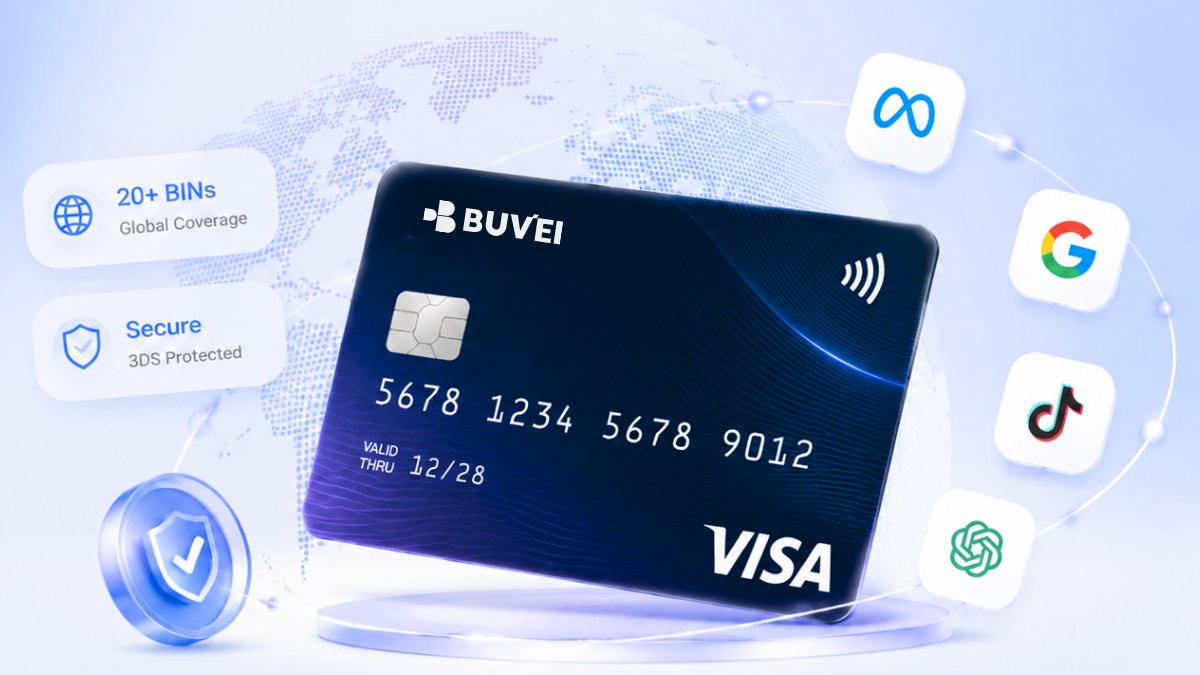
BUVEI offers more than 20 BIN options across multiple issuing regions, with both Visa and Mastercard virtual cards.
Having different BIN options gives users more flexibility when selecting cards for specific payment requirements. For businesses managing advertising accounts, international subscriptions, and online purchases, the issuing region and card characteristics can influence which option is suitable.
Instant Virtual Card Issuance
When a new advertising account or subscription needs a payment method, waiting for physical card delivery can slow things down.
BUVEI supports instant virtual card issuance, allowing users to create cards within seconds through the platform.
This is useful for businesses that need to:
- Create separate cards for advertising accounts.
- Assign dedicated cards to software subscriptions.
- Issue additional cards for employees or projects.
- Replace cards that are no longer needed.
Registration and verification requirements may vary depending on the product and account. Additional identity or business information may be requested when necessary.

Where Can You Use BUVEI Virtual Cards?
A virtual card is more useful when it can handle different types of online expenses. BUVEI supports several payment scenarios, including digital advertising, software subscriptions, international shopping, and travel.
Digital Advertising Payments
Advertising teams often manage several accounts across different platforms. Separating payment methods makes it easier to track campaign expenses and manage individual budgets.
BUVEI supports advertising payment scenarios involving:
- Google Ads.
- Meta Ads.
- TikTok Ads.
- Microsoft Ads.
For example, a marketing team running campaigns on Meta and Google can assign separate cards to different advertising accounts. This helps identify individual charges without mixing every expense together.
For advertising buyers with recurring card issuance needs, BUVEI also offers Private: Premium Service for Ads Buying.
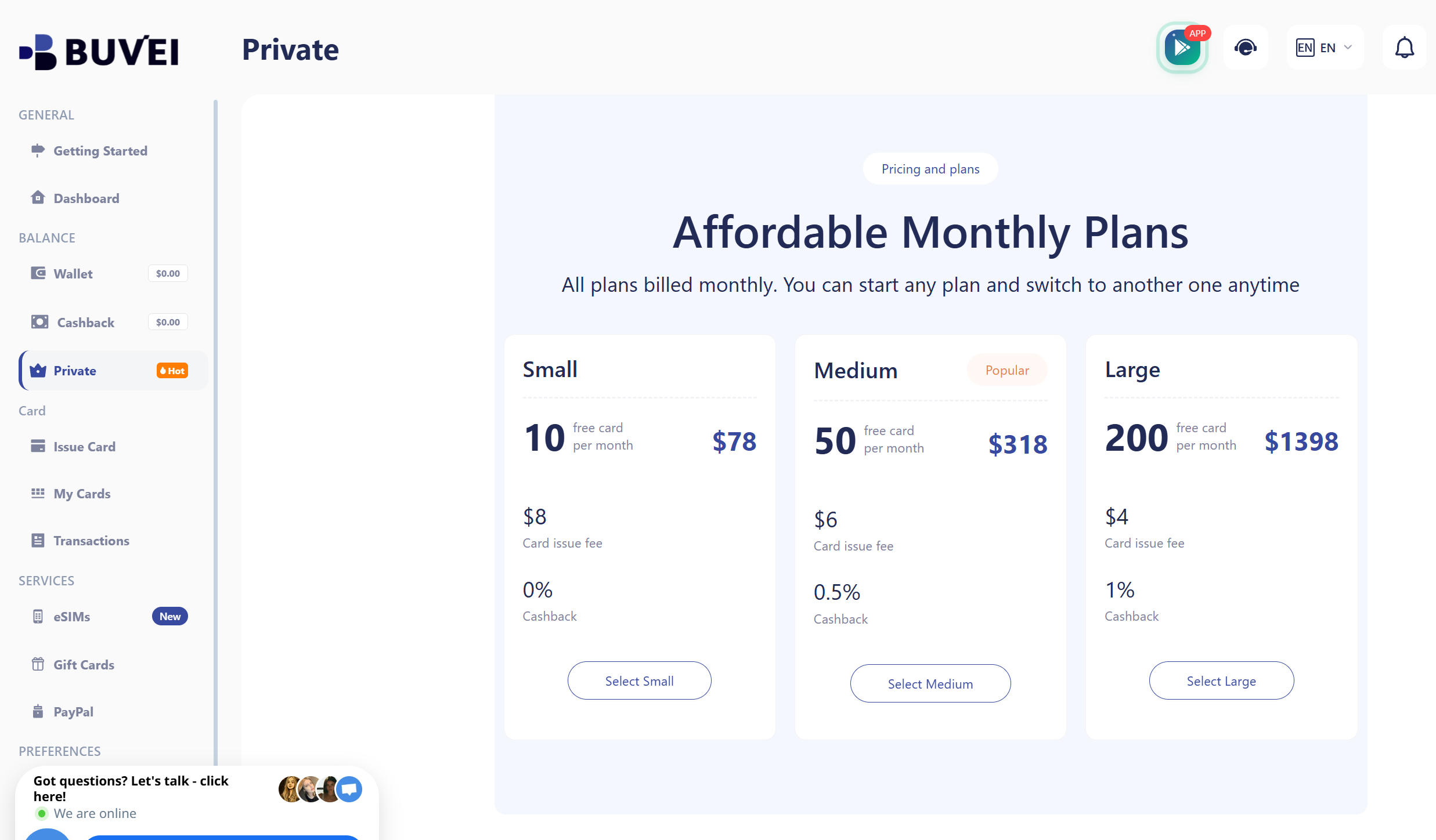
This is a separate advertising service with monthly plans, different card allowances, and cashback benefits of up to 1% under eligible plans.
AI and SaaS Subscriptions
Businesses increasingly rely on paid software for writing, design, research, development, and project management.
Common examples include ChatGPT, Claude, Canva, and Notion.
When several subscriptions share one payment method, identifying individual charges can become inconvenient. Assigning dedicated cards to different services makes recurring expenses easier to review and manage.
International Shopping and Travel
Online spending also extends beyond business software and advertising.
BUVEI offers virtual card options for eligible international purchases, including e-commerce transactions, flight bookings, and accommodation payments.
For frequent travelers and international shoppers, separate payment methods can make it easier to organize travel expenses without mixing them with regular business subscriptions.
Flexible Funding with USDT
Funding options matter, especially for users who already hold cryptocurrency and prefer not to rely exclusively on traditional bank transfers.
BUVEI supports USDT top-ups through two networks:
- TRC20: Often selected for its relatively low network fees.
- ERC20: Supports USDT transfers through the Ethereum network.
The actual transfer cost and confirmation time depend on network conditions.
To fund a BUVEI account:
- Open the Wallet section.
- Select USDT and the available deposit network.
- Copy the corresponding deposit address.
- Transfer USDT through the matching network.
- Wait for transaction confirmation and check the wallet balance.
Always make sure the transfer network matches the deposit address. Sending funds through an unsupported or mismatched network can result in lost assets.
BUVEI also provides other digital asset funding options where available in the account. Users should check the currently supported assets and deposit methods before transferring funds.
Multi-Card Management and Business Integration
Issuing multiple virtual cards is only useful when businesses can manage them efficiently.
Consider a marketing agency handling several advertising accounts, software subscriptions, and client projects. Instead of putting every payment on one card, the team can assign separate cards to different expenses.
| Payment Purpose | Suggested Card Setup |
|---|---|
| Meta Ads | Dedicated advertising card |
| Google Ads | Separate advertising card |
| AI and SaaS Tools | Subscription card |
| Client Project A | Project-specific card |
| Client Project B | Separate project card |
BUVEI supports multiple card management through one account, including batch card issuance and bulk top-ups.
Users can also manage individual cards through several controls:
- Spending Limits: Set individual limits for different payment purposes.
- Freeze and Unfreeze: Temporarily disable cards and reactivate them when needed.
- Card Closure: Close cards that are no longer required.
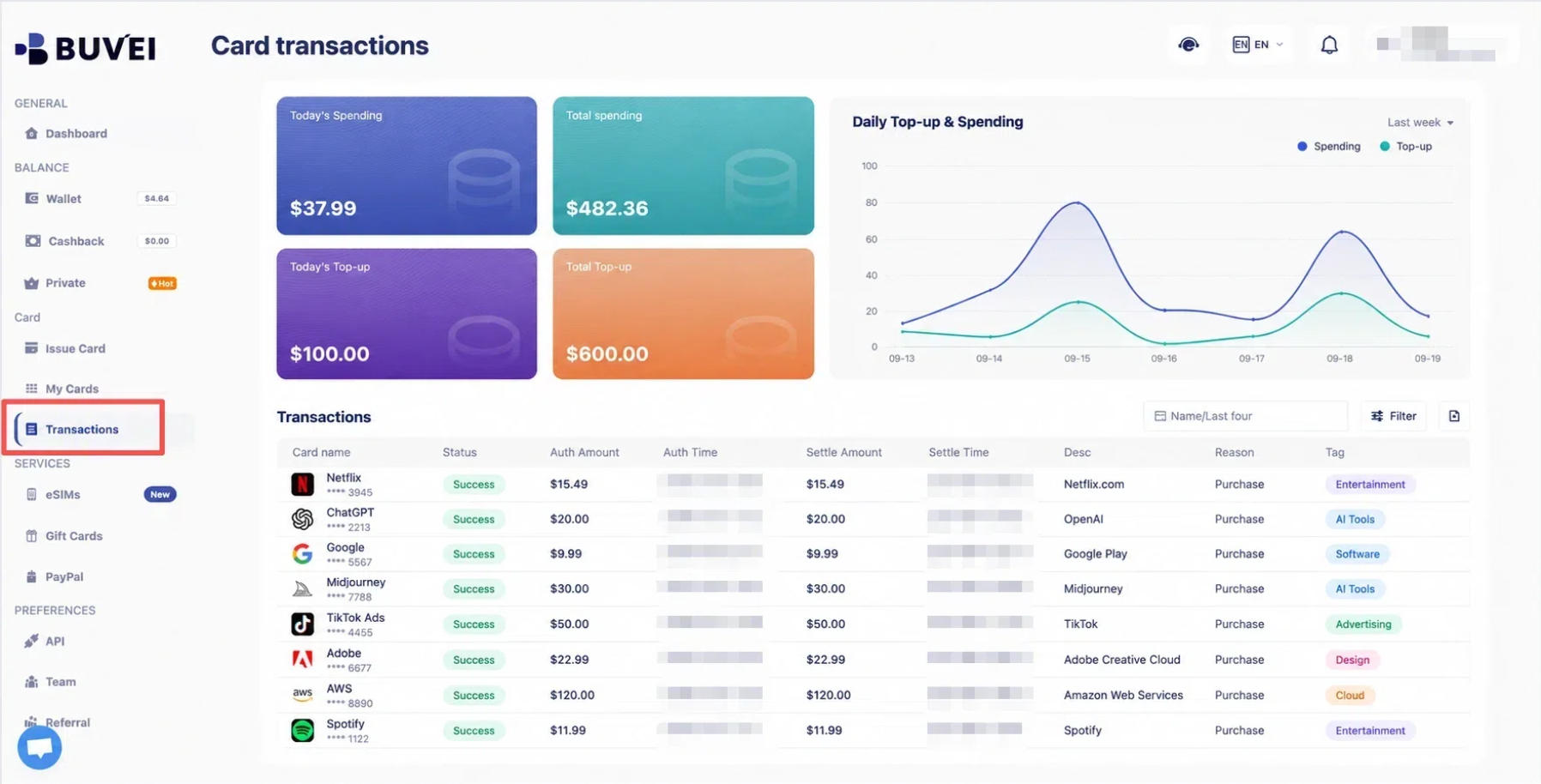
- Transaction Monitoring: Review individual card activity and track expenses.
For larger teams, BUVEI also provides additional business management capabilities.
Sub-Accounts and Permissions
Businesses can organize payment operations through multiple sub-accounts and assign different access permissions to team members.
Transaction Monitoring and Reconciliation
Transaction records help businesses review payment activity and organize expenses across cards and accounts.
API Integration
BUVEI provides API capabilities for businesses that want to connect supported card issuance and account management operations with their own systems.
Together, these tools help businesses manage more payment methods without relying entirely on repetitive manual operations.
Security, Transparent Fees, and Customer Support
Payment security, cost visibility, and accessible support all contribute to the overall experience of using a virtual card platform.
Security and Privacy Protection
Using the same bank card across multiple websites and services increases the number of merchants that handle its payment details.
Virtual cards provide an additional layer of separation by allowing users to use different card details for different payment purposes. If one card needs to be disabled, other payment methods can remain separate.
BUVEI also provides individual spending limits, card freezing, and card closure to help users manage payment activity.
According to BUVEI's Privacy Policy, its systems and operating processes undergo annual PCI and SOC 2 compliance certifications. The policy also describes security measures such as:
- Data encryption.
- Firewalls.
- Server authentication.
- Multi-factor authentication.
These measures support the protection of personal and payment-related information. Virtual cards do not eliminate every payment risk, but separating payment methods can help reduce unnecessary exposure.
Transparent Fee Structure
Card issuance, top-up, and payment charges all affect the actual cost of using a virtual card.
BUVEI displays applicable fees in its platform, allowing users to review relevant charges before confirming operations.
This makes it easier to understand payment costs and plan expenses, particularly when managing multiple cards.
BUVEI virtual card issuance starts at around $4 per card, making it a practical option for users who need multiple payment methods without committing to unnecessary subscriptions.
Online Customer Support
Payment problems can interrupt advertising campaigns, subscription renewals, and other business activities. Access to support is important when users need help with card operations or account-related questions.
BUVEI provides online customer support, and users can also contact the team through email.
For more personalized assistance, a dedicated account manager may be available depending on the applicable service arrangement.
This gives users another point of contact when they need help with payment operations or more complex account requirements.
Conclusion
Managing online payments becomes easier when businesses can separate expenses, choose suitable card options, and control how individual payment methods are used.
BUVEI brings together more than 20 BIN options, Visa and Mastercard virtual cards, instant issuance, USDT funding, and multi-card management. Its business features, including batch operations, sub-accounts, permissions, and API integration, also support more complex payment workflows.
For advertising buyers, SaaS users, and businesses handling international expenses, these capabilities provide a flexible way to organize online payments.
The right card still depends on the intended merchant and payment requirements, but having more options and better control can make day-to-day payment management considerably easier.