
Why Small Businesses Are Rethinking Business Payments
For many years, a single business credit card was enough for most small businesses.
That is no longer the case.
In 2026, companies are managing spending across advertising platforms, SaaS subscriptions, contractors, software tools, and global vendors. What used to be a centralized spending model has become a distributed one.
As a result, virtual cards have become one of the most important financial tools for modern businesses.
But with dozens of providers on the market, choosing the right virtual card solution can be difficult.
The challenge is not simply finding a card that works.
The challenge is finding a system that supports how your business spends money as it grows.
Quick Comparison: Best Virtual Cards for Small Businesses
| Provider | Best For | Key Strength |
| Ramp | Finance teams | Expense management and reporting |
| Brex | Startups | Corporate spending controls |
| Wise | International businesses | Multi-currency payments |
| Airwallex | Global operations | Cross-border payment infrastructure |
| Mercury | Digital-first businesses | Banking and card management |
| BUVEI | Advertising and SaaS-heavy businesses | Spending isolation and operational control |
Each platform serves a different purpose, which means the best virtual card depends on how your business operates.
Let's look at each option in more detail.

Ramp: Best for Expense Management
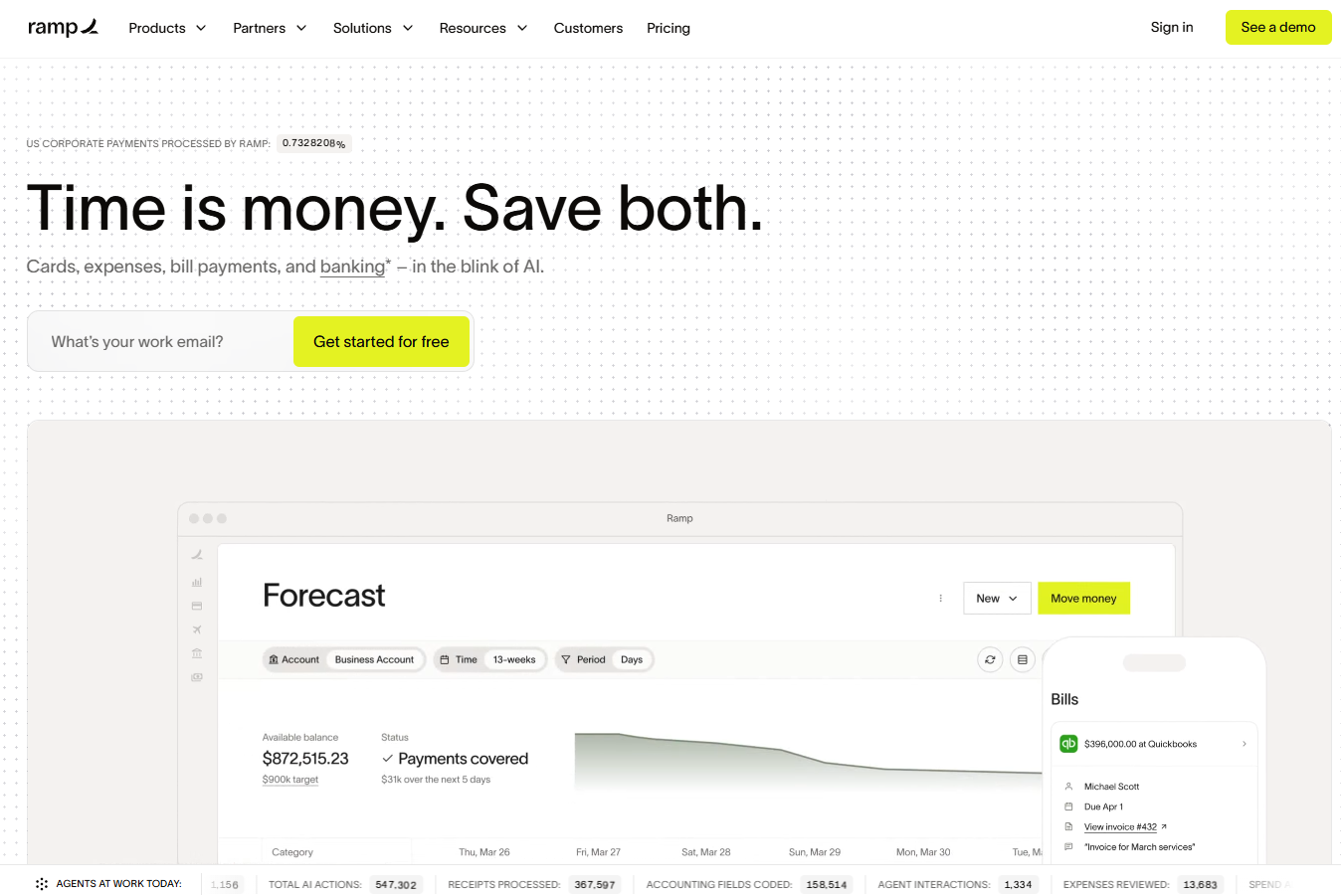
Ramp has become one of the most popular spend management platforms for growing companies.
Its strengths include automated expense tracking, approval workflows, and accounting integrations.
For finance-focused organizations, Ramp provides excellent visibility into company-wide spending.
However, businesses with complex advertising operations or highly segmented spending structures may find that expense management alone does not solve operational control challenges.
Brex: Best for Venture-Backed Startups
Brex was originally built to serve startups that needed access to modern corporate spending tools.
The platform offers corporate cards, expense controls, and financial management features designed for fast-growing companies.
For venture-backed businesses, Brex can simplify financial operations.
However, its primary focus remains corporate spending rather than campaign-level or workflow-level spending control.

Wise: Best for International Payments
Wise is widely known for international money transfers and multi-currency accounts.
For businesses that frequently pay overseas suppliers or contractors, Wise can significantly reduce currency conversion costs.
Its virtual cards add flexibility for international transactions.
The trade-off is that Wise is primarily optimized for global payments rather than operational spend management.
Airwallex: Best for Global Operations
Airwallex combines international payments, multi-currency accounts, and virtual card issuance within a single platform.
It is particularly useful for businesses operating across multiple countries and currencies.
Companies managing global suppliers or international teams often benefit from Airwallex’s infrastructure.
Like many payment-focused platforms, however, its core strength is enabling transactions rather than structuring spending behavior.
Mercury: Best for Banking and Card Management
Mercury combines business banking with virtual card capabilities, making it a popular choice for digital-first businesses.
Its strengths include:
- Integrated banking and payments
- Simple card management
- Startup-friendly experience
For businesses looking for an all-in-one banking solution, Mercury can provide a convenient foundation. However, companies with more complex advertising or operational spending needs may require additional spending controls as they scale.
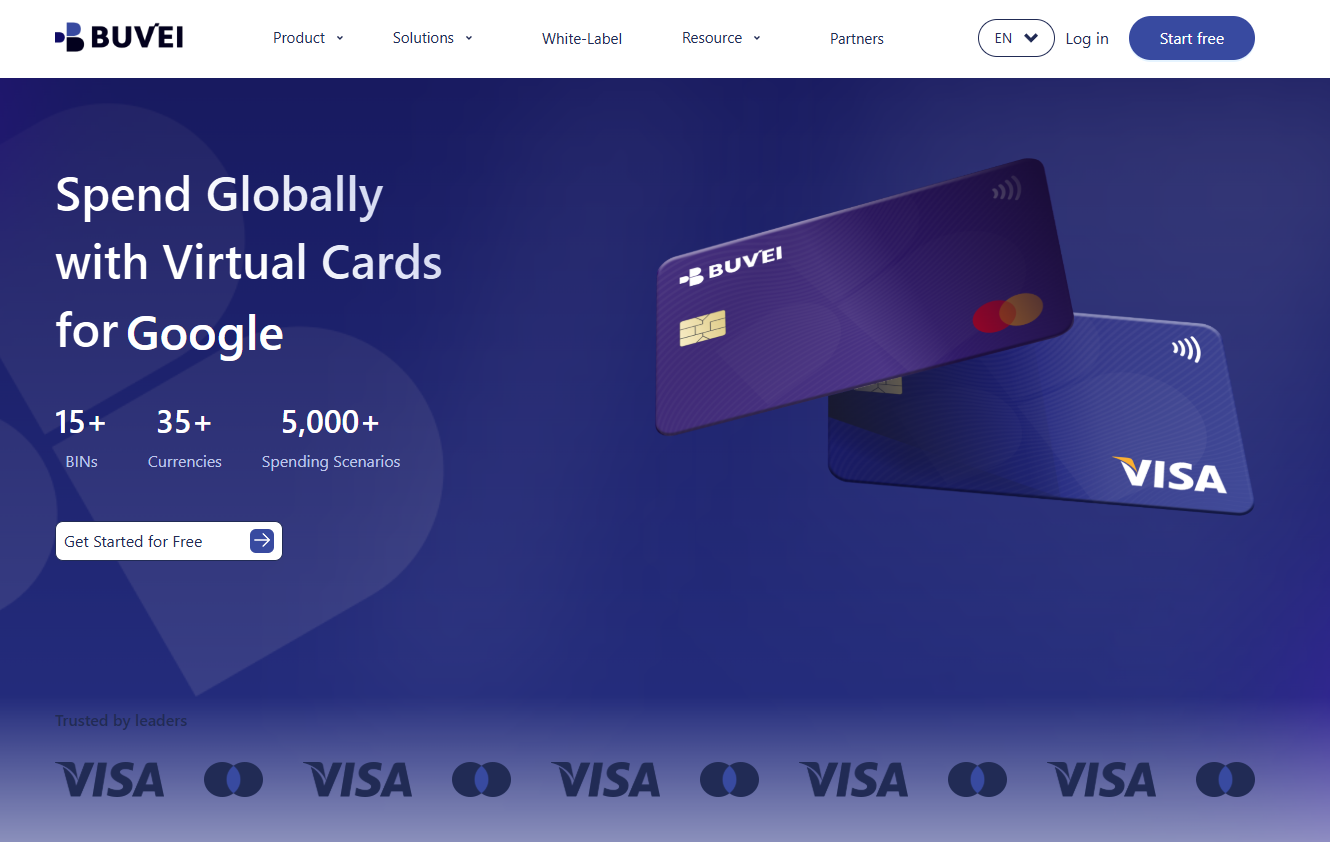
BUVEI: Best for Advertising and SaaS Businesses
BUVEI is designed for businesses that have outgrown traditional virtual card workflows.
Most virtual card platforms help businesses make payments.
BUVEI helps businesses control how spending is organized.
This difference becomes especially valuable for companies managing multiple advertising accounts, recurring software subscriptions, client budgets, or distributed teams.
Instead of relying on a small number of shared cards, businesses can create dedicated virtual cards for specific campaigns, clients, departments, or operational workflows.
For example, a digital marketing agency may assign one card to each client account, while a SaaS company may create separate cards for advertising spend, software subscriptions, and contractor payments. This makes it easier to track spending, control budgets, and reduce operational risk as the business grows.
This creates clear spending boundaries, improves visibility, and reduces the risk of one spending stream affecting another.
What Most Businesses Get Wrong When Comparing Virtual Cards
While monthly fees, cashback rewards, foreign exchange rates, and sign-up incentives are often the focus of comparison guides, they rarely determine which virtual card platform delivers the most value over time.
The reason is simple.
As spending grows, operational complexity often becomes a larger challenge than transaction costs.
A platform with lower fees may still create problems if it lacks visibility, flexibility, or spending isolation.
This is why many growing businesses eventually stop asking:
“Which virtual card is cheapest?”
And start asking:
“Which virtual card system gives us the most control?”
To answer that question, it can be helpful to look beyond pricing and understand what each provider is primarily designed to solve.
A Better Way to Compare Virtual Card Providers
| Provider | Primary Focus |
| Ramp | Expense Management |
| Brex | Corporate Spend Control |
| Wise | Global Payments |
| Airwallex | Cross-Border Operations |
| Mercury | Banking + Payments |
| BUVEI | Spending Isolation & Operational Control |
Most comparison articles focus on fees, rewards, or foreign exchange rates.
However, as businesses grow, spending often becomes more distributed across teams, campaigns, software subscriptions, and client accounts.
In these environments, factors such as spending isolation, operational visibility, and payment control can become just as important as traditional financial metrics.
This is why many businesses eventually evaluate virtual card providers based not only on cost, but also on how effectively they support day-to-day operations.

The Three Types of Virtual Card Providers
One useful way to evaluate virtual cards is by understanding the category they belong to.
1. Finance-First Platforms
Examples: Ramp, Brex
These platforms focus on:
- Expense management
- Financial reporting
- Approval workflows
- Accounting integrations
They are ideal for organizations where finance teams are the primary users.
2. Payment-First Platforms
Examples: Wise, Airwallex
These platforms focus on:
- International payments
- Multi-currency support
- Global transaction infrastructure
They are ideal for businesses operating internationally.
3. Operational Spending Platforms
Examples: BUVEI
These platforms focus on:
- Spending isolation
- Campaign-level card management
- Client-level card structures
- Real-time spending control
They are designed for businesses where spending itself is part of day-to-day operations.

Why Spending Structure Matters More as You Scale
At a small scale, almost every virtual card platform feels similar.
The differences become visible only when spending increases.
Common scaling challenges include:
| Challenge | Impact |
| Shared spending limits | Teams affect each other unintentionally |
| Poor visibility | Difficult to identify spending sources |
| Payment instability | Disruptions to advertising operations |
| Subscription sprawl | Increasing financial complexity |
These are not fee-related problems.
They are structural problems.
And structural problems tend to become more expensive as businesses grow.
Final Thoughts
The best virtual card depends on how your business spends money.
If your priority is expense reporting and finance workflows, platforms like Ramp or Brex may be a strong fit.
If international payments are central to your operations, Wise and Airwallex offer powerful global infrastructure.
However, businesses running multiple advertising campaigns, managing recurring SaaS expenses, or operating across multiple clients often face a different challenge: maintaining control as spending scales.
In these environments, spending isolation and operational visibility become just as important as payments themselves.
That is where platforms like BUVEI are helping redefine what businesses should expect from a virtual card solution.