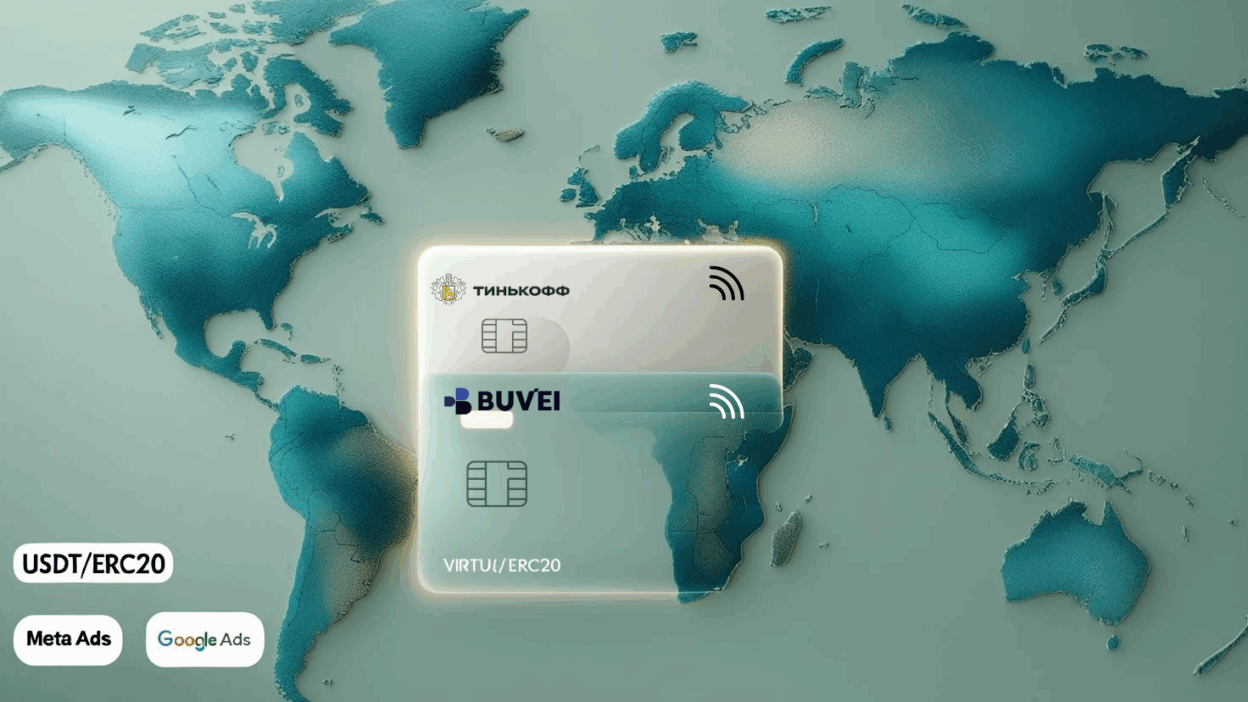
As online payments and digital advertising continue to expand globally, virtual cards have become an essential tool for businesses and individual entrepreneurs alike. Russian-based Tinkoff and global virtual card provider Buvei represent two distinct approaches to card issuance. In this article, we compare them across multiple dimensions — including pricing, supported use cases, ad platform compatibility, KYC flexibility, and crypto funding — to help you choose the right tool for your payment needs.
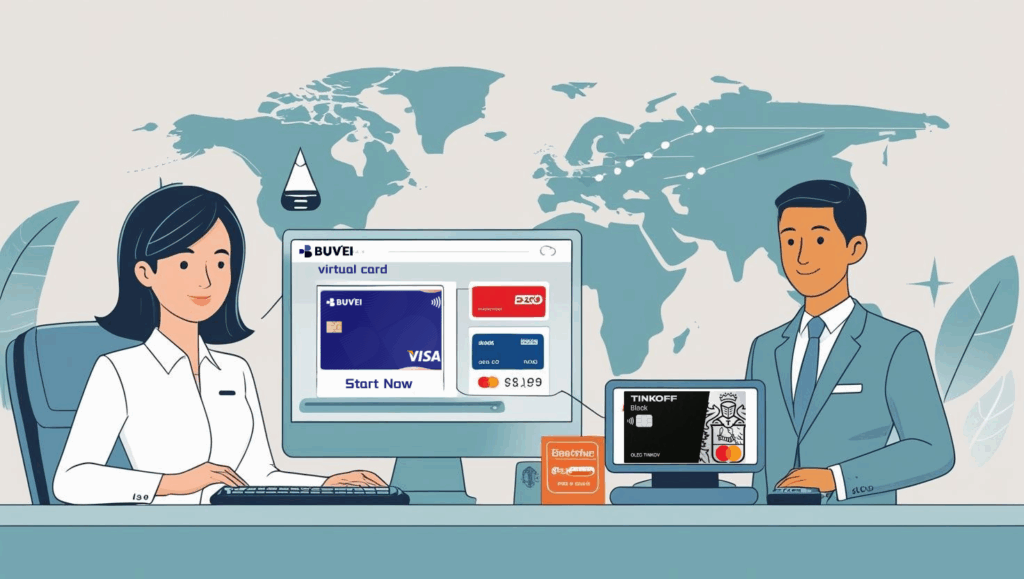
Platform Overview: Local Banking vs. Global Virtual Issuance
Buvei, on the other hand, is a global virtual card platform built for advertisers, e-commerce sellers, and SaaS users. It supports multi-currency payments and crypto top-ups (e.g., USDT), with native compatibility across Meta Ads, Google Ads, TikTok, and more.
Tinkoff Bank is one of Russia’s leading digital banks, offering both physical and virtual cards. It is optimized for domestic financial services and personal banking.
Pricing Comparison
| Fee Type | Tinkoff Virtual Card | Buvei Virtual Card |
| Card Issuance Fee | Free (linked to bank account) | $5/card (some BINs are free) |
| Monthly Fee | Free | Free |
| Transaction Fee | 0% (domestic) | $0.25/txn |
| Top-Up Method | Bank transfer or card | USDT (TRC20/ERC20) |
| FX or Cross-border Fee | 1.5–2.5% on conversion | None (crypto-funded, USD-based) |
Tinkoff’s cards rely on RUB settlement, resulting in foreign exchange costs. Buvei uses USD pricing and supports stablecoin deposits, ideal for international or USD-based payments.
Use Case Scenarios: Domestic Payments vs. Global Ad Campaigns
Buvei
-
Excellent for agencies, Web3 teams, and power users who need multi-account support.
-
One account can issue multiple cards and manage spend per platform or campaign.
Tinkoff
-
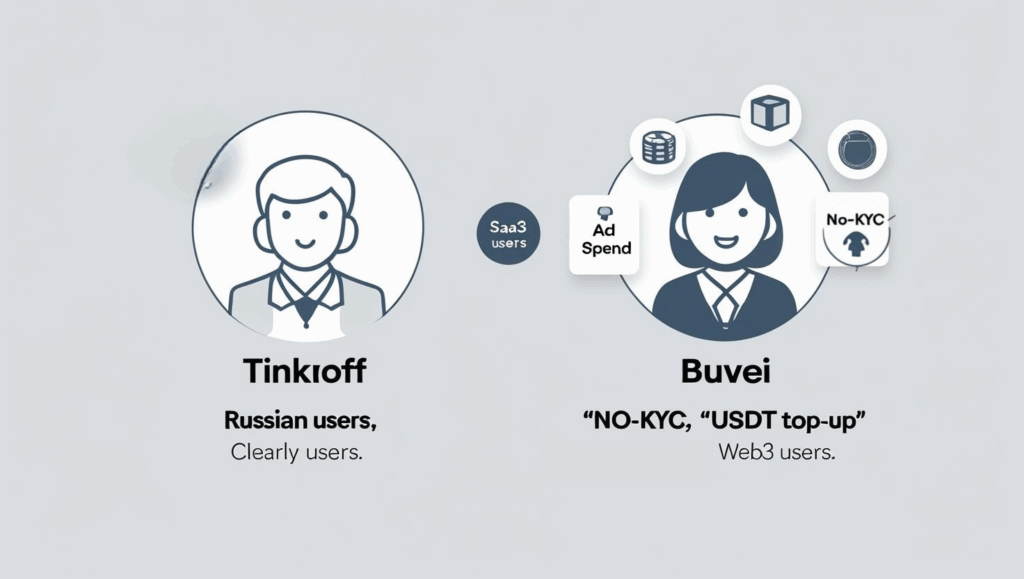
Best suited for local Russian users and e-commerce payments (e.g., Yandex, Ozon, Avito).
-
May experience rejection or conversion errors when used on global ad platforms (e.g., Meta or Google).
Buvei offers tailored BINs for each ad network, ensuring precise spend control and minimized rejections.
Top-Up Methods and Asset Security
Buvei
-
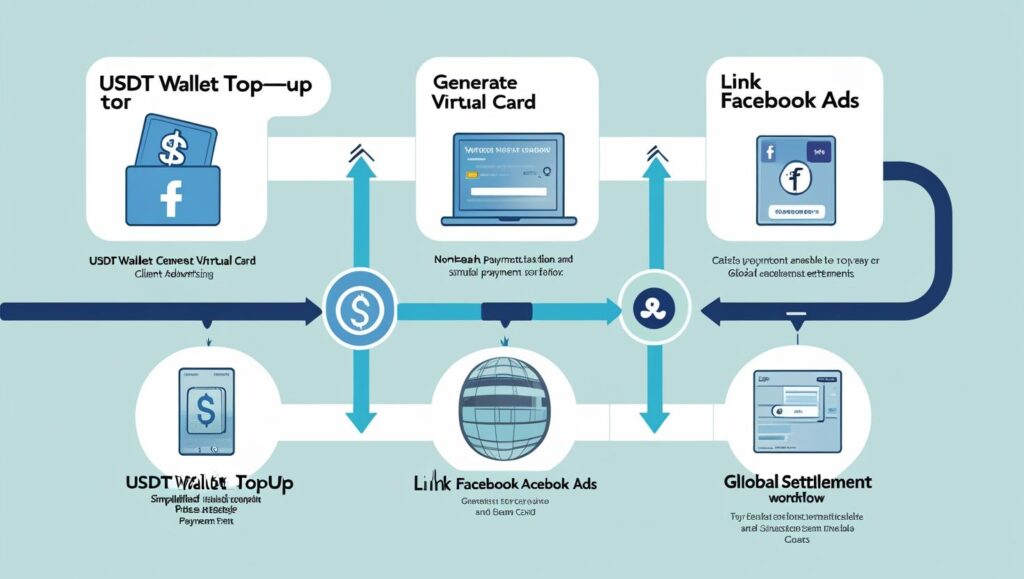
Accepts USDT (TRC20/ERC20) deposits, with fast confirmation and no FX loss.
-
Suitable for SaaS tools, ad payments, and international subscriptions.
-
Users get unique wallet addresses and security screening per transaction.
Tinkoff
-
Tied to Russian bank infrastructure; only RUB funding via local accounts.
-
No support for crypto funding or digital wallets.
KYC Requirements and Account Creation
| Factor | Tinkoff | Buvei |
| KYC Requirement | Strict, requires Russian ID & phone | Flexible; no KYC for small-amount cards |
| Sign-up Process | Requires linked local bank account | Register via email or Telegram in minutes |
| Multi-Account Support | Limited | Full support for agencies or team usage |
Buvei’s No-KYC option is ideal for testing ads or subscribing to SaaS tools without compliance bottlenecks.
Security and Card Control Features
Buvei
-
Freeze card, set spending caps, enable single-use or purpose-specific controls.
-
Revoke or reissue cards instantly — ideal for high-frequency spend or sensitive channels.
Tinkoff
-
Real-time notifications and card lock via app.
-
More suited to traditional banking use cases.
Final Verdict: Which Platform Suits Your Needs?
| User Type | Recommended Platform |
| Domestic Russian users | Tinkoff |
| Global ad buyers | Buvei |
| SaaS or cloud service subscribers | Buvei |
| Web3 and crypto-native users | Buvei |
| Small-scale, local consumers | Tinkoff |
| Agencies with budget oversight | Buvei |
Buvei shines in areas where cross-border compatibility, ad platform alignment, and flexible card controls matter most. Tinkoff, while reliable for local users, lacks global payment agility.
👉 Start with Buvei today and experience the future of efficient global payments — no red tape, no surprises.