
Business virtual cards have become an important tool for companies managing online subscriptions, employee spending, advertising, and international expenses. But choosing the right provider is not simply about getting a virtual card. Businesses also need spending controls, payment visibility, recurring payment support, and scalable card management.
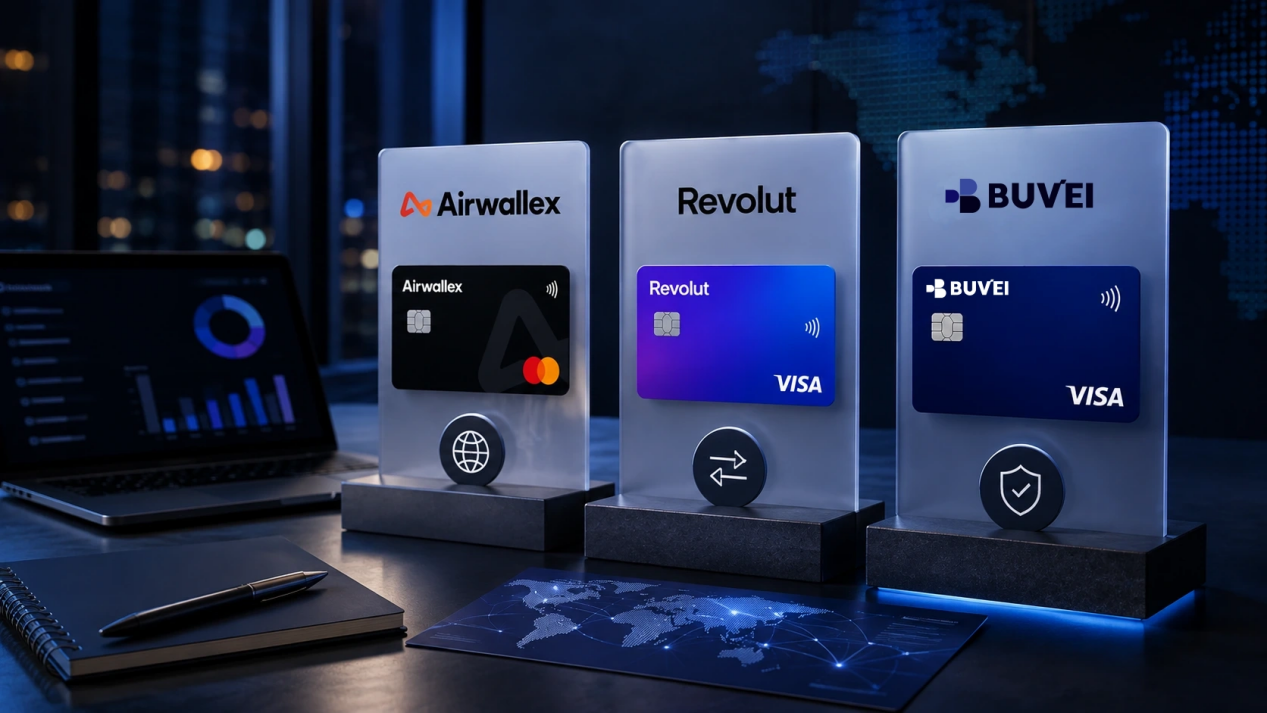
Airwallex, Revolut, and BUVEI take different approaches to business payments. This comparison looks at their key features, pricing considerations, strengths, and ideal use cases to help businesses choose the right virtual card solution in 2026.
Airwallex vs Revolut vs BUVEI at a Glance
The three providers all support business card payments, but their primary focus is different.
| Category | Airwallex | Revolut | BUVEI |
| Primary Focus | Global business finance | Business financial ecosystem | Virtual card & digital payments |
| Virtual Card Focus | Part of broader platform | Part of broader platform | Core payment solution |
| Spending Controls | Card and expense controls | Custom spend controls | Per-card spending limits |
| International Use | Global, subject to availability | International business use | 150+ country merchants |
| Recurring Payments | Supported | Subscriptions and recurring spend | SaaS and online payment use cases |
| API / Automation | Card issuing API | Card issuing API | Full API access |
| Best For | Global business operations | All-in-one business finance | Digital & payment-focused businesses |
The main difference is positioning. Airwallex combines cards with broader global financial services, while Revolut integrates business cards into a wider financial ecosystem. BUVEI focuses more directly on virtual card infrastructure and digital payment management.
What Should Businesses Look for in a Virtual Card?
A business virtual card should support more than online purchases. Businesses should consider spending controls, transaction visibility, recurring payments, international use, and the ability to manage cards as payment requirements grow.
These capabilities are especially relevant for SaaS subscriptions, advertising platforms, cloud services, software licenses, vendor payments, and other recurring digital expenses.
The right provider should balance flexibility, control, visibility, and scalability based on the company’s actual payment workflow.

Airwallex vs Revolut vs BUVEI: Key Differences
Virtual Card Management
Airwallex and Revolut position virtual cards as part of broader business financial ecosystems. Airwallex supports instant virtual card creation for employee and business expenses, while Revolut Business offers virtual company cards for suppliers, vendors, and subscriptions.
BUVEI takes a more focused approach, making virtual card infrastructure a central part of its digital payment offering.
Best fit: Businesses looking for a broader financial platform may prefer Airwallex or Revolut, while companies prioritizing dedicated virtual card management may want to consider BUVEI.
Spending Controls
Spending control is important when multiple employees, teams, or payment activities use company funds.
Airwallex provides card controls and expense management, while Revolut Business supports controls around business card spending. BUVEI allows businesses to set per-card spending limits and provides enterprise-level controls such as sub-accounts and role-based permissions.
Best fit: BUVEI is particularly relevant when controlled online payment workflows are a central requirement.
International Payments
International capabilities are another important consideration for businesses operating across markets.
Airwallex supports multi-currency business spending and global card use, while Revolut provides international business payment capabilities through its broader financial platform.
BUVEI focuses on virtual card payments, with its official site stating that its cards can be used with merchants in 150+ countries.
These figures should not be treated as a direct measure of geographic availability: Airwallex’s published coverage refers to card issuing in supported markets, while BUVEI’s 150+ figure refers to merchant/payment coverage.
Recurring Payments
Recurring digital expenses are common for modern businesses.
SaaS subscriptions, advertising platforms, cloud tools, and software services can generate ongoing charges. Revolut Business explicitly positions virtual company cards for subscriptions and vendors, while Airwallex promotes virtual cards for business expenses such as subscriptions and online advertising.
BUVEI also focuses on online payment use cases including SaaS and advertising, making recurring digital payments an important use case for its virtual cards.
API and Automation
API access becomes more important when businesses need to automate card issuance or integrate payment operations into their own systems.
Airwallex offers card issuing through API, while Revolut Business also provides card issuing API capabilities on eligible business plans. BUVEI offers full API access covering areas such as card issuance, account management, and transaction operations.
Best fit: Businesses building more customized payment workflows should evaluate API capabilities alongside standard dashboard features.
Pricing Considerations
Pricing is difficult to compare directly because plans, regions, card programs, and transaction requirements vary.
Airwallex currently offers a free Explore tier in some markets, including unlimited virtual cards, while paid plans and additional services vary by region.
Revolut Business also uses market-specific plans, so pricing should be checked for the company’s country and selected plan.
For BUVEI, businesses should evaluate the pricing associated with their specific virtual card and payment requirements rather than assuming a standard monthly plan.
When comparing providers, look beyond the monthly subscription fee and consider card issuance, transaction, FX, funding, and platform-related costs.
Airwallex Review: Best for Global Business Financial Operations
Airwallex is designed for businesses that need more than card payments. Its broader platform combines business accounts, international payments, multi-currency capabilities, cards, and expense management.
Its virtual cards can be created instantly for employee and business expenses, with support for multiple currencies and global spending. Airwallex also provides card controls and API-based card issuing for businesses that need more advanced payment workflows.
The broader platform approach can be valuable for companies operating across multiple markets. However, businesses primarily looking for dedicated virtual card infrastructure may want to compare Airwallex with more focused providers.
Best for: Businesses that need global financial operations alongside virtual cards and payment management.
Revolut Business Review: Best for an All-in-One Financial Ecosystem
Revolut Business combines business accounts, cards, payments, and other financial services within one ecosystem.
Its virtual company cards can be used for suppliers, vendors, subscriptions, and other business expenses. This makes Revolut relevant for companies that want to manage different financial activities through a single platform.
Revolut also provides virtual card and API capabilities, although exact features and pricing depend on the market and business plan.
The main consideration is whether a company needs a broad financial ecosystem or a more specialized virtual card solution.
Best for: Businesses that want business financial services, cards, and payments within one platform.
BUVEI Virtual Cards: A Closer Look
BUVEI takes a more focused approach to virtual cards and digital payment management. Its official virtual card offering supports Visa and Mastercard cards across 20+ BIN networks, multiple funding methods, per-card spending limits, and payments to merchants in 150+ countries. This positioning makes BUVEI particularly relevant to businesses whose payment operations are heavily digital.
Flexible Virtual Card Management
As businesses grow, managing online expenses through one corporate card can become difficult.
BUVEI allows businesses to create virtual cards with individual spending limits, helping separate payment activities across different services or use cases. This can be useful for SaaS subscriptions, advertising, travel, e-commerce, and other online expenses.
Spending Controls and Payment Visibility
Virtual cards can create clearer boundaries around business spending.
BUVEI supports per-card spending limits and enterprise controls, including sub-accounts and role-based permissions. Its platform also provides real-time reconciliation, helping businesses maintain greater visibility across payment operations.
This is particularly relevant for companies managing multiple teams, projects, or online payment workflows.
Built for Digital Payment Use Cases
BUVEI’s official use cases include advertising, SaaS, travel, and e-commerce payments across 150+ countries.
This makes it a natural fit for businesses that rely heavily on digital services and recurring online expenses.
Instead of using one general-purpose corporate card for every transaction, businesses can structure online payments around dedicated virtual cards.
Scalable Virtual Card Programs
BUVEI also supports more advanced business requirements through sub-accounts, role-based permissions, real-time reconciliation, and full API access.
These capabilities can be relevant to fintech platforms, digital businesses, payment providers, and enterprises that need to manage virtual cards at greater scale.
Who Is BUVEI Best For?
BUVEI is particularly relevant to businesses that prioritize:
- Virtual card management
- Controlled online spending
- SaaS and advertising payments
- Multi-team payment operations
- Scalable virtual card infrastructure
For businesses that do not necessarily need a full banking ecosystem but want a focused solution for digital payment operations, BUVEI can be a strong alternative.
What Makes BUVEI Different?
The main difference is focus.
Virtual card infrastructure: BUVEI places virtual cards at the center of its payment solution rather than treating them simply as one feature within a broader financial platform.
Digital payment control: Per-card spending limits, sub-accounts, and role-based permissions provide businesses with more structured ways to manage online payment activity.
Built for online businesses: Its use cases cover advertising, SaaS, travel, and e-commerce, making the platform relevant to businesses with significant digital spending.
Scalable operations: API access, real-time reconciliation, and enterprise controls support businesses with more complex virtual card requirements.
Which Business Virtual Card Is Right for You?
The right provider depends on your business model and payment priorities.
Choose Airwallex if your business needs broader global financial operations, multi-currency spending, and business payment services.
Choose Revolut if you want business accounts, cards, payments, and other financial services within one ecosystem.
Choose BUVEI if your priority is virtual card management, controlled online payments, spending visibility, and scalable digital payment operations.
For companies where virtual cards are a core part of their online payment strategy, BUVEI offers a more focused alternative to broader business financial platforms.
Frequently Asked Questions
What are the best business virtual cards in 2026?
The best option depends on your business needs. Airwallex is suited to broader global financial operations, Revolut combines business financial services with cards and payments, while BUVEI focuses more directly on virtual card and digital payment management.
Can businesses use virtual cards for recurring payments?
Yes. Virtual cards can be useful for recurring expenses such as SaaS subscriptions, software services, advertising, and cloud tools, provided the merchant and card provider support the required payment setup.
What makes BUVEI different from other business virtual card providers?
BUVEI focuses on virtual card infrastructure and controlled digital payments, with features such as per-card spending limits, sub-accounts, role-based permissions, real-time reconciliation, and API access.
Conclusion
Airwallex, Revolut, and BUVEI serve different business payment needs. Airwallex is well suited to global financial operations, while Revolut combines business accounts, cards, and financial tools in one ecosystem. BUVEI takes a more focused approach to virtual cards and digital payment management, making it a strong option for businesses that need controlled online spending and scalable card operations.
The best choice depends on your payment workflow, but businesses prioritizing virtual card management should take a closer look at BUVEI.
If your business needs flexible virtual cards, spending controls, and scalable digital payment management, explore BUVEI’s virtual card solutions and build a payment workflow that fits your business.
Sources
Airwallex. Virtual Cards and Business Expense Management Solutions
Airwallex. Airwallex Virtual Card Guide: How to Issue, Manage, and Use Virtual Visa Debit Cards
Revolut Business. Corporate Cards for Businesses
BUVEI. Virtual Cards for Business Payments