Introduction
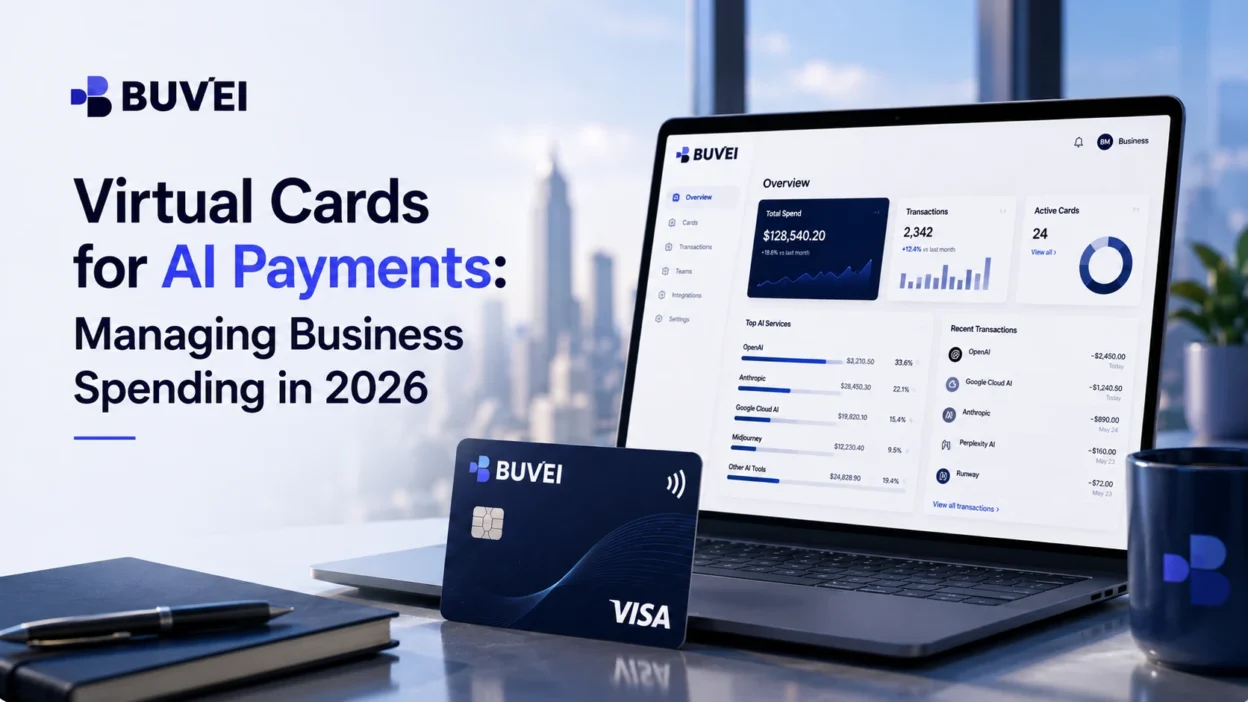
Artificial intelligence is becoming part of everyday business operations. However, as companies adopt more AI services, a new challenge is emerging: managing the payments behind them.
Businesses are no longer paying only for traditional software subscriptions. They are now managing AI assistants, API-based services, automation platforms, and specialized AI applications across different teams.
The challenge is not simply adopting AI solutions. The challenge is building a scalable payment system that provides visibility, control, and flexibility as AI-related spending grows.
Virtual card infrastructure provides businesses with a more efficient way to manage AI payments while supporting future expansion.
Why AI Software Spending Requires Better Payment Management in 2026
AI adoption is changing how companies manage business expenses. In the past, software spending was relatively predictable. Companies typically purchased licenses for established platforms and managed payments through centralized corporate accounts.
AI spending introduces a different model. Businesses may now rely on multiple AI-powered services across departments, including productivity platforms, development tools, automation solutions, and API-based services.
As more teams adopt AI independently, finance teams face a growing challenge: maintaining visibility and control over an increasingly distributed category of business spending.
The issue is no longer whether companies should use AI. The issue is how they can manage AI-related payments efficiently as adoption expands. AI spending is becoming a payment infrastructure challenge, not just an expense management challenge.
Why Traditional Payment Methods Cannot Manage AI Expenses at Scale
Traditional corporate payment methods were not designed for the complexity of modern AI adoption. Many businesses initially manage AI subscriptions through existing corporate cards or employee payment processes. However, as the number of services grows, these methods often create operational challenges.
Finance teams may struggle to understand who owns each expense, which services are actively being used, and whether ongoing subscriptions still provide business value.
Recurring AI payments also create additional complexity. Unlike one-time purchases, subscription-based services continue charging automatically unless they are actively monitored and managed.
For organizations using AI across multiple teams, traditional payment methods often lack the flexibility required to create clear spending policies and scalable workflows.
How Virtual Cards Help Businesses Manage AI Payments and Software Expenses
Virtual cards provide a more structured approach to managing modern digital expenses. Their value goes beyond creating digital payment numbers. They allow businesses to build payment workflows around specific operational needs.
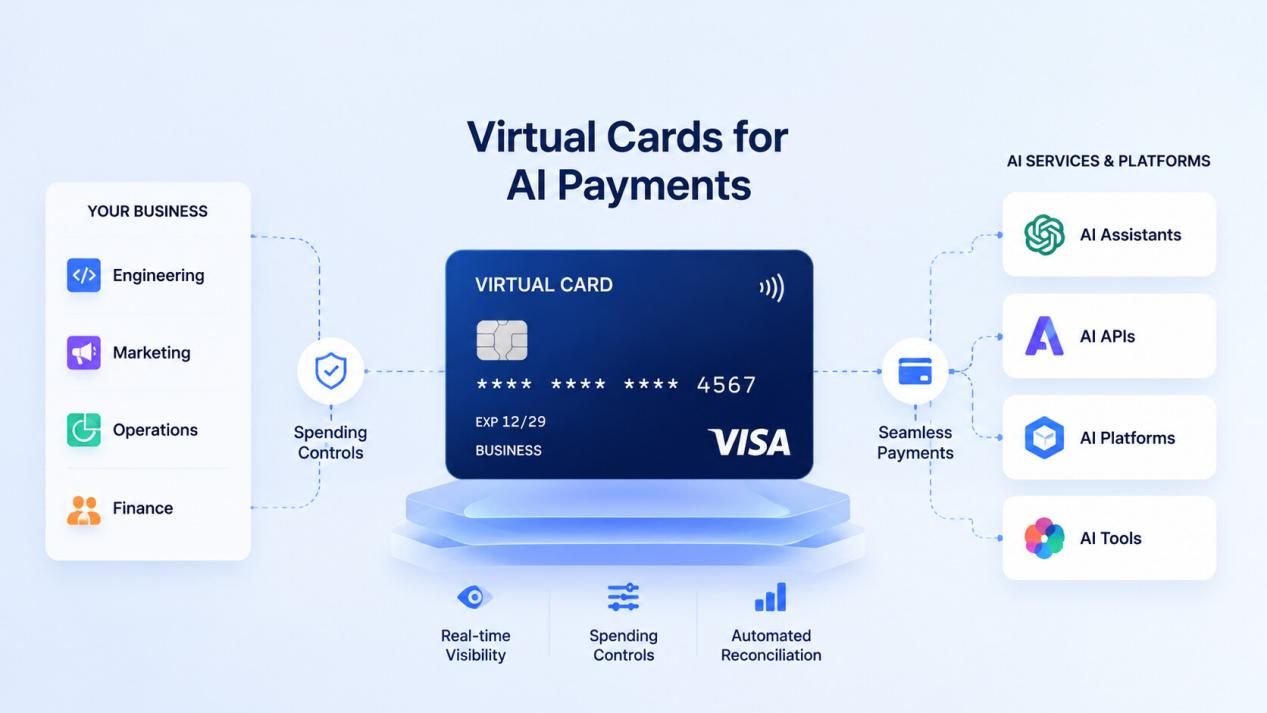
Companies can create dedicated payment methods for different spending scenarios, improving ownership and financial visibility. For example, a software development team may manage AI coding services separately from marketing teams using AI content platforms. Larger organizations can establish clearer payment structures across departments while maintaining centralized financial oversight.
This approach helps businesses support AI adoption without losing control over growing software expenses.
Improving Spending Control Through Flexible Payment Workflows
As AI adoption accelerates, companies need better ways to manage digital spending.
Virtual card infrastructure allows businesses to introduce stronger controls through customized spending rules, transaction visibility, and structured payment processes. Instead of relying on manual expense reviews after payments occur, companies can create more proactive systems for managing AI-related expenses.
This enables organizations to encourage innovation while maintaining financial discipline.
Why Businesses Need Virtual Card Infrastructure for AI Payments
A few virtual cards may solve immediate payment requirements. However, businesses scaling AI adoption require more than individual payment methods. They need infrastructure that supports the complete payment lifecycle, including:
- virtual card issuing
- payment management
- transaction workflows
- system integration
- scalability
Building these capabilities internally requires significant investment. Companies would need to develop payment systems, establish partnerships, manage compliance requirements, and maintain operational infrastructure.
For most businesses, the goal is not to become a payment infrastructure company. The goal is to access payment capabilities without managing every complex layer behind them. This is why virtual card infrastructure is becoming increasingly important for AI-driven businesses.
Virtual Card Use Cases for AI Payments Across Businesses
Different organizations use virtual card infrastructure based on their business models and operational requirements.
Managing AI Software Expenses for Enterprise Teams
Large organizations are adopting AI across multiple departments. As AI usage expands, finance teams need better ways to manage software expenses while maintaining visibility and control.
Virtual card infrastructure allows enterprises to create structured payment environments that support different teams, projects, and spending scenarios. Rather than limiting AI adoption, businesses can build financial systems that support responsible and scalable AI usage.
How AI SaaS Companies Use Virtual Card Infrastructure
AI SaaS companies face a different challenge. They are not only managing internal AI expenses. They may also need payment capabilities that become part of their own products.
These companies may require infrastructure that supports customer payment workflows, embedded financial experiences, and scalable virtual card programs. For AI SaaS businesses, payments are increasingly becoming part of the product architecture rather than simply an operational expense.
Managing AI API Payments with Virtual Cards
Many AI-powered applications depend on API-based services. Unlike traditional software subscriptions, API expenses often change based on usage volume. This creates new requirements for connecting payment activity with operational systems.
Virtual card infrastructure provides businesses with a foundation for managing variable AI-related payment workflows more efficiently.
How BUVEI Enables Scalable AI Payment Infrastructure
As AI adoption continues to grow, businesses need payment systems that can adapt to changing requirements.
BUVEI helps companies build virtual card programs without developing the entire payment ecosystem internally. Instead of investing resources into creating issuing systems, payment workflows, and operational infrastructure from scratch, businesses can integrate scalable payment capabilities into their existing products and processes.
Build Virtual Card Programs Without Developing Payment Infrastructure
Creating a complete payment program requires multiple technical and operational capabilities. Businesses need reliable systems for card creation, transaction processing, payment management, and scalable program operations.
BUVEI provides the infrastructure needed to support these capabilities while allowing companies to focus on their core products and customer experiences.
API-Based Virtual Card Infrastructure for AI Payment Workflows
Modern AI businesses are technology-driven. Their payment systems need to connect with existing applications, financial platforms, and internal workflows.
API-based virtual card infrastructure allows businesses to integrate payment capabilities directly into their systems and create customized payment experiences.
This is especially important for companies building AI-powered products that require flexible and scalable payment operations.
Scaling AI Payment Operations with Flexible Infrastructure
AI adoption will continue expanding across industries. As businesses increase their use of AI services, payment requirements will become more complex. Companies need infrastructure that can support increasing users, transaction volumes, and evolving business models.
BUVEI provides the foundation for businesses looking to scale AI payment workflows without managing every layer of payment complexity themselves.
How to Choose a Virtual Card Infrastructure Partner for AI Payments
Choosing a virtual card infrastructure provider is a strategic business decision. The right partner should support both current requirements and future growth. Key considerations include:
Scalability
The infrastructure should support increasing users, transactions, and payment scenarios as business needs evolve.
Integration Flexibility
Payment capabilities should connect easily with existing platforms, financial systems, and operational workflows.
Spending Management
Businesses need effective controls to improve visibility and manage payment risks.
Long-Term Reliability
Payment infrastructure should provide a stable foundation for future products and changing business requirements. For companies building AI-driven products or managing AI expenses at scale, infrastructure flexibility is becoming increasingly important.
Conclusion
AI is changing how businesses operate, and it is also changing how companies manage payments. As organizations adopt more AI software, subscriptions, and API-based services, traditional payment methods may no longer provide enough visibility, flexibility, and control.
Virtual cards provide businesses with a scalable way to manage AI payments and improve digital expense operations. However, the future of AI payments is not only about issuing more cards. It is about building payment infrastructure that supports new business models.
For companies looking beyond simple payment methods, solutions like BUVEI provide the infrastructure needed to support modern AI-driven businesses.