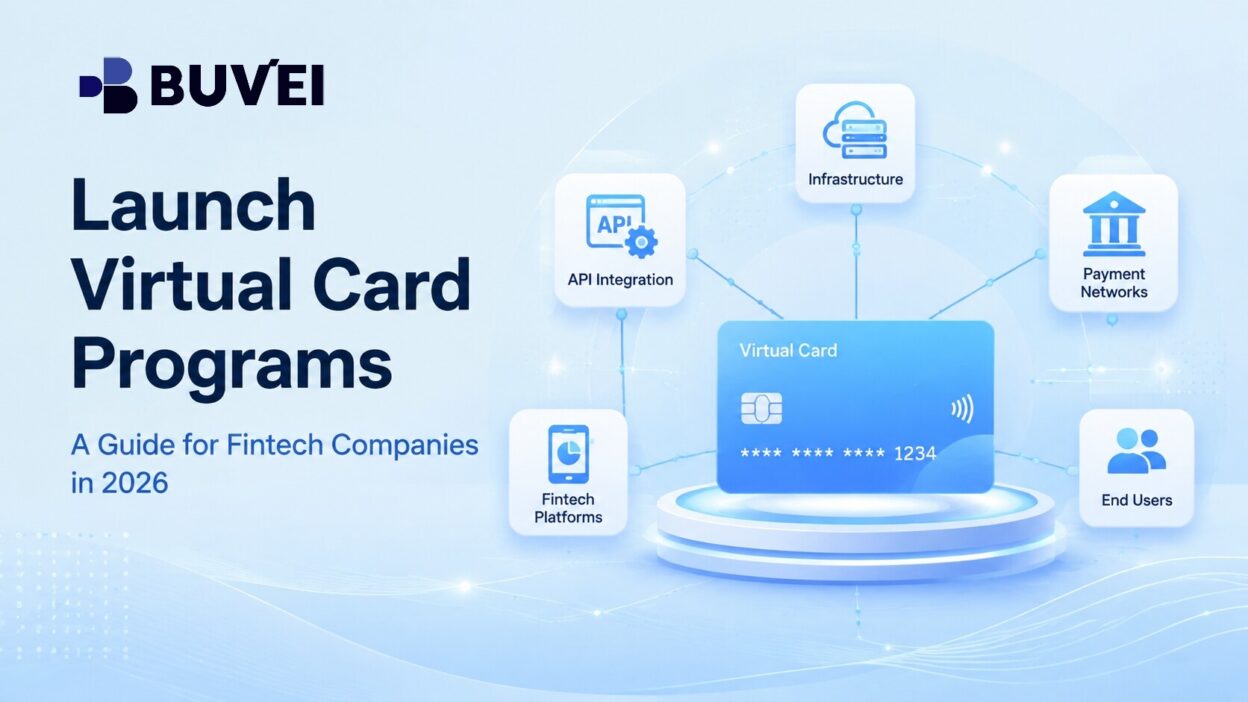
Virtual card programs for fintech companies are becoming an important solution for businesses that want to launch flexible payment products without building the entire card-issuing stack from scratch. By combining virtual card issuing, APIs, compliance support, and payment infrastructure, fintech companies can create scalable payment experiences for their customers.
However, launching a successful virtual card program requires more than simply issuing digital card numbers. Fintech companies need the right combination of issuing infrastructure, compliance support, API connectivity, and operational scalability to build reliable payment products.
This guide explains how fintech companies can launch virtual card programs in 2026, including key considerations, implementation strategies, and the role of payment infrastructure partners in accelerating growth.
Why Fintech Companies Are Adding Virtual Cards to Their Products
Virtual cards have evolved from a simple payment tool into an important component of modern fintech ecosystems. As businesses and consumers increasingly rely on digital payment experiences, fintech companies are looking for flexible ways to integrate card capabilities into their platforms.
By launching virtual card programs, fintech companies can expand their product offerings, improve payment control, and create new revenue opportunities through embedded financial services.
Expanding Digital Payment Capabilities
Many fintech companies use virtual cards to enhance existing payment products. For example, digital banking platforms can provide customers with instant access to virtual payment cards, while business payment platforms can create dedicated cards for employees, departments, or specific spending purposes.
Compared with traditional card programs, virtual cards offer greater flexibility because they can be created, managed, and controlled through digital platforms. This allows fintech companies to design payment experiences that better match their customers’ needs.
Common applications include:
- Digital payment cards for online transactions
- Business expense management solutions
- Subscription payment tools
- Corporate spending programs
Supporting Embedded Finance Models
Embedded finance has become one of the fastest-growing areas in fintech. Companies across industries are integrating financial services directly into their platforms instead of requiring customers to use separate banking products. Virtual cards play an important role in this transformation by allowing non-bank platforms to introduce payment capabilities within their own ecosystems. For example:
- A SaaS platform can provide payment cards as part of its business management tools.
- A marketplace can offer payment solutions for suppliers or partners.
- A fintech application can create customized payment products for different customer segments.
By integrating virtual card capabilities, companies can deliver a more complete financial experience while creating additional value for users.
Improving Customer Payment Experiences
Customer expectations around payments continue to change. Users increasingly expect faster onboarding, instant access, and greater control over their financial activities. Virtual card programs allow fintech companies to provide:
- Faster card issuance
- Customizable spending controls
- Real-time transaction visibility
- Improved security features
These capabilities help businesses create more modern payment experiences while reducing reliance on traditional banking processes.
Key Challenges When Launching a Virtual Card Program
Although virtual cards provide significant opportunities, launching a card program involves several operational and technical challenges. Fintech companies must consider not only the customer experience but also the underlying infrastructure required to issue, manage, and scale virtual cards.
Accessing Card Issuing Infrastructure
One of the biggest challenges for fintech companies is gaining access to the infrastructure required for card issuing. A complete virtual card program typically involves multiple components, including:
- Card issuing capabilities
- Payment network connectivity
- Processing systems
- Transaction management tools
Building these capabilities internally requires significant investment in technology, compliance, and operational resources. For many fintech companies, partnering with an experienced infrastructure provider can provide a faster and more efficient way to launch a virtual card program without developing every component from the ground up.
Managing Compliance and Regulatory Requirements
Compliance is a critical consideration for any fintech company entering card issuing. Depending on the target market and business model, companies may need to address requirements related to:
- Customer verification
- Business verification
- Transaction monitoring
- Fraud prevention
- Regulatory obligations
A successful virtual card program must balance innovation with strong compliance processes. Without proper compliance frameworks, fintech companies may face operational risks when expanding their payment products.
Building Scalable Card Operations
A virtual card program may start with a limited number of users, but successful fintech products often need to support rapid growth. As transaction volumes increase, companies need systems that can efficiently handle:
- Large-scale card creation
- Real-time transaction processing
- Card management workflows
- Spending controls
Scalability is especially important for fintech platforms serving multiple customers, businesses, or geographic markets.
Supporting Global Payment Growth
Many fintech companies aim to serve customers across multiple regions. However, international expansion introduces additional challenges, including:
- Different payment environments
- Regional compliance requirements
- Currency considerations
- Local market expectations
Choosing infrastructure that supports global payment operations can help fintech companies expand their products more efficiently.
How Fintech Companies Can Launch Virtual Card Programs Successfully
Launching a virtual card program requires careful planning. Instead of focusing only on card issuance, fintech companies should consider the complete payment ecosystem behind the product.
Step 1: Define the Right Use Case
Before building a virtual card program, companies should clearly define the problem they want to solve. Different use cases require different features and capabilities. For example:
A digital wallet may prioritize customer payment access, while an expense management platform may require advanced spending controls and reporting features.
Common virtual card use cases include:
- Consumer payment solutions
- Business expense cards
- Marketplace payment workflows
- Embedded financial products
A clear use case helps companies determine the right technology approach and program requirements.
Step 2: Choose the Right Issuing Approach
Fintech companies generally have two options when launching virtual card programs: building internally or partnering with an infrastructure provider.
| Build In-House | Partner with Infrastructure Provider | |
| Development effort | Requires significant technical resources | Lower internal development requirements |
| Launch speed | Longer implementation timeline | Faster deployment |
| Infrastructure management | Managed internally | Supported by provider |
| Compliance responsibility | Fully handled internally | Provider support available |
| Scalability | Depends on internal systems | Designed for expansion |
For companies with extensive resources and specific requirements, building internally may be suitable. However, many fintech companies prefer partnering with infrastructure providers because it allows them to focus on customer experience and product development rather than complex payment infrastructure.
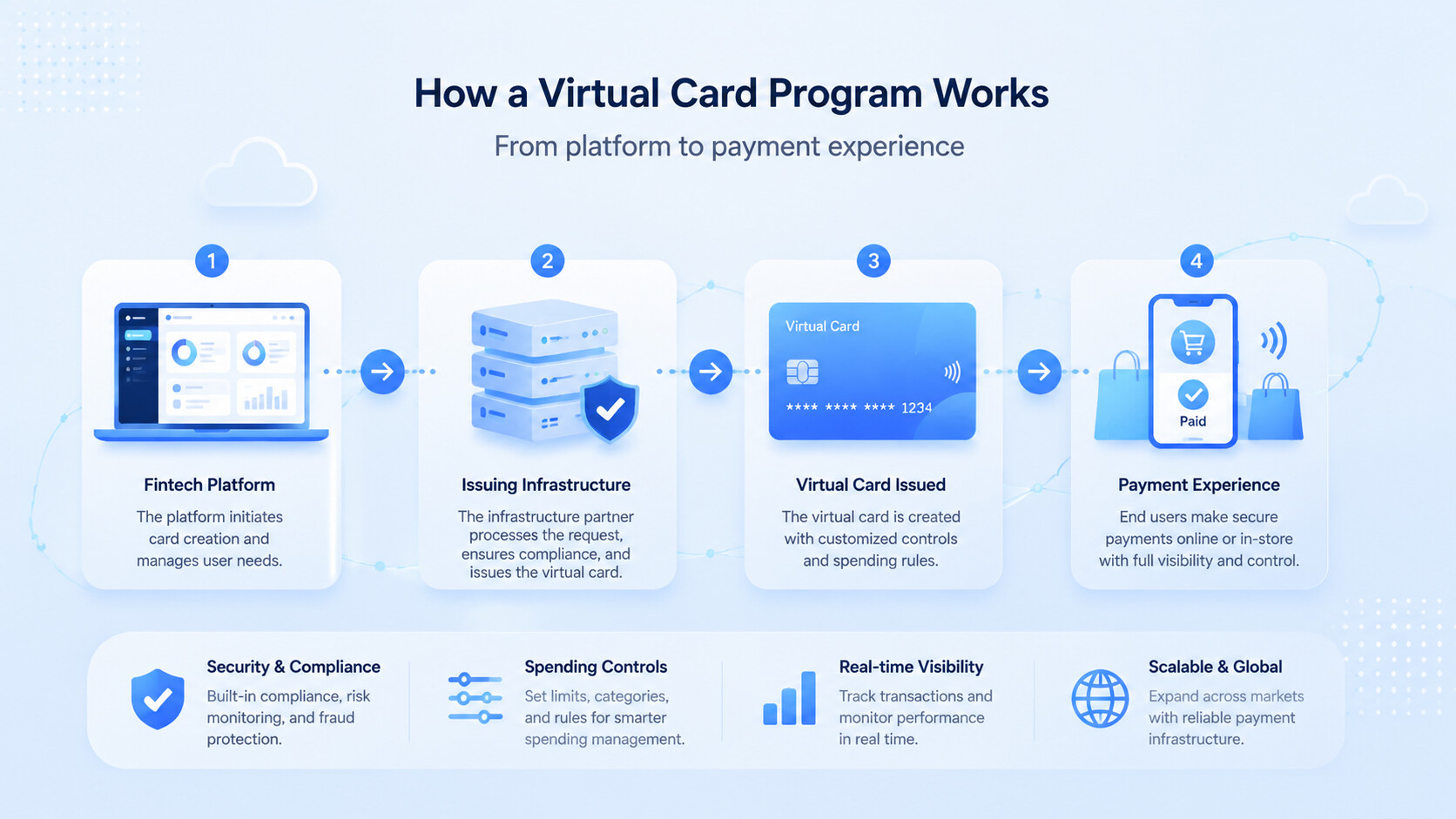
Step 3: Select an Infrastructure Partner
Choosing the right partner is one of the most important decisions in launching a virtual card program. Fintech companies should evaluate providers based on:
- Card issuing capabilities
- API availability
- Integration flexibility
- Scalability
- Payment coverage
- Compliance support
A reliable infrastructure partner should support both the initial launch and future program expansion.
Step 4: Integrate APIs and Payment Workflows
Modern fintech products require automation and flexibility. Virtual card APIs allow businesses to connect card capabilities directly into their platforms. Common API-enabled workflows include:
- Automated card creation
- Card status management
- Transaction data access
- Payment workflow automation
API-based integration allows fintech companies to create seamless experiences without requiring customers or internal teams to manage payments manually.
Step 5: Scale and Optimize the Program
Launching the first version of a virtual card program is only the beginning. Fintech companies should continuously improve their programs by analyzing:
- Transaction performance
- Customer usage patterns
- Payment success rates
- Operational efficiency
A scalable virtual card program should be designed to support future product expansion and changing customer requirements.
Build vs Partner: Choosing the Right Virtual Card Strategy
The right approach depends on a fintech company’s resources, timeline, and business goals. For many startups and growing platforms, partnering with an experienced infrastructure provider offers a practical path to launching payment products faster. A partnership approach allows companies to reduce development complexity while gaining access to established issuing capabilities.
Common Virtual Card Use Cases for Fintech Companies
Virtual cards support a wide range of fintech applications across different industries.
Digital Wallets
Digital wallet providers can use virtual cards to offer customers secure online payment options and improve transaction flexibility. Virtual cards can help wallet platforms expand beyond basic money transfer features and provide additional payment capabilities.
Expense Management Platforms
Expense management companies use virtual cards to help businesses control spending and simplify financial operations. Examples include:
- Employee spending cards
- Department-specific cards
- Budget-controlled payment cards
Marketplaces
Marketplaces can integrate virtual cards into payment workflows for suppliers, partners, and sellers. This enables more flexible payment processes while improving transaction management.
SaaS and Embedded Finance Platforms
SaaS companies increasingly explore embedded finance opportunities by adding payment features directly into their software products. Virtual cards allow these platforms to provide additional financial services without building a complete banking system internally.
How BUVEI Supports Fintech Companies Building Virtual Card Programs
When fintech companies evaluate virtual card infrastructure partners, they typically look for solutions that provide scalability, flexibility, and reliable payment capabilities. BUVEI helps businesses simplify the process of launching and managing virtual card programs by providing access to modern card issuing infrastructure and payment capabilities.
Scalable Virtual Card Issuing Infrastructure
Building a virtual card program requires multiple technical components, from issuing capabilities to transaction management.
BUVEI enables fintech companies to access scalable virtual card infrastructure without needing to develop every underlying component internally. This allows companies to focus on building customer-facing products while reducing operational complexity.
API-Based Integration
Fintech companies require flexible technology that can integrate with existing platforms.
BUVEI supports API-driven workflows that help businesses connect virtual card capabilities with their applications and automate key payment operations. This enables companies to create smoother payment experiences and manage card programs more efficiently.
Flexible Card Program Management
Different fintech products require different levels of control. Virtual card programs may need features such as:
- Spending management
- Transaction visibility
- Custom workflows
- Program-level controls
Flexible management capabilities allow fintech companies to design solutions that match their customers’ needs.
Supporting Global Payment Operations
As fintech companies expand into new markets, they need payment solutions that can support broader operational requirements. BUVEI helps businesses build scalable virtual card programs designed for modern digital payment environments.
Conclusion
Virtual card programs are becoming an important capability for fintech companies looking to expand digital payment offerings and build embedded finance solutions.
However, successful card programs require more than issuing technology. Companies need the right combination of infrastructure, compliance support, API connectivity, and scalability.
By selecting the right approach and working with experienced infrastructure partners, fintech companies can launch virtual card programs more efficiently and create stronger payment experiences for their customers.