Introduction
A SaaS company adding corporate cards for customers may initially focus on the user experience: card creation, payment flows, and account management.
However, the more important decision happens behind the scenes: should the company build its own issuing infrastructure or use a Virtual Card Issuing Platform?
Building internally provides full control, but it also requires investment in payment infrastructure, engineering resources, security, compliance, and ongoing operations.
For businesses where payments are not the core product, the key question is whether owning the infrastructure creates enough value to justify the cost and complexity.
What Is a Virtual Card Issuing Platform?
A Virtual Card Issuing Platform provides the infrastructure required to create and manage virtual card programs without building the entire payment stack internally.
Instead of developing separate systems for card issuance, transaction management, and security controls, companies can connect their products with existing issuing infrastructure.
This approach allows businesses to add payment capabilities without taking on the full complexity of building payment infrastructure internally.
The Hidden Costs of Building Virtual Card Infrastructure
Building a virtual card program internally may seem attractive because it offers maximum control.
However, the investment goes beyond initial development.
Engineering and Maintenance
A complete virtual card system requires infrastructure for card issuance, transaction processing, security controls, and reporting.
Building and maintaining these systems requires specialized engineering resources and continuous technical investment.
For SaaS companies and digital platforms, those resources may be better allocated toward improving their main products.
Operations and Compliance
Virtual card programs also require ongoing operational management.
Companies must handle payment integrations, transaction monitoring, fraud prevention, and compliance requirements.
Many businesses underestimate this operational burden until transaction volumes increase and the system needs to support more users, markets, and payment scenarios.
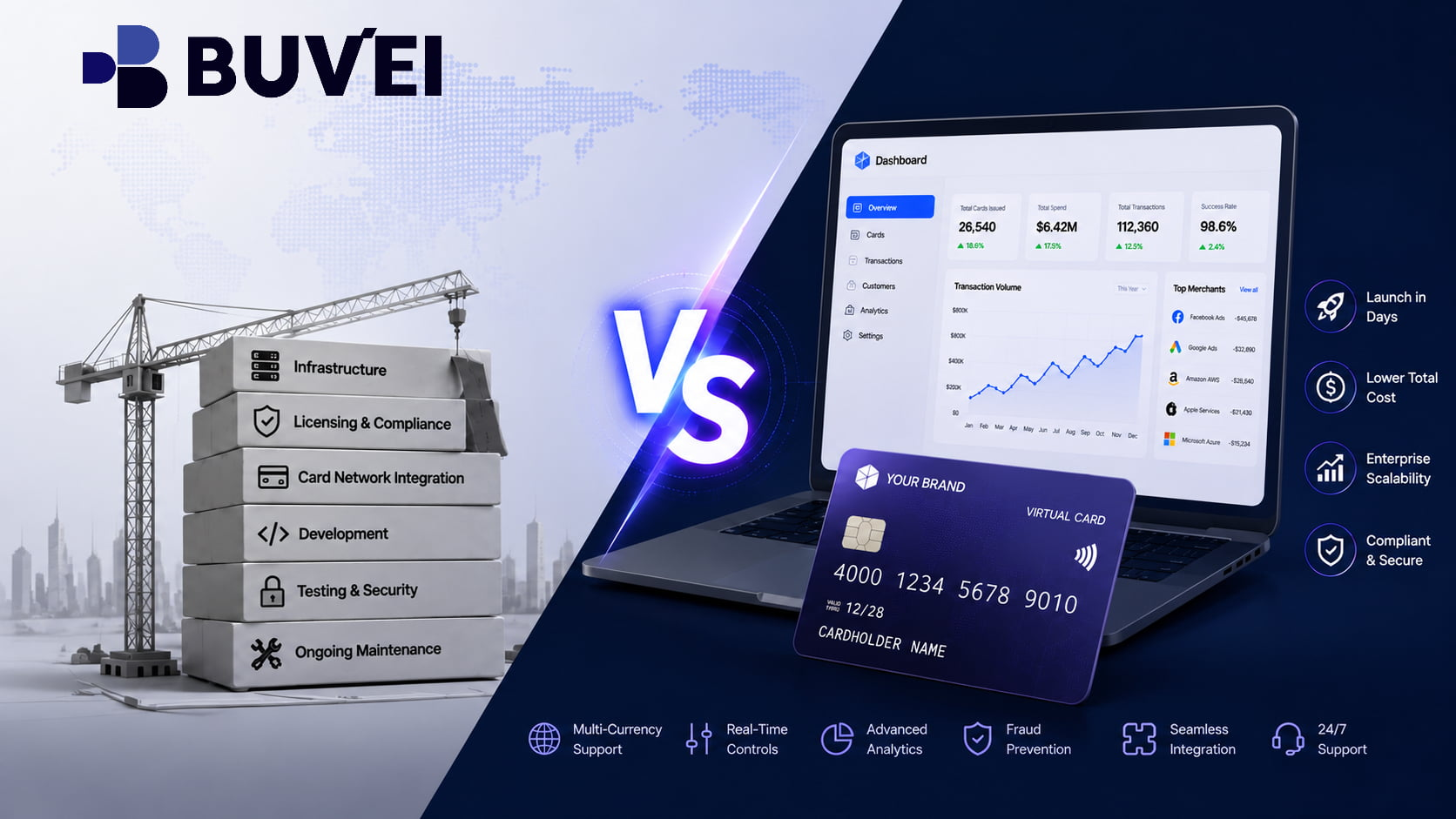
Virtual Card Issuing Platform vs In-House Development
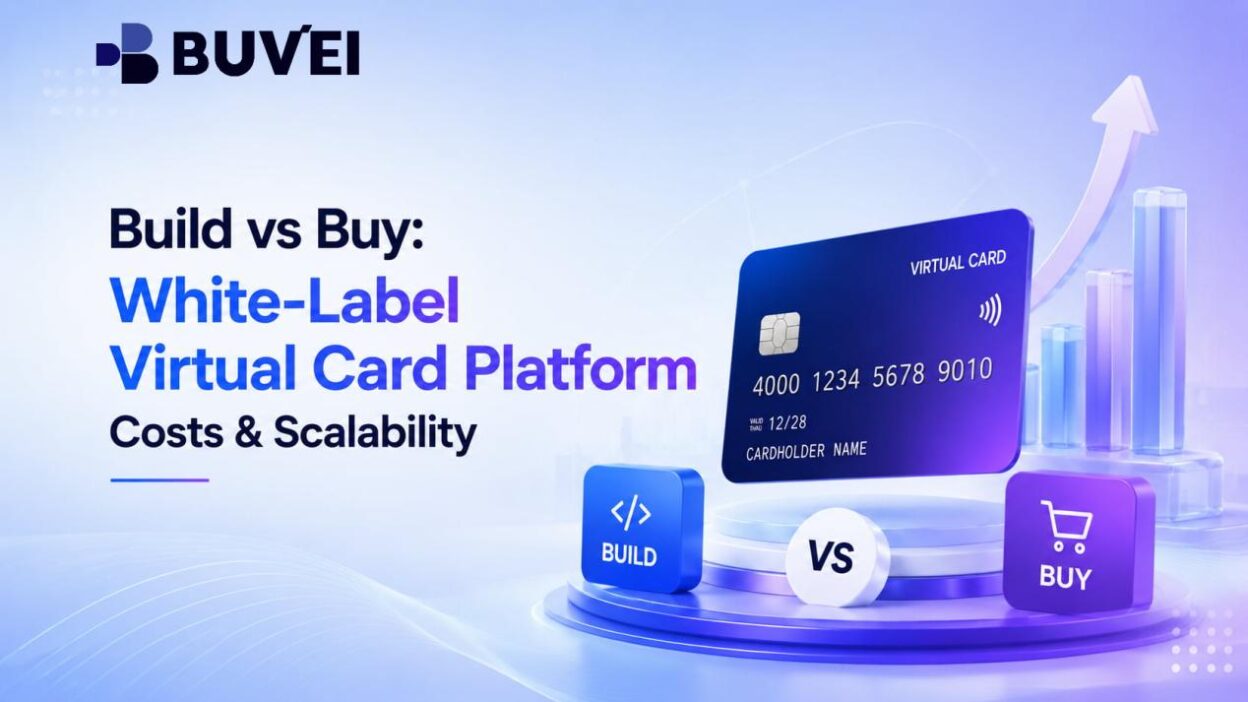
The decision between using a Virtual Card Issuing Platform and building internally depends on business strategy.
| Virtual Card Issuing Platform | In-House Development | |
| Launch speed | Faster deployment | Longer development cycle |
| Engineering resources | Lower internal requirements | Requires specialized teams |
| Infrastructure management | Provider-supported | Fully managed internally |
| Scalability | Easier expansion | Requires continuous investment |
| Customization | Flexible configuration | Maximum control |
Building internally can make sense when payment infrastructure itself is the company’s competitive advantage.
For most SaaS companies, marketplaces, and digital businesses, payments are usually a supporting capability rather than the main product.
In these cases, using specialized infrastructure often provides a better balance between speed, cost, and scalability.
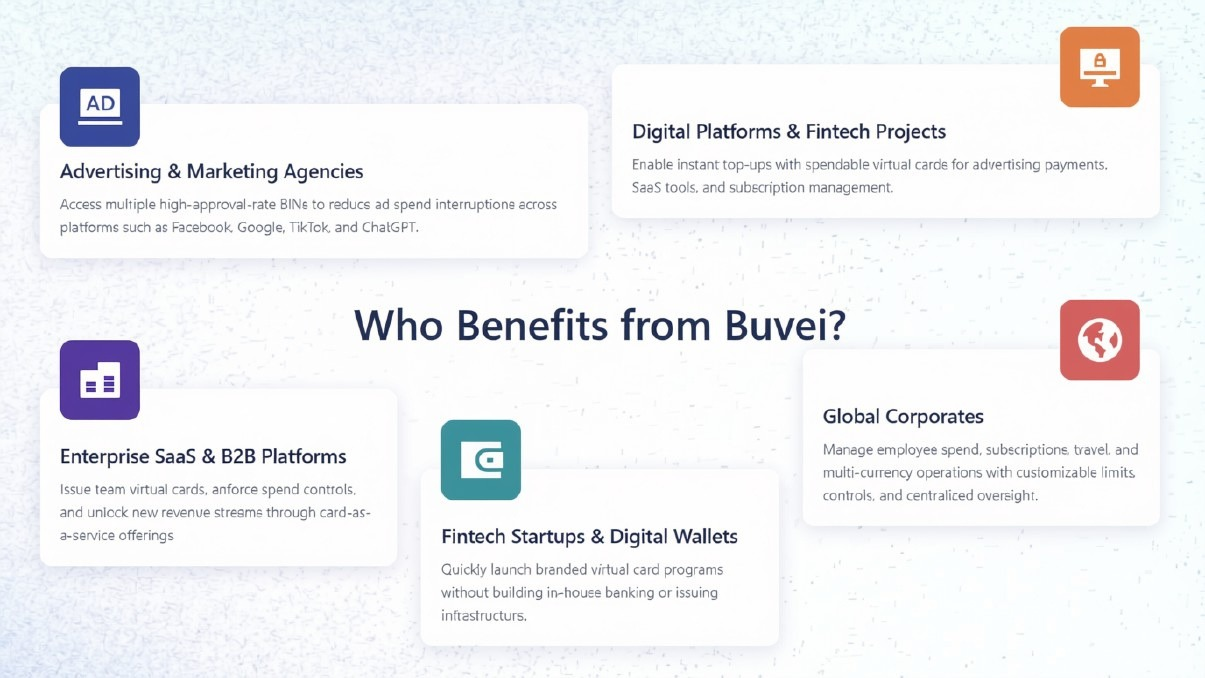
Why Businesses Choose Virtual Card Issuing Platforms
Many companies need payment capabilities but do not want to become payment infrastructure providers.
A Virtual Card Issuing Platform helps businesses avoid building every technical and operational layer internally.
SaaS Companies
SaaS platforms can integrate virtual cards into expense management, subscription payments, or business workflows without diverting engineering resources from their core software.
FinTech Startups
Early-stage FinTech companies can launch and test payment products faster before committing significant resources to infrastructure development.
Digital Platforms
Marketplaces and international platforms can use existing infrastructure to support different regions, users, and transaction requirements.
When In-House Development Makes Sense
A Virtual Card Issuing Platform is not always the right choice.
Building internally may be suitable when:
- Payment infrastructure is the company’s primary business;
- The company already has strong payment engineering capabilities;
- Full control over infrastructure is strategically important.
For these businesses, owning the entire technology stack may create long-term advantages.
How to Choose the Right Virtual Card Issuing Platform
Choosing a platform requires evaluating more than basic card issuance.
Companies should consider:
Infrastructure Capability
The platform should support essential card operations and provide flexibility for different business models.
Scalability
As transaction volume grows, infrastructure reliability becomes increasingly important.
Businesses should evaluate whether the platform can support expanding users, markets, and payment workflows.
API Integration
Flexible APIs allow companies to connect card functionality with existing products and create customized payment experiences.
How BUVEI Supports Virtual Card Programs
For many businesses, the challenge of launching virtual cards is not creating the customer-facing experience.
It is accessing reliable infrastructure behind the program.
BUVEI provides virtual card infrastructure that helps businesses build scalable payment workflows without developing every component internally.
The platform supports:
- Virtual card issuance
- Multi-BIN management
- API connectivity
- Spending controls
- Business payment workflows
For FinTech companies, SaaS platforms, and digital businesses, BUVEI provides the infrastructure foundation needed to launch and scale virtual card programs more efficiently.
FAQ
What is a Virtual Card Issuing Platform?
A Virtual Card Issuing Platform provides the infrastructure businesses need to create and manage virtual card programs without building the entire payment system internally.
Should companies build or buy virtual card infrastructure?
Companies focused on payment infrastructure may benefit from building internally, while businesses adding payment capabilities often prefer specialized platforms.
Is a Virtual Card Issuing Platform cheaper than building in-house?
The answer depends on business requirements. Companies should consider engineering costs, maintenance, compliance responsibilities, and long-term operational investment.
Conclusion
Choosing between building virtual card infrastructure internally and using a Virtual Card Issuing Platform is a strategic business decision.
In-house development provides maximum control but requires significant investment in technology and operations.
A platform approach allows businesses to access established infrastructure while focusing resources on their core products.
For companies where payments support the product rather than define it, a Virtual Card Issuing Platform provides a practical path to launching and scaling payment capabilities.