Introduction
Many companies start with the same idea: add branded virtual cards to their product and give customers a better payment experience. The challenge appears when they move from concept to a real card program.
The real challenge is building the payment foundation behind the product. Companies need reliable systems that can support card operations, user activity, and future growth.
For businesses entering digital payments, developing this infrastructure internally can require significant time, technical resources, and ongoing operational effort.
This is why fintech companies, SaaS platforms, and digital businesses are increasingly adopting white label virtual card solutions to launch their own card products faster.
Why Businesses Choose White Label Virtual Card Solutions
Many companies want to offer branded virtual cards, but building a complete payment infrastructure is rarely their core business.
Creating a card program internally requires more than generating cards. Companies must manage technical systems, payment connections, security requirements, and operational processes that become increasingly complex as the product grows.
A white label virtual card solution provides a more practical approach. Instead of building every component internally, companies can use existing infrastructure while maintaining control over their branding, customer experience, and product strategy.
This allows teams to focus on the parts of the business that create differentiation, rather than managing the entire payment stack.
What a White Label Virtual Card Program Needs to Scale
A scalable white label virtual card program depends on several core capabilities working together.
Card issuing infrastructure provides the foundation for creating, managing, and controlling virtual cards throughout their lifecycle.
API connectivity allows businesses to integrate card functionality directly into their own applications, platforms, and workflows.
Transaction management and operational controls become increasingly important as usage grows, giving companies better visibility and control over payment activity.
The strength of these underlying systems determines whether a card program can scale beyond an initial launch.
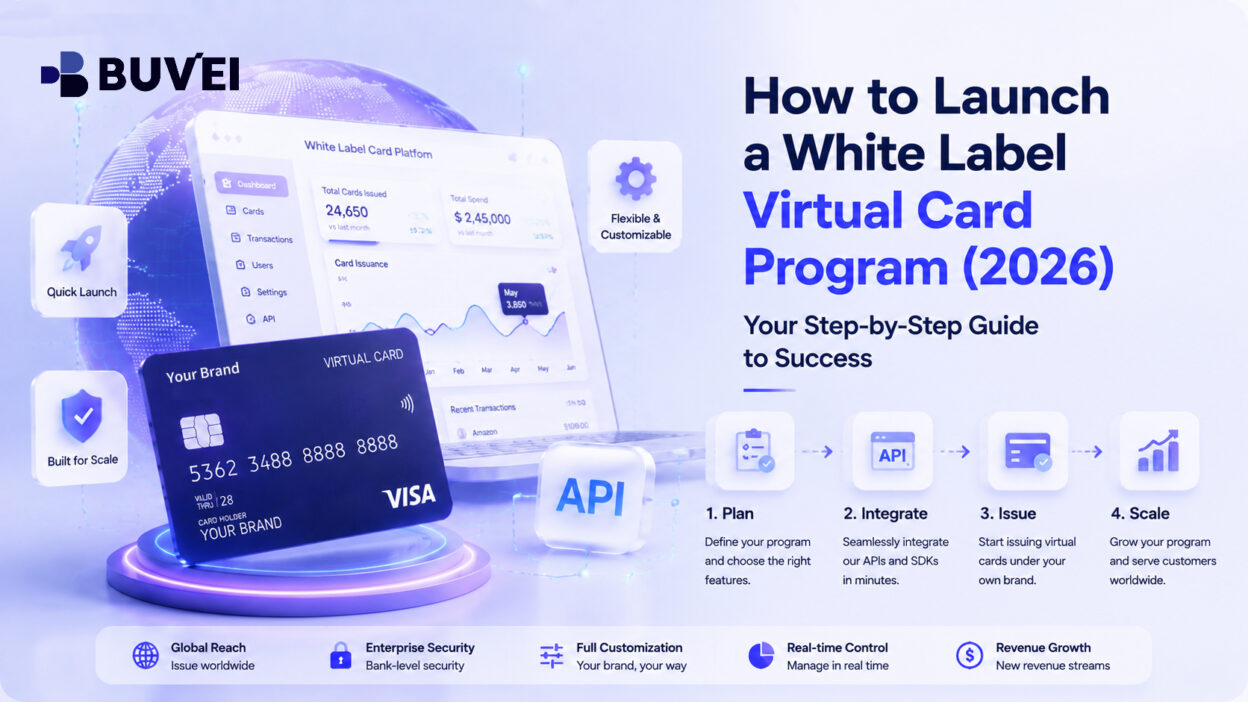
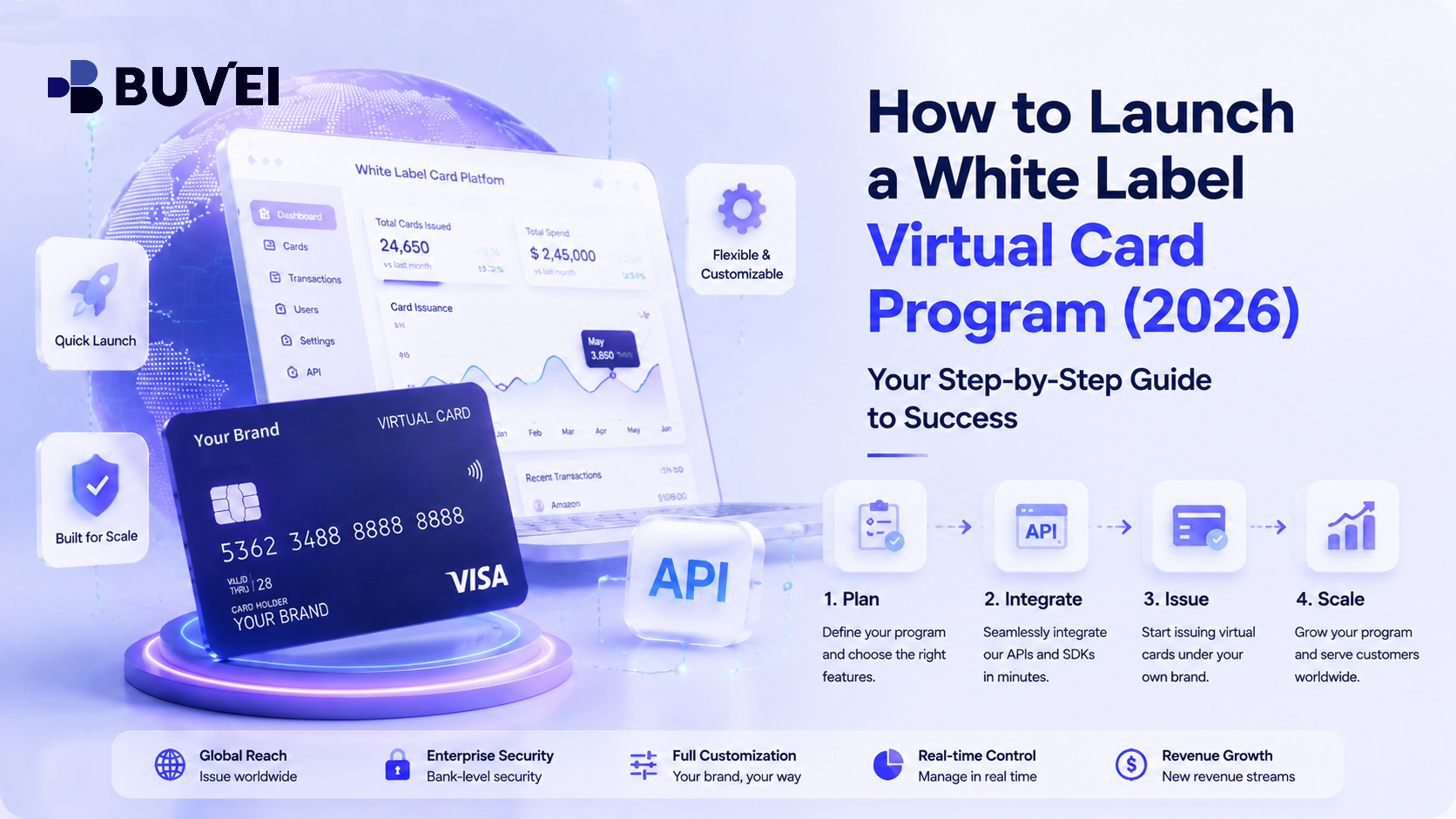
How to Launch a White Label Virtual Card Program
Building payment infrastructure from the ground up can give companies full control, but it also requires significant investment in technology and operations.
A white label virtual card provider offers an alternative by providing the infrastructure needed to support card programs without requiring companies to build every component themselves.
With this approach, businesses can focus on product development, customer experience, and market expansion while relying on an established platform for card issuing and payment operations.
The company owns the customer-facing experience, while the infrastructure partner supports the systems behind the program.
For many digital businesses, this creates a faster and more efficient path from concept to launch.
Why White Label Virtual Card API Integration Matters
A successful virtual card program needs to work naturally with existing business systems.
White label virtual card API integration allows companies to automate card creation, manage card settings, access transaction data, and build payment workflows that fit their specific requirements.
For example, fintech platforms can integrate virtual cards into financial products, while SaaS companies can use them within expense management or business payment solutions.
Flexible API infrastructure helps businesses create smoother user experiences without requiring separate payment tools.
Which Businesses Use White Label Virtual Card Solutions?
White label virtual card solutions are commonly used by companies that want to add payment capabilities without becoming payment infrastructure providers themselves.
Fintech companies use them to expand financial products with branded cards. SaaS platforms integrate them into business payment workflows and expense solutions.
Digital marketplaces, advertising platforms, and cross-border payment providers can also use white label card infrastructure to support different payment scenarios across multiple markets.
These businesses share a common need: flexible payment infrastructure that can adapt as their products grow.
Building a White Label Virtual Card Program with BUVEI
BUVEI provides white label virtual card infrastructure for businesses that want to launch branded card programs without developing the entire payment system internally.
Through API-based integration, companies can connect virtual card capabilities with their existing platforms and build payment experiences that match their products.
BUVEI supports virtual card issuing, card management, and scalable infrastructure designed for digital businesses with different payment requirements.
For companies operating across multiple regions, BUVEI’s multi-BIN virtual card infrastructure provides additional flexibility when building global payment solutions and supporting different payment scenarios.
The platform is designed for fintech companies, SaaS platforms, advertising businesses, and cross-border payment providers that need reliable infrastructure to launch and expand virtual card products.
By working with BUVEI, companies can reduce development complexity and focus more resources on their customers, products, and growth.
What to Look for in a White Label Virtual Card Provider
Selecting a white label virtual card provider is about more than launching the first card.
The right partner should provide reliable infrastructure, flexible API capabilities, and the scalability required as the product expands.
Choosing a platform that can support future growth helps businesses avoid rebuilding their payment foundation later.
Conclusion
Launching a white label virtual card program does not require every company to build payment infrastructure from scratch.
With the right infrastructure partner, businesses can access card issuing capabilities, API integration, and scalable payment systems while focusing on their own products and customers.
For companies building digital payment products, choosing the right infrastructure approach can determine how quickly they launch and how effectively they scale.