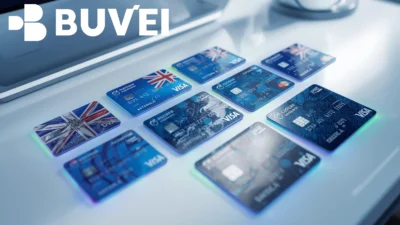
In 2026, the United Kingdom’s financial sector has moved far beyond the traditional "High Street" model. With the maturity of Open Banking (Entity 2.0) and the widespread adoption of the Digital Pound (the UK's Central Bank Digital Currency/CBDC) in wholesale settlement, the way we interact with money is now "Token-First." Virtual cards are the essential interface for this new reality, providing a secure, programmable, and instant layer between a user’s liquid assets and the global e-commerce market.
 What Is a Virtual Card and How Does It Work in 2026?
A virtual card is not merely a digital copy of a plastic card; in 2026, it is a dynamic financial token.
The Technical Anatomy
A UK virtual card consists of a standard 16-digit Primary Account Number (PAN), an Expiry Date, and a Card Verification Value (CVV). However, unlike the static cards of the past, 2026 virtual cards are:
-
Merchant-Locked: Once a card is used at a specific vendor (e.g., Amazon.co.uk), it can be "locked" so that no other merchant can ever charge it.
-
Time-Sensitive: Users can generate "Burner" cards that expire automatically 10 minutes after creation.
-
Balance-Capped: You can set a hard limit of exactly £49.99, ensuring a vendor cannot "accidentally" charge you a penny more.
The Role of Tokenization
In 2026, the UK’s payment rails rely heavily on the EMVCo Tokenization Standard. When you use a virtual card, your real account details are never transmitted. Instead, a "Payment Token" is generated. If a merchant’s database is breached, the hackers only steal a useless, single-use token rather than your permanent financial identity.
Requirements for Getting a Virtual Card in the UK
The UK remains a strictly regulated "Tier 1" financial jurisdiction. To obtain a virtual card in 2026, you must navigate the Financial Services and Markets Act 2023 compliance framework.
For Personal Users:
-
Identity Verification (eKYC): Most UK platforms now use AI-driven biometric checks. You will need a valid UK Passport or Biometric Residence Permit (BRP).
-
Digital Address Proof: Thanks to Open Banking, many platforms no longer ask for paper utility bills. Instead, they "ping" your existing bank account to verify your UK residential address.
-
Active UK Mobile Number: Required for Strong Customer Authentication (SCA) via push notifications or biometrics.
For Business Users:
-
Companies House Verification: The platform will instantly verify your company registration number.
-
UBO (Ultimate Beneficial Owner) Check: Anyone owning more than 25% of the business must be verified.
-
Business Nature Declaration: Given the UK’s 2026 "Green Finance" mandates, you may be asked to briefly categorize your business activities to ensure compliance with ESG (Environmental, Social, and Governance) standards.
Different Types of UK Virtual Card Platforms
The UK’s "Silicon Roundabout" and the City of London have birthed a diverse array of providers, each serving a specific niche.
The Challenger Giants (Monzo, Revolut, Starling)
These are the primary retail choices. In 2026, Revolut is the leader for multi-currency virtual cards, while Monzo is preferred for its "Virtual Flex" features, which allow users to pay for virtual card transactions in installments.
The Corporate Spend Managers (Pleo, Soldo, Ramp UK)
These are the "operating systems" for UK SMEs. They don’t just provide cards; they provide Auto-Reconciliation. When an employee uses a virtual card, the platform automatically extracts the VAT from the digital receipt and syncs it with Xero or Sage.
The Agile & Crypto-Native Platforms (Buvei)
A new "Third Pillar" has emerged for the Global Briton. Platforms like Buvei cater to users who don't want to be tied to the legacy "BACS/CHAPS" settlement speeds. They offer instant liquidity via stablecoins and high-trust US/Global BINs that are essential for international ad spend and SaaS.
Industry-Specific Use Cases (The "London Edge")
Digital Advertising (The Agency Model)
London is a global hub for marketing. Agencies managing "Media Spend" for clients in New York, Dubai, and Singapore use virtual cards to:
-
Avoid "Batch Declines": If one client’s credit card expires, it doesn't shut down the agency’s entire Google Ads account. Each client gets their own virtual card.
-
Currency Arbitrage: Paying for Meta Ads in USD while billing the client in GBP using mid-market exchange rates.
The "Abo-Falle" Protection (SaaS Management)
With the average UK household spending over £2,500 annually on subscriptions, virtual cards are used as "Kill Switches."
-
Example: A user signs up for a "Free 7-Day Trial" of an AI tool. They use a virtual card with a £1.00 limit. When the trial ends and the company tries to charge a £199.00 annual fee, the transaction is instantly declined by the card's hard cap.
Public Transport & The "TfL" Integration
In 2026, nearly all UK virtual cards are Express Transit enabled. You can add your virtual card to your Apple/Google Wallet and tap into the London Underground or Manchester Metrolink without waking your phone or using a physical card.
 Common Issues and Limitations in the UK
Despite the tech, there are still "Friction Points":
-
3D Secure (3DS) Latency: If a UK merchant uses an older payment gateway, the "Handshake" with your virtual card app might time out. In 2026, the best platforms use App-Native Biometrics instead of SMS codes to solve this.
-
The "Prepaid" Stigma: Some UK merchants, particularly high-end car rentals (Hertz, Sixt) or hotels in Mayfair, still program their terminals to reject "Prepaid" BINs. This is why choosing a provider with Debit or Credit BINs is vital.
-
Refund Routing: When a merchant refunds a "Single-Use" card that you have already deleted, the money doesn't vanish—but it can take 5–10 days for the platform's "Exception Team" to manually move those funds back to your main account.
Using Buvei Virtual Cards in the UK: The Strategic Advantage
In the competitive UK market of May 2026, Buvei has become the "Hidden Secret" of the tech and advertising elite.
The "Stablecoin-to-High-Street" Bridge
While many UK banks (like HSBC or Barclays) still have complex hurdles for crypto-related transactions, Buvei provides a Compliant Gateway.
-
The Workflow: A UK freelancer receives USDT (TRC20) for a project. They deposit it into Buvei and instantly generate a virtual card. They then use that card to pay for their office rent or a new MacBook at the Apple Store on Regent Street. No 3-day bank "Processing" time. No "Source of Wealth" interrogations for small transactions.
US BIN Authority for UK Agencies
Many US-based platforms (like Hulu, specialized AI labs, or certain US Shopify stores) often block "International" cards.
-
The Buvei Fix: Buvei offers Commercial US BINs. To a merchant, this card looks like it was issued in New York, not London. This is the ultimate "Unlock" for UK businesses operating in the US market.
Anti-Fraud and Privacy
Buvei’s architecture is designed for the "Zero-Trust" era. Every card comes with Customizable Billing Names, allowing UK users to maintain a high level of privacy when transacting with new or unverified vendors.
Tips for Choosing the Right Provider
Before you open an app, ask these four questions:
-
Is it FCA Regulated? Check the Financial Services Register. If they aren't an EMI (Electronic Money Institution) or a licensed bank, your money isn't protected by the same safeguarding rules.
-
What is the "True" FX Markup? Don't look at the fee; look at the Exchange Rate. Compare it to the "Mid-Market" rate on Reuters. A "Zero Fee" card with a 2% spread is more expensive than a card with a £1 fee and 0% spread.
-
How many cards can I have? Some UK banks limit you to one virtual card. If you are a power user, you need a provider (like Buvei) that allows for multiple, concurrent cards.
-
Is there API access? For developers and agencies, being able to generate a card via a Python or Node.js script is the difference between an automated business and a manual one.
Conclusion: The UK’s Financial Future Is Virtual
By the end of 2026, the physical wallet will be a nostalgic relic in the United Kingdom. As the Digital Pound integrates further into our daily lives, the virtual card will be the primary tool we use to manage our digital identities and our "Programmable Money."
Whether you are a consumer looking to protect your Netflix account or a London agency managing a million-pound ad budget, the choice of platform is your most important financial decision. For those who value speed, crypto-integration, and global BIN authority, Buvei offers a compelling glimpse into the future of UK finance.