Both prepaid cards and virtual cards are widely used for online payments. While they share similarities, their structure, flexibility, and compatibility differ significantly.
Understanding how each works can help you choose the right payment method for subscriptions, advertising platforms, AI tools, and e-commerce transactions.
How Prepaid Cards Work
Prepaid cards are payment cards loaded with funds in advance. Users spend only the available balance.
Key characteristics:
-
Fixed or reloadable balance
-
Often issued by banks or financial institutions
-
May require identity verification
-
Limited recurring billing support
-
Sometimes restricted internationally
Prepaid cards operate on major networks such as:
-
Visa Inc.
-
Mastercard
They are commonly used for budgeting and controlled spending.
How Virtual Cards Work
Virtual cards function similarly to physical cards but exist digitally. They are issued online and can be used for e-commerce transactions.
Virtual cards typically offer:
-
Instant issuance
-
Adjustable spending limits
-
International compatibility
-
Recurring billing support (if enabled)
-
Multi-card management
They also operate on major card networks such as Visa and Mastercard, making them widely accepted for online payments.

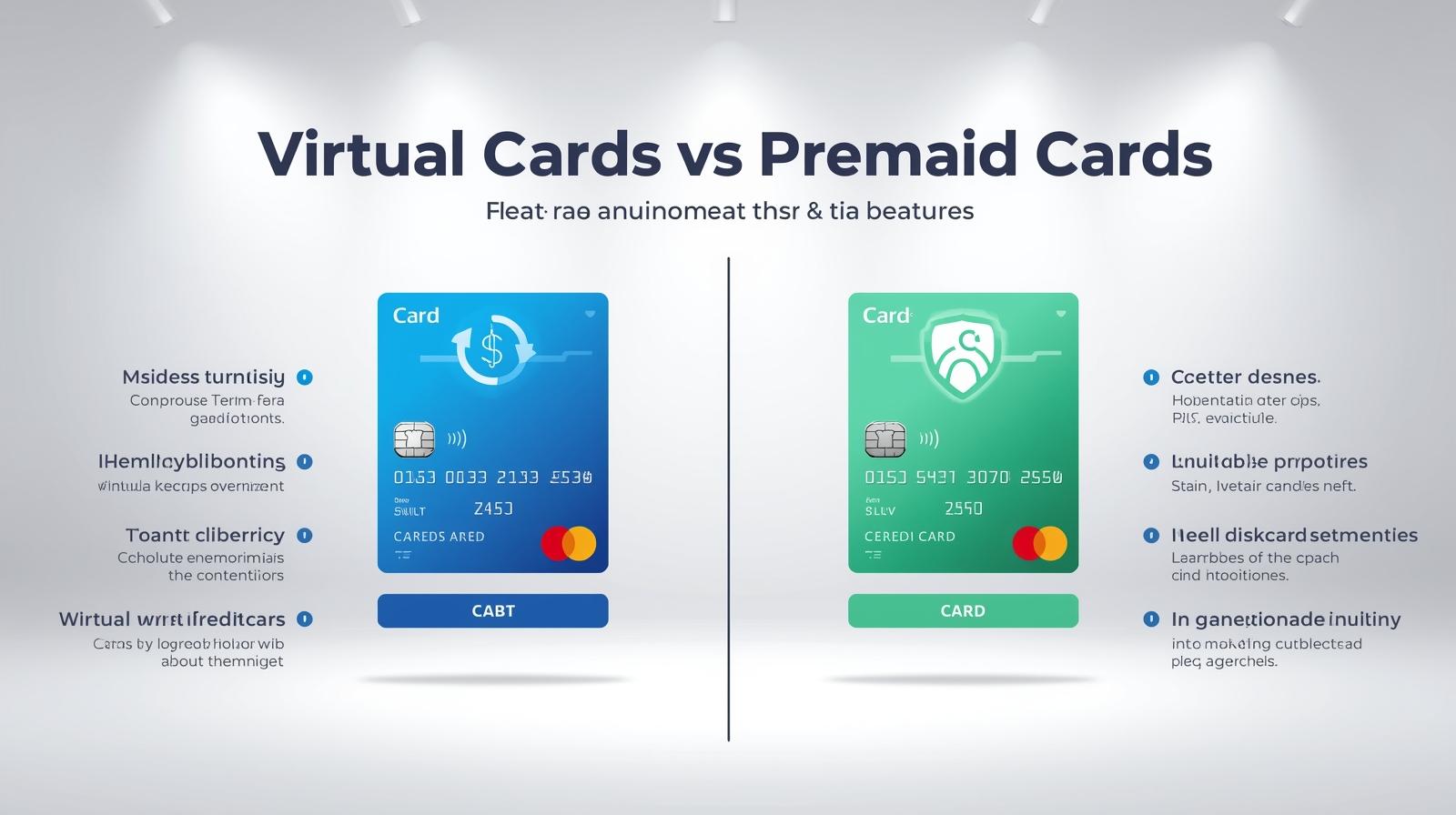
Key Differences: Security, Limits, and Compatibility
1. Security
-
Prepaid Cards: Secure but reusable; exposure risk if compromised
-
Virtual Cards: Can be single-use or limit-controlled, reducing risk
2. Spending Limits
-
Prepaid Cards: Fixed by loaded balance
-
Virtual Cards: Adjustable limits per card
3. Online Compatibility
-
Prepaid Cards: May face restrictions on subscriptions or cross-border payments
-
Virtual Cards: Designed primarily for online transactions
4. Multi-Card Management
-
Prepaid Cards: Usually one per account
-
Virtual Cards: Multiple cards under one dashboard
Which Is Better for Subscriptions, Ads, and AI Tools?
For one-time retail purchases, prepaid cards may work well.
However, for:
-
Recurring subscriptions
-
Advertising accounts
-
AI tools
-
SaaS platforms
-
Cross-border digital services
Virtual cards often provide greater flexibility due to:
-
Adjustable limits
-
Recurring billing support
-
Faster issuance
-
Better online compatibility
Businesses managing multiple digital services frequently prefer structured virtual card systems.
Conclusion
Prepaid cards and virtual cards both support online payments, but they serve different use cases.
Prepaid cards are suitable for controlled spending and retail purchases. Virtual cards, however, often provide greater flexibility, especially for subscriptions, advertising platforms, and AI tools.
For users seeking adjustable limits, recurring billing compatibility, and centralized management, virtual cards may be the more adaptable solution.
Platforms like Buvei support USDT deposits, instant issuance, and multi-card management — offering a structured alternative for modern digital payments.