Online payments power everything from advertising and SaaS subscriptions to AI tools and global travel bookings. But traditional bank cards aren’t always optimized for digital-first transactions.
Understanding how virtual cards work helps explain why they’re increasingly preferred for virtual cards for online payments across industries.
What a Virtual Card Is and How It Differs from a Physical Card
-
Card number
-
Expiration date
-
CVV
-
Billing information
Unlike a physical card:
-
It does not exist in plastic form
-
It is generated instantly online
-
It can be created in multiple quantities
-
It can be assigned specific limits
The main difference between virtual and physical cards lies in flexibility and control. Virtual cards are built for digital environments, while physical cards were originally designed for in-person transactions.
How Virtual Cards Process Online Transactions
From a technical standpoint, virtual cards operate on the same global networks as traditional cards, such as:
-
Visa
-
Mastercard
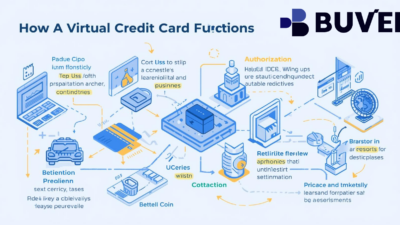
Here’s how virtual cards process transactions:
-
You enter the virtual card details at checkout
-
The merchant sends the transaction to its acquiring bank
-
The network (Visa/Mastercard) routes the request
-
The issuing institution authorizes or declines the charge
-
Funds are settled
Functionally, the merchant cannot distinguish between a virtual and physical card.
However, behind the scenes, virtual cards often provide:
-
Better spend segmentation
-
Real-time card issuance
-
Easier replacement if declined
-
Dedicated use per merchant
This is why many businesses rely on them for how virtual cards process transactions in high-volume online environments.
Where Virtual Cards Are Commonly Used (AI, Ads, SaaS, Cloud, Travel)
Virtual cards are widely used across digital-first industries:
AI Tools
Subscriptions to AI platforms and API-based services.
Advertising Platforms
Ad spend on:
-
Meta Ads
-
Google Ads
-
TikTok Ads
SaaS Platforms
Recurring billing for software tools.
Cloud Infrastructure
Hosting and server providers like:
-
Amazon Web Services
-
Microsoft Azure
Travel Bookings
Flights, hotels, and global reservations.
Because these industries rely heavily on automated online billing, virtual cards provide better operational control.

Why Some Online Payments Fail with Normal Bank Cards
Many users search for why online payments fail with bank cards, especially when:
-
Paying international merchants
-
Scaling ad budgets
-
Purchasing high-ticket SaaS services
Common causes include:
Risk Detection Systems
Banks may flag unusual online or foreign transactions.
Spending Velocity
Sudden spikes in transaction size or frequency.
International Merchant Codes
Cross-border processing increases fraud scoring.
Card Sharing
Using one bank card across multiple platforms.
Insufficient Limit Control
Standard bank cards lack per-merchant segmentation.
Virtual cards reduce these issues by isolating transactions and allowing structured spending.

Key Features of a Good Virtual Card Provider
Not all virtual card services are equal. A reliable provider should offer:
Multi-BIN Support
Improves international acceptance rates.
Instant Issuance
Create new cards without delays.
Flexible Funding Options
Including stablecoin support (e.g., USDT).
Real-Time Dashboard
Track balances and transactions.
Clear Fee Structure
Transparent pricing for issuance and top-ups.
Security & Compliance
PCI DSS-compliant infrastructure.
Choosing the right provider ensures smooth global online payments with virtual cards.
Using Buvei Virtual Cards for Global Online Payments
Buvei virtual cards are designed specifically for digital use cases such as:
-
Advertising
-
AI subscriptions
-
SaaS platforms
-
Cloud services
-
Travel bookings
Key features include:
-
Multi-BIN card issuance
-
USDT (TRC20/ERC20) wallet funding
-
Real-time transaction tracking
-
Dedicated card allocation
-
PCI DSS-compliant systems
Below is how to get started.
Final Thoughts
Understanding how virtual cards work reveals why they’ve become essential for modern online payments.
They operate on the same global networks as traditional cards but provide greater flexibility, segmentation, and risk control—especially for ads, AI tools, SaaS platforms, and international transactions.
As digital commerce continues expanding globally, virtual cards for online payments are no longer optional infrastructure—they’re becoming standard practice for individuals and businesses alike.