Funding a Binance account with cards seems straightforward, yet many users experience repeated declines, unexpected limits, or temporary holds—especially when using virtual cards.
This guide explains how Binance processes card funding, why virtual cards are often rejected, how Buvei virtual cards can be used more effectively, and what safer alternatives exist if card payments fail.
How Binance Processes Card Funding
Binance allows users to buy crypto or fund accounts using debit and credit cards through third-party payment processors.
Key characteristics of Binance card funding include:
-
Visa and Mastercard support
-
Real-time authorization checks
-
Region-based risk assessment
-
Additional scrutiny for crypto-related MCCs
Each transaction is evaluated based on card BIN, issuer reputation, transaction history, and user location. Even valid cards may be declined if they do not meet Binance’s internal risk criteria.
Why Virtual Cards Are Often Declined
Virtual cards are widely used, but they face higher rejection rates on crypto exchanges.
Common reasons include:
-
BINs flagged as prepaid or high-risk
-
Issuers blocking crypto-related merchants
-
Cards lacking support for crypto MCCs
-
Repeated small test transactions triggering risk controls
-
Region mismatch between card BIN and user location
In many cases, the decline is not caused by insufficient balance, but by how Binance’s processors classify the card.
Using Buvei Virtual Cards for Binance Funding
Buvei virtual cards are designed for online platforms that require flexibility, spend control, and fast setup. When configured correctly, they can be used for Binance-related payments more reliably than many generic virtual cards.
Below is the standardized operation guide used across all Buvei tutorials.
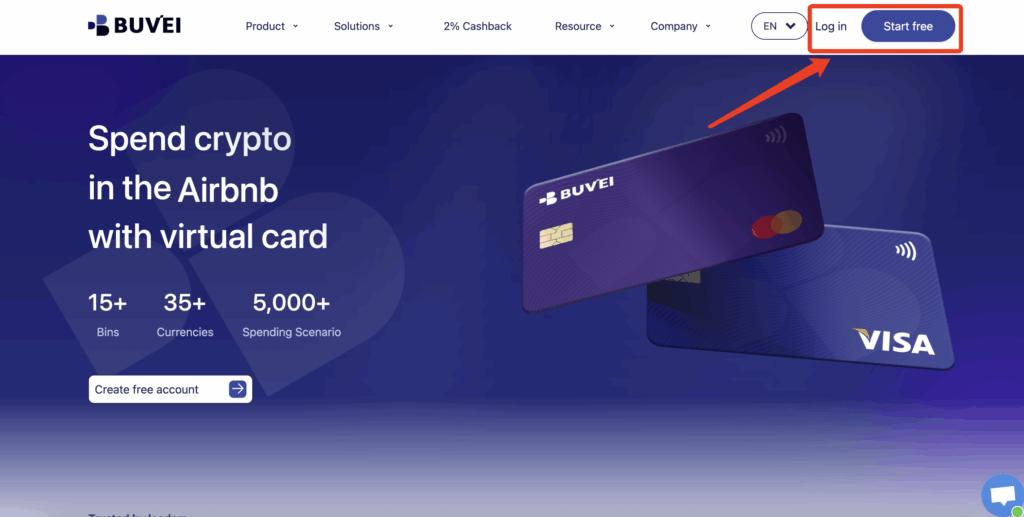
Step 1: Register a Buvei Account
-
Visit https://buvei.com
-
Create a free account
-
Complete email verification
-
Log in to your dashboard
No traditional bank account is required to get started.
Step 2: Fund Your Wallet with Crypto
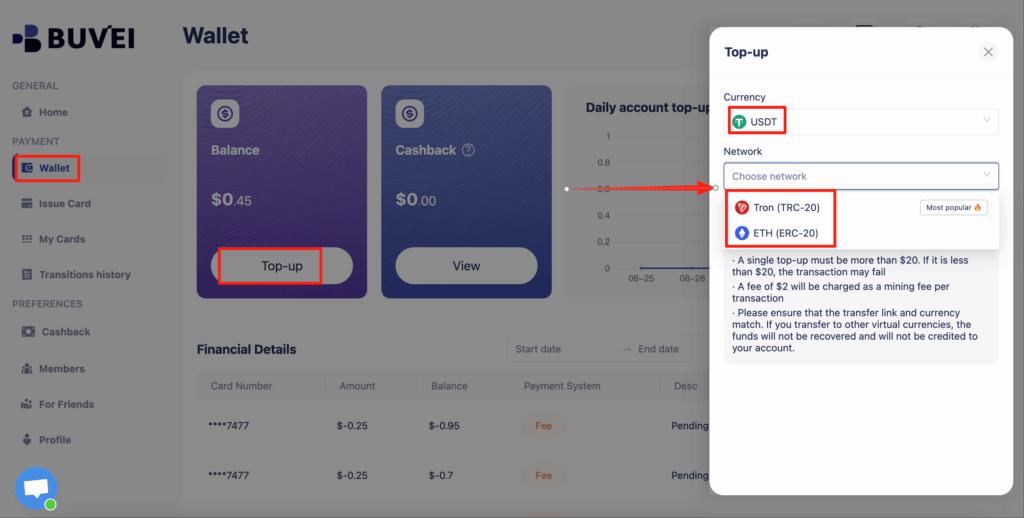
Navigate to the Wallet tab and top up using supported stablecoins:
-
USDT (TRC20)
-
USDT (ERC20)
Buvei provides a dedicated deposit address. Once the transaction is confirmed on-chain, your balance becomes available instantly.
Step 3: Create a Virtual Card
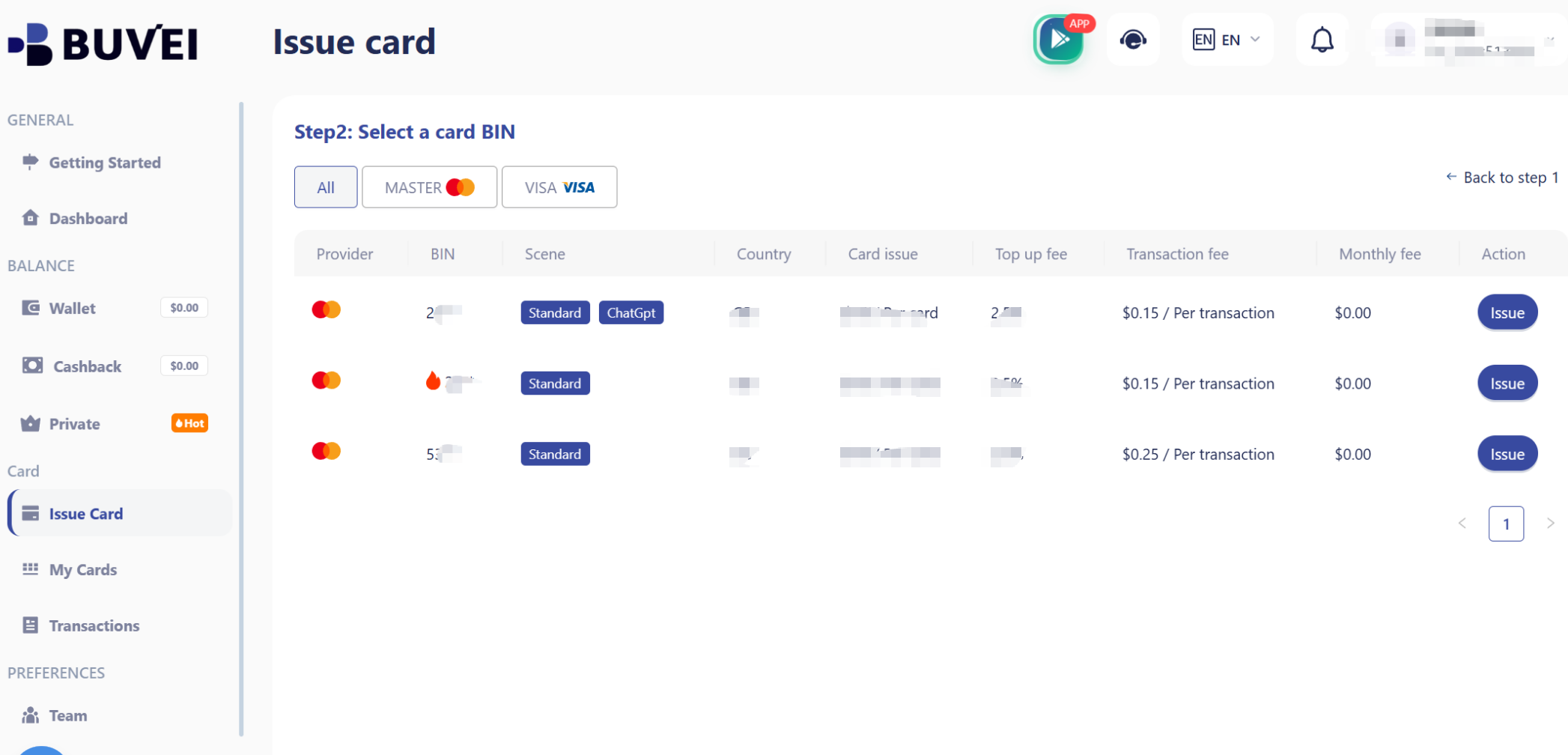
Go to the Cards tab:
-
Select your preferred BIN region
-
US BINs generally perform better for exchanges
-
-
Choose card type
-
Click Issue Card
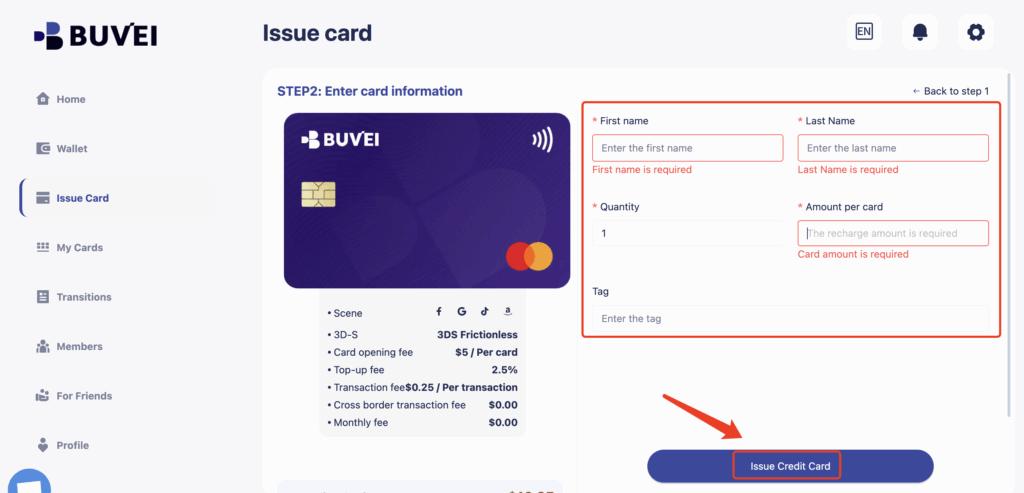
Enter the card name, initial amount, and number of cards, then click Create Card.
You’ll immediately receive:
-
Card number
-
Expiration date
-
CVV
-
Transaction history
-
Card balance and usage
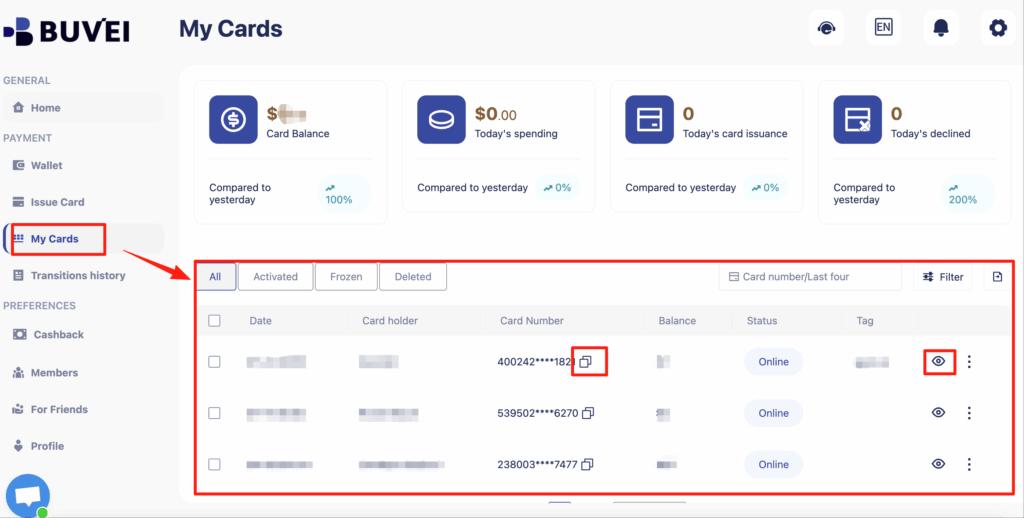
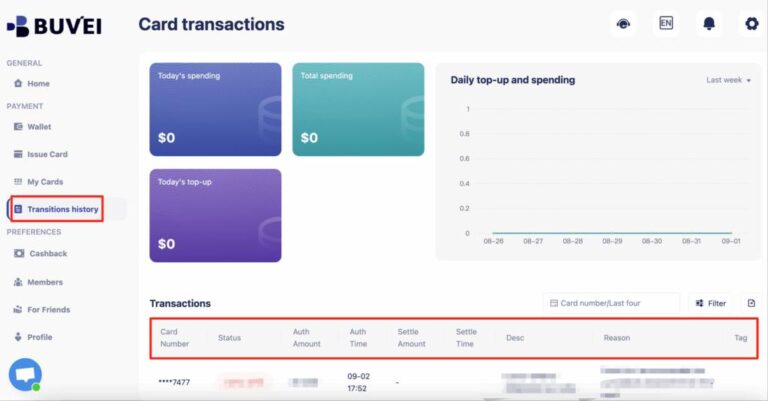
This setup allows you to isolate Binance-related spending from other platforms.
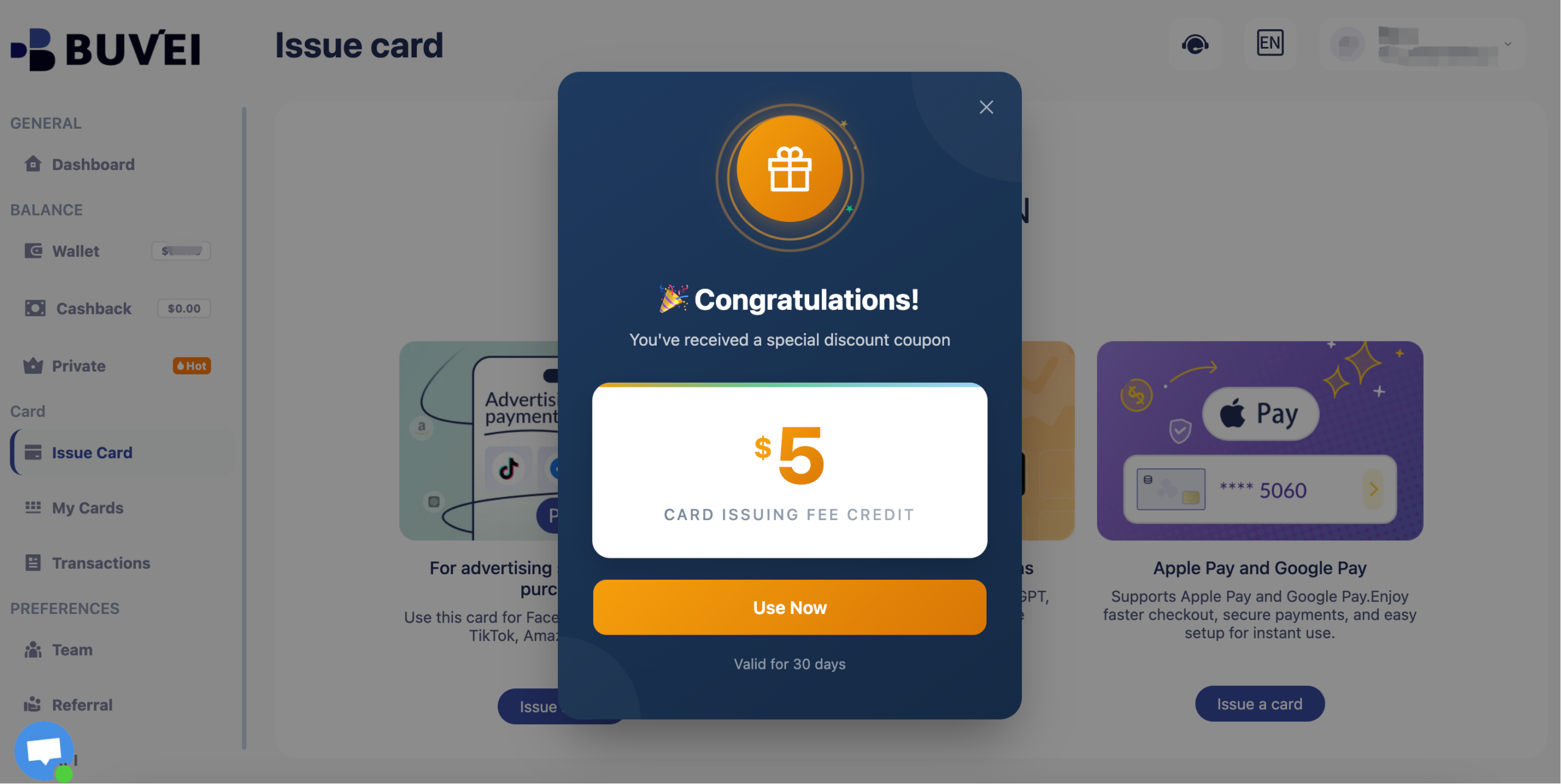
Buvei currently have a promotion: new registered users get a $5 sign-up coupon. You can claim it simply by registering.
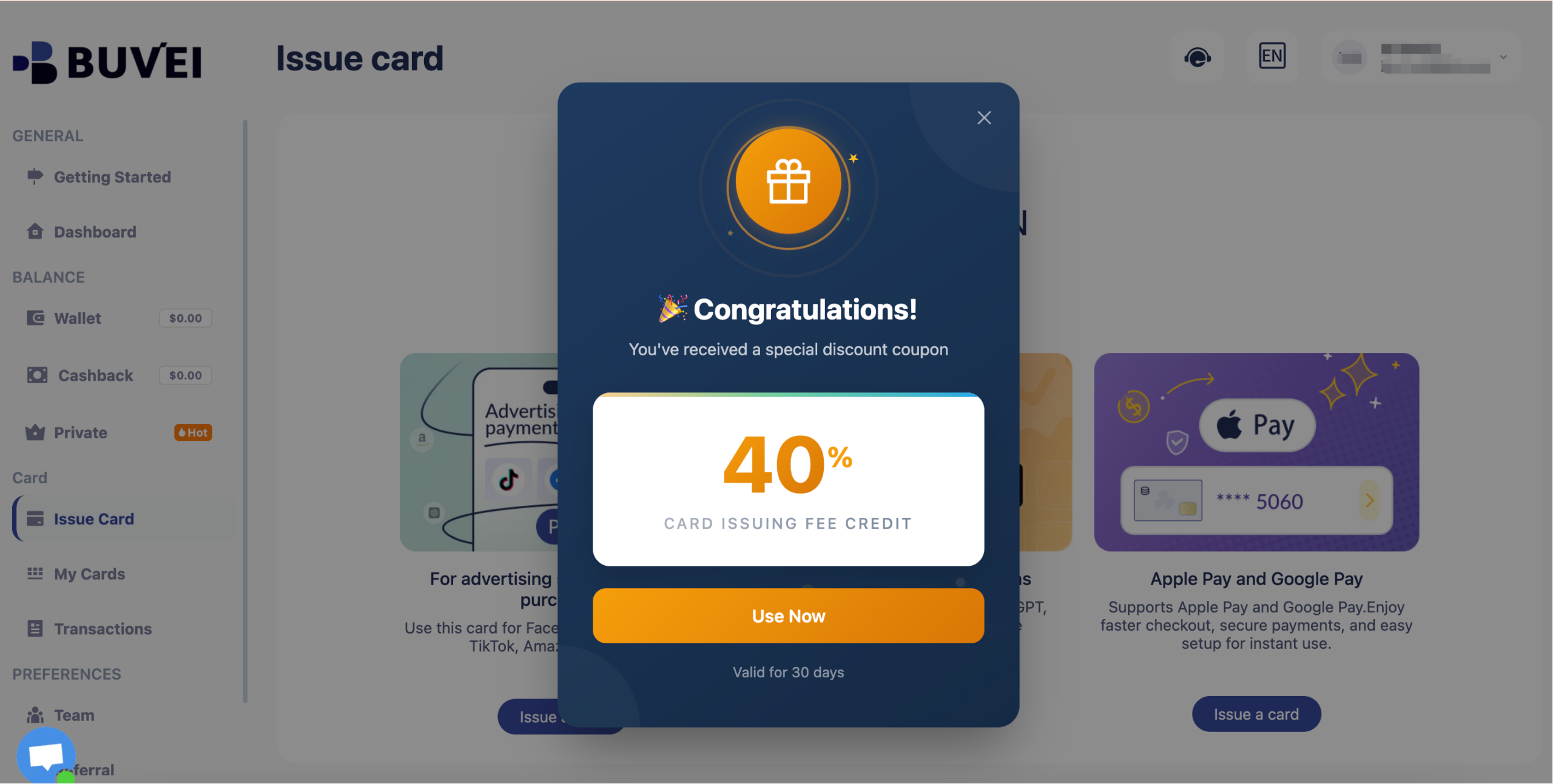
Long-term inactive users will receive a 40% discount coupon.
Limits, Holds, and Fee Structures
Even when a card is accepted, Binance applies limits and fees.
Typical constraints include:
-
Daily and monthly card funding limits
-
Temporary holds after failed attempts
-
Processing fees added to purchase amounts
-
Additional verification for higher volumes
Limits vary by region, card issuer, and account verification level. Virtual cards often have lower initial limits than traditional credit cards.
Safer Alternatives If Card Funding Fails
If card funding continues to fail, alternative methods may be more reliable.
Common alternatives include:
-
P2P trading using stablecoins
-
Bank transfers where available
-
Third-party on-ramp providers
-
Funding via external wallets
These methods often bypass card-related risk controls entirely, though they may require additional steps.
Best Practices to Reduce Declines on Binance
Experienced users follow these guidelines:
-
Use one dedicated card for Binance
-
Avoid frequent funding attempts
-
Keep transaction amounts consistent
-
Match BIN region with account location
-
Monitor card transaction logs
Following these practices improves long-term success rates.
Final Thoughts
Card funding on Binance is convenient but highly sensitive to card structure and issuer rules. Virtual cards can work—but only when properly configured and used with caution.
Buvei virtual cards provide a flexible option for users who want controlled exposure and quick setup. However, understanding Binance’s limits and having backup funding methods is essential for uninterrupted trading.