,或人在国外用虚拟卡支付__图文文案:Ai风格__Pay-anywhere-anytime-1248x702.jpg)
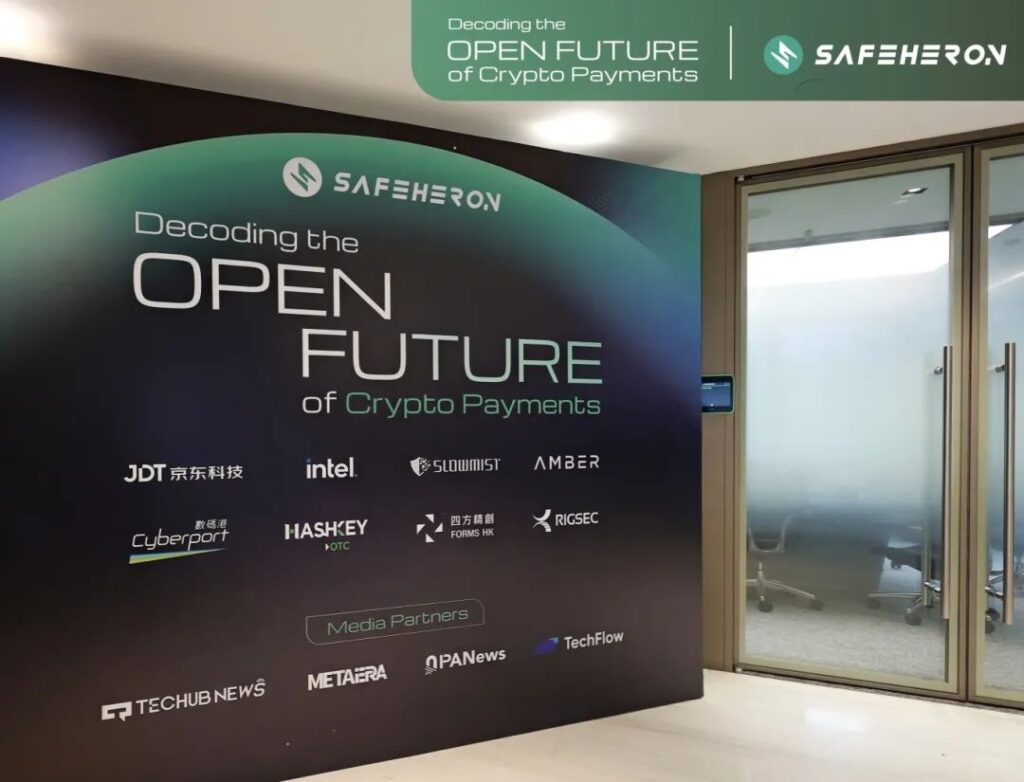
In May 2025, Hong Kong hosted a pivotal gathering of industry leaders to discuss the future of crypto payments. On May 27, Safeheron convened its “Decoding the Open Future of Crypto Payments” conference, spotlighting stablecoin infrastructure, open-source technology, and real-world use cases. Executives and experts from JD Crypto, Intel, SlowMist, Amber Group, Cyberport HK, HashKey OTC Global, Sifang Jinchuang, and RigSec shared insights on how stability and regulatory compliance have become top priorities as regulators worldwide move beyond the question of “Is stablecoin issuance legal?” to “How can we implement it safely and compliantly?”
Global Regulatory Shifts
In recent months, stablecoin regulation has entered a critical phase. The U.S. Senate passed the “GENIUS Stablecoin Act,” while Hong Kong’s draft “Stablecoin Regulations” is under review. Both frameworks emphasize that, once legality is established, technology resilience and adherence to local rules become the driving factors for success. In this environment, open-source software—by offering transparent, verifiable security—stands out as the most reliable foundation.
Safeheron’s Open-Source Breakthrough
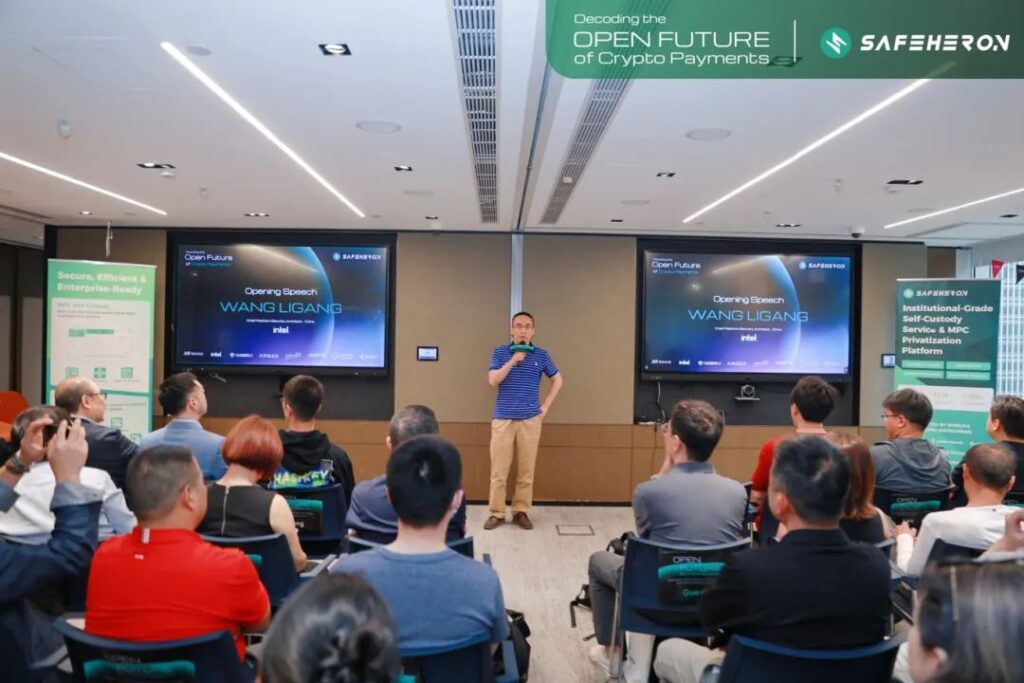
As Asia’s leader in enterprise-grade self-custody, Safeheron used the conference to unveil its new “tech ace”: the world’s first C++-based Intel SGX TEE native development framework. In a trusted execution environment (TEE), security cannot rely solely on vendor claims; it must be verifiable and auditable. Intel China’s Chief Platform Security Architect, Wang Ligang, opened the event by applauding Safeheron’s initiative: “Open-sourcing TEE-based solutions is essential. For sophisticated cryptographic applications like these, open-source is not just beneficial—it’s a prerequisite for true trust.”
Bringing Enterprise Crypto Custody up to Banking Standards
While crypto wallets have improved greatly in terms of digital asset security, they still lag behind traditional bank accounts in areas like compliance controls and enterprise usability. Safeheron’s goal is to deliver a corporate asset management framework as safe and reliable as conventional online banking. At the conference, Safeheron showcased several existing products—such as “Energy Leasing,” which can cut transactional fees by more than 50%, and “Auto Sweep,” which automates deposits and withdrawals—while also launching **Safeheron Connect**, a new module designed to create a trusted crypto settlement network.
Traditional wallet addresses are immutable, uncontrollable, and unverifiable in terms of ownership—all red flags in institutional workflows. Safeheron Connect addresses these issues by introducing an enterprise “identity card” system. Each organization can issue its own “payment ID” (akin to a WeChat business card) for collecting payments, managing approvals, and enforcing authorization rules. This model fundamentally rearchitects how identities and transfers work in crypto, enabling a more secure, compliant network for institutional asset exchange.
A Fully Integrated, One-Stop Payment Solution
Safeheron’s top priority is to strengthen security at every touchpoint—because even a seemingly minor vulnerability can bring operations to a halt. In response to industry challenges, Safeheron has released a comprehensive one-stop payment solution that marries wallet security, compliance monitoring, transaction automation, and cost-optimization in a single package. This platform not only lowers development and maintenance overhead, but also enforces a dual mechanism of compliance checks and risk controls. As a result, enterprises can reduce operating-cost risk and compliance spending, while substantially boosting payment efficiency and focusing on client experience.
Key features include:
-
An institutional-grade wallet security architecture built on MPC and Intel SGX TEE
-
24/7 stablecoin deposits and withdrawals
-
API-driven automation for settlement and asset aggregation
-
On-demand “Energy Leasing” for lower transaction fees
-
Integration of leading AML and compliance services for real-time transaction monitoring
-
A TEE policy engine for transparent, granular asset governance
Tailored Modules for Enterprise Security
-
MPC Node (White-Label Self-Custody):
-
Developing a multi-party computation (MPC) threshold signing solution from scratch can be time consuming and costly. The MPC Node package offers a turnkey, fully private white-label solution—equivalent to hiring an entire cryptography team. Deployed in various real-world scenarios (e.g., key-less wallets like OKX Keyless & Binance Wallet, cold wallet plug-ins for MetaMask Snap, warm/hot wallet backends for exchanges, and compliance-focused solutions for regulated financial institutions), MPC Node proves its flexibility and practicality.
-
KMS Node (High-Performance Key Management):
-
For institutions needing ultra-secure private key management with high-throughput signing (e.g., exchange API key controls or high-frequency trading bots), Safeheron is introducing **KMS Node**—a TEE-based key management system that balances security with performance. Leveraging the Intel SGX secure enclave, standard signature algorithms, and a multi-party collaboration framework to eliminate single points of failure, KMS Node supports large-scale high-frequency signing, robust access controls, seamless migration, and fully private deployments—helping enterprises achieve optimal security-performance trade-offs.
Conclusion
As stablecoin regulation shifts from “Is it legal?” to “How do we implement it safely?” companies must adopt transparent, verifiable technologies that can adapt to evolving compliance requirements. Safeheron’s open-source, TEE-driven framework and modular solutions empower enterprises to treat digital asset management with the same rigor as traditional banking. From reducing risk and improving reconciliation to achieving operational excellence, these tools are an indispensable part of any modern payment infrastructure.
Ready to secure your crypto payments at enterprise scale?
👉 Reach out to Buvei’s team and let’s build a future-proof, compliant MID strategy together.