
Using multiple virtual cards instead of one card for everything is quickly becoming a best practice for online payments. Whether you’re paying for ads, SaaS tools, subscriptions, or online services, separating cards helps improve security, control spending, and avoid unnecessary account issues.
This guide shows you exactly why it matters and how to set everything up step by step.

Why Using One Card for Everything Is Risky
Many users start with one card for all payments. At first, it feels convenient. But over time, it creates serious risks.
Common problems include:
-
One card decline breaks all your services
-
A compromised card exposes every account
-
Difficult to track where your money is going
-
No way to control spending per platform
-
Subscription charges you forgot about keep draining funds
-
Ad platforms linking too many accounts to one payment method
When everything depends on one card, one problem can affect everything.
Common Use Cases for Separate Virtual Cards
Professionals typically organize their multiple virtual cards by use case.
For example:
-
One card for Google Ads
-
One card for Facebook Ads
-
One card for TikTok Ads
-
One card for SaaS subscriptions (ChatGPT, Canva, Notion, etc.)
-
One card for cloud services (AWS, Azure, Google Cloud)
-
One card for freelance tools
-
One card for personal online shopping
-
One card for short-term trials
This structure keeps your finances clean and much easier to manage.
How Virtual Cards Improve Security and Budget Control
Using separate virtual cards gives you clear advantages.
Better security
If one card is leaked or blocked, your other services remain unaffected.
Stronger budget control
Each card can have its own balance, which naturally limits spending.
Cleaner accounting
You can easily see which platform is consuming which budget.
Easier troubleshooting
If a payment fails, you know exactly which service is involved.
Safer experimentation
You can test new platforms with low-balance cards instead of risking your main funds.
This is exactly how agencies, remote teams, and serious online businesses operate.
How to Create and Manage Multiple Virtual Cards with Buvei
Buvei is designed specifically for multi-card management, which makes it suitable for this type of setup.
Here is the full step-by-step process.
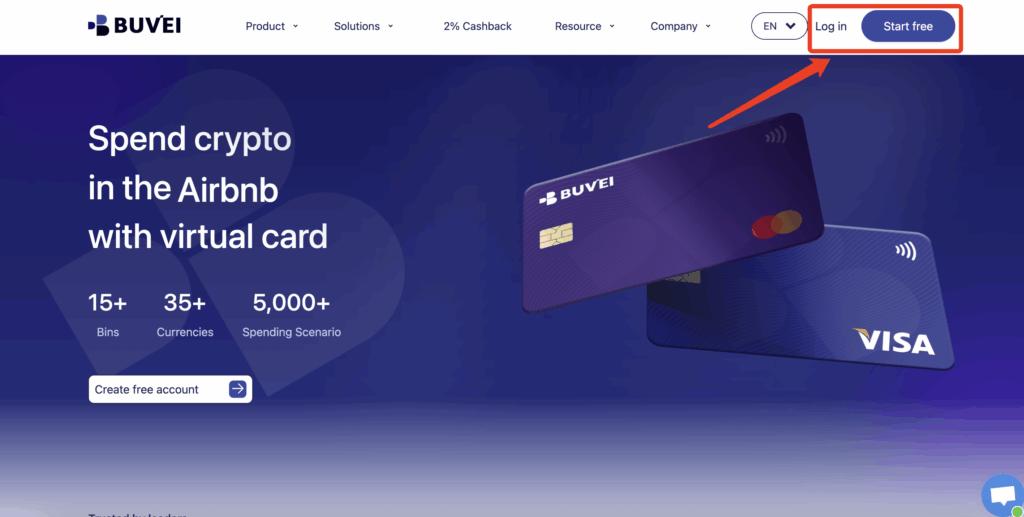
Step 1: Register a Buvei Account
Go to https://buvei.com and create a free account.
Complete email verification and log in to your Buvei dashboard.
Step 2: Fund Your Wallet
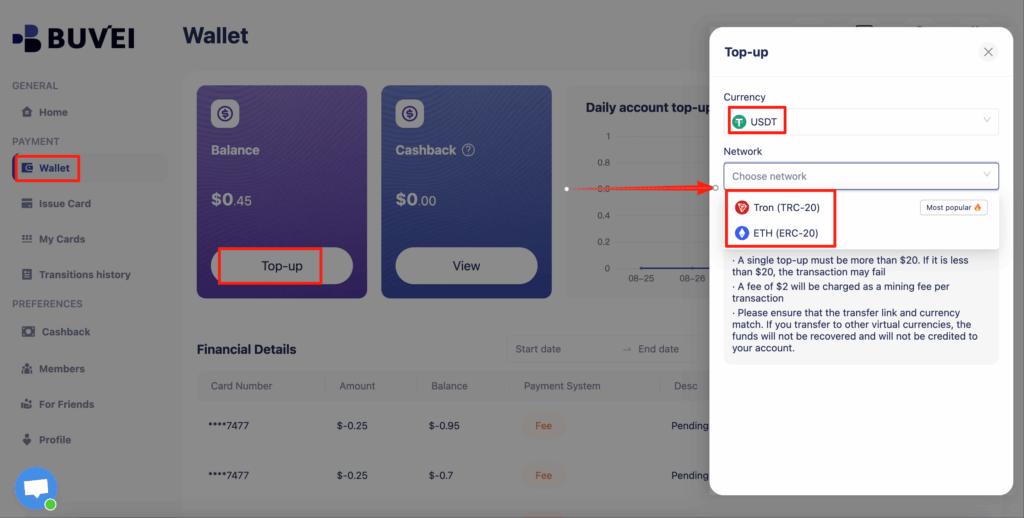
Open the Wallet tab.
Top up using USDT (TRC20 or ERC20).
You will receive a unique deposit address.
Send your funds, and after confirmation, your balance will appear in your wallet.
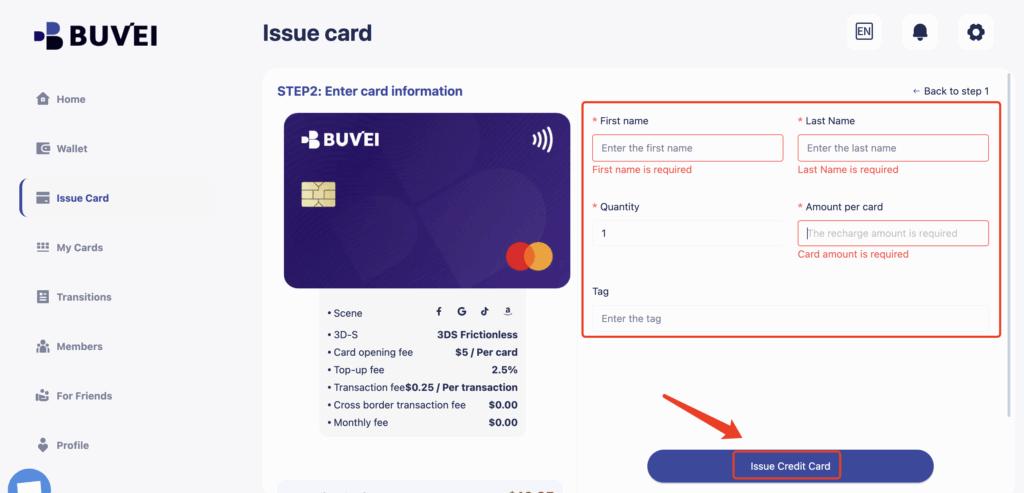
Step 3: Create Multiple Virtual Cards
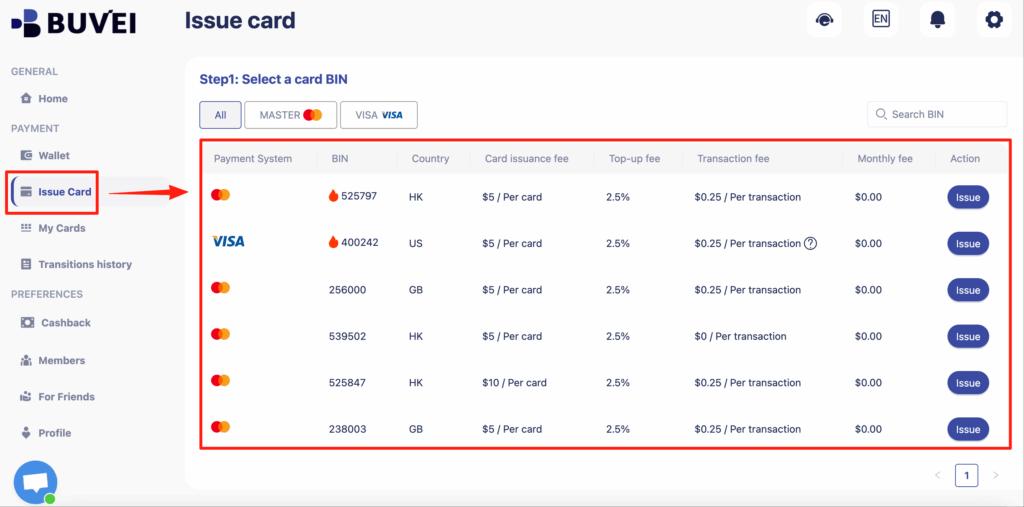
Go to the Cards tab.
Choose your preferred BIN region (US BIN is generally recommended for better acceptance).
Select your card type.
Click create.
Fill in:
-
Card name (e.g., “Subscriptions”, “Ads – Client A”)
-
Amount (this becomes the spending limit of the card)
-
Number of cards you want to issue
Click issue card.
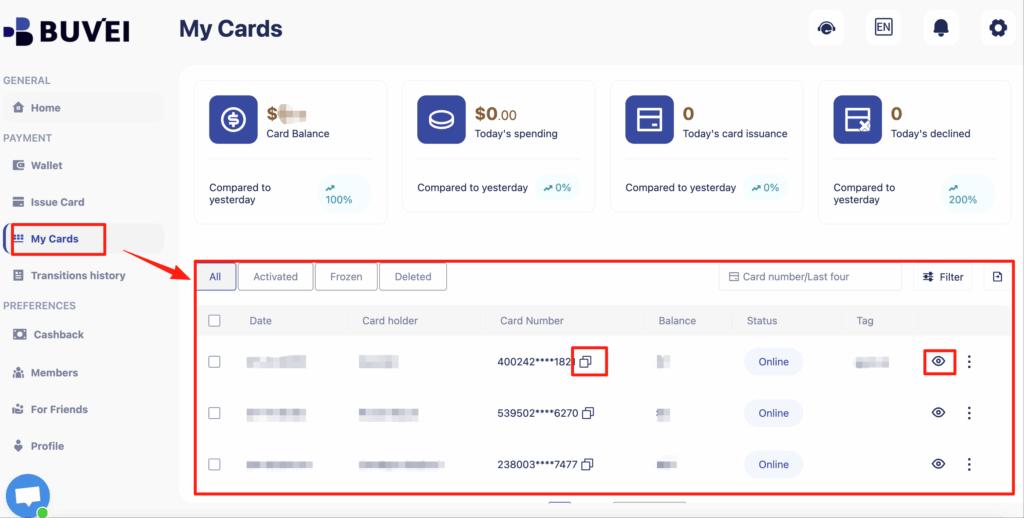
After creation, go to My Cards to view:
-
Card number
-
Expiry date
-
CVV
-
Card balance
-
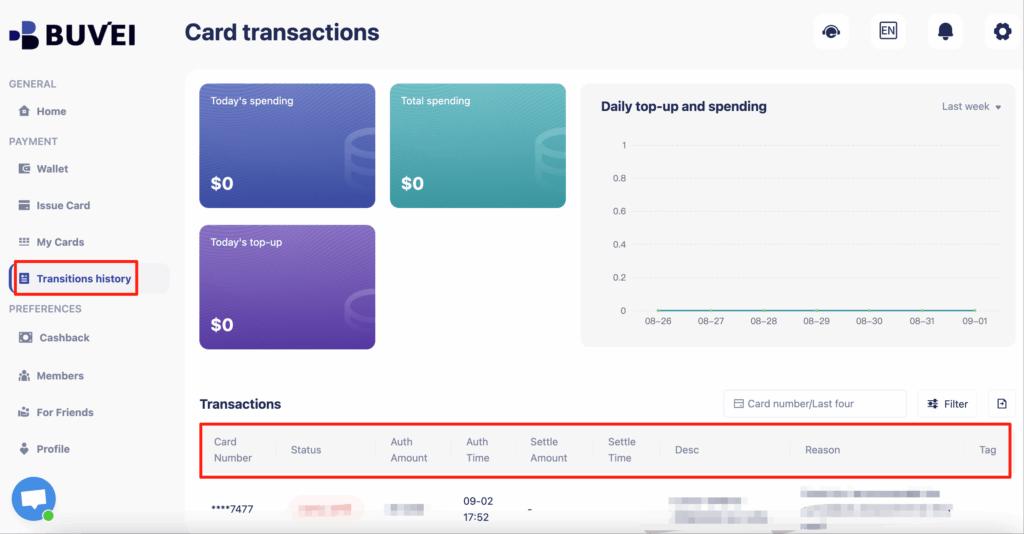
Recharge and spending history
You can repeat this process to create as many cards as you need for different purposes.
Best Practices for Organizing Cards by Use Case
To get the most value out of multiple virtual cards, follow these habits:
-
Always name cards clearly
-
Avoid mixing risky platforms with critical services on the same card
-
Use low balances for testing new platforms
-
Keep higher balances only on trusted services
-
Review transactions regularly
-
Replace cards periodically for better security hygiene
-
Keep separate cards for personal use and business use
Many users choose Buvei specifically because managing multiple cards from one dashboard is simple and scalable.

Final Thoughts
If you want more control over your online payments, using multiple virtual cards is no longer optional — it’s a smart financial habit.
With the right structure, you gain:
-
Better security
-
Stronger spending control
-
Cleaner financial organization
-
Fewer platform payment issues
-
Easier scaling as your activity grows
That’s why more freelancers, agencies, and online businesses are moving toward multi-card systems like Buvei instead of relying on a single fragile payment method.