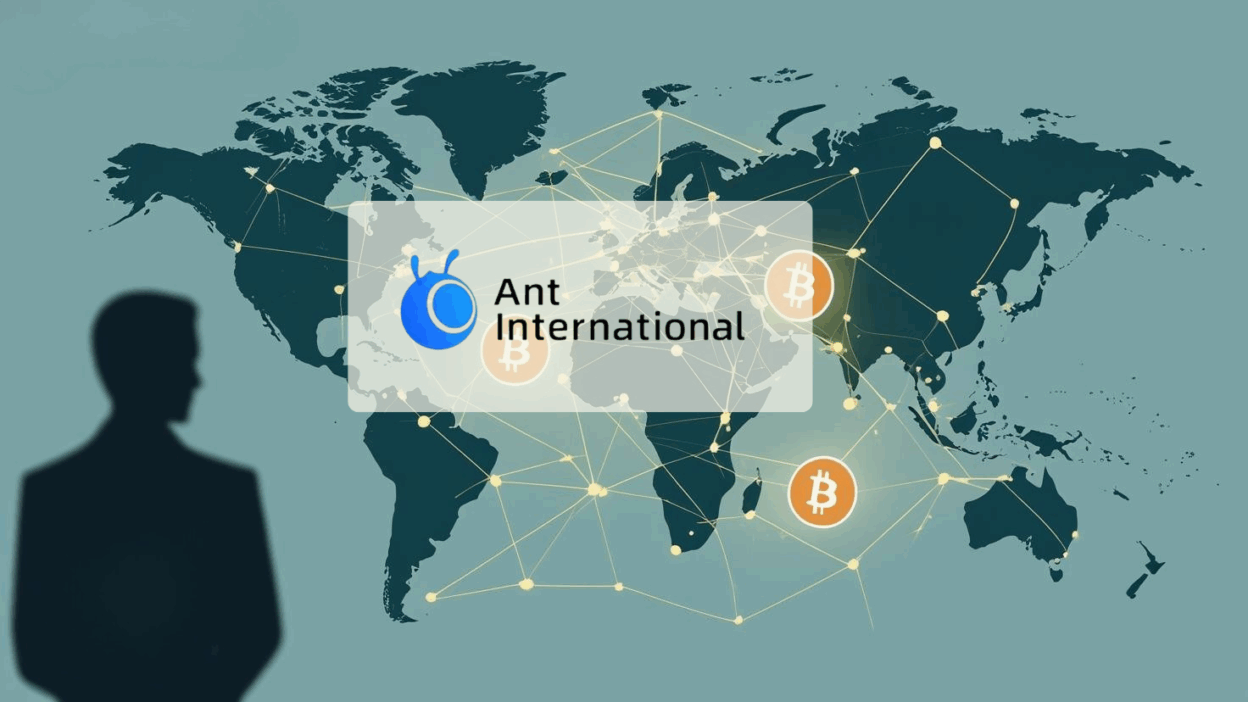
In July 2025, Ant International announced in a media interview that it is seriously considering applying for stablecoin licenses in multiple countries and regions. This signals not only another bold move by a Chinese fintech giant but also a growing consensus that the cross-border payments landscape is entering a stablecoin-powered era.

Stablecoins: From Crypto Asset to Global Settlement Channel
According to Reuters, Ant emphasized during the Singapore Fintech Festival that its stablecoin initiative is not about speculation or crypto trading. Instead, the goal is to use stablecoins as a compliance-ready, high-efficiency mechanism for global payments.
For enterprise use cases—receivables, remittances, and settlement—stablecoins offer real-time settlement and price stability, making them an attractive alternative to traditional USD/EUR corridors for fintech and e-commerce platforms.
Much like JD.com’s earlier support for CNH-based stablecoins, Ant aims to build a global merchant-facing payments network rooted in Hong Kong’s regulatory framework, with likely extensions to Singapore, Luxembourg, and beyond.
Hong Kong’s Stablecoin Regulation to Take Effect in August
Another key development: Hong Kong’s Monetary Authority will officially implement a stablecoin licensing regime in August 2025, transitioning the asset class from a legal grey zone to a formal compliance track.
Ant’s timing is strategic, likely aiming to secure licenses early and position Alipay+—its global wallet with over 100 million users—as a compliant gateway for stablecoin-based corporate settlements.
What Role Can Buvei Play in the Stablecoin-Powered Payments Era?
As a platform focused on enterprise-grade virtual card infrastructure and cross-border payment solutions, Buvei sees stablecoin adoption as a pivotal trend shaping the next wave of global financial infrastructure.
| Trend | How Buvei Responds |
| Stablecoin Cross-Border Settlement | Compatible with international merchant wallets |
| Web3-Native Payment Infrastructure | Offers programmable API-based card issuance and crypto wallet top-ups |
| Multi-Currency Capabilities | Supports TRC20/ERC20 USDT settlement flows |
| Compliant Expense Management | Offers enterprise spend limits, team permissions, and merchant-locking |
With Buvei, enterprises can build a hybrid payment stack that combines traditional finance, stablecoin-based transfers, and compliant virtual card controls—perfect for high-frequency spend such as ads, procurement, SaaS tools, or AI subscriptions.
Outlook: Stablecoins + Virtual Cards = New Global Stack
We are witnessing a major paradigm shift in global payments: from SWIFT-led bank transfers to stablecoin settlements paired with virtual card spend control.
In this model:
-
Stablecoins handle liquidity movement
-
Virtual cards ensure structured, traceable, compliant disbursement
The synergy between both will enable low-friction, programmable, and globally scalable payment rails.

Buvei’s Strategic Advice for Enterprises
-
Use separate virtual cards for ads, procurement, SaaS, or AI tools
-
Leverage Buvei’s TRC20/ERC20 USDT top-up function for cost-efficient funding
-
Reach out to explore integrated stablecoin + virtual card solutions
Final Thoughts
Stablecoins are fast becoming the new language of global payments. But while compliance is the foundation, smart integration and modular control are the future.
Buvei will continue building programmable, enterprise-ready virtual card tools to help you scale in this rapidly evolving payment landscape.
📨 Ready to build your global payment strategy? Click here to create your Buvei account today.